
Rugby League Betting Tips in 2026: Reading the Game Behind the Price
 Available in US
A rugby league betting tip is a forecast. It says a team is more likely to win, or to cover a handicap, than the price the bookmaker is offering. A good tip is one whose price is bigger than the chance it describes. That single sentence carries most of what this page is about — and it is the bit the marketing never explains.
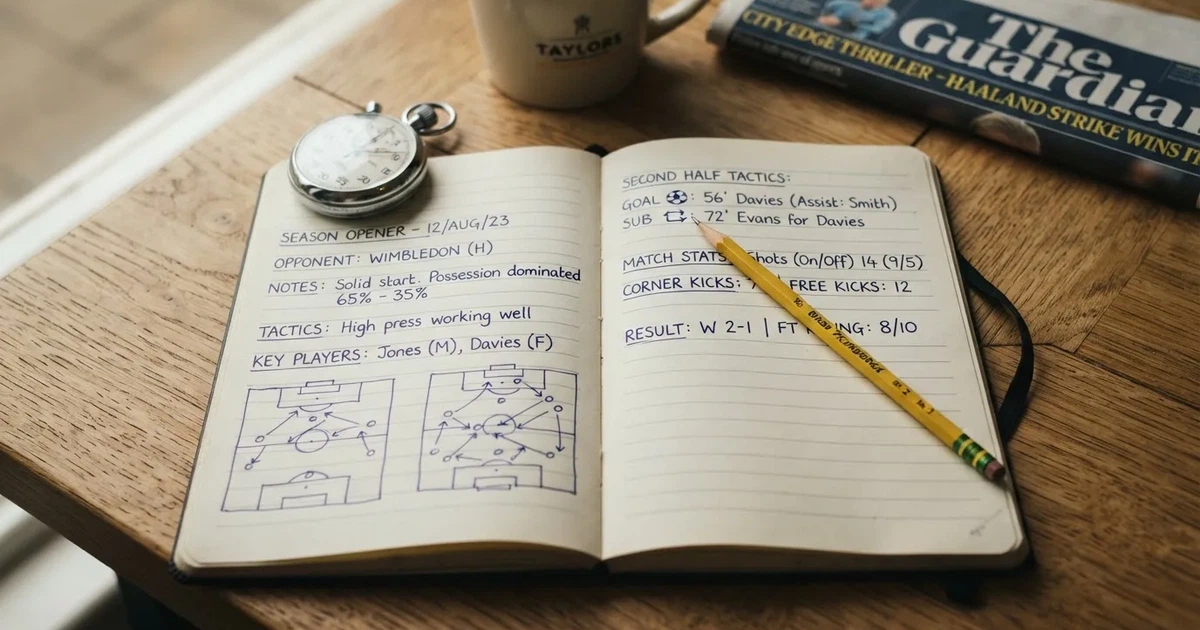
The rest of this page works through what sits underneath that sentence: how a tip is built from form, fixtures and line-ups, why the price you see has the bookmaker’s margin already baked in, why no prediction survives contact with eighty minutes of rugby league, and what each of the ten bookmakers on the shortlist actually asks for in return for a free bet or a welcome bonus. None of it turns betting into an income. What it does is turn a tip from a slogan into a calculation the punter can do themselves.
27 October 2026 — figures cross-checked against the Gambling Commission’s public register and each operator’s terms page.
The Law That Frames Every Bet: Gambling Commission Licensing in Great Britain
Every commercial bookmaker serving customers in Great Britain needs a Gambling Commission licence, wherever the operator happens to be based. That licence is the test of who is allowed to take a bet, and the Commission’s public register is the whole proof. A Gibraltar, Maltese or Curaçao licence does not substitute: since the Gambling (Licensing and Advertising) Act 2014, an operator whose remote facilities are used in Great Britain needs a Commission licence, with the Gambling Act 2005 sections 33 and 36 doing the heavy lifting on the point of consumption.
The register is searchable by business name, trading name, domain or account number. That is how the page’s operator list was checked. A brand using a .com domain is no more or less trustworthy than one using .co.uk — the domain proves nothing, the licence number proves everything. Several brands can also run under one licensee: Paddy Power and Betfair, for instance, sit with PPB Counterparty Services Limited; Ladbrokes and Coral sit under another. They are not independent operators, even when they look like one in the marketing.
The ten operators in this ranking all hold a Gambling Commission remote licence for general betting on real events. Their account numbers, the registered domains and the licensed categories are in the comparison table further down. Two things that licence does NOT do. It does not licence advertising — that runs through the ASA, the CAP Code (non-broadcast) and the BCAP Code (broadcast) — and it does not put a cap on stakes or winnings. Operators set their own maximum stakes and may restrict customers when they choose to.
A second regulator deserves a mention in the rugby league context because spread betting is sometimes bundled with fixed-odds in the same app. The Financial Conduct Authority regulates financial spread betting; the Commission regulates fixed-odds and sports spread betting. For the punter, the practical line is that financial spread betting losses can exceed the deposit, while a fixed-odds loss cannot. The FCA regulates the first, the Commission the second.
Northern Ireland sits outside the Gambling Act 2005. A “GB licence” governs England, Scotland and Wales. Bookmakers who are GB-licensed may not be licensed in Northern Ireland at all, and Northern Ireland runs its own older regime. A punter in Belfast who bets through a GB-licensed site is using the GB rules, not anything local.
The Player-Protection Frame: Safer Gambling, GAMSTOP and the Checks Around Your Money
The second cluster of rules covers what the licence obliges the operator to do around a customer. GAMSTOP is the centrepiece. Every GB-licensed online operator takes part, and self-exclusion through it is a licence condition: six months, one year, five years, or five years with auto-renewal. After the minimum period the exclusion stays in place for a further seven years unless the customer asks GAMSTOP to remove it. Betting shops use a separate service.

Identity checks have been in force since 7 May 2019, and they apply before any deposit or any gamble, including a free bet or bonus: name, address and date of birth verified before the first pound goes in. That rules out anonymous play at a licensed site, full stop. It also explains the account-opening paperwork a punter meets on a first visit — KYC is the regulator’s word for it, and it is a non-negotiable part of using a GB-licensed operator.
Two more checks arrived on a staggered timetable. A financial vulnerability check (LCCP condition 3.4.4, in force since 30 August 2024) runs when a customer’s deposits minus withdrawals exceed £150 in a rolling 30 days — that threshold applied from 28 February 2025. It is a public-record check (bankruptcy, county court judgments), not an income or credit-reference check. Financial risk assessments — the “affordability checks” of the press — were announced in a staged plan in a Commission article of 7 July 2026, with no start date. Until a start date is published, the operative phrase is “announced, staged, no start date”, and the page holds that line.
Deposit limits are a Remote Technical Standard (RTS 12). Operators must offer a gross deposit limit on a fixed time frame. The first changes applied from 31 October 2025. A second phase was postponed to 30 September 2026, and whether it is live on a given operator is not established by the register. There is no state-set deposit ceiling for betting; the customer sets the limit, within the technical standard the operator offers. Punters with a small budget set a tight one.
Help exists outside the operators. GamCare runs the National Gambling Helpline; GambleAware funds treatment and education; NHS gambling clinics treat problem gambling in the health service; Gamblers Anonymous runs peer-support meetings. The Commission’s register has a list of approved providers, and every GB-licensed operator links to one or more of them from its safer-gambling page.
The frame a punter meets is: verification before the first bet, GAMSTOP coverage if self-exclusion is wanted, deposit limits they set, vulnerability checks at moderate spend, and routes to help. The same frame makes the punter traceable, accountable and friction-bearing. That is what a licence buys, and it is also the cost of one.
Bonuses and Free Bets: What the Marketing Word Costs the Punter
A “free bet” is not a gift. A “100% bonus” is not a hundred pounds. Each of those marketing phrases is a number the bookmaker is willing to pay, attached to a list of conditions the punter has to meet before any of it can be withdrawn. The conditions — wagering requirements, minimum odds, expiry windows, payment-method exclusions — are where the offer turns from headline to cost.
A wagering requirement says how many times the bonus, or the bonus plus the deposit, has to be turned over before withdrawal. A £10 bonus with a 10x requirement means £100 of qualifying bets before the bonus is withdrawable. Promotions with wagering conditions are capped at 10x as of 19 January 2026, so the worst legal bonus is now £100 of turnover for every £10 of bonus — already heavy, but legal. Mixed-product promotions — “bet on football to get free spins” — are banned under the same change. A free bet whose stake is not paid back with a win is the rule rather than the exception; what the punter keeps is the winnings, not the stake.
Minimum odds gate the qualifying wager. “Min odds EVS” means bets at decimal odds of 2.00 or above count; lower prices count for nothing. The list of qualifying markets matters too: an offer may specify pre-match singles, or accumulators with three or more legs, or specific sports. Payment-method exclusions are common — debit card only, no e-wallets, no prepaid cards.
The free bet’s value depends on the odds the punter takes. For a free bet whose stake is not returned, the value is the free-bet amount multiplied by (odds minus 1) and divided by the odds, scaled by the market’s payout share. At evens on a market paying 95%, a £10 free bet is worth roughly £4.75 — about half its face, before the conditions above are even counted. The “£100 in free bets” headline reads differently once that arithmetic sits beside it.
Welcome offers the page saw in the public terms at the snapshot date:
- Betway’s welcome offer for new UK and Ireland customers is £40 in free bet tokens (4 x £10) credited on settlement of a first bet of at least £10 at minimum odds of 2.0, with a 7-day expiry and debit card deposits only.
- Midnite’s sports welcome offer: new customers who bet £5 or more on pre-match odds of EVS (2.0) or greater within 14 days of sign-up receive £25 in free bets and 50 free spins, valid for 7 days.
- Hollywoodbets’ sports welcome offer: new players who deposit £10 or more by card get their stake back as a free bet of up to £30 on their first qualifying losing accumulator (stake £10+, 3+ legs, odds of 4/1 or greater, settled within 7 days); one free bet per customer.
- Bet Ahoy offers a 10% Acca Bonus up to £1,000, Sub-Cover for player substitutions, Best Odds Guaranteed on UK and Irish horse and greyhound racing up to £100, and Double Result payout on UK and Irish racing.
Each of those figures is the operator’s own terms. Two of them expire inside a week, one is refund-shaped, one is an acca bonus. None of them is the headline number on its own.
BOG — Best Odds Guaranteed — is the other offer worth naming. William Hill pays Best Odds Guaranteed on UK and Irish horse racing from 8 AM on the day of the race, on both single and multiple bets; it does not apply to ante-post, tote or pari-mutuel bets. BetVictor offers the same on UK and Irish horse racing. Bet Ahoy’s BOG is capped at £100. None of that is rugby league: BOG is a racing offer, and the page names it because it lives on the racing side of the same app, not because it changes a rugby league price.
Live Betting and Cash Out: Reading the Game While the Game Is Going
A live bet, in rugby league, is one struck after kick-off. The bookmaker reprices the market as the scoreboard moves; the punter backs the new price or lays the old one. The product is fast, the margins on it are tighter than pre-match in the best shops, and the discipline the punter needs is sharper — the price moves every tackle.
In-play is permitted at GB-licensed operators; the controls are the operator’s licence conditions and its customer-protection duties, not a statute. No statute caps the stake or the price, and no statute forbids in-play on any specific market. Rugby league is well suited to it: scoring is bursty (a try plus a conversion is six points in fifteen seconds), and the six-tackle rule puts a clock on each possession that markets can read. A side under pressure in its own half, third tackle gone, fourth tackle on its own twenty-metre line — that is a moment when the next try market moves, and the punter who has watched the shape of the game sees it before the price does.
Cash out is a related product. The bookmaker offers to settle the bet early, at a price that reflects the current market and a margin of its own. The punter takes the cash-out number or lets the bet ride. Cash out is most useful when the bet has gone well but the lead looks fragile — a six-point lead with fifteen minutes left in a game that has just lost its first-choice full-back. It is least useful when the price is poor; a cash-out number well below the live market is a margin dressed up as a feature. The bookmaker’s edge in cash out is not zero.
Streaming and live data are bundled into the same apps. Betfair Sportsbook streams UK and Irish horse racing and football inside its app and runs a 90 Minute Payout market; BetVictor streams live racing. Rugby league streams are rarer, but the in-play data feed (tackle count, completion rate, possession percentage) is the same product in different clothes. The punter who has both the visual and the data feeds can see things the price has not caught up with yet.
A live bet at a GB-licensed bookmaker is paid on the result at full-time (or 80 minutes, depending on the market). The settlement rules below matter more in-play than they do pre-match, because an in-play bet is decided in minutes, not hours.
Predictions and Strategy: Building a Tip You Could Defend
A tip is a forecast. Building one is a sequence of four steps, each of which can be wrong, and each of which the bookmaker’s market has already had a stab at.
Step one is form. A team’s last five results, home and away, against opponents of similar strength. Form tells a story that rankings do not: a side on a three-match losing run that has lost those three by a combined twelve points is in worse shape than the W column suggests; a side on a three-match winning run that has won by a combined four points is closer to a fall than the L column says. Form is read at the team level, not at the player level.
Step two is fixtures. Who has the easier run-in. Who is travelling, who is at home. Who has had a short turnaround (the standard is six days between matches in Super League, less in the NRL with its Wednesday-Sunday-Saturday rhythm). The schedule shapes form — a side on a five-match winning run with three of those at home faces a different test to a side on the same run with three of those away.
Step three is the line-up. Late changes in rugby league are common: a hooker or a halfback missing changes the shape of a side more than a winger or a prop does. The bookmaker’s market reflects only the named team on the team’s own announcement; the punter who watches the warm-up catches the swap a tick earlier. Some bookmakers settle on the named team on the team sheet, others on the player who actually takes the field. The punter checks the rule.
Step four is the market. The bookmaker’s price on a market is the bet. A price of 2.50 on a side the punter rates at 60% to win is a value bet; a price of 1.80 on the same side is not. The punter’s percentage is theirs to defend; the price is the bookmaker’s.
A value bet, defined properly, is one whose decimal odds are larger than 1 divided by the punter’s own estimate of the true probability. If the punter rates a side at 50% to win, fair odds are 2.00; a price of 2.20 is value, a price of 1.80 is not. That is the entire theory. Everything else in this page — the bookmaker’s margin, the payout formula, the bankroll rule — sits underneath it.
Bankroll discipline is the half of strategy the marketing never touches. The punter stakes a fixed percentage of the bank (one to three per cent is the conventional band) on every selection, regardless of confidence. The percentage is the discipline, not the pick. A punter who stakes five per cent on a “certainty” and one per cent on a “long shot” is not managing risk; they are confusing confidence with edge.
Why no tip is ever certain: because the punter’s percentage is a number they put on an event that has not happened yet. The bookmaker’s market, which has been worked over by a trading team and a margin, will sometimes be more accurate. The punter’s edge, when it exists, is small — one or two per cent of true probability on a market the punter knows better than the market does. A tipster selling “95% accas” is selling something that does not exist.
A punter who treats betting as income has been sold a story. A punter who treats it as a paid hobby with a budget, a percentage and a record has the right frame. The record matters: a spreadsheet of stake, selection, price and outcome is the only way to know whether the strategy is working. Without it, every tip feels like a winner.
Bet Types and Odds: How a Rugby League Market Is Built
A rugby league match is settled market by market, and the market shapes the bet.
Match Betting — who wins — settles on 80 minutes’ play. Extra time does not count unless the specific market says so. A draw is a possible result: Super League can finish level; the NRL can go to golden point in regular-season play and to extra time in the finals. Punters who forget the third outcome stake on a two-horse race and lose to it.
Handicap Betting is the same market with a head start applied. A side given a -6 handicap starts the market six points behind; it needs to win by seven or more for the bet to land. A side given +6 wins the bet if it wins, draws, or loses by five or fewer. A handicap line that is a whole number and is hit exactly (the favourite wins by exactly six) refunds every wager on that line: the punter’s stake comes back. Half-handicap lines (2.5, -7.5) cannot be hit exactly, so no refund.
Totals markets ask whether the combined score is over or under a line, usually set in multiples of 0.5 points. Super League totals sit in the high thirties and low forties depending on the sides; NRL totals run higher. Totals move with weather, with line-up and with the script of the game: a wet track punishes expansive rugby league.
First Try Scorer is the most popular player market. It is settled on the first try, not the first try-scorer in the squad list; a substitute who comes on for the first time and scores first settles the bet. Each-way terms are common — a place portion pays if the player scores at any point — but the place terms vary by bookmaker.
Scorecasts — a combined bet on first try-scorer and the match result — multiply. A punt on Winger A to score first and Team X to win multiplies both prices into one. The maths is sound; the risk is that both legs have to land.
Bet Builder / Same-Game Multi: Betfred’s app features Bet Builder alongside Sub Switch, Racing Post data and Extra Places; Midnite’s app shows an acca builder and popular accas. A bet-builder is a bookmaker-built same-game accumulator; it lets the punter combine match result, total points, first try-scorer and player markets into one bet, at a bookmaker-priced combined odds. Bet builder prices are tighter than the same selections priced separately — the bookmaker’s margin is bigger on the combined product.
Ante-post markets settle when the tournament does, not when the match does. A punt on the Grand Final winner in March is for the whole season, not the round-one game. Ante-post bets are usually losers when a player is ruled out for the season; non-runner rules vary by bookmaker.
Odds come in two shapes in the UK. Fractional odds (5/1, 11/4, evens) and decimal odds (6.00, 3.75, 2.00). The two are interchangeable: fractional a/b becomes decimal a ÷ b + 1, so 5/1 is 6.00 and 11/4 is 3.75. “Odds-on” means shorter than evens — a price the punter has to stake more than they would win. “Evens” is the dividing point. “Starting price” (SP) is the on-course price settled at the off; in rugby league, it does not apply, but the term turns up in the racing offers.
The return on a winning single is stake × odds. A £10 punt at 3.00 returns £30 — the £10 stake plus £20 profit. A £10 punt at 1.50 returns £15. A combination bet multiplies the legs: a double at 3.00 and 4.00 is 12.00, a £10 double returns £120. The maths is the only part of betting that is mechanical, and it is the part the punter does at the kitchen table, not at the betting slip.
Sports and Tournaments: Where the Bets Actually Sit
A rugby league match lasts 80 minutes, in two 40-minute halves; a team fields 13 players; the attacking side gets a maximum of six tackles before possession changes. Try four points, conversion two, penalty goal two, drop goal one (or two from beyond the 40-metre line). Those numbers are the structure of every market on the sport. A punter who does not know them cannot read the totals line, cannot price the first-tryscorer market, cannot understand why a side within six points is more interesting than a side ten points clear.
The sport’s competitions split into three families. The European club competition is Super League, a twelve-team competition that runs from February to October with a five-team playoff for the Grand Final at Old Trafford. The NRL is the Australian and New Zealand club competition, seventeen teams, March to October, with the Grand Final in the new season in Sydney. International Rugby League governs the international game — the Rugby League World Cup, Four Nations, test series between Great Britain and Australia or Papua New Guinea, and the Pacific Championships. The page covers all three because each one carries different markets and different price behaviour. Super League odds are tight; NRL totals are higher and the books price them with more variance; international markets are thinner and the bookmaker’s margin is wider.
In one GB bookmaker’s rules, Super League and NRL Match Betting and Handicap Betting settle on 80 minutes’ play, while most other markets settle on the official result including extra time. That single rule is the one a punter needs to know by heart. A bet on the Grand Final winner settles on the trophy; a bet on the Grand Final match winner settles on 80 minutes. A bet on a regular-season NRL match settles on 80 minutes plus golden point. A bet on a postponed match stands for 48 hours from the original kick-off and then becomes void.
The Rule 4 deduction is a horse racing rule, but a tubed living analogue exists in rugby league: a key player scratched close to kick-off moves the market, and bookmakers adjust prices accordingly. The punter with an ante-post bet on a team whose half-back is ruled out on Friday night has a bet whose value has changed. Settlement depends on each bookmaker’s specific rule.
The Ten Operators Side by Side: What Each One Actually Costs
The ranking is a shortlist, not a recommendation. A place in the table is not a licence — every brand here holds a Gambling Commission remote licence for general betting on real events, and that is the test of who is allowed to take the bet. A punter’s choice between them is a choice between offers, markets, settlement rules and the price of a £10 stake.
| Brand | Gambling Commission licence | Key terms on the rugby league side |
|---|---|---|
| William Hill | 039225-R-319373-015 (WHG (International) Limited) | BOG on UK and Irish horse racing from 8 AM; broad rugby league market; in-play and cash out on the major sports books |
| Geoff Banks | 054095-R-330366-010 (GB Sports Advisors Limited) | Live in-play prices; ante-post markets on future events; an app-led product from GB Sports Advisors Limited |
| Midnite | 101839-R-342850-001 (Midnite Limited) | In-play events; acca builder and price boosts with maximum-stake limits; welcome of £25 in free bets and 50 free spins at min odds EVS |
| Betfred | 039544-R-319290-010 (Petfre (Gibraltar) Limited) | Bet Builder, Sub Switch, Extra Places; racing features sit beside the rugby league product |
| Hollywoodbets | 053028-R-330019-013 (Hollywoodbets International UK Limited) | Refund-style welcome on a first losing acca (3+ legs, 4/1+) up to £30; deposit by card only |
| BetVictor | 039576-R-319370-028 (BV Gaming Limited) | BOG on UK and Irish racing; Smart Stats and a BetFinder for racing; enhanced live race streaming |
| Bet Ahoy | 100094-R-341742-003 (Bet Ahoy Ltd) | 10% Acca Bonus up to £1,000; Sub-Cover; BOG on UK and Irish horse and greyhound racing up to £100; Double Result on UK and Irish racing |
| Betfair | 039439-R-319330-013 (PPB Counterparty Services Limited) | In-play; Bet Builder; free live streaming of UK and Irish racing and football; 90 Minute Payout market |
| Bar One Racing | 056516-R-332750-007 (Bar-One Racing Limited) | Irish bookmaker; horse racing sponsorships at Dundalk, Fairyhouse, Navan, The Curragh, Curraheen Park and Cork |
| Betway | 039372-R-319367-029 (Betway Limited) | Welcome of £40 in free bet tokens (4 x £10) at min odds 2.0; 7-day expiry; debit card deposits only |
What the table cannot say is what each one costs in margin. The bookmaker’s margin is the difference between the implied probability of all outcomes and 100%; the larger the margin, the less of every pound the punter holds across all outcomes of a market. On a two-way market priced at 1.90 / 1.90, the payout share is roughly 1 ÷ (1/1.90 + 1/1.90), or about 95%, leaving a margin of roughly 5% of every unit staked as the bookmaker’s edge. roughly 4% to 6% on major rugby league markets at the top of the book, and 8% to 12% on smaller or exotic markets, depending on the operator and the time of day. A market’s margin sits inside every price on it, and that is the figure that decides whether a tip is value or noise.
Where each operator’s offer is refund-shaped rather than free-bet-shaped, the punter keeps the stake refund as a free bet rather than cash. That is a real distinction. Hollywoodbets’ refund is a free bet on a losing accumulator; Betway’s £40 in free bet tokens does not return the qualifying stake. A punter who reads the small print before claiming does not lose the difference.
The brands that match a rugby league punter’s profile best are the ones with strong in-play product, broad Super League and NRL coverage, and bet-builder depth. Betfair, Betfred and Bet Victor cover that profile at the racing-friendly end; Midnite cover the same profile at a sharper prices-on-bookmaker side; Hollywoodbets is the acca-friendly option. William Hill and Betway are the broad-market options, with strong racing sides that do not change their rugby league product. Geoff Banks is the app-led ante-post specialist; Bar One Racing is the Irish racing-led bookmaker whose rugby league product is a small part of a racing-led shop.
The punter who bets rugby league and little else picks on price and in-play depth. The punter who bets rugby league and the horses picks the racing-friendly side of the list. The punter who bets accas on rugby league picks the acca-bonus side. None of these is “the best”; each is a price point at which a punter trades off the bookmaker’s offer against the bookmaker’s margin.
The Bookmaker’s Margin: The Number Inside Every Price
A two-way market priced 1.90 / 1.90 looks fair. The favourite wins at 1.90, the underdog at 1.90, both sides look 50/50. The implied probability is 1 ÷ 1.90, which is about 52.6% per side. Two sides of 52.6% add up to 105.3%, and the extra 5.3 percentage points are the bookmaker’s margin — the slice of every pound staked that the bookmaker keeps on average.
The arithmetic. The payout share of the market is 1 divided by the sum of 1/odds across all outcomes. For 1.90 / 1.90 the payout share is roughly 1 ÷ (0.5263 + 0.5263), or about 95.0%. The margin is 1 minus the payout share, which is roughly 5.0% of every unit staked. Stated as a band: on a major rugby league market at the top of a major bookmaker, roughly 4% to 6% of every pound staked is the bookmaker’s edge; on smaller or exotic markets, 8% to 12% is more common.
The margin is the reason a price of 2.00 on a side the punter rates at 50% is fair, not value. Fair odds on a 50% chance are 2.00; a price of 2.10 is value, and the punter’s edge is the 10 pips of price minus the slice of the margin the punter has to outlast. The edge is small. The marketing word “value” is large.
The punter who wants to see a market’s margin does not need the bookmaker to print it. The punter adds the implied probabilities of all outcomes (1 ÷ odds for each), subtracts 100, and the result is the margin in percentage points. A 105% book is 5% margin; a 108% book is 8% margin. The lower the better, and the difference between 4% and 8% margin over a season of betting is the difference between a hobby and a hole.
Responsible Gambling: Where the Punter Gets Help
The punter who wants to stop betting can stop betting without telling the bookmaker first. GAMSTOP is the route: free, online, and once registered it tells every GB-licensed online operator to refuse the customer’s bets for the period chosen. Six months, one year, five years, or five years with auto-renewal, plus the seven-year tail. It covers online sites and apps; betting shops use a different service.
A punter who wants to keep betting within a tighter frame sets a deposit limit on the operator’s safer-gambling page. The first phase of the deposit-limit technical standard applied from 31 October 2025; a second phase was postponed to 30 September 2026. The customer’s chosen limit is the operative number, and the operator must offer the option.
A punter whose spend is climbing past the £150-deposits-minus-withdrawals rolling-30-days threshold meets the financial vulnerability check. It is a public-record check (bankruptcy, county court judgments), not an income or credit-reference check, and it is in force as of 28 February 2025. The punter answers the questions; the operator decides what happens next.
Help exists outside the operators. GamCare runs the National Gambling Helpline; GambleAware funds treatment and education; NHS gambling clinics treat problem gambling in the health service; Gamblers Anonymous runs peer-support meetings. The Commission’s register has a list of approved providers. The punter who is worried about their own or someone else’s betting calls GamCare first.
The frame a punter meets at a GB-licensed operator — verification, GAMSTOP, deposit limits, vulnerability checks at higher spend, routes to help — is the cost of a licence. It is also the reason a licence matters.
Reading Form, Reading the Market: A Punter’s Working Method
The four steps from earlier — form, fixtures, line-up, market — sit inside a working week. Form is read on a Sunday night after the weekend’s matches. The schedule is read for the next round’s turnarounds. Line-ups are read for any team news released before the round. The market is read on the day, with the price as the test of whether the tip is value.
Form: a team’s last five results, with margin of victory. A side on a three-match winning run by combined eight points is closer to a fall than a side on the same run by combined twenty; the L column hides the question.
Fixtures: who has the bye. Who is at home. Who has had the short turnaround. Six days between matches is the standard; less than that, the question is which side carries more fatigue into the match.
Line-ups: who is named on the team sheet, who is missing. A hooker or a halfback missing changes the shape of a side more than a prop does. The bookmaker’s market reflects only the named team; the punter who watches the warm-up catches the late change.
Market: the price as the test. A price of 2.20 on a side the punter rates at 50% is value; a price of 1.80 on the same side is not. The margin on the market tells the punter what the bookmaker’s edge is; the punter’s percentage is theirs to defend.
A punter who follows that sequence, keeps a record of stake and selection, stakes one to three per cent of the bank on every selection and reviews the record once a month has the right frame. A punter who chases losses, raises stakes on losing runs or bets without a record is the punter the regulator writes the safer-gambling rules for.
Frequently Asked Questions
What is the best rugby league world cup betting site in the UK?
There is no single “best” — a bookmaker’s edge varies market by market, and the edge on a Rugby League World Cup final is not the edge on a Super League round. The page’s shortlist names ten GB-licensed operators with broad rugby league coverage. A punter picks on margin, on in-play depth and on the welcome offer in question.
How do you bet on rugby league?
A rugby league bet is struck on a market — match result, handicap, totals, first try-scorer — at a price the bookmaker quotes. The bet settles on 80 minutes’ play for match result and handicap, on the official result including extra time for most other markets. The punter stakes, the bookmaker takes the bet, and the bet settles at full-time.
What is a value bet and why is no tip ever certain?
A value bet is one whose decimal odds are larger than 1 divided by the punter’s own estimate of the true probability. A price of 2.20 on a side the punter rates at 50% is value; a price of 1.80 is not. No tip is ever certain because the punter’s percentage is a number they put on an event that has not happened. The bookmaker’s market, worked over by a trading team and a margin, will sometimes be more accurate; the punter’s edge, when it exists, is small.
What is the bookmaker’s margin and how can it be seen in the odds?
The bookmaker’s margin is the slice of every pound staked that the bookmaker keeps on average across a market. It is the difference between the sum of the implied probabilities of all outcomes and 100%. A two-way market priced 1.90 / 1.90 sums to about 105% and carries a margin of about 5%; a market priced 2.00 / 2.00 sums to 100% and carries no margin. The lower the better.
How is the return on a bet worked out from the stake and the odds?
For a single bet, the return is stake × odds. A £10 stake at 3.00 returns £30, of which £10 is the stake returned and £20 is the profit. For a combination bet — a double, an accumulator — the legs multiply into one price, and the return is stake × the combined price. A treble at 2.00, 3.00 and 4.00 is 24.00; a £10 treble returns £240.
How can it be checked that a bookmaker holds a Gambling Commission licence?
The Commission’s public register is searchable by business name, trading name, domain or account number. A brand holding a remote licence for general betting on real events is on the register; the licence number, the licensee and the licensed category are public. The page’s operator table lists those numbers for each of the ten brands.
Rugby, cricket & Gaelic – Footy Tips
Content created by the «Footy Tips» team
