
The real cost of a UK sports betting app: what each one extracts from your stake
 Available in US
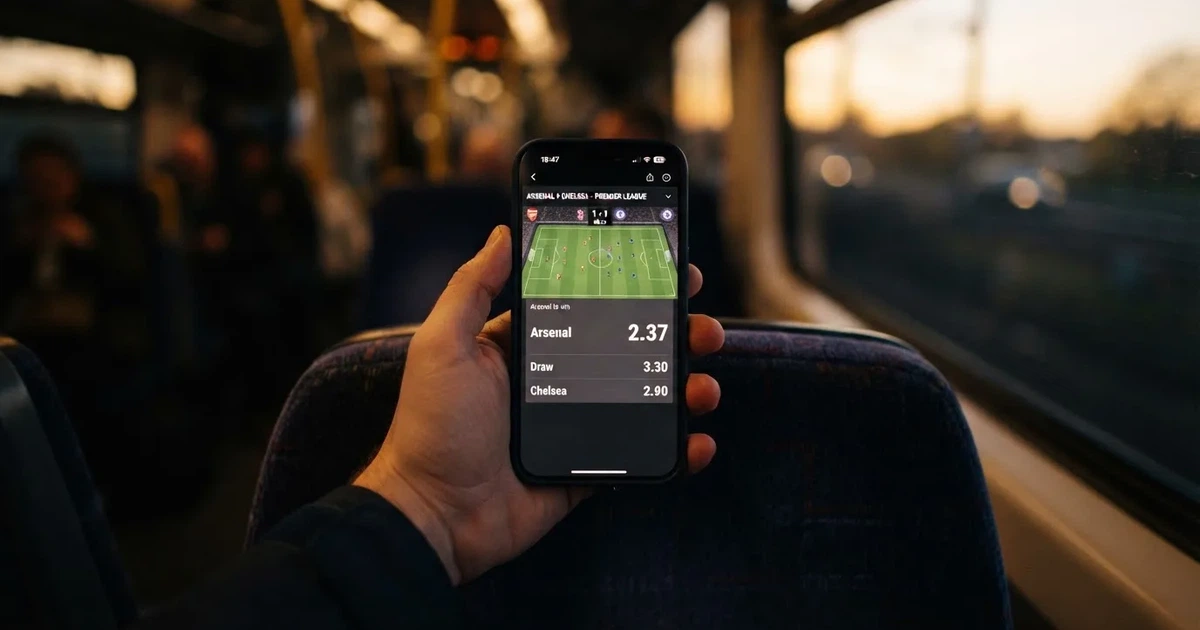
A betting app is a margin dressed in a touchscreen. The numbers on the slip look small — 6/4, 11/2, 6.00 in decimal — and the difference between a sharp bookmaker and an average one is not the brand, the colour of the home screen or the size of the welcome splash. It is the per-cent the operator keeps from every pound wagered, the conditions bolted onto every free bet and the speed at which winnings reach a current account when they do. This page compares ten licensed apps against those three things, in that order, because that is the order the cost falls on the bettor.
Current as of 27 October 2026 against the Gambling Commission’s public register.
The legal frame every UK betting app sits inside
British punters are the most protected in Europe, and the protection starts with a single licence. A bookmaker taking remote bets from a customer in England, Scotland or Wales needs a Gambling Commission licence, regardless of where the operator is incorporated. Since the Gambling (Licensing and Advertising) Act 2014, the test is where the customer is, not where the company sits — a Curaçao, Maltese or Gibraltar licence is no substitute. The Commission’s public register is searchable by business name, trading name, domain or account number; that register is the only place a licence can be confirmed.

The Gambling Act 2005 covers Great Britain only. Northern Ireland runs on older legislation, so a “GB-licensed” operator is the correct term for anything covered here. Several well-known high-street names sit under one parent licence — Ladbrokes and Coral run together, Paddy Power and Betfair as well — which is why the register lists a single licence against multiple brand names and not ten separate companies. Every remote licence comes in named categories: general betting standard (real events), general betting standard (virtual), general betting limited, pool betting, and the betting-intermediary permit that exchanges use. The “remote” prefix matters; a remote licence is what governs an app, not a high-street betting-office permit.
The Commission’s bite covers identity, age, money-laundering and marketing. Customers must be 18, and the name, address and date of birth are verified before the first deposit or stake, even with a free bet or bonus. From 7 May 2019 that verification has been a precondition, not an option; there is no anonymous play at a licensed app. Credit cards are banned for gambling (LCCP 6.1.2, since 14 April 2020), and the ban reaches credit-card-funded e-wallet top-ups. Debit cards and bank-based payments sit outside that ban. The Commission’s enforcement powers run to licence action, fines, personal-management letters and, on the civil side, work with payment providers, search engines and registrars.
The bettor pays no UK tax on winnings. That is general information, not advice; a professional gambler asks HMRC or a tax adviser. General Betting Duty sits on the operator’s gross profits at 15% during 2026, with a remote-gambling uplift to 25% from 1 April 2027 on most remote bets (UK horse racing, self-service terminals, pool and in-person bets stay at 15%). Whether any operator passes duty through into worse prices is not established, and writing it as if they do is guesswork.
Safer-gambling tools baked into every licensed app
Protection is not a single rule but a stack of them, and every licensed app must carry the same foundations. GAMSTOP — the national multi-operator online self-exclusion scheme — has been a mandatory licence condition since 31 March 2020: a single registration stops the customer opening new accounts with any GB online operator, period, and stays in force for at least the chosen term (six months, one year, five years, or five years with auto-renewal) and for seven years beyond it unless removed on request. Unibet’s site sets out the wider toolkit — deposit limits, a Player Profile test, product restrictions and self-exclusion — and these are typical of the licensed set rather than one operator’s kindness. William Hill runs a 24/7 customer-service team and the standard time reminders, time-outs and deposit-limit stack. Fitzwilliam links to GambleAware, GamStop and Gamblers Anonymous from the footer. Star Sports exposes deposit limits, a Play Break facility and self-exclusion from My Account. Dabble lists deposit limits and cooling-off periods on its helpdesk.

The financial-vulnerability check (LCCP condition 3.4.4, in force since 30 August 2024) is not an income test. It is a public-record check against bankruptcy or county-court judgments, applied once a customer’s deposits minus withdrawals pass £150 over a rolling 30 days, since 28 February 2025. Financial risk assessments — the “affordability checks” of the press — have been announced in a staged plan, with no start date. The headline distinction matters: a vulnerability check happens at a known threshold; a financial risk assessment is something the industry is still preparing for.
Help is the part the rules do not need. GamCare runs the National Gambling Helpline; GambleAware funds treatment and education; the NHS runs regional gambling clinics; Gamblers Anonymous runs meeting groups. A licensed app will surface at least one of these in its safer-gambling section, and the safer-gambling tools listed above turn into a concrete limit — “no more than £200 a week” — inside the customer account, not just on the help page.
Why most crypto or “no ID” apps in this market are not what they seem
Many of the searches that target anonymous betting, bitcoin sports-betting apps or providers not on GAMSTOP run into the same brick wall at the British border. A bookmaker without a Gambling Commission licence is an offence against section 33 of the Gambling Act 2005 aimed at the operator: on summary conviction up to 51 weeks’ imprisonment and a fine, six months in Scotland. That is the operator’s risk. The customer’s risk is different — and arguably larger, because it is harder to spot. An unlicensed site provides no GAMSTOP coverage, no Commission complaints route, no approved alternative-dispute-resolution body and no British consumer redress if funds are withheld; the 10x bonus cap, the £150 vulnerability check, the credit-card ban and the verification rules do not apply. Saying an offshore app is “legal to use” is not the same as saying it is protected to use.
That is the frame before any crypto is mentioned. Cryptocurrency is the second layer, not the first. No British statutory prohibition on crypto deposits at licensed operators has been established, but every licensed site that accepts a deposit runs source-of-funds and anti-money-laundering checks the moment a customer’s activity looks out of profile, and a crypto-funded deposit triggers that profile faster than a £10 debit-card top-up. A bettor asking for the “best crypto sports-betting app” is, in practice, asking for a site that is not subject to any of the rules above. The honest answer is that the licensed app does not have a “crypto-friendly” feature — it has a debit-card, bank-transfer or e-wallet cashier with a different value proposition.
The pragmatic alternative is straightforward. Where speed or smaller minimums matter, a licensed operator offers e-wallets — NetBet’s app lists Instant Payments to bank, Apple Pay, PayPal and debit card — that the offshore market would call anonymous but that, at a licensed site, still run inside the same identity check, the same GAMSTOP coverage and the same Commission complaints channel. The trade-off is unfashionable to pitch: convenience costs the protection, and the protection is the only thing the offline customer never wins back.
What a free bet costs the punter who claims it
A “free bet” sounds like a gift. The mechanism is closer to a price. Two structural rules decide what it is worth; both come from the offer’s own terms, never from the headline.
The first is the wagering requirement — the multiple of the bonus that has to be turned over before any winnings become withdrawable. The second, since 19 January 2026, is the UK-wide cap: wagering requirements on bonuses are limited to 10x (a £10 bonus at 50x wagering — £500 of bets — is unlawful under the cap, and no more than £100 of turnover is required on a single bonus). Mixed-product promotions — “bet on football to get free spins” — are banned outright.
Coral’s £40-in-free-bets welcome is a clean illustration of how the same headline splits once the cost is read. Place a sports bet of £20 or more at minimum odds of 2.0 (evens); £40 in free bets land within seven days; they expire seven days after issue; only GB customers who opt in qualify. The headline reads “free”. The arithmetic reads three things: a minimum qualifying price (2.0 cuts out most short-odds favourites), a deadline (seven days from issue, not from sign-up), and a stake not paid back with a win. On a £40 free bet at 3.0 the stake is forfeited if the bet wins, so a winning return is £80 — and the bettor keeps £80, not £120. That is the real cost of the word “free”.
Midnite’s mid-week price boosts run under maximum-stake limits rather than a heavy wagering factor — a different shape, where the cost shows up as a cap on stakes rather than a turnover multiple. BetVictor’s app matches boosted odds and free bets to selected events under its customer terms. Lottoland UK’s current app welcome is the casino-shaped version: a £20 stake on selected slots earns 100 free spins on a named slot with no wagering and a 30-day expiry, running until 14 February 2027 — useful context, because it shows the 10x cap and the mixed-product ban have changed what landing pages can say.
The short version of the cost: every “free bet” cedes either stake return, qualifying odds, time, or stake size. A 10x wagering cap is a £100 ceiling on turnover; an expiry is a deadline; a minimum price cuts the markets the bonus can be used on. None of these is small, and all of them are in the terms before the bettor installs the app.
Payments and payout speed: where the second bill lands
The cashier section is where the second hidden cost lives. Three things move a betting app off the high-street average: whether deposits are free, whether withdrawals clear in hours or days, and which methods the rules let an operator offer.
DAZN Bet publishes its deposit floor cleanly: £5 by debit card, Apple Pay, Paysafecard, Trustly and Skrill, £20 by PayPal, no processing fees on any of them. That is the lower end of the licensed market and the only place a £5 minimum matters for cost — every pound below a £5 deposit floor is a pound a bettor cannot place, and the cost of that floor is zero interest, plus the value of the bet never made. bet365 funds accounts by debit card, PayPal and Apple Pay, with Face ID login on supported devices; that trio covers most of the British market and explains why operators keep landing on the same list. NetBet layers Instant Payments to bank, Apple Pay, PayPal and debit card, with Face ID or Touch ID login on top. The speed gain on Instant Payments-to-bank is the only place the cashier changes the punter’s week, not just the punter’s deposit.
Withdrawal speed is the second line item. Bank rails clear in one to three working days for most licensed UK apps; an e-wallet like PayPal can settle within hours of approval. The determinant is not the operator’s marketing copy; it is the withdrawal queue inside the payment team and the source-of-funds checks that trigger when a withdrawal looks out of profile. A large first withdrawal after a small-deposit history will pause, regardless of the operator. That pause is not unique to one brand.
Credit cards are banned for gambling in Britain (LCCP 6.1.2). The ban reaches credit-card-funded e-wallet top-ups as well. A bettor trying to fund from a credit card — their own or one topping up Skrill — meets the same wall at every licensed app. That makes debit card, bank transfer and bank-rail e-wallets the only routes in, which is why “Apple Pay and PayPal” is the recurring cashier headline across the licensed set.
The third cost is the one that never gets marketed: identity checks, done before the first deposit, attached to every bonus and every free bet, repeated if the customer’s profile changes. There is no anonymous play at a licensed app, and there is no version of this market where that changes. A first-time user opens the app, hits the deposit button, gets bounced into a verification flow, and comes out the other side with either a confirmed account or a partial one that cannot yet withdraw. The cost of verification is friction at sign-up; the benefit is that the same friction prevents an unlicensed operator from keeping the punter’s balance indefinitely.
What makes a betting app run well on a phone
The mobile experience is more than a screen size. Four things separate a serious betting app from a wrapped website: the login, the bet-slip layout, the in-play rendering and the fingerprint or face-ID support.
bet365 supports Face ID login on supported devices, sits behind Face or Touch ID where the hardware allows, and bills itself as the most-downloaded sports-betting app in the UK on its App Store listing — a marketing line that, on iOS download ranking, is approximately accurate. Fafabet lists Face ID and Touch ID login with contact support routed through the account settings. NetBet’s app pairs Face or Touch ID with Apple Pay and Instant Payments to bank, which is the most complete identity stack of the trio. Kwiff’s 17+ App Store rating is the standard for this set; the 18+ age gate sits behind it inside the app.
The bet-slip is where punter-time is actually spent. Kwiff, Betfair and Unibet lead on in-play and bet-builder depth; Spreadex runs one-click, auto and partial cash out, with Bet Builder across fixed odds or spreads and live streaming of UK and Irish horse racing, greyhounds, tennis, NFL and selected football. Vbet combines Bet Builder with pre-match and in-play, live streaming and a live calendar. The slip is where the punter pays for the cleverness, because features that lower friction — auto cash-out, one-click, partial close — make overspend easier as well as faster. The risk is not the app; it is the user holding it.
In-play and streaming are the third dimension. Betfair’s app offers Bet Builder, free live streaming of UK and Irish horse racing and football, and a 90-Minute Payout market on the football match result. The same operator calls itself the most-downloaded app on its listing; that combination — streaming plus a payout market that settles inside the match — is the only one that flips in-play into a value-extraction tool rather than a novelty. Spreadex covers UK and Irish horse racing, greyhounds, tennis, NFL and selected football for streaming. Vbet’s listing sets out a live calendar with results and stats. Where streaming and an in-play market sit on the same operator, the app does something a single-event website cannot.
Betting exchanges sit in this segment too. Smarkets offers two-factor authentication, live charts and an order-book view, a quick trade-out option and 24/7 live chat — a different shape from a fixed-odds bookmaker, because the customer is laying as well as backing. The exchange is licensed as a betting intermediary, not as a general betting standard operator, which is the right shape for what it does.
Where the licensed apps overlap on sport
A market licence is a gateway, not a guarantee. The Commission registers what an operator may do; the operator’s app then decides what to expose. Football is on every licensed app in the registered set, and on most of them at depth — Premier League, Champions League, the EFL, the Scottish leagues, Europa and Conference. bet365’s tie-up is the official global betting partner of the UEFA Champions League, which is the only sponsorship-of-this-shape on the licensed side and the only one that gets an operator named against a tournament at regulator level. Horse racing is on the same apps for the most part, with Betfair and Spreadex using free live streaming of UK and Irish meetings, and BOG (best odds guaranteed) the standard concession. Greyhounds, tennis, NFL, basketball, cricket, rugby, golf, boxing and MMA all land on the betting menus of the registered set. Ladbrokes and Coral run off the same pool — that is why one operator’s racing menu looks like the other.
Esports and virtuals sit under their own licence categories on the Commission register. Esports is treated like any other event; virtuals are a separate licence category. Where a punter sees “virtual football” on the slip, the operator is licensed for that category separately. The slant of this is small to the customer and large to a comparator — a real-event licence does not by itself cover virtual events, and the register lists the difference.
Spread betting adds a separate shape to the same app. Spreadex combines fixed-odds and spread betting under one login, regulated by the Gambling Commission for fixed-odds and by the FCA for spread betting. Spread betting losses can exceed the deposit. That is the line on the FCA’s spread-betting protection: the customer trades against the bookmaker on every market, and the loss on a single position is uncapped. It is not a free-bet loss; it is a margined-trade loss. Same app, different cost.
The Tote covers pool betting — Placepot, Jackpot, Scoop6 and Quadpot — plus the World Pool and international pools on French PMU, US and Hong Kong. Off-course pool betting is its own licence category, separate from the standard remote betting licence. A punter looking at the Tote is looking at a different operator shape from a fixed-odds bookmaker.
How the ten licensed apps compare
The table below covers the ten operators the Gambling Commission’s public register lists against a remote general betting standard (real events) licence and that the page reviews in turn. The four columns read the same things across the ten: who runs it, which licence covers it, and what each operator’s own terms say about the cost topics above. Column headings are matters, not branded lines; the wording on the page is not the wording here.
| Brand | Gambling Commission remote licence number and licence holder | What the operator’s own terms state on the key’s subject |
|---|---|---|
| bet365 | 055444-R-348472-006 (Commission account 55444), Hillside Technology Limited | Debit card, PayPal, Apple Pay funding, Face ID login on supported devices, 18+ age gate, named as the official UEFA Champions League partner |
| Unibet | 045322-R-324275-019 (Commission account 45322), Platinum Gaming Limited | Operated since 1999; deposit limits, Player Profile test, product restrictions and self-exclusion under safer-gambling tools, with live chat and links to BeGambleAware, GamCare, GAMSTOP, Gambling Therapy and the BGC |
| Coral | 054743-R-330863-014 (Commission account 54743), LC International Limited | £40-in-free-bets welcome on a £20 qualifying bet at min odds 2.0, free bets issued within 7 days and expiring 7 days after issue, GB-only and opt-in |
| Spreadex | 042103-R-323654-007 (Commission account 42103), Spreadex Limited | Fixed-odds regulated by the Commission; spread betting by the FCA with losses that can exceed the deposit; one-click, auto and partial cash out and live streaming on UK and Irish horse racing, greyhounds, tennis, NFL and selected football |
| Betfair Sportsbook | 0 45196-R-323776-008 (Commission account 45196), PP Gaming Limited | In-play betting, Bet Builder, free live streaming of UK and Irish racing and football, and a 90-Minute Payout market on the match result |
| BetVictor | 0 39716-R-319209-020 (Commission account 39716), BetVictor Limited | Approximately 80 years of operating history; iPhone and iPad app pairs sportsbook with online casino (roulette, blackjack, live casino, Mega Moolah jackpots); regular price boosts, acca offers and free bets on selected events under its customer terms |
| Smarkets | 0 46785-R-330211-009 (Commission account 46785), Smarkets Limited | Two-factor authentication, live charts and order-book view, quick trade-out, 24/7 live chat; betting-intermediary licence covering exchange customers |
| Star Sports | 0 54633-R-330844-010 (Commission account 54633), Star Sports Limited | Deposit limits, Play Break and self-exclusion in My Account; app available in the UK and Ireland |
| NetBet | 0 39195-R-319448-027 (Commission account 39195), NetBet Enterprises Limited | Instant Payments to bank, Apple Pay, PayPal and debit card; Face ID or Touch ID login |
| William Hill | 0 39220-R-319429-019 (Commission account 39220), WHG (International) Limited | 24/7 in-site customer-service messaging; time reminders, time-outs and deposit limits under safer-gambling tools |
(The headline pairing of brand to public-register detail is taken from research against the Gambling Commission’s public register at the date shown above; any licensed brand not listed has been omitted by editorial choice, not because it lacks a licence.)
The ten operators, reviewed
The reviews that follow run in the same order research names them, not in a personal ranking. Each ends on a verdict that takes a position: which operator the evidence supports, for whom, and what the licence tells the reader that the marketing does not.
bet365 — official Champions League partner, payments on every rail
bet365 runs on Hillside Technology Limited’s Commission account 55444, with a remote general betting standard (real events) licence and an intermediary licence that covers its exchange-style products. The app funds through debit card, PayPal and Apple Pay, with Face ID login on supported devices, and the App Store listing names the brand as the official UEFA Champions League partner — the only operator the registry ties to a major tournament at regulator level. The app is the most-downloaded sports betting app in the UK by App Store ranking.
The cost picture is the standard one with two edges cut off. bet365’s BOG (best odds guaranteed) on UK and Irish horse racing pays out at the higher of the taken price and the starting price, which is a real concession; the margin on the standard 1X2 football line is competitive rather than best-in-class; in-play pricing moves quickly and gets suspended during goals. The 18+ gate sits inside the app, the verification flow runs before the first deposit, and the safer-gambling tools on the account match the registered-set baseline.
Verdict: the strongest general-purpose app on the registered set for in-play and streaming, and the only one the Commission’s framework attaches to a tournament of this size. For the punter who wants a single app for football, racing and live betting it is the default pick; for the punter who already uses a tight specialist app it is the comparison brand.
Coral — £40 in free bets at the cost of a 2.0 minimum
Coral sits on LC International Limited’s Commission account 54743 — the same parent that runs Ladbrokes — under both a remote general betting standard licence and a betting-intermediary category. Coral’s current sports welcome is the £40-in-free-bets on a £20 qualifying bet at minimum odds of 2.0 (evens); free bets land within seven days and expire seven days after issue, with GB-only and opt-in eligibility.
The cost of “free” here is the same as elsewhere in the registered set: the £20 stake must be at 2.0 or longer (which excludes most short-odds favourites), and the free-bet stake is forfeited if it wins. The product range is broad, the racing menu shares rails with Ladbrokes, and the safer-gambling tools land on the registered-set baseline.
Verdict: a strong welcome for the punter whose first bet would naturally land at 2.0 or longer — not a match for the punter whose first bet is a 1.4 shot. For the registered set as a whole, Coral’s value sits in the welcome; the daily-account value sits in the racing and football combination.
Spreadex — fixed odds and spread betting on one login
Spreadex runs on Spreadex Limited’s Commission account 42103. Fixed-odds betting is regulated by the Gambling Commission; spread betting is regulated by the FCA, and Spreadex’s site makes clear that spread betting losses can exceed the deposit. The app carries one-click, auto and partial cash out, Bet Builder across fixed odds or spreads, and live streaming of UK and Irish horse racing, greyhounds, tennis, NFL and selected football.
The cost here is two bills under one login. Fixed-odds markets attract the registered-set margin; spread-betting markets carry the FCA’s spread-betting risk, with no deposit cap on losses and a margin call on every position. Two bankrolls would normally be run side by side, because the loss shape is materially different — fixed odds loses the stake; spread betting can require top-up funds mid-event.
Verdict: the only major registered app with a real spread-betting menu. For the punter who treats fixed odds and spreads as separate disciplines Spreadex is the only licensed single-login option; for the punter looking for a simple app, the spread book is a hazard, not a feature.
Betfair Sportsbook — exchange depth plus a payout market
Betfair runs on PP Gaming Limited’s Commission account 45196, the same parent that runs Paddy Power. The app combines in-play betting, Bet Builder, free live streaming of UK and Irish horse racing and football, and a 90-Minute Payout market on the football match result — a market that settles inside the match if a goal decides it, which is the closest the registered set gets to an in-play hedge.
The cost is the registered-set standard on the bookmaker side and a commission structure on the exchange — Betfair charges a commission on net winnings on the exchange product, in line with its market position as a betting intermediary. The two products can sit on the same wallet in many configurations, and the smarter punter keeps them on the same login with separate bankrolls. The 90-Minute Payout market is the differentiator; the depth of the exchange is the depth of an exchange.
Verdict: the strongest single-login app on the registered set for an in-play punter who wants both the bookmaker and the exchange. For the punter who only plays one side, the matched-bet rules and commission structure dominate the cost discussion.
BetVictor — eighty years of operating history, casino in the same app
BetVictor sits on BetVictor Limited’s Commission account 39716, with a remote general betting standard (real events) licence. The app combines a sportsbook with an online casino — roulette, blackjack, live casino and Mega Moolah jackpots — and its listing claims roughly 80 years of operating history. Regular price boosts, acca offers and free bets on selected events run on the app under its customer terms.
The cost discussion runs through the welcome and into the price-boost shape. BetVictor’s boosts run on selected events with maximum-stake limits; the welcome offers shown in the app are governed by the same 10x wagering cap and the mixed-product ban that shape the rest of the registered set. The casino product is the same app, the same wallet and a separate licence under the Commission’s LCCP — not a separate registration.
Verdict: the casino-plus-sportsbook combination is a genuine convenience for the punter who plays both, and price boosts on selected events are a fair concession. For the punter whose betting is sports-only, the casino product is unnecessary friction on the verification flow.
Smarkets — exchange on a betting-intermediary licence
Smarkets operates on Smarkets Limited’s Commission account 46785 under a betting-intermediary licence, which covers exchange customers rather than fixed-odds bookmaker customers. The app supports two-factor authentication, live charts and an order-book view, a quick trade-out option and 24/7 live chat support — an exchange-style app rather than a fixed-odds app.
The cost here is exchange commission on net winnings, in line with Smarkets’ published schedule. Two-factor authentication and an order-book view are competitive advantages on the security and UI axes. The product surface is narrower than a fixed-odds bookmaker; the depth on the markets that matter to exchange customers is comparable to Betfair’s.
Verdict: the better exchange-app alternative on the registered set for the punter who already runs a Betfair account and is comparing fees, and the default pick for the punter starting an exchange book from scratch. For the punter who only places fixed-odds singles, the exchange has no product to offer them.
Star Sports — high-street name with a mobile app
Star Sports runs on Star Sports Limited’s Commission account 54633, with a remote general betting standard (real events) licence. The app is available in the UK and Ireland, and My Account carries deposit limits, a Play Break facility and self-exclusion in line with the registered-set baseline.
The product surface is closer to a traditional bookmaker than to the racing-heavy specialists, with a broad football menu and a smaller but live racing menu. Star Sports is not a deep in-play app and not an exchange; the value is in the everyday account pricing on football and the racing concessions. The app’s iOS rating and the safer-gambling stack are the registered-set standard.
Verdict: a second-tier football-and-racing app rather than a primary one. For the punter with a Star Sports shop book the app extends the account well; for the punter with no prior relationship, the registered-set leaders have stronger in-play and streaming.
NetBet — Instant Payments, Apple Pay and biometric login
NetBet operates on NetBet Enterprises Limited’s Commission account 39195. The app supports Instant Payments to bank, Apple Pay, PayPal and debit card, with Face ID or Touch ID login. The product surface covers the registered-set baseline — football, racing, a working in-play menu — without the scale of the leading bookmakers.
The cost is the cashier speed. Instant Payments to bank on a licensed UK app moves withdrawals in hours rather than days; Apple Pay and PayPal close the deposit speed; biometric login closes the speed-of-use axis. The combination is more complete than many of the larger names’ cashier stacks.
Verdict: the strongest cashier shape on a mid-size app, and the registered-set pick for the punter whose main complaint about bookmakers is withdrawal speed. For the punter who values in-play and streaming depth, the registered-set leaders are stronger.
William Hill — 24/7 customer service and the registered-set baseline
William Hill runs on WHG (International) Limited’s Commission account 39220 — the same parent that runs several historical high-street brands — under a remote general betting standard (real events) licence. The app’s customer-service team runs 24/7 via in-site messaging; safer-gambling tools include time reminders, time-outs and deposit limits.
The cost discussion here is support and reach. William Hill’s 24/7 messaging is the widest customer-service window on the registered set for a UK punter; the price-boost and acca-offer routine is steady rather than spectacular; the racing concession is standard. The product surface is the registered-set baseline across football, racing, tennis, golf and the rest of the price-feed.
Verdict: the strongest customer-service window on the registered set at the price of slightly weaker streaming and in-play depth than the leaders. For the punter who values round-the-clock help and a recognisable high-street brand, William Hill is the conservative pick.
Kwiff — small registered app, 17+ App Store rating
Kwiff operates on Eaton Gate Gaming Limited’s Commission account 44448, with a 17+ App Store age rating that reflects a softer line than the 18+ inside-registration check that the licensing rules require. The brand markets itself on “surprise” mechanics that stake customers randomly — the cost shape here is the registered-set baseline on a smaller in-play book, with a marketing-led onboarding.
The product surface is narrow by registered-set standards — football, racing and a handful of in-play markets — but the verification flow, the safer-gambling tools and the Commission oversight sit on the same baseline as the larger names. The 17+ App Store rating is a marketing-shop setting rather than a real-world 18+ check; the age gate inside the app and on the Commission’s rules is 18.
Verdict: a smaller registered app whose marketing-led onboarding is the registered-set baseline underneath. For the punter who wants a single-account relationship with a UK-licensed operator, the larger registered apps carry the same protections with deeper in-play and streaming; for the punter who has decided on Kwiff specifically, the licensing status is in line with the leaders.
What this page settles and what it does not
Three points are settled by the framework above, not by a brand. First, a UK punter who plays at any of the ten operators on the registered set is inside the same identity-check, age-check, GAMSTOP and safer-gambling regime; the registered baseline is the same. Second, a free bet or a bonus on any of them costs the customer a stake-not-paid-back, a minimum qualifying price, an expiry or a stake cap — and the 10x wagering cap and the mixed-product ban shape what the welcome page can say. Third, a customer-facing crypto-friendly or anonymous app is, in Britain, an app that is not subject to the regime above, and the customer pays for the absence of that regime with the absence of the Commission’s protections.
What this page does not settle is which operator is “best”. The Commission’s register is not a ranking; the absence of a brand is editorial, not regulatory; the value of a welcome offer is a six-week function of the customer’s own betting. The honest frame is: pick from the registered set, compare on margin and cashier, read the wagering terms and the time limits — and stop comparing once the specifics on the operator’s own terms page match the bettor’s own stakes.
Frequently asked questions on UK sports betting apps
Are sports betting apps legal in Texas?
Texas does not have a regulated online sports-betting market. Apps offered to Texas residents are typically licensed in other jurisdictions, often outside the United States, and the legal position depends on where the operator is based and how the customer funds the account. US state law changes frequently, and the answer for a customer in Texas is usually a punt on a state-by-state basis rather than a national licence.
How do sports betting apps work?
A licensed UK app verifies the customer’s identity (name, address and date of birth), enforces the 18+ age check, registers the customer with GAMSTOP unless self-excluded, and then carries the same bet types and markets the website would. Decimal odds are the default in most apps; each-way and acca bets show the per-leg stake on the slip; cash-out lets the customer close a position early on a managed margin.
Are sports betting apps legal in California?
California’s online sports-betting market remains restricted at state level, with several ballot attempts to legalise it failing. Apps serving California residents are typically licensed outside the United States; the legal status varies by jurisdiction, and the position is similar to Texas for the customer rather than for the operator.
How can it be checked that a bookmaker holds a Gambling Commission licence?
The Commission’s public register is searchable by business name, trading name, domain or account number. A licensed UK operator appears on the register with its remote licence category (general betting standard, betting intermediary, pool betting and so on). If a brand does not appear under its trading name, the licence check is the operator-side of the brand-name test.
How is the return on a bet worked out from the stake and the odds?
For decimal odds, the return is the stake multiplied by the odds; the profit is the stake multiplied by the odds minus one. A £10 single at 3.0 returns £30 (£20 profit) if it wins; the same £10 at 1.5 returns £15 (£5 profit). Combination bets multiply the legs into a single price, so the same £10 on two legs at 3.0 and 4.0 returns £120 (£110 profit) if both win.
What is the bookmaker’s margin and how can it be seen in the odds?
The margin is the per-cent of every pound wagered on a market that the bookmaker keeps on average. For a 1X2 football market with home win at 2.10, draw at 3.40 and away win at 3.60, the implied probabilities sum to more than 100% — around 105–107% in normal pricing — and the excess over 100% is the margin. A lower excess is a sharper bookmaker; a higher excess is a softer one, and the difference is the per-cent the punter pays for the same market across the registered set.
Payments & apps – Footy Tips
Content created by the «Footy Tips» team
