
Online darts betting in 2026: offers, odds, and what they really cost
 Available in US
Darts looks cheap to bet on. The tournament is on for three weeks at Christmas, three minutes at the oche decide a leg, and a £10 stake at 6/1 reads £70 profit on the betting slip without anyone pausing over the number. The reason it looks cheap is the same reason it is not: every price a bookmaker prints carries a margin, and the margin is the slice of every pound that never goes back out as winnings. Most bettors will never see it because the odds move in small steps and the slip shows the upside, not the cut. The whole point of betting on darts in Great Britain is understanding that cut well enough to know when a price is fair, when an offer is worth claiming, and when the better decision is to leave the wager on the counter.
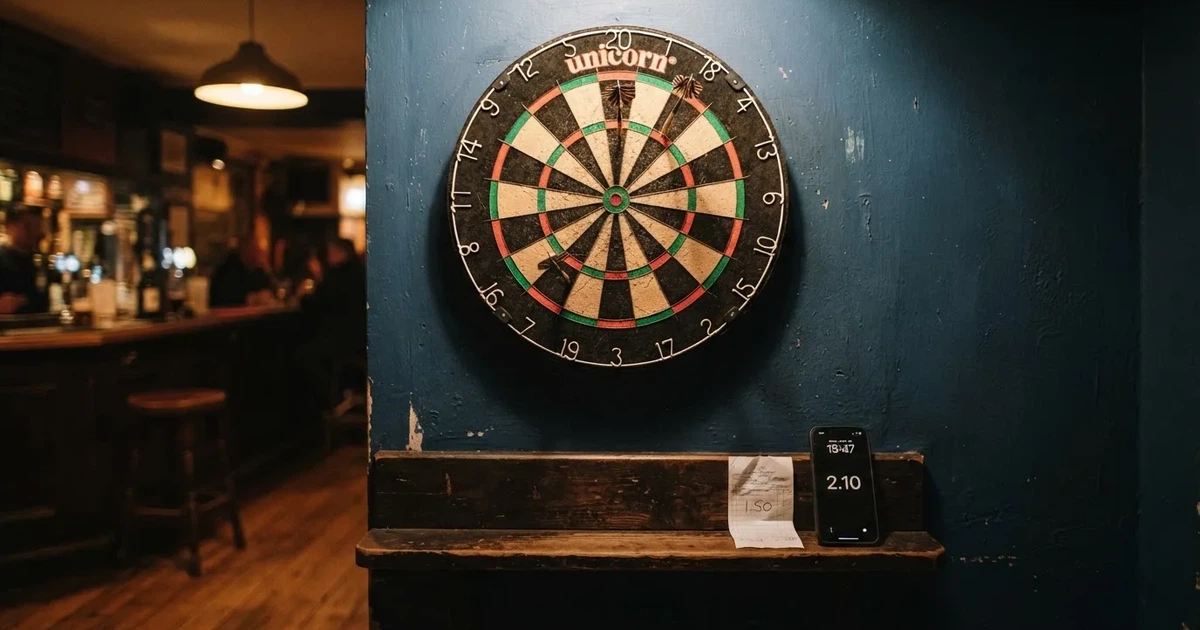
This page walks through what darts betting actually is in the licensed British market in 2026, what it costs, and where the offers and the odds come apart from the marketing. The material below is current as of 27 October 2026 and the licences were verified against the Gambling Commission’s public register. No figure on this page is invented; where a detail is missing, it is because no source for it exists, and the page says so rather than guessing.
What the law actually says about betting on darts in Great Britain
The headline rule is short and total: any operator taking bets from customers in Great Britain needs a Gambling Commission licence, wherever the operator itself is based. That is the effect of the Gambling (Licensing and Advertising) Act 2014 amending sections 33 and 36 of the Gambling Act 2005. There is no separate whitelist of sports, no separate whitelist of markets, no separate whitelist of payment methods. Darts is treated like any other real sporting event, and the only test of whether a brand may take a darts bet from a customer in England, Scotland or Wales is whether the brand appears on the Commission’s public register under a remote general betting standard (real events) category.

Northern Ireland sits outside the 2005 Act. A licence that covers Great Britain does not, on its own, regulate Northern Ireland, and the page sticks to the term “Great Britain” or “GB-licensed” rather than “UK-licensed” for that reason. It is a small distinction but a real one: a bookmaker serving a customer in Belfast is operating under different law from a bookmaker serving a customer in Bristol, and the difference has shown up in High Court cases over the years.
Why the register matters more than the brand
The Commission’s public register is searchable by business name, trading name, domain or account number, and it is the only document that proves a brand holds a licence. A .co.uk address proves nothing — licensed operators routinely use .com, and unlicensed operators routinely buy .co.uk domains. The brands reviewed further down all appear on that register under the licences named in their own terms. None of them is the only licensed brand in the country. The register lists far more names than any review can cover, and any comparison that claims a “only licensed” status for one of them is misrepresenting both the register and the law.
The categories on the register matter, too. A remote general betting standard (real events) licence covers darts. A remote general betting standard (virtual events) licence covers simulated fixtures. A betting intermediary licence is what runs an exchange. These are different permissions with different licence conditions, and a brand whose licence is limited to one category cannot lawfully offer bets in another. The pages of the register spell that out per operator; the reader who wants certainty before staking money should look there, not at the homepage.
What it costs to operate, and what that does to the odds
Every licensed bookmaker pays General Betting Duty, currently 15% on gross profits from general betting, with a separate remote rate applying from 1 April 2027 (25% on remote gross profits, while bets on UK horse racing, self-service terminal bets, pool betting and in-person betting stay at 15%). The duty sits inside the operator’s cost base. Whether a bookmaker passes it on through the odds is not established; what is established is that no duty is charged on the customer. The bettor pays no tax on winnings in Great Britain — for most people, that is the end of the conversation. A professional gambler has a separate conversation to have with HMRC.
The duty is not the only operator tax. The Commission’s statutory levy is a separate charge, and the operator’s own compliance, marketing and platform costs sit on top. None of that is news to the bettor, but it explains why a margin of 4-6% on a darts match is normal and a margin of 1% is exceptional. The difference between an exceptional price and a normal one is the slice the bookmaker keeps.
Safer gambling: what the licence actually buys
A Gambling Commission licence is not a quality mark on the odds. It is a set of obligations on the operator about how it treats the customer, what it must offer in terms of limits, and where the customer can turn if something goes wrong. Reading those obligations as a list of features the bettor gets to switch on is the wrong frame. They are the floor; the interesting question is how they interact with a real darts betting account.
Identity checks before the first deposit
Since 7 May 2019, every licensed remote bookmaker has to verify a customer’s name, address and date of birth before that customer can deposit or gamble, including with a free bet or a bonus. There is no anonymous play at a licensed site. For most readers this is invisible: the bookmaker runs a soft credit check or a database check, the page refreshes, and the deposit button works. For some readers — those with thin credit files, recent address changes, or names that don’t match a database cleanly — the check can take hours or days, and a deposit placed before verification clears can be reversed.
That friction is the price of the other protections. The bet is matched to a verified identity, so a dispute can be traced, a self-exclusion can be enforced, and a problem gambler who has closed one account cannot simply open another at the same brand.
GAMSTOP and the no-bypass rule
GAMSTOP is the national multi-operator self-exclusion scheme and a mandatory licence condition for every online operator since 31 March 2020. Exclusion periods are six months, one year, five years, or five years with auto-renewal, and after the minimum period the exclusion runs on for a further seven years unless the customer asks GAMSTOP to remove it. Once a customer is registered, no GB-licensed online bookmaker may accept a deposit or a bet from them. That is the rule. The branded sites and apps respect it; the betting shops run a separate scheme.
The scheme covers every brand reviewed below. None of them is a route around GAMSTOP. The phrase “not on GamStop” attached to a brand advertises, in most cases, an offshore operator with no British licence at all. That operator does not have to verify identity before the first deposit, does not have to offer GAMSTOP, and does not have to comply with the bonus cap or the vulnerability check. It also offers the customer no British route to complain and no guarantee that funds will be paid out. The page does not direct readers to unlicensed brands and does not consider the loss of protection a minor detail.
Vulnerability checks and deposit limits
Two newer controls are worth knowing in detail because they reach into the betting slip in ways the marketing copy does not explain.
A financial vulnerability check runs against public records — bankruptcy, county court judgments, IVAs, the kind of debt markers that show up in a search rather than a credit reference file. The trigger is a rolling 30-day net deposit (deposits minus withdrawals) of more than £150. Above that level, the operator has to run the check; below it, the bettor will not notice. The check is not an income check, and the result is not a credit score. It is a flag for the operator to consider whether the customer is in a position to absorb the bets they are placing. The bettor is not declined on the strength of one marker; the operator is obliged to look, and to act on what it sees, in line with its own social responsibility procedures.
Deposit limits work differently. Under Remote Technical Standards rule 12, the operator must offer a gross deposit limit on a fixed time frame — daily, weekly or monthly — that the customer can set and lower at any time and raise only after a cooling-off period. The first changes have applied since 31 October 2025; a second phase was postponed to 30 September 2026, and whether it is live in 2026 is not established in the public materials. There is no state-set ceiling on what a bettor may deposit; the ceiling is the customer’s own choice, set inside the limits the operator is obliged to offer.
Financial risk assessments — the press’s “affordability checks” — were announced by the Commission in a staged plan published on 7 July 2026 with no start date. The page records this as “announced, staged, no start date” rather than “in force”, because that is what the source says.
Where to get help
GamCare runs the National Gambling Helpline. GambleAware funds treatment and research. The NHS runs gambling clinics in several regions. Gamblers Anonymous runs peer-support meetings. These are the routes that exist whether or not a self-exclusion is in place, and they are free. The licensed operators link to them on the safer-gambling page of their sites and apps because the licence conditions require it.
Bonus offers and free bets on darts: the price of the headline
The headline number on a welcome offer is the number the marketing puts first. A £40 in free bets banner sits next to a £20 qualifying bet line, and the reader who skims the page sees the larger number twice for every one time the smaller one appears. The arithmetic underneath the headline is the part the page works through here.
What the licence cap means for bonuses
From 19 January 2026 the Gambling Commission’s promotion rules cap wagering requirements on bonuses at 10x. A £10 bonus with a 50x wagering requirement needs £500 of qualifying betting to clear; under the cap, no more than £100. The cap is for the operator’s licence, not for the punter’s pocket, but it is the reason offers have come down from the doubling-up structures of a few years ago. It does not cap the headline value of the bonus, and it does not cap free bets whose only condition is a minimum odds threshold.
A second rule, also in force since 19 January 2026, bans mixed-product promotions — offers that require the customer to bet on one product to get a reward in another (“bet on football to get free spins”). For darts bettors this mostly closes off the kind of welcome package where a sportsbook signup unlocked casino credit. The offers that remain are sports-only or they are not licensed promotions at all.
A worked look at one welcome offer
Coral’s sports welcome offer, as the operator states it, is “Get £40 in free bets when you bet £20”: a deposit and a sports bet of £20 or more at minimum odds of 2.0 (1/1), with £40 in free bets issued within 7 days and expiring 7 days after issue, for new GB customers who opt in.
The qualifying bet is the part that costs the customer money in real terms. Place £20 on a darts match at minimum odds of 2.0. At those odds, a £20 win returns £40, for £20 of profit — the stake comes back with the winnings. The free bets, when they arrive, behave differently. Their stake is not returned with a win. A £20 free bet at the same 2.0 odds returns £40 in profit only, the £20 stake disappears on settlement. The free bet is worth less than a real-money bet at the same price, and the gap is the bettor’s cost for claiming the offer.
Sky Bet’s free-bet rules make the gap explicit: the free bets expire 30 days after crediting, can be used only on single or each-way markets and not multiples, are non-withdrawable, and do not return the stake with winnings. The stake-not-returned point is the most consequential detail on the page, because it is the difference between a free bet and a discounted cash bet, and the marketing does not draw the line.
The expected value of a stake-not-returned free bet
A free bet whose stake is not returned is worth less than its face value. The exact value depends on the odds the bettor picks and the margin of the market they pick it on. The arithmetic is straightforward and worth working through once, because the marketing word “free” depends on it.
The standard formula takes the free-bet amount, multiplies it by the odds minus one, divides by the odds, and scales by the payout share of the market. For a £10 free bet at 4.0 odds on a market with a 95% payout share, the calculation runs £10 × (4.0 − 1) ÷ 4.0 × 0.95, giving £7.13 of expected value. The same £10 staked as a real-money bet at 4.0 returns £40, with £30 of profit — the free bet is worth roughly 24% of what the same stake would win as cash, before any other conditions are layered on.
This is the figure to hold in mind whenever an offer advertises “free” credit. The credit is free to stake, but it is not free to keep. A 24% haircut against the equivalent cash bet is typical for a stake-not-returned structure at sensible odds; at long odds the haircut gets larger, at short odds it gets smaller.
Acumulator insurance and price boosts
The other offer types a darts bettor will meet are accumulator insurance and price boosts. Both are described in the brand reviews below; both are worth understanding on their own terms before any decision to chase them.
Accumulator insurance refunds a stake as a free bet — stake not returned — if one leg of a multi-leg accumulator loses. The refund is a free bet, not cash, and the cost of the insurance is built into the margin of the multi-leg price. A four-fold accumulator with insurance is a worse price than the same four-fold without insurance, because the bookmaker is pricing in the conditional refund. The insurance feels generous on the losing week; on the winning week the customer has paid for a refund they never claim.
Price boosts raise one or two prices above the market. They look like the bookmaker giving something away, and on a single bet the value can be real. The catch is the maximum stake limit that almost always sits alongside the boost — the boost is on a £5 or £10 stake, not on the £100 the bettor would otherwise stake. The bettor is invited to take a small slice of a better price. Whether that slice is worth taking depends on whether the boosted price is fair in absolute terms, not just better than the unboosted one.
In-play darts and the cash-out question
In-play betting on darts is one of the better products in the licensed British market. The matches are short, the data is granular, the markets update faster than in almost any other sport, and a knowledgeable bettor can read the trajectory of a leg better than the algorithm on a slow price update. It is also where the licensed bookmaker’s margin is hardest to see, because the prices move before the bettor can write them down.
Why in-play works on darts
A darts leg lasts on average between 20 seconds and three minutes. A match of 13 legs is over in well under an hour, with rests. Between legs the markets go briefly into suspend, then reopen at updated prices, and the pattern of opens-and-closes is the shape of the in-play product. A bettor who can model checkout chances — what score a player needs, what their finishing range looks like, whether they hit the treble they want — has an information edge over a price feed that updates on event data only.
The licensed bookmaker’s in-play margin is typically higher than the pre-match margin. The reason is liquidity. The match has more bets per minute on football or horse racing than it will ever see on a Premier League Darts night, and the bookmaker’s risk on a darts in-play book is harder to lay off. A higher margin is the price of less liquid in-play product, and a bettor who reads the in-play prices against the pre-match closes will see the gap.
Cash out as a settlement device
Cash out lets the bettor settle a bet before the event has finished, at a price the bookmaker sets in real time. It looks like the bettor’s friend: the bet is going badly, the cash-out figure is a partial recovery, the bettor takes the smaller loss and walks away. The price of that convenience is the bookmaker’s cash-out margin, which sits on top of the in-play margin and which the bettor cannot see in the quote.
A cash-out quote is also a one-way valve. The bookmaker sets the price; the bettor takes it or leaves it. There is no negotiation, no lay at the same price, no alternative quote from a different shop in the same browser tab unless the bettor has accounts at multiple brands. A punter who relies on cash out to manage losing positions is paying a steady, invisible premium for a service that is mostly managing the bookmaker’s risk rather than the bettor’s.
Where cash out is useful
Cash out has a narrower, honest use: locking in a profit on an accumulator when one leg is in trouble and the others have already won. The maths is simple. A five-fold accumulator with four winners and one leg losing has the same expected value as the cash-out quote only if the cash-out quote equals the true probability-weighted return. In practice the cash-out quote is a fraction lower, and the bettor trades a known amount of profit for the certainty of having it. On an accumulator the trade is often reasonable. On a single bet, the bettor is usually better off letting the bet run, because the cash-out quote prices in the same event the bet already priced.
The licensed operators below describe cash out as a feature. It is. It is also a margin line dressed up as a customer tool, and the page treats it as such.
Darts predictions, form, and what “tips” actually mean
A search for “darts betting tips today” returns a long list of pages with predictions. Most of them are written by tipsters who stake other people’s money. The page works through what a tip actually is, what it costs the bettor, and where the gap between a tip and a model sits.
What a tip is
A tip is a prediction. A prediction is a statement about a future event, made before the event happens, in conditions where the predictor does not know the outcome. The strongest version of a tip is one written by a model whose past predictions have been recorded and whose accuracy can be checked. The weakest version is a tipster who writes a confident pick on a match they have not watched, with no record of past picks.
The reader who follows tips is doing two things at once. They are picking a tipster and they are staking on the tipster’s tip. Both decisions have a cost. The first decision costs whatever subscription or time the tipster charges; the second decision costs whatever the bettor stakes at the price the bookmaker offers. The tipster’s profit and the bettor’s profit are not the same number.
Where darts is more predictable than other sports
Darts is, structurally, more predictable than most sports. There are two players. There are no team dynamics, no injuries to read mid-match, no weather. A player’s recent form is the most informative number, and the difference between a player in form and a player out of form is large enough to model with reasonable accuracy. The market knows this: the favourites are shorter on darts than on most sports, and the longshots are longer. The bookmaker’s margin on the match-winner market is correspondingly tight, often below 4% on a Premier League Darts night.
That tightness is the bettor’s opportunity and the tipster’s. A model with a small edge over the bookmaker’s price compounds across a season of bets. A tipster with a small edge does the same. A tipster without an edge — most of them — bleeds the bettor’s bank at the rate of the bookmaker’s margin on every bet they recommend, because the tip is the bettor’s reason to place a bet they would otherwise have skipped.
Following form without following tipsters
The licensed bookmakers below publish form data, head-to-head records and tournament results inside their darts pages. The bettor who reads form is doing the work the tipster claims to do. The data is not as granular as a tipster with deep sources might have, but it is current, and the bettor who stakes from it is keeping the tipster’s cut. The page does not name picks or predict outcomes — a page that picks winners on its own name makes the reader pay for the wrong ones when it loses — but it points the reader at the data a competent decision needs.
How darts bets work: the markets, the prices and what the slip says
The betting slip on a darts match shows the same handful of markets on every licensed British bookmaker. The markets have different names on different sites but they settle the same way, and the prices move for the same reasons. The page works through each one and what it costs the bettor.
Match winner and outright winner
The match-winner market is the simplest: who wins the match. Two outcomes on a head-to-head, three on a three-way (the draw, where the format allows it). The margin is the lowest of any darts market because the information is the cleanest. The outright-winner market is the same idea on a tournament: who wins the whole event, priced before the event starts and updated as it runs. The outright market has a much wider margin because the information set is much smaller and the bookmaker is pricing 128 players down to one, with limited liquidity on most names.
Each-way betting is a way to take the outright market with a partial hedge: half the stake on the win, half on the place. The each-way stake doubles the total cost and the place terms are set by the bookmaker — usually a quarter of the win odds at the first four in a major tournament, half the odds at the first two in a smaller one. The place terms are the most important number on an each-way slip and the one the marketing copy is least likely to surface.
Correct score, checkout and total 180s
The correct-score market on darts is more granular than on most sports because the possible scorelines are fewer. In a first-to-X-sets match the scorelines are bounded. The market prices each one, with a margin that is wider than the match-winner margin because the bookmaker is taking more positions on fewer outcomes.
Checkout markets — the highest checkout, the colour of the winning double, whether the match finishes on a particular finish — are novelty markets with wide margins. They are fun; they are not a route to long-term profit. Total 180s (the number of maximum throws in a match) is the third standard market on a darts match. The information set is rich enough that the margin is tighter than checkout markets, and the bettor who models 180s against player averages is doing real work rather than reading form.
Handicaps and totals
Handicap betting on darts works the same way it does on most other sports: the bookmaker applies a notional advantage to one player, the bet wins if that player covers the line. The bettor who reads handicaps as a way to back a heavy favourite at a better price is reading them right; the cost is a tighter margin than the match-winner market and a higher variance outcome, because the favourite has to win by more than the line rather than just winning.
Totals on darts are over/under markets on the number of legs, number of 180s or number of sets. The margin is similar to handicaps. The bettor who models a player’s expected 180 count against a totals line is doing the work the bookmaker’s trader has done, and the question is who has the better model. On the majors the bookmaker is usually sharper.
How odds are written and what they mean
Licensed British bookmakers write odds in fractional form by default and in decimal form at the bettor’s option. The conversion is straightforward: a/b in fractions becomes a ÷ b + 1 in decimals. 5/1 is 6.00. 11/4 is 3.75. Evens is 2.00. The fractional form reads the profit, not the return — 5/1 means £5 of profit for every £1 staked. The decimal form reads the total return — 6.00 means £6 returned for every £1 staked, of which £5 is profit and £1 is the stake back. The two forms describe the same price.
Starting price (SP) is the industry term for the odds at the moment the event starts, set by the market. Best odds guaranteed (BOG) is a concession on horse racing where the bookmaker pays the bigger of the original price and the SP. BOG does not apply to darts. The bettor who expects it does so by mistake.
How the margin sits in the price
The margin is the slice of every pound bet that the bookmaker keeps regardless of the outcome. It is built into every price, in both directions of every market, and it is the reason a “fair” odds line is never the odds the bookmaker prints. A two-way market priced at 1.90 / 1.90 has a margin of 1 − (1/1.90 + 1/1.90) = 1 − (2/1.90) = 1 − 1.0526 = approximately negative — meaning the margin is mathematically impossible at those prices and the bookmaker is, on paper, offering more than 100% of the stakes back as winnings. Real prices sit the other side of that boundary, where the reciprocal sum is below 1.
For a typical pre-match darts match winner priced at 1.83 / 1.95 (favourites are usually shorter), the reciprocal sum is 1/1.83 + 1/1.95 = 0.5464 + 0.5128 = 1.0593. The margin is 1 − 1/1.0593, where the reciprocal of the sum is the payout share: 1 ÷ 1.0593 = 0.9440. The margin is therefore 1 − 0.9440 = 0.0560, or about 5.6%. A 5.6% margin means the bookmaker keeps roughly £5.60 of every £100 staked across the two outcomes, on average. The bettor pays the margin on every bet, and the only way to come out ahead is to win at prices better than the true probability would justify, which is a hard thing to do consistently.
The page treats the margin as a real number because it is. The reader who wants to know the cost of a bet can read it off the price; the reader who wants to know the cost of a bookmaker’s product can compare margins across books on the same match.
The tournaments: where darts betting happens in the calendar
The darts calendar runs year-round, with two peaks that drive most of the betting handle: the PDC World Championship at Christmas and New Year, and the Premier League season that follows it across the spring. Other majors — the World Matchplay, the Grand Slam, the Players Championship Finals — sit between them, with a continuous stream of Players Championship events and European Tour events underneath.
The PDC World Championship 2026
The 2026 PDC World Darts Championship ran from 11 December 2025 to 3 January 2026 at Alexandra Palace, in front of the now-familiar Ally Pally crowd. The field grew to 128 players from 96 the year before, and the prize fund rose to £5,000,000, with £1,000,000 to the winner. Luke Littler beat Gian van Veen 7–1 in the final. The format stretched rounds 1 and 2 to first-to-3-sets, rounds 3 and 4 to first-to-4, quarter-finals to first-to-5, semi-finals to first-to-6 and the final to first-to-7.
The tournament is the biggest single darts betting event of the year. The outright market runs from October onwards, with prices shortening into December as the field is confirmed; the match-winner markets on individual games run from a few days before each round. Liquidity is highest in the latter rounds, when casual bettors join, and prices are sharpest in the early rounds, when the bookmakers’ models have more information per pound staked.
The 2027 PDC World Championship runs at the end of 2026 into early 2027, on the same dates and at the same venue, with the field and prize fund likely to be announced in the autumn. The bookmakers’ outright markets open several months in advance and tighten as the field is confirmed.
Premier League Darts
Premier League Darts runs from February to May, with eight players meeting weekly in different arenas across the UK and Europe, plus a play-off night. It is the second-biggest darts betting event of the year. The format rewards consistency more than the World Championship, where a hot week can carry a player through. The match-winner markets are tighter as a consequence, and the outright market is correspondingly harder to beat.
The Premier League is also the tournament where in-play betting reaches its sharpest expression on darts. The matches are weekly, the players are known, and the bookmakers’ models have a season’s worth of data on each one. The bettor who has tracked a player’s checkout rate across the season has an information edge over the in-play price feed that updates on event data only.
The World Matchplay, the Grand Slam and the rest
The World Matchplay runs in July at the Winter Gardens in Blackpool, with a 32-player field and a first-to-X-legs format that is closer to old-school darts than the sets format of the World Championship. The Grand Slam of Darts runs in November in Wolverhampton, with a 32-player field drawn from the PDC and BDO ranks. The Players Championship Finals run in December, on the back of the Players Championship season. The European Tour runs from February to October, with multiple events across European cities.
Each tournament has its own outright market, its own match-winner markets and its own specials. The margins vary, with the bigger events running tighter prices than the smaller ones. The bettor who shops between books on the same player in the same event can pick up the difference between a 5% margin and a 7% margin on the same selection, which is real money across a season.
The ten licensed bookmakers reviewed
What follows are ten operators that hold a Gambling Commission remote licence for real-event betting and that offer darts markets at the time of writing. Each appears on the Commission’s public register, each is a GAMSTOP member, and each is described from its own terms and its own product. The order is the order the page presents them, not a ranking; the reader who treats one of them as the only licensed brand has misread the register.
A single table across all ten comes first, covering the licence and the headline product detail from each brand’s own materials; the prose that follows each row is the playing-in-the-world judgement, and that judgement is the part the reader cannot get from the register alone.
| Brand | Licence | What the operator’s terms state |
|---|---|---|
| 10bet | Remote general betting standard (real events) under Gambling Commission account 43173 | Sportsbook covering football, tennis and horse racing, with Cash out, Bet Builder and Live Streaming |
| Sky Bet | Remote general betting standard (real events) under Gambling Commission account 67370 | Free bets expire 30 days after crediting, single or each-way use, stake not returned with winnings |
| DragonBet | Remote general betting standard (real events) under Gambling Commission account 64908 | App focused on Welsh football and rugby, with racing, American football, in-play and bet builder markets |
| 888sport | Remote general betting standard (real events) under Gambling Commission account 39028 | Pre-match and in-play betting, Cash Out, Bet Builder, racing streams, BetFinder form tools, daily boosted odds |
| Fafabet | Remote general betting standard (real events) under Gambling Commission account 57385 | Best Odds Guaranteed on UK and Irish horse racing win and each-way bets from 9am on race days |
| Star Sports | Remote general betting standard (real events) under Gambling Commission account 9177 | Trader-led account opening on a freephone number, with email support alongside |
| Coral | Remote general betting standard (real events) and remote betting intermediary under Gambling Commission account 54743 | Sports welcome offer: get £40 in free bets when you bet £20, expiring 7 days after issue |
| Betfair | Remote general betting standard (real events) under Gambling Commission account 39439 | In-play betting, Bet Builder, free live streaming of UK and Irish horse racing and football, 90 Minute Payout |
| DAZN Bet | Remote general betting standard (real events) under Gambling Commission account 48756 | Deposits from £5 by debit card, Apple Pay, Paysafecard, Trustly and Skrill; £20 minimum by PayPal; no processing fees |
| Kalooki Sportsbook | Remote general betting standard (real events) under Gambling Commission account 57730 | Identity-verified registration, GAMSTOP member, sportsbook under a UK operator |
10bet
10bet runs a remote general betting standard licence under account 43173 through Blue Star Planet Limited. The sportsbook covers football, tennis and horse racing in depth, and its app listing names Cash out, Bet Builder and Live Streaming among the headline features. Darts sits inside the sportsbook’s secondary line of sports — the markets are present, the in-play offer is functional, and the outright markets on the World Championship and Premier League run across the season. The platform is a competent mainstream bookmaker rather than a darts specialist, and the bettor looking for the deepest darts in-play product will find more elsewhere. For a bettor whose darts interest sits alongside a heavier football and racing book, 10bet is a competent single account.
Sky Bet
Sky Bet operates under account 67370 through SBG Sports Limited. The brand is best known for its football and racing product, but the darts markets on the World Championship and Premier League are competitive and the in-play product is functional. The headline detail on Sky Bet’s free bets is the part the marketing copy does not surface: the free bets expire 30 days after crediting, can be used only on single or each-way markets and not multiples, are non-withdrawable and do not return the stake with winnings. The bettor who reads those four conditions before claiming sees the offer for what it is; the bettor who reads the headline and skips the terms sees a different one.
DragonBet
DragonBet runs under account 64908 through DragonBet Ltd. The brand is built around Welsh sport — Welsh football and Welsh rugby are the centre of the product — and the rest of the sportsbook (racing, American football, in-play, bet builder) is built around that focus. Darts is offered but is not the centre of the product in the way it would be at a darts-first brand. The bettor whose other betting interest is in Welsh sport and who wants a single account will find DragonBet useful. The bettor whose darts interest is the primary one will find a thinner product than at a mainstream brand.
888sport
888sport operates under account 39028 through 888 UK Limited. The sportsbook runs the standard range of markets across football, tennis, racing, American sports and darts, with pre-match and in-play pricing, Cash Out, Bet Builder, racing streams, BetFinder form tools and a daily boosted-odds feed. The product is broad and the darts coverage is functional rather than specialist; the in-play product on the bigger darts events is competitive and the outright market on the majors is priced to the same level as the mainstream books. The 888sport position is best read as a mainstream bookmaker with a complete product rather than a darts specialist.
Fafabet
Fafabet runs under account 57385 through Taichi Tech Limited. The brand’s headline product is its Best Odds Guaranteed concession on UK and Irish horse racing win and each-way bets from 9am on race days — a racing feature that does not transfer to darts. The darts markets are present and functional, the in-play product is standard, and the rest of the sportsbook sits alongside horse racing as a complete product rather than a darts-focused one. The bettor whose primary interest is horse racing and who wants a darts market on the side will find Fafabet competent; the bettor whose primary interest is darts will find a thinner product than the majors-focused books.
Star Sports
Star Sports operates under account 9177 through Star Racing Limited. The brand’s distinguishing feature is its trader-led account opening — a freephone number (08000 521 321) on which a customer can speak directly to a trader to open an account, place bets or ask queries, with email support as a back-up. That model is a relic of the pre-online bookmaker era and survives as a differentiator for bettors who want a human on the other end. The darts product is functional rather than specialist, and the listings the page has for Star Sports are limited to the registration and contact model rather than the in-play product. The bettor who values the trader relationship will find Star Sports a different kind of bookmaker; the bettor whose decision is purely on price and product will find thinner coverage than the mainstream brands.
Coral
Coral operates under account 54743 through LC International Limited, the same licensee as Ladbrokes. The sports welcome offer, as Coral states it, is “Get £40 in free bets when you bet £20”: a £20 deposit and a sports bet at minimum odds of 2.0 (1/1), with £40 in free bets issued within 7 days and expiring 7 days after issue, for new GB customers who opt in. The qualifying bet is the part that costs the customer real money in expectation; the free bets that follow are stake-not-returned, so a £20 free bet at 2.0 returns £20 of profit only, the £20 stake disappears on settlement. The headline number on the offer is twice the qualifying bet, which is the way Coral’s marketing writes it; the cost is the gap between real-money profit and free-bet profit at the same price, repeated across the lifetime of the bonus.
Betfair
Betfair operates under account 39439 through PPB Counterparty Services Limited, the same licensee as Paddy Power. The product includes in-play betting, Bet Builder, free live streaming of events such as UK and Irish horse racing and football inside the app, and a 90 Minute Payout market on football. The exchange underneath the sportsbook is the brand’s distinguishing feature — a betting intermediary product where customers can back and lay, with prices set by the market rather than the bookmaker. The exchange’s margin is the platform’s cut of winning bets, set lower than the sportsbook’s margin and varying by market. The darts exchange market is thinner than football or horse racing, but it exists, and the bettor who uses the exchange on darts is paying a lower margin than the sportsbook bettor on the same selection.
DAZN Bet
DAZN Bet operates under account 48756 through DZBT Limited. The brand’s headline detail is its payment structure: deposits start at £5 by debit card, Apple Pay, Paysafecard, Trustly and Skrill, and at £20 by PayPal, with no processing fees. That structure is unusually low by industry standards — most bookmakers set £10 as the minimum debit-card deposit — and it matters for the bettor who wants to stake small on a darts match without paying a per-deposit friction. The rest of the sportsbook is functional rather than specialist, with darts markets on the World Championship and Premier League and a standard in-play product. The bettor with a small budget or a preference for low-friction deposits will find the minimum useful.
Kalooki Sportsbook
Kalooki Sportsbook operates under account 57730 through Kalooki Sportsbook Limited (company number 12938274). The brand is a smaller UK sportsbook with identity verification at registration, a GAMSTOP membership, and a sportsbook that runs the standard range of markets with darts present. The product is functional rather than specialist, the in-play offer is standard, and the brand’s distinguishing feature is its smaller-scale, UK-operator-only profile. The bettor who prefers a UK-only operator with a complete product and a smaller market share will find Kalooki Sportsbook a fit; the bettor whose decision is on price and product depth will find a thinner offering than the mainstream books.
The cost of betting on darts: putting the numbers together
The page has worked through individual numbers — the 5.6% margin on a sample pre-match darts match, the £7.13 expected value of a £10 stake-not-returned free bet at 4.0 odds, the qualifying-bet math on Coral’s welcome offer. The whole picture is the sum of those numbers, and the whole picture is what a bettor should hold in mind.
A worked example of the margin on a darts match
Take a Premier League Darts match priced at 1.83 / 1.95 in decimal odds — a typical pair of prices where the favourite is around 1.83 (roughly 5/6 in fractions) and the outsider around 1.95 (roughly 20/21). The reciprocal sum is 1/1.83 + 1/1.95, which is approximately 0.5464 + 0.5128 = 1.0593. The payout share is 1 ÷ 1.0593 = 0.9440, or 94.40%. The margin is 1 − 0.9440 = 0.0560, or 5.60%.
At a 5.60% margin, a bookmaker keeps roughly £5.60 of every £100 staked across both outcomes, on average, before any other cost is layered in. The two-way example sits in the middle of the range that a darts match-winner market trades at across the licensed British books — anywhere from about 4% on a heavily-liquid Premier League night to about 7% on a smaller event. The bettor who wants to know the cost of a bet on a specific match reads the reciprocal sum and the implied margin off the prices the bookmaker shows, in the same way the page has done for the example. There is no shortcut.
What a turnover requirement looks like on a darts bonus
A bonus turnover requirement is the volume of bets the customer must place before the bonus is withdrawable. The Commission’s cap, in force since 19 January 2026, is 10x the bonus on wagering requirements — a £10 bonus at the cap needs £100 of qualifying betting. A £40 free-bet bundle from Coral, if it carried a 10x wagering requirement on the bonus value, would need £400 of qualifying bets at the licensed minimum odds, and only bets at or above the minimum price count.
The number of bets depends on the stake. At a £10 stake per bet, £400 of turnover is 40 qualifying bets. At a £20 stake, 20 bets. The qualifying bets are placed on the bookmaker’s markets at the bookmaker’s prices, which carry the bookmaker’s margin, which is the bettor’s expected cost on top of the qualifying volume. The page does not work through a Coral turnover example because Coral’s welcome offer is a free bet with no wagering condition; the offer is described above and the stake-not-returned math is the relevant cost. For a brand whose bonus carries a wagering condition, the page’s reading is the same as it would be for any licensed offer: read the wagering multiple, read the minimum stake, write the implied number of bets and the implied cost at the bookmaker’s margin.
The expected cost of clearing a bonus at the margin
The expected cost of clearing a bonus at the margin is the volume of qualifying bets times the margin of the market the qualifying bets are placed on. A £400 turnover at a 5.60% margin costs £22.40 of expected value, on average, before any other condition is layered in. The bonus value, the wagering multiple and the qualifying bet margin are the three numbers; the expected cost is the product of the first two times the third. A bonus that looks generous on the headline is often close to break-even after the cost of clearing it.
The point is not to make every reader an actuary. The point is to read the offer with the cost attached, and to know that the offer’s headline number is one of three numbers rather than the only one.
Darts betting fundamentals: the rules the reader needs
The betting markets work the way they do because the sport works the way it does. A short read of the sport is the right place for a reader who has not watched much darts and wants to know what the markets are pricing.

The 501 game
In a standard 501 game, players start at 501 and must finish on a double or the bullseye. A leg ends when one player checks out, and a match ends when one player has won the required number of legs. The highest possible three-dart finish is 170 — treble 20, treble 20, bullseye. The minimum possible leg is nine darts — the maximum score per dart of 60 plus the checkout of 501 in three visits to the oche.
The 501 game is the basis of the World Championship, the Premier League and most televised events. A reader who knows the format knows what a checkout is worth, knows what 170 means when the caller shouts it, and knows what the bookmaker’s specials are pricing.
The board and the throw
A standard dartboard has 20 numbered segments, each with single, double and treble areas. The bullseye is worth 50 and the outer bull 25. The standard throw distance is 2.37 metres (7 ft 9 in) and the bullseye is 1.73 metres above the floor.
The board is the same on every televised event, the same in the World Championship and the same at the local league. The betting markets price on what happens at the board — the highest checkout, the colour of the winning double, the count of 180s — and the more a reader knows about the board, the better they read those markets.
Governing bodies and the tour structure
The PDC (Professional Darts Corporation) is the highest governing body in darts alongside the World Darts Federation. The PDC organises the World Championship, the Premier League, the World Matchplay, the Grand Slam, the Players Championship events and the European Tour. The WDF organises a parallel circuit of events. The two organisations do not share players or ranking; the betting handle is overwhelmingly on the PDC.
The PDC World Championship is held annually over the Christmas and New Year period, and the format is the same each year with minor adjustments to the field size and the prize fund. The 2026 edition ran from 11 December 2025 to 3 January 2026 with a 128-player field and a £5,000,000 prize fund.
Frequently asked questions
How do I bet on darts?
Pick a licensed bookmaker from the Gambling Commission’s public register, open an account and complete the verification (name, address and date of birth — the operator has to confirm these before your first deposit, including with a free bet). Navigate to the darts section, pick a market — match winner is the simplest — and choose your stake. Confirm the bet on the slip, watch the match, and the settlement runs automatically. Settled bets show in your account history; winnings are added to your balance and can be withdrawn subject to the operator’s terms.
What is darts betting?
Darts betting is wagering on the outcome of professional darts matches or tournaments. The most common markets are match winner (who wins the match), outright winner (who wins the tournament), correct score (the exact sets or legs), total 180s (how many maximum throws in the match) and various specials (the highest checkout, the colour of the winning double). Odds are written in fractions by default on British bookmakers — 5/1 means £5 of profit per £1 staked — or in decimals on request — 6.00 means £6 returned per £1 staked.
How does darts handicap betting work?
A handicap bet applies a notional advantage to one player before the match starts. If Player A is a heavy favourite, the bookmaker may apply a −1.5 set handicap to them, meaning Player A must win by two sets or more for the bet to win; the same handicap applied to Player B (+1.5) means the bet wins if Player B wins the match or loses by exactly one set. The handicap is a way to back a favourite at a better price or to back an outsider with a margin of safety, at the cost of a tighter bookmaker margin than the match-winner market.
How can I check that a bookmaker holds a Gambling Commission licence?
Search the Commission’s public register by business name, trading name, domain or account number. The register shows the licence categories, the licensee, the trading names and the account number. A match between the brand on the betting site and the brand on the register is the test. A .co.uk address is not the test — licensed operators use .com and unlicensed operators use .co.uk, so the domain proves nothing.
How is the return on a bet worked out from the stake and the odds?
In decimal odds, the return is the stake multiplied by the odds. A £10 stake at 4.00 returns £40, of which £30 is profit and £10 is the stake back. The net profit is the stake multiplied by the odds minus one. A £10 stake at 4.00 yields £30 of profit. For a combination bet (an accumulator), the odds of the legs multiply into a single price — three legs at 2.00, 3.00 and 4.00 give a combined price of 24.00, and a £10 stake returns £240.
What is the bookmaker’s margin and how can it be seen in the odds?
The margin is the slice of every pound the bookmaker keeps regardless of the outcome. It is built into every price, in both directions, and it is the reason a “fair” odds line is never the odds the bookmaker prints. To see it, add up the reciprocal of each price in the market and subtract the result from one. A two-way market priced at 1.83 and 1.95 has a reciprocal sum of 1.0593, giving a margin of approximately 5.60%. The lower the margin, the more of every pound the bookmaker returns to customers as winnings.
Tennis, darts & cue sports – Footy Tips
Content created by the «Footy Tips» team
