
Best Betting Sites with Acca Bets
 Available in US
An accumulator is the simplest idea in betting and the most punishing one to misunderstand. Link a handful of selections, multiply the odds, and a £10 stake becomes the kind of return people tell their friends about. Multiply the odds the wrong way — or onto a market with a margin the bettor never looked at — and the same £10 disappears with the first leg that fails. That is the whole shape of acca betting, and it is the shape ten UK-licensed bookmakers are competing on in 2026. Current as of 27 October 2026 (source: Gambling Commission public register).
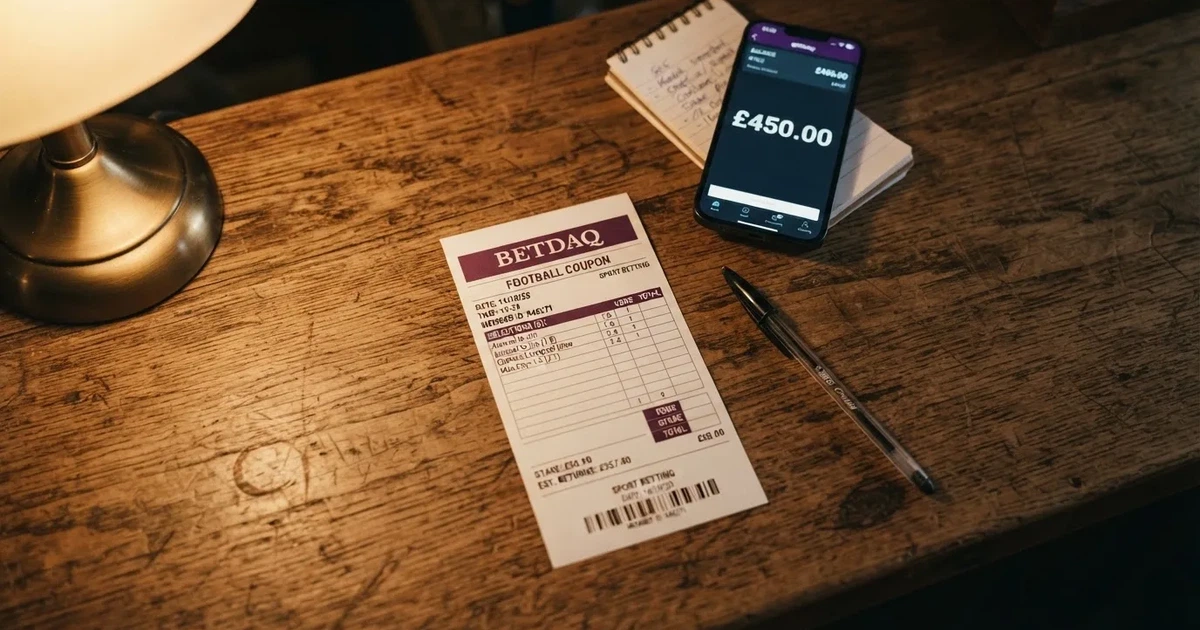
What follows is a close look at what each of them offers, what their acca rules actually say, and what a £10 stake pays back at three illustrative prices. The licence number sits beside every brand because the only test of who may serve customers in Great Britain is the Gambling Commission’s public register. Where the operator’s own terms carry a number, that number is in the table; where they don’t, the gap is left empty rather than filled with an estimate.
How a UK Acca Bookmaker Is Allowed to Take Your Bet
The legal frame for acca betting in Great Britain is the Gambling Act 2005, enforced by the Gambling Commission (UKGC). Since the Gambling (Licensing and Advertising) Act 2014 an operator whose remote facilities are used in Great Britain needs a Commission licence wherever it is based — a Curaçao, Maltese or Gibraltar licence is not a substitute. There is no statutory list of permitted bets: a bookmaker holds a licence for a category and offers markets under its own rules and the Licence Conditions and Codes of Practice (LCCP). The categories most relevant to acca betting are remote general betting standard (real events), remote general betting standard (virtual events), remote general betting limited, remote pool betting and remote betting intermediary, which is the licence that runs a betting exchange.
Every brand in the ranking below is checked against the Commission’s public register, which can be searched by business name, trading name, domain or account number and is the whole test of who holds a licence. A licence number that does not resolve on the register means the brand is not what it claims to be, and a domain extension proves nothing: licensed operators use .com as well as .co.uk. Financial spread betting is a separate activity regulated by the Financial Conduct Authority, not the Commission, and spread-betting losses can exceed deposits — a different proposition from a fixed-odds acca and not what this page is about.
Minimum age is 18, and since 7 May 2019 licensed remote operators must verify name, address and date of birth before a customer can deposit or gamble, including with a free bet. Credit cards have been banned for gambling in Great Britain since 14 April 2020, including credit-card-funded payments through an e-wallet; debit cards and bank-based payments are not covered by that ban. Identity verification before the first deposit means there is no anonymous play at a licensed site, and source-of-funds questions at higher spend are normal under the money-laundering rules.
What an acca bettor is buying into, in plain terms: a regulated market, a named licensee, a dispute route through an approved alternative dispute resolution body, and a duty on the operator to honour the price it showed. What that licence does not give the bettor is a guarantee of winning — every price carries the bookmaker’s margin, and the margin is the same on a treble as on a single.
The Current Statutory Frame for Acca Marketing
Two changes in the marketing rules matter to anyone collecting acca free bets or price boosts. Wagering requirements on bonuses are capped at 10x — a £10 bonus at 50x would have required £500 of bets; under the cap, no more than £100 of qualifying wagering is allowed. Mixed-product offers that require gambling on two or more product types, betting and casino together for example, have been banned since 19 January 2026. The “whistle-to-whistle” code is an industry code rather than law: betting advertisements are not shown on TV from five minutes before a live sporting event to five minutes after it, before the 9pm watershed, with horse and greyhound racing excluded. The Premier League’s voluntary withdrawal of gambling sponsorship from the front of matchday shirts from 2026/27 onward is voluntary, not law.

Whether a cap applies to free bets with no wagering condition, and any cap on the money value of a bonus, are not established in the public record. Operators describe their own offers, and the price an acca bettor finally pays for a “free” stake lives in those terms.
Responsible Gambling Around Acca Betting
An acca is the bet type most associated with the gambling-harm warning literature: a stake that recurs weekly, often on football, often at a number of selections that compounds the bookmaker’s margin, and often chased after one leg has already let the bet down. The protections around it are mostly the customer’s choice rather than the operator’s.
GAMSTOP is the national multi-operator online self-exclusion scheme and a mandatory licence condition for online operators since 31 March 2020. Exclusion periods run six months, one year, five years, or five years with auto-renewal; after the minimum period the exclusion stays in place for a further seven years unless the customer asks GAMSTOP to remove it. Every GB-licensed online operator takes part. Betting shops use a separate service.
A financial vulnerability check applies to licensed remote betting when a customer’s deposits minus withdrawals exceed £150 in a rolling 30 days (since 28 February 2025). It is a public-record check — for example bankruptcy or county court judgments — not an income check and not a credit reference check. The “affordability checks” of the press — financial risk assessments — were announced in a staged plan (Commission article of 7 July 2026), with no start date. Operators must offer a gross deposit limit on a fixed time frame under RTS 12; the first changes have applied since 31 October 2025, and a second phase was postponed to 30 September 2026. There is no state-set deposit or loss ceiling for betting: limits are the customer’s choice.
Where to get help: GamCare runs the National Gambling Helpline. GambleAware funds treatment and education. NHS gambling clinics treat gambling harm across the regions. Gamblers Anonymous runs peer-support meetings. None of these is a substitute for the self-exclusion register, and a self-exclusion that has not been set leaves every other protection at arm’s length.
What an acca bettor should know going in: chasing a treble with a stake the bankroll cannot absorb is the path the help lines hear about most. The mathematics of an acca does not bend for loyalty, and “one more leg to win it back” is the phrase that recurs in case histories more than any other.
Acca Free Bets and What a “Free” Stake Actually Costs
A free bet looks like a marketing gift. The mechanics underneath are the marketing. Three terms decide what the gift is worth:
- Whether the stake comes back with a win. Most acca free bets return the winnings only and not the stake; the headline “£30 in free bets” produces £30 of stake, and a winning acca at combined odds of 10/1 returns £300 of profit, not £330.
- The minimum odds each leg must carry. A £10 free bet that only counts at odds of 3/1 or longer rules out the short-priced favourites most accas are built on.
- The expiry. A seven-day expiry from issue means the free bet must be placed, settled and resolved inside a week; anything else disappears.
Acca-specific promotions carry their own costs. “Acca insurance” refunds a stake as a free bet if one leg lets the rest of the bet down — usually up to a cap, sometimes only on accumulators of five legs or more. “Acca boost” tokens add a percentage on top of winnings, again tiered by the number of legs and again capped. “Enhanced odds” boost the price of one leg, but the boosted leg often has the stake-not-returned rule applied and a maximum stake that is lower than the account’s ordinary maximum.
The wagering cap of 10x (a £100 ceiling on qualifying bets to clear a £10 bonus) is the line that matters at the heavy end of the market. The mixed-product ban matters when an acca offer bundles a free spin or a casino credit; that offer shape is no longer licensed in Great Britain.
A “risk-free” first bet that is refunded as a free bet, not cash, is the trick worth naming. The first bet can lose; the refund does not make the bettor whole — the refund is a stake that itself carries the stake-not-returned rule. Bet £10, the bet loses, get £10 back as a free bet, place the free bet at 5/1 and win: the bettor keeps £50 of profit on the free bet and has spent £10 of real money on the original stake. The arithmetic on the page’s own calculation, in the worked example further down, shows what the same arithmetic looks like at three prices.
Acca Predictions and the Strategy That Sounds Like It Works
“Best acca bets today” is the search behind a third of acca traffic. What the search finds is predictions: tipsters naming four or five football fixtures, a price for each leg, and a combined odds figure at the top. The figure is correct. The figure is also what the bookmaker was selling in the first place — and the bookmaker’s margin is in every leg.
A prediction is not analysis. A prediction is a guess with a price attached, and the price carries the same margin a single bet carries. An acca of five legs at average odds of 6/4 each, at the kind of margin a Premier League match carries, returns a payout share that the calculation below works through. The bettor who reads predictions and treats them as forecasts is paying for five margins at once.
The strategies that hold up are the dull ones. Bankroll discipline: a stake that is a fixed percentage of a separately funded betting bank, not the household account. Price discipline: an odds threshold below which a leg is not added, whatever the tipster says. Selection discipline: a limit on the number of legs, because each leg is a fresh chance to lose. A four-leg acca is not four times as informative as a single — it is four times as uncertain and pays back less than the four singles would, because the bookmaker has added its margin four times.
What does not work: rolling a losing acca into a bigger one, chasing the missing leg from yesterday’s coupon, raising the stake to recover yesterday’s loss. The arithmetic does not know yesterday’s loss, and the bookmaker’s welcome offer does not change it.
Acca Bets, Bet Types and the Odds That Apply
An accumulator (also called a parlay, acca, combo bet or multi) is a single bet that links two or more individual wagers. It wins only if every one of its linked selections wins; a losing leg loses the whole bet. A leg that ties — a push — is removed and the payout odds are reduced to match the remaining selections. In fixed-odds accumulators the payout odds are the product of the odds of each selection, which is why decimal odds suit them: at 1.50, 2.00 and 2.50 the combined price is 7.50, and a £10 stake returns £75.
The variants below the headline acca multiply the number of bets and the stake. A Trixie is a full cover bet on 3 selections made up of 4 bets — three doubles and a treble. A Yankee covers 4 selections in 11 bets. A Heinz covers 6 selections in 57 bets, and a Super Heinz covers 7 selections in 120 bets. The total stake is the unit stake multiplied by the number of bets, so a 10p Lucky 15 costs £1.50 in stake, and a £2 Super Heinz costs £240.
Each-way betting places two bets of equal stake — a win bet and a place bet — so the stake doubles. Place terms vary by race and by operator; horse-racing each-way terms are typically a quarter of the win odds for the first three places, but each-way on a five-leg football acca is a different proposition, and not every bookmaker offers it on every sport. Ante-post prices are taken before the final declarations and carry a non-runner risk that Rule 4 deductions do not cover. Best odds guaranteed (BOG) means the payout is the higher of the price taken and the starting price, on horse racing only and at the bookmaker’s election. SP is the starting price, set at the off.
A bet builder links markets from one event — a player to score, both teams to score, total goals — into a single bet. The bookmaker’s margin is applied once across the combined price rather than per leg, which is the feature’s appeal: the price of the builder is usually lower than the product of the singles, because the bookmaker has not added its margin four times. Cash out lets the bettor settle a bet before the final leg; the cash-out price is the bookmaker’s live estimate of the bet’s value and is lower than the back-and-forth fair value, because the operator is taking the other side of the trade.
The bookmaker’s margin sits inside every price. A payout share of 95 % and a margin of 5 % are the same market seen from two sides, and the margin is what the bookmaker keeps of every unit bet on the market. The margin of a one-leg acca is the margin of the underlying selection; the margin of a five-leg acca is the margin of each leg compounded. The calculation further down shows what the compounding does to a payout at three illustrative odds.
Selection Anchors — How This Page Picked Its Ten Brands
The ten brands ranked below are the only ones on the page. Each is a holder of a Gambling Commission remote licence for general betting standard (real events); each is checked against the Commission’s public register; each takes part in GAMSTOP. Several major brands run under one licensee — Ladbrokes and Coral under one group, Paddy Power and Betfair under another — and the page does not present them as independent operators. No unlicensed brand is listed.
The ranking weighs five things: the licence (a binary test, not a tiebreaker), the acca mechanic on offer (single-leg bet builders, full-cover multiples, acca insurance, enhanced odds), the cost in the operator’s own terms (minimum odds, stake-not-returned, expiry, wagering requirements), the price surface the operator publishes (best odds guaranteed on racing, acca boosts, price boosts) and the friction at the wallet (payment methods, withdrawal speed, verification friction at first deposit). A brand that wins on one and loses on another is ranked by where it loses, because a weakness at the wallet is the weakness the bettor notices.
Where two brands are run by the same licensee, only one is in the ranking. Where a brand runs an acca product but does not hold a remote licence, it is out. Where the operator’s own terms are silent on a feature, the gap is left empty in the table rather than filled with an estimate.
The Licence and the Terms at a Glance
| Brand | Gambling Commission remote licence | Operator’s terms on accumulators |
|---|---|---|
| bet365 | 055148-R-331498-002 (Hillside (UK Sports) ENC, account 55148) | Bet Builder+ combines markets from one event pre-match and in-play; Super Boosts and daily Bet Boosts apply to selected accas |
| Geoff Banks | 054095-R-330366-010 (GB Sports Advisors Limited, account 54095) | Live in-play and ante-post prices on future events; app published by GB Sports Advisors Ltd |
| Kwiff | 044448-R-323408-017 (Eaton Gate Gaming Limited, account 44448) | Supercharge can instantly boost a bet’s odds (for example from 2/1 to 20/1), on single or multi bets on any sport |
| Fitzwilliam Sports | 048760-R-335434-009 (SBKI Limited, account 48760) | Prices based on Oddschecker’s average for each selection; Apple and Google mobile apps |
| Dabble | 065677-R-340363-005 (Dabble Sports UK Ltd, account 65677) | Welcome offer is a £10 stake for £10 of free bets on a first deposit, with minimum odds, a 7-day expiry and stake not returned |
| Swifty Sports | 058957-R-334734-006 (Swifty Global (UK) Ltd, account 58957) | Best Odds Guaranteed, Cash Out on horse racing and football, daily price boosts, live streaming and in-play; Bet Builder listed as coming soon |
| Octobet | 062545-R-337248-006 (Octopus Game Limited, account 62545) | Best Odds Guaranteed on UK and Irish horse racing, up to £150 per customer per race |
| BetGoodwin | 002927-R-327985-008 (Goodwin Racing Limited, account 2927) | Welcome offer of £10 stake for £15 of free bets: a £5 sports bet, a £5 acca and a £5 Sub-Cover bet |
| Betfred | 039544-R-319290-010 (Petfre (Gibraltar) Limited, account 39544) | Bet Builder, Sub Switch, Racing Post data, Extra Places, live casino and bingo |
| BetUK | 039198-R-319450-029 (LeoVegas Gaming PLC, account 39198) | Free bets exclude virtual sports, esports and non-UK/IE horse racing; minimum odds apply |
The licence column is the test of who may take a bet. The terms column is the test of what the bet costs — minimum odds, stake-not-returned, expiry, exclusions — and the gap between the two is where the marketing lives.
What an Acca Costs at Three Illustrative Prices
A £10 accumulator on three selections at decimal odds of 1.50, 2.00 and 2.50 returns £75 at the listed prices, made up of the £10 stake and £65 of profit. The calculation is the multiplication of the odds: 1.50 × 2.00 × 2.50 = 7.50, and 7.50 × £10 = £75. That is the gross figure, before the bookmaker’s margin.
The bookmaker’s margin is what sits inside the prices the operator published. A typical Premier League match-margin sits in the region of 5 %, and a five-leg acca compounds that margin across five legs. A payout share — the proportion of every pound bet that comes back to bettors across all outcomes — of 95 % on a single match becomes roughly 77 % across the five legs of an acca, because each leg has taken its own margin. The £75 at 1.50, 2.00 and 2.50 is the headline; the expected cost of clearing the same stake at the same prices, weighted by the margin, sits underneath it.
For a full-cover bet the maths change shape. A £2 per line Trixie on three selections at the same 1.50, 2.00 and 2.50 prices stakes £8 across four bets, returns on whichever of the four combinations land, and the £2 stake per line is the unit that gets multiplied. A Lucky 15 at £1 per line on four selections stakes £15 across fifteen bets. The stake is the cost of the structure; the return is the cost of the structure when the legs win.
The point of the calculation is the size of the band, not a single figure. At illustrative prices the gross return on a £10 acca is £75; the margin-adjusted expected value of that return is lower, by a factor that grows with each additional leg. A bettor who reads a treble’s price as a forecast is reading the headline; a bettor who reads the treble’s expected value is reading the cost.
The Ten Brands, Reviewed
bet365
bet365 is the licence holder under Hillside (UK Sports) ENC on Commission account 55148, with the categories on the register covering remote general betting standard (real events). The acca product is Bet Builder+, which combines markets from one event into a single bet and is available pre-match and in-play; Super Boosts, Winnings Boosts on Bet Builders and selected singles, and daily Bet Boosts sit around it. The product is broad: football, racing, tennis, an in-play console that publishes prices in fractions and decimals side by side. The cost is in the operator’s margin on the combined price, which is set at the point of publication and shifts in-play. For an acca bettor who wants a bet builder across one match and the price boost attached, bet365 is the most fully built option in the ranking; for anyone wanting a tighter margin, the lower-priced options elsewhere are worth a look.
Geoff Banks
Geoff Banks runs on Commission account 54095, with GB Sports Advisors Limited as the licence holder. The product is ante-post and live in-play prices on future events, with an app published by GB Sports Advisors Ltd. The brand is a smaller bookmaker than the others on the page and the acca product is narrower; the appeal is the price depth on outright markets and the ante-post book, which is where futures prices sit before a tournament or a season. For a bettor whose acca is built around outrights — a tournament winner, a top scorer, a relegation market — Geoff Banks is the right pick; those primarily betting on weekly football matches might find the range narrower than at the largest operators.
Kwiff
Kwiff is licensed under Eaton Gate Gaming Limited on Commission account 44448. The headline feature is Supercharge, which can instantly boost the odds on a bet, for example from 2/1 to 20/1, and applies to single or multi bets on any sport. The acca product is built around the boost: a price that is lower at the moment of placement can be increased at settlement, and the boost is what the marketing is built around. The cost is the unpredictable shape of the boosted price — a Supercharged acca is not the same proposition as an acca at the prices the operator showed an hour before. The 17+ App Store age rating reflects the licensed-operator status; the licence is current on the Commission’s register. Kwiff is the clear choice for bettors prioritising odds-boosting innovation; those wanting traditional, fixed-price accumulators will likely prefer a different platform.
Fitzwilliam Sports
Fitzwilliam Sports is licensed under SBKI Limited on Commission account 48760. The pricing model is the distinguishing feature: prices are based on Oddschecker’s average price for each selection, and the mobile app is on Apple and Google stores. The acca product is built around the average price — a bettor who takes an acca at Fitzwilliam is taking an acca at the market average across the major operators, which is the conservative price the comparison sites publish. The cost is the absence of an edge: an acca at the average price does not have the spread an aggressive bookmaker offers, and the bettor pays for the averaging through a smaller payout. Fitzwilliam Sports provides a balanced, middle-of-the-road experience; it is not the place to seek aggressive pricing strategies.
Dabble
Dabble is licensed under Dabble Sports UK Ltd on Commission account 65677. The welcome offer is “Bet £10, Get £10 in Free Bets” on a first deposit, with minimum odds applying, a 7-day expiry and the stake not returned — the standard shape of a free-bet welcome and the standard cost. The acca product sits inside the welcome, and the seven-day clock starts on the first deposit. For a bettor who plans to use the welcome on a single acca at the kind of short prices a £10 free bet covers, Dabble fits; for deeper product variety, the more established tier-one bookmakers are the stronger contenders.
Swifty Sports
Swifty Sports is licensed under Swifty Global (UK) Ltd on Commission account 58957. The feature set is broad for a smaller bookmaker: Best Odds Guaranteed, Cash Out on horse racing and football, daily price boosts, live streaming and in-play; Bet Builder is listed as coming soon. The acca product today is the standard multiple-and-boost product the smaller end of the market runs, and the price boosts are the surface a bettor sees most. Swifty Sports is a solid entry for racing and simple football doubles; larger competitors currently offer more extensive bet-builder capabilities.
Octobet
Octobet is licensed under Octopus Game Limited on Commission account 62545. The headline product is Best Odds Guaranteed on UK and Irish horse racing, up to £150 per customer per race. The acca product on football and racing sits around the BOG offer, and the cap on the BOG is the shape of the cost: a bettor with a stake above £150 on a single race will not get the better of the price or the starting price on the excess. For a bettor who prices a small-stake acca around the BOG, Octobet is the right fit; for a bettor whose stake on a single race is above £150, the cap is where the proposition flattens.
BetGoodwin
BetGoodwin is licensed under Goodwin Racing Limited on Commission account 2927. The welcome offer is “Bet £10 & Get £15 in Free Bets”, made up of a £5 sports bet, a £5 acca and a £5 Sub-Cover bet — three buckets, three different products, each with its own terms. The acca product sits in the middle bucket, and the £5 acca stake is the unit. BetGoodwin is ideal for casual players wanting to split a welcome across three products and try each of them at small stakes; the rigid stake structure may frustrate those looking to build a substantial position.
Betfred
Betfred is licensed under Petfre (Gibraltar) Limited on Commission account 39544. The product set is broad: Bet Builder, Sub Switch, Racing Post data, Extra Places, live casino and bingo. The acca product sits across Bet Builder and the Extra Places offer on racing, and the breadth of the product set is the distinguishing feature. For a bettor whose acca is built around Bet Builder and racing extras, Betfred is the right shape; for a purely football-focused accumulator player, other brands might offer a more streamlined experience.
BetUK
BetUK is licensed under LeoVegas Gaming PLC on Commission account 39198. The exclusions in the free-bet terms are the cost: free bets exclude virtual sports, esports and non-UK/IE horse racing, and minimum odds apply. The acca product sits inside those exclusions, and a bettor whose acca is built around virtual sports or esports will not be able to use the welcome on those legs. For a bettor whose acca is built on UK and Irish racing and mainstream football, BetUK fits; for a bettor whose acca touches the excluded sports, the welcome is smaller than the headline suggests.
The Landscape — What the Ten Brands Add Up To
Across the ten brands the picture is the picture of a regulated market: every licence resolves on the Commission’s public register, every brand is a GAMSTOP member, every acca product is built around the same arithmetic of multiplied odds and the same margin. Where the brands differ is the surface — Bet Builder at bet365, Supercharge at bet feature, average pricing at Fitzwilliam Sports, BOG on racing at Octobet — and the cost that sits underneath. A free bet’s stake-not-returned rule is the same rule at every brand; a minimum-odds requirement is the same requirement, even where the level differs.
What changes is the price of the licence itself, in the time the bettor spends at verification. Every brand on the page verifies identity before the first deposit. Every brand runs a financial vulnerability check at the £150 rolling-30-days threshold. Every brand applies the 10x wagering cap and the mixed-product ban where the offer reaches those terms. The acca bettor pays the cost of these in time rather than in money, and the time is the friction that has to be weighed against the price boost and the welcome offer.
What the ten brands do not have, between them, is a “best” one. A bettor who wants a bet builder takes one brand; a bettor who wants ante-post takes another; a bettor who wants a Supercharged price takes a third. The ranking on this page is the ranking by the balance of those features and the operator’s own terms, and the choice that wins on a Saturday afternoon depends on which Saturday afternoon.
Offshore, Unlicensed and the Cost of Saving the Licence Check
A brand that serves customers in Great Britain without a Commission licence is breaking section 33 of the Gambling Act 2005 — on summary conviction up to 51 weeks’ imprisonment, a fine up to level 5, or both; six months in Scotland. No offence aimed at the customer who merely bets on an unlicensed site was found in the public record. What the customer gives up is the protection: no GAMSTOP coverage, no Commission complaints route, no approved dispute-resolution body, no British consumer redress if funds are withheld, no 10x bonus cap and no £150 vulnerability check. The licence check takes a minute on the Commission’s public register; the cost of skipping it is paid at the other end, when a withdrawal stalls and there is no route to dispute it.
Enforcement against unlicensed operators is disruption rather than blocking: cease-and-desist notices, search-engine referrals, work with registrars, hosts and payment providers. The Commission has been given, or is about to receive, court-order DNS blocking powers. ISP blocking is not yet in operation, and the page does not write it as if it were. Honest framing: licensed is checks, limits, GAMSTOP, the bonus cap and identity verification before the first bet; unlicensed is none of those and possible loss of funds.
Closing Position on the Ten
The acca bettor’s choice in 2026 is a choice between ten licensed brands, each priced by its own margin, each governed by the same Commission rules, each running a slightly different product on top. The licence is the floor. The product is the surface. The cost is the operator’s own margin and the offer’s own terms, written down in the operator’s T&Cs and verifiable on the Commission’s register. Read the table; read the terms; price the acca at the displayed odds; remember that the headline is the gross and the margin is the cost underneath.
Frequently Asked Questions
What are acca bets?
An accumulator (also called a parlay, acca, combo bet or multi) is a single bet that links two or more individual wagers. It wins only if every one of its linked selections wins; a losing leg loses the whole bet. A leg that ties is removed and the payout odds are reduced to match the remaining selections. The payout odds are the product of the odds of each selection, which is why decimal odds suit them.
How do accumulator acca bets work?
An acca is placed as a single stake, the bookmaker multiplies the odds of each leg into one combined price, and the stake is returned at that price if every leg wins. If any leg loses the whole stake is lost; if a leg ties (a push) that leg drops out and the combined price is recalculated. The book’s margin sits inside each leg, and the margin compounds across the legs of the acca.
Can you use acca freeze on free bets?
Acca freeze — locking an acca’s price while adding further legs — is a feature some operators offer, and the operator’s own terms decide whether it works on free-bet stakes. Most free bets carry a minimum-odds requirement, a stake-not-returned rule and a short expiry, and acca freeze does not bypass any of those. The operator’s terms page is the place to check for a specific brand.
How can it be checked that a bookmaker holds a Gambling Commission licence?
The Commission’s public register can be searched by business name, trading name, domain or account number, and a licence that resolves on the register is the whole test of who holds one. The licence number on the operator’s site should match the register entry; a mismatch means the brand is not what it claims to be. Every brand on this page has been checked against the register at the date of the snapshot.
How is the return on a bet worked out from the stake and the odds?
For a single bet at decimal odds, return = stake × odds; net profit = stake × (odds − 1). For a combination bet the odds of the legs multiply into one price: 1.50 × 2.00 × 2.50 = 7.50, and a £10 stake returns £75 if every leg wins. The figure is the gross return; the bookmaker’s margin sits underneath the prices, and the expected value is lower than the headline.
What is the bookmaker’s margin and how can it be seen in the odds?
The margin is what the bookmaker keeps of every unit bet on a market. For a three-outcome market with decimal odds o₁, o₂ and o₃ the payout share is 1 ÷ (1/o₁ + 1/o₂ + 1/o₃), and the margin is 1 − payout share. A 95 % payout share is a 5 % margin, and the same market can be quoted as either. The margin is the cost a bettor pays on top of the bet’s expected value, and it compounds across the legs of an accumulator.
Bet types & in-play – Footy Tips
Content created by the «Footy Tips» team
