
Online Hurling Betting in Great Britain: What It Actually Costs the Punter
 Available in US
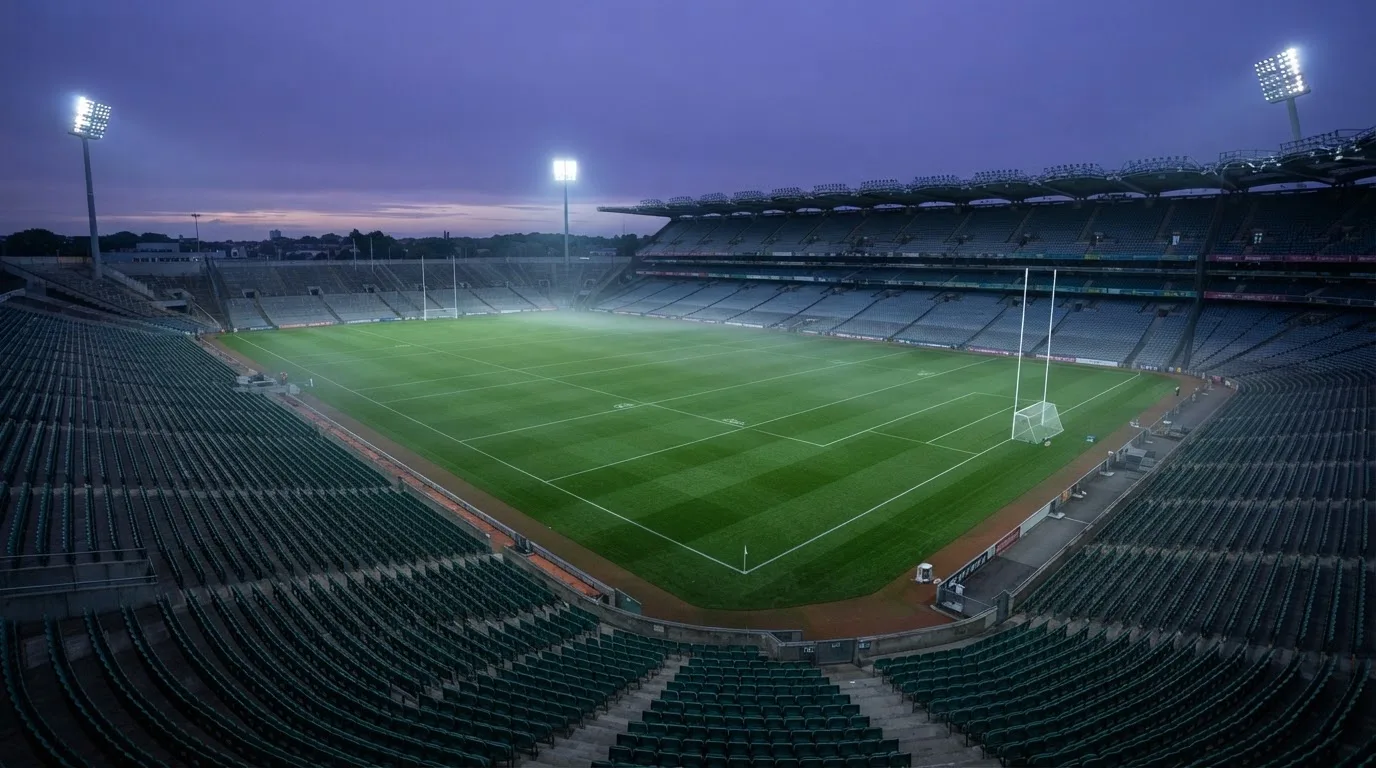
Hurling finds its biggest betting audience inside the All-Ireland Senior Hurling Championship, a tournament the GAA runs every summer and whose final in 2026 was won by Limerick over Galway at Croke Park on 19 July 2026. Around that competition, the 2026 provincial championships ran with Leinster putting six teams and Munster five into round-robin groups, before knockout provincial finals and the All-Ireland quarter-finals. Beyond the senior championship, club hurling keeps a parallel fixture list running almost year-round, including the All-Ireland Club Hurling Championship. None of that is the expensive part. The expensive part is what sits between the price the screen shows and the money that lands back in the punter’s account: the margin baked into the odds, the terms written in small print on a welcome offer, and the house rules under which a winning ticket still settles for nothing. This page works through each of those costs in turn, then puts ten Gambling Commission-licensed bookmakers side by side so the reader can see where each one actually sits.

Current as of 27 October 2026 against the Gambling Commission’s public register.
The licence check that decides who is a real choice
The first cost is the one most punters forget: the moment a deposit goes to an unlicensed brand, every protection that follows on this page — GAMSTOP self-exclusion, the Commission’s complaints route, the bonus cap, the affordability rules — disappears together. A betting site has to hold a Gambling Commission licence to take money from customers in Great Britain, and that rule is point-of-consumption: where the operator is based, whether Gibraltar, Malta or Curaçao, is irrelevant. The test is whether the brand appears on the Commission’s public register, and the register is searchable by business name, trading name, domain or account number.
In practice the check is quick. Open the Commission’s register, type the brand, confirm the licence category says “remote general betting standard (real events)” for a sportsbook, or “remote betting intermediary” for an exchange, and read the licence holder name shown beside it. That licence holder is the legal entity the bet is with; the brand on screen may be just a trading name. Paddy Power and Betfair, for example, both trade under the same PPB Counterparty Services Limited licence — they are not separate operators for regulatory purposes, even though the apps look different.
There is no shortcut by domain. A licensed operator is as likely to use .com as .co.uk, and the file extension proves nothing either way. The only test is the register itself.
One detail that affects price. Spreadex, the only brand in this space that runs financial spread betting on top of its fixed-odds sportsbook, is regulated by the Financial Conduct Authority for the spread side and by the Gambling Commission for the fixed-odds side. The two regimes treat losses differently, and Spreadex’s own site puts the warning on the homepage: spread betting losses can exceed the deposit. That is the one line in this article where the regulatory difference shows up as a price — it costs a punter who uses the wrong product the entire balance, not the original stake.
What a betting licence does and does not cover
A Gambling Commission licence is not a content licence. The Commission does not keep a list of permitted sports or markets, and no statute fixes what an All-Ireland hurling market must look like. The licence category — remote general betting standard (real events) — tells the regulator what kind of operation it is; the markets offered inside it sit in each operator’s own sportsbook and rulebook. The licences and codes of practice (LCCP) that govern them are matters of conduct, not catalogue. So when a market is missing from one brand and present at another, the difference is a commercial choice rather than a regulatory gap.

The boundary that does bite is identity. Since 7 May 2019 every remote operator has to verify name, address and date of birth before a first deposit, and that gate applies to free bets and bonuses too. There is no anonymous play on a licensed site. Anyone joining a sportsbook today will see a verification screen — driving licence, passport, a recent utility bill, sometimes a selfie — well before a penny is withdrawn. That friction is not optional, and it is the price a punter pays for every protection lower down this page, including the £150 financial vulnerability check that pulls in public-record information when deposits minus withdrawals clear £150 over a rolling 30 days.
The age limit is 18. Below that, the LCCP marketing conditions under section 16 of the CAP Code apply — no gambling marketing may appeal strongly to under-18s, and no one who is or seems to be under 25 may feature in or play a significant role in an ad — but those rules describe the advertisement rather than who may place a bet. The customer-side rule is the 18 threshold, and verification enforces it.
Where the punter stands with a gambling problem
The cheapest bet on this page is the one a punter decides not to place. The whole framework around online betting in Great Britain is built around that decision being available before, during and after play, not just once something has gone wrong. Two pieces belong together.
GAMSTOP is the national multi-operator online self-exclusion scheme. Joining it closes a punter out of every licensed online bookmaker in one step, covering sites and apps but not the high-street betting shops, which run a separate service. The minimum period is six months; options then run to one year, five years, or five years with auto-renewal. Once the minimum has passed, the exclusion stays in place for a further seven years unless the punter asks GAMSTOP to remove it. That is a long tail, and it is the long tail a punter in trouble usually does not feel like they have signed up for. Every brand reviewed here is a GAMSTOP member, so a self-exclusion cuts them all in one move.
Alongside GAMSTOP, every licensed remote bookmaker has to offer its own customer-side tools: deposit limits, timeouts, reality checks, session reminders, and the route into GamCare’s National Gambling Helpline, GambleAware, the NHS gambling clinics network and Gamblers Anonymous. The new statutory deposit-limit regime (RTS 12) is the most consequential change on this front. A first phase has applied since 31 October 2025, and a second phase was postponed to 30 September 2026. The shape of the framework — gross deposit limits on a fixed time frame, the customer’s choice — is in place; what those limits will finally look like once phase two lands is not yet established.
The financial-vulnerability check that took effect on 30 August 2024 is narrower than the press shorthand suggested. It is a public-record check — bankruptcy registers, county court judgments, similar flags — applied once deposits minus withdrawals clear £150 in a rolling 30 days. It is not an income check and not a credit-reference search, and the broader “affordability checks” framed as financial risk assessments have been announced by the Commission in a staged plan with no start date. Until the regulator sets that date, the practical rule is the £150 threshold.
What welcome offers actually cost the punter
The marketing reaches the screen with two words on it: “free” and “bonus”. Both words have been the most expensive in betting for a long time, and they were the centre of the most consequential rule change in this market in years. From 19 January 2026, wagering requirements on bonuses are capped at 10x in Great Britain — a £10 bonus with a 50x rollover that used to need £500 of qualifying bets is now barred entirely, since the post-cap maximum would be £100. Mixed-product promotions — an offer that asks the punter to bet on football in order to unlock casino free spins, for instance — are banned outright.
That is the headline. The rule is the rule, and ten licensed brands keep operating under it. The lived detail is messier, because two brands can both describe a “welcome offer” and make a very different demand of the punter’s bankroll. A reasonable way to read this section is by what the offer actually takes, not by the headline number.
BetGoodwin’s welcome package is described in its App Store listing as “Bet £10 & Get £15 in Free Bets”, made up of a £5 sports bet, a £5 acca and a £5 Sub-Cover bet — three different free bets at three different products, all triggered by a single qualifying stake. Hollywoodbets’ package ties the trigger to a losing accumulator: a new player depositing £10 or more by card sees their stake returned as a free bet of up to £30 if an initial acca with three or more legs, total odds of at least 4/1, settles as a loser within seven days; one free bet per customer. VBet’s sports welcome offer gives a £10 free bet to a new verified customer whose first ever bet loses on a £10 stake. Bet Ahoy runs “Bet £10 & Get £10 in Free Bets”, split as a £5 sports bet and a £5 acca.
Sky Bet’s terms add a layer most offers do not announce on screen: its free bets expire 30 days after being credited, can be used only on single or each-way markets and not on multiples excluding virtuals, are non-withdrawable, and do not return the stake with winnings. That last clause is the one that defines what a “free bet” actually means in market terms. A £10 free bet at decimal odds of 4.00 wins £30 profit but does not add the £10 stake, so the punter’s return stops at the profit. The terms turn “free bet” into a half-stake bet, and the rule is the rule across the industry rather than a Sky peculiarity — most welcome-offer free bets in this market follow the same shape.
Welcome offers are framed in the marketing as gifts; read them as the bargain they are. The cap on wagering is a real ceiling on the worst excesses, and the question for any punter is the one asked above: what does the offer take from me before it pays anything back, and over how many days?
Live betting and cash out in hurling markets
Live betting on hurling sits on the same physical product as pre-match betting — odds, a market, a settlement rule — but at a different speed. Most licensed GB bookmakers carry it: bet365 offers in-play betting with live streaming of events worldwide, Sky Bet maintains the Gaelic Games rulebook that bets settle on the official result at the end of normal time including injury time (extra time does not count unless the market name says otherwise), Sporting Index layers in-play onto its fixed-odds sportsbook, and Matchbook, as a betting exchange, hosts continuous in-play pricing across both football and other sports. The market depth is thinner than for Association Football — the All-Ireland Senior Hurling Championship is the main event, with provincial championships, the All-Ireland Club Hurling Championship and the Allianz Hurling League feeding into it — and the price swings in-play reflect that.
Cash out is a separate product that interacts with live markets. Sporting Index lists auto cash-out and Multi-Markets, alongside its fixed-odds sportsbook, which gives a punter the option to lock a price back in mid-match or build a multi-market ticket that spans several games. The cost of cash out is the spread the bookmaker builds into the price it offers to close the bet — the punter takes a position before the event, and a cash-out value lower than the closing line-tocked value is the bookmaker’s cut of the position. The punters who profit from cash out are the ones who treat it as a tool rather than a feature, locking profit when the price is right rather than as a reflex on every selection.
Bet builders complicate the picture. Bet Builder+ at bet365, for instance, combines markets from a single event into one ticket, available pre-match and in-play, sitting beside Super Boosts and daily Bet Boosts. A bet builder multiplies the leg prices together and applies the bookmaker’s margin to each leg, so the overround in a builder ticket is steeper than a straight single. The convenience is real; the cost is the price.
How odds are built, what they mean, and what they cost
A betting price is a fraction of one. Three decimal odds of 2.00, 3.00 and 4.00 reflect the book’s view of a market, and the margin sits in the shortfall when their implied probabilities are added together. The market’s “payout share” — the fraction of every pound bet that returns to punters over the long run — is found from the inverse odds summed across every selection, and the margin is one minus that share.
Take an illustrative two-way market priced 1.90 / 1.90 in decimal. The implied probability of each outcome is 1 divided by 1.90, which is roughly 0.5263 or 52.63%. Two outcomes at identical prices give a total implied probability of about 105.26%, and the excess over 100% — the 5.26%, or thereabouts, depending on rounding — is the bookmaker’s margin. In words: roughly a 5% margin, give or take the rounding, on a market that looks symmetrical on the screen. The narrower that margin, the more of every pound the punter gets to keep as a group; the wider it is, the more the bookmaker is taking off the top.
This is the most important number on the page and the one the marketing never quotes. A headline price of 2.00 with a margin of 5% is worth less to the punter than a headline price of 2.00 with a margin of 3%, because the lower-margin book keeps less of every bet. Comparing prices between operators means comparing margins on the same market for the same event, and the difference shows up over a season rather than over a single bet.
Betting exchanges price markets differently. Matchbook and similar exchanges run a back-and-lay book: punters bet against each other, and the exchange takes a commission rather than a margin. The headline price at an exchange is closer to the true probability because the overround is smaller and the take comes off winnings rather than out of the odds. The economic cost to the punter is still present — it sits in the commission rather than the margin — but it is paid by the winning side and varies with the operator’s commission tier.
Odds are written two ways in Britain. Fractional odds, the traditional form, show the profit as a fraction of the stake — 5/1 means a £1 stake returns £5 profit plus the £1 stake, so a £10 stake at 5/1 returns £60 in total (£50 profit plus the £10 stake). The decimal form is the stake-inclusive version: 6.00 at decimal equals 5/1 fractional, because the decimal odds are calculated as the fractional numerator divided by the fractional denominator plus one. The rule of thumb is simple: decimal odds = fractional odds fraction + 1. Evens (1/1) becomes 2.00; 11/4 becomes 3.75. The two forms describe the same price and the same payout; the decimal version makes for quicker mental arithmetic on a betting slip.
A winning £10 single at decimal odds 3.75 returns £37.50 — £10 stake plus £27.50 profit, the profit being the stake times the odds minus one. A four-leg accumulator that lands at 2.00, 3.00, 4.00 and 5.00 in decimal is a 120.00 bet in terms of combined price, so the same £10 stake returns £1,200 — £10 stake plus £1,190 profit. The acca multiplies the leg prices into one, and so does the margin at each leg, which is why a long-odds accumulator is almost always a heavier-margin ticket than a single on the same event.
The hurling calendar that drives the markets
Hurling’s competitive calendar runs along the GAA’s structure. Fifteen players a side, two halves of 35 minutes, three points for a goal struck under the crossbar between the posts, and one point for a shot over the crossbar between the posts — that is the sport, and a wager on the All-Ireland Senior Hurling Championship final settles on the official result at the end of normal time including injury time, with extra time only counting where the market states it. The Gaelic Athletic Association runs the inter-county championship, the provincial championships (Leinster, Munster, Connacht and Ulster — though Connacht and Ulster are slimmer in hurling than in Gaelic football) and the club championship.
The 2026 championship ran in its usual shape. Leinster put six teams and Munster five into round-robin groups; the top two in each provincial group met in the provincial final, while the third-placed teams progressed to the All-Ireland quarter-finals. Limerick beat Galway in the final on 19 July 2026 at Croke Park, Dublin. The 2025 championship had been won by Tipperary. Beyond the senior championship, the Allianz Hurling League runs in the spring, the U20 and minor championships run alongside the seniors, and the club championships fill the autumn and winter — the All-Ireland Club Hurling Championship final closes the GAA calendar in January.
Most licensed GB bookmakers carry hurling in some form because the GAA season is short and visible, and the major firms tend to price the championship from the quarter-finals onwards with match markets, outright winner, and handicaps. Smaller and newer brands — Geoff Banks, Bet Ahoy, Kalooki Sportsbook, Hollywoodbets’ UK facing site — sometimes list hurling with a narrower set of markets or only on the bigger fixtures. A punter looking to bet on a minor round-robin game in February should check the brand’s GAA fixture list before assuming the market is up. The GAA fixture list runs year-round, but the betting markets thin out beyond the senior championship windows.
Ten licensed bookmakers for hurling, side by side
The brands below are the ten this page reviews in detail. Each one appears on the Gambling Commission’s public register against the licence shown; each licence holder is the legal entity the bet is placed with. The table is the only place on this page where licences, holders and the site each brand runs are listed together; the individual reviews below it spell out what each operator does best, where its welcome offer lands the punter, and which competitive edge actually shows up in the betting experience.
| Brand | Licence and licence holder | Position on a hurling punter |
|---|---|---|
| VBet | Gambling Commission remote licence 044662-R-324273-022 (account 44662); licence holder SCGO Limited | A £10 free bet to a new verified customer whose first ever £10+ bet loses — the simplest version of an offer, with the trigger set on a single losing stake rather than a multi-leg acca |
| Sporting Index | Gambling Commission remote licence 027343-R-308898-011 (account 27343); licence holder Sporting Index Limited | A two-mode product: fixed-odds sportsbook with in-play betting and Bet Builder (football), or a spread-betting book where the gain and the loss are both open-ended |
| Hollywoodbets | Gambling Commission remote licence 053028-R-330019-013 (account 53028); licence holder Hollywoodbets International UK Limited | A stake-back-as-free-bet offer of up to £30 tied to a losing three-leg accumulator at 4/1 or greater, settled within seven days, with a £10 card deposit as the entry condition |
| BetGoodwin | Gambling Commission remote licence 002927-R-327985-008 (account 2927); licence holder Goodwin Racing Limited | A £15 free-bet package made up of three £5 bets across the sportsbook, the accumulator product and the Sub-Cover product, all unlocked by a single £10 qualifying stake |
| bet365 | Gambling Commission remote licence 055148-R-331498-002 (account 55148); licence holder Hillside (UK Sports) ENC | The deepest in-play product in this group: live streaming of hurling matches alongside continuous in-play pricing, Bet Builder+ on a single event, Super Boosts and daily Bet Boosts |
| Bet Ahoy | Gambling Commission remote licence 100094-R-341742-003 (account 100094); licence holder Bet Ahoy Ltd | A lighter welcome package of two £5 free bets (sports and acca) from a £10 stake, with the GAA fixture list taken from a wider catalogue that lists what Sky Bet’s Gaelic Games hub also carries |
| Paddy Power | Gambling Commission remote licence 039439-R-319330-013 (account 39439); licence holder PPB Counterparty Services Limited | The longest-running GB-licensed brand in the group, with the broadest sportsbook — football, horse racing, boxing, rugby, tennis, golf, darts, snooker and F1 in the App Store listing, plus ante-post pricing on hurling and GAA outrights |
| Geoff Banks | Gambling Commission remote licence 054095-R-330366-010 (account 54095); licence holder GB Sports Advisors Limited | A specialist GAA-and-racing bookmaker with live in-play prices on hurling and ante-post prices on future GAA events, kept narrow by design |
| Sky Bet | Gambling Commission remote licence 067370-R-341330-005 (account 67370); licence holder SBG Sports Limited | The GAA hub’s terms are the clearest in the group: bets settle on the official result at the end of normal time including injury time, with extra time excluded unless the market names it, and free bets that expire in 30 days and exclude multiples |
| Matchbook | Gambling Commission remote licence 039504-R-319407-024 (account 39504); licence holder Triplebet Limited | The only betting exchange in the set, with a separate commission-based pricing model in place of a margin; live streaming of horse racing and greyhounds sits alongside a back-and-lay book for hurling outrights and main-event markets |
The reader is supposed to treat this as a starting grid, not a ranking. A licence on this list is not a recommendation, and an offer from a brand at row one is no more enforceable than an offer from a brand at row ten. What changes row to row is the product, the welcome trigger, and the way the firm handles in-play pricing on the GAA fixtures.
VBet
VBet’s UK sportsbook runs under SCGO Limited against the Commission’s remote general betting standard (real events) licence. The sports welcome offer is the simplest in this list — a £10 free bet if a new, verified customer stakes £10 or more on a first-ever bet that loses. The trigger is single: one losing pre-match bet, no minimum odds written into the headline, no multi-leg requirement and no acca. The cost is the verification step before a first deposit, which on a licensed site is unavoidable.
The price on the offer is the cost of not winning. A £10 stake on a single at 2.50 returns £25 (the £10 stake plus £15 profit) if it wins; if it loses, the punter walks away with a £10 free bet that does not return its stake. The “free” bet costs the losing stake, then stands at half its face value on the next selection: a £10 free bet at 3.00 wins £20 profit, not £30. That is the price the marketing never names.
VBet suits the punter who wants one bet, one outcome, one trigger, without the multi-leg acca architecture that other brands lean on. The downside is the same single-bet narrowness in the welcome architecture: there is no ladder of offers across multiple free bets, just the one shot at a losing stake.
Sporting Index
Sporting Index sits on a Gambling Commission licence and runs two products at once — fixed-odds sports betting and financial-style spread betting — under two regulators: the Commission for the fixed-odds book, the FCA for the spread side. The site lists in-play betting, Bet Builder for football, auto cash-out and Multi-Markets, with the option for a customer to switch between fixed odds and spread betting on the same login.
The price of that dual product is the spread-bet warning on the homepage: spread betting losses can exceed the deposit. A spread bet’s liability is open-ended — the punter’s loss can run beyond the original stake, the FCA does not classify it as a fixed-odds wager, and the tax treatment is different (3% financial spread duty, 10% on the non-financial side). A punter who only ever uses the fixed-odds book has paid for the regulatory width of the dual product without using it.
Sporting Index suits the punter who wants the optionality of spreading price moves on a small number of GAA markets without opening a second account at a separate spread-bet firm. The welcome terms are not the headline offer on the app listing; the asset is the dual-mode access.
Hollywoodbets
Hollywoodbets’ UK sportsbook runs under Hollywoodbets International UK Limited against the Commission’s remote licence. The welcome package is a stake-back-as-free-bet offer: new players depositing £10 or more by card get their stake back as a free bet of up to £30 if their first qualifying losing accumulator (three or more legs, total odds 4/1 or greater, settled within seven days) loses. One free bet per customer.
The trigger is the loser’s acca — three or more legs, total odds 4/1, settled in seven days, deposit by card. The cost of meeting that trigger is that the qualifying acca has to lose; a winning acca pays the punter’s stake plus profit and triggers nothing. A losing £20 acca with three legs at average odds of 5/2 would return £20 as a free bet of up to £30, then that free bet itself has to land to be of any use, and most “free bet” terms in this market do not return the stake with winnings. Two bets have to go wrong on the same ticket for the offer to activate, and the marketing leads the punter to assume that is a happy outcome.
Hollywoodbets suits the punter who already plans to place a multi-leg acca in the first week of opening the account and wants the downside refunded as a free bet. The cost is the risk built into the trigger and the time-bound window of seven days.
BetGoodwin
BetGoodwin’s app lists Goodwin Racing Limited as the operator against the Commission’s remote licence. The welcome offer is the most granular in the group: “Bet £10 & Get £15 in Free Bets”, split as a £5 sports bet, a £5 acca and a £5 Sub-Cover bet. Three bets, three products, one qualifying stake.
The trigger is a single £10 stake, and the reward is three free bets that together reach £15 — a smaller headline than Hollywoodbets’ £30 ceiling but with a much smaller qualifying bet and a much broader product spread. The Sub-Cover bet is a distinct market that BetGoodwin runs alongside the main sportsbook, and the £5 acca has to go on accumulator markets in the product. A punter who already uses all three products in a normal month pays no extra friction; a punter who only bets singles has one £5 free bet that they will not use.
BetGoodwin suits the punter who already bets the sportsbook, the acca and the Sub-Cover product and wants a small but spread welcome. The cost is the dead-weight bet on the products the punter does not normally use.
bet365
bet365 runs under Hillside (UK Sports) ENC, licensed by the Gambling Commission for real events, and is the official global betting partner of the UEFA Champions League; the app is described as the most-downloaded sports betting app in the UK. The GAA fixture list is one of the deepest among licensed UK brands, with in-play betting and live streaming, Bet Builder+ combining markets from a single event pre-match and in-play, and Super Boosts, Winnings Boosts on Bet Builders and selected singles, and daily Bet Boosts across the sportsbook.
The price of that depth is the sheer volume of markets. A GAA-hurling day at a big bookmaker like bet365 has more prices than the same day at a smaller GAA-focused bookmaker; more markets means a wider average margin per market and more combinations to chase. The Welcome Offer structure is not the lead for GAA punters — the lead is the in-play product, the live streaming, and Bet Builder+ on the senior championship finals.
bet365 suits the punter who plans to bet across the senior championship from quarter-final onwards, wants in-play pricing, and treats GAA as one of several sports. The cost is the temptation to bet on wider markets than the punter has researched.
Bet Ahoy
Bet Ahoy runs under Bet Ahoy Ltd against the Commission’s remote licence. The welcome offer is “Bet £10 & Get £10 in Free Bets”, made up of a £5 sports bet and a £5 acca — narrower than BetGoodwin’s three-product split but a clean trigger.
The GAA fixture list is wider than the welcome architecture; the brand is a smaller name in GB sports betting and uses a wider catalogue that overlaps with Sky Bet’s Gaelic Games hub. A punter looking at Bet Ahoy for hurling specifically should expect the bigger fixtures priced deeply (All-Ireland quarter-finals onwards) and the small ones (early Allianz Hurling League rounds, club fixtures) thinner or absent.
Bet Ahoy suits the punter who wants a small straight welcome and is comfortable checking the catalogue before each fixture. The cost is catalogue depth, which is real but lower than the bigger firms in this group.
Paddy Power
Paddy Power runs under PPB Counterparty Services Limited, licensed by the Gambling Commission for real events. Paddy Power PLC publishes the sports betting app, which lists football, horse racing, boxing, rugby, tennis, golf, darts, snooker and F1 across the App Store listing, with GAA outrights and ante-post prices on the All-Ireland Senior Hurling Championship typically offered alongside the senior championship’s run-in.
The brand runs GAA outrights at the widest scale in this group, and the price the punter pays is the breadth of markets rather than the depth of any one. Paddy Power is also a brand whose group includes Betfair under the same PPB Counterparty Services Limited licence — the two are not separate operators for regulatory purposes. A punter looking for the deepest outright market for the All-Ireland Senior Hurling Championship in the autumn of 2026 will find Paddy Power among the most competitive; a punter who wants a single sharp in-play product will find more in bet365’s GAA hub.
Paddy Power suits the punter who already has an account with the brand from horse racing or football and is comfortable adding GAA outrights to the same wallet. The cost is the spread of the marketing that comes with the brand’s other offers, which is why the welcome headline is rarely the cleanest in the comparison.
Geoff Banks
Geoff Banks runs under GB Sports Advisors Limited against the Commission’s remote licence. The brand’s app offers live in-play prices on hurling and ante-post prices on future GAA events, kept narrow by design rather than accident.
The price the punter pays is the product being narrow. A specialist GAA-focused bookmaker carries fewer markets than a multi-sports brand, fewer price boosts, fewer promotional overlays, and a smaller in-play book on a midweek club fixture. The gain is the specialism: a brand that has priced GAA outrights on the All-Ireland Senior Hurling Championship since ante-post windows opened is part of a different conversation than a generic football-and-horse brand that lists the final as an extra.
Geoff Banks suits the GAA specialist punter who has already decided that the price at a multi-sports bookmaker is not sharp enough on a Leinster group-stage game. The cost is the catalogue elsewhere.
Sky Bet
Sky Bet runs under SBG Sports Limited against the Commission’s remote licence. The GAA hub’s terms are the clearest in the group: bets settle on the official result at the end of normal time including injury time, with extra time excluded unless the market name states otherwise. Free bets expire 30 days after being credited, can be used only on single or each-way markets and not on multiples excluding virtuals, are non-withdrawable, and do not return the stake with winnings. The clause that defines what a free bet is in market terms — no stake with winnings — is the standard British convention and applies at almost every licensed brand, but Sky Bet is unusually explicit about it on its support pages.
The price on a Sky Bet free bet is the half-stake math. A £5 free bet at decimal odds 4.00 wins £15 profit (not £20), and the time bound (30 days) means an unused free bet on GAA outrights before a winter championship window can quietly expire if the punter is not watching. A punter who stays inside the single-bet rule and the 30-day window collects profit; a punter who piles a free bet onto a treble at the first fixture loses it on a market they were not allowed to use it on.
Sky Bet suits the punter who reads the rule and stakes the free bet as a single at a price the punter has already worked out. The cost is reading the rules before staking, which the marketing presents as a chore.
Matchbook
Matchbook runs under Triplebet Limited, licensed by the Gambling Commission for real events and as a betting intermediary (betting exchange) — the only exchange licence in the group, and the only commission-based pricing model alongside the margin-based sportsbooks. The app lists Bet Builder, multiples, in-play betting and live streaming of horse racing and greyhounds; the exchange format is back-and-lay, which means the punter can offer a lay price as well as take the backer’s odds.
The price the punter pays at an exchange is the commission on net winnings, not the margin on the odds. A price of 2.00 at a sportsbook with a 5% margin is closer to 1.91 at the exchange before commission, with the exchange’s take coming off the winning selection. The economic cost to the punter is in the same neighbourhood as the sportsbook’s, but it is paid by the side that wins and varies by commission tier. The exchange book on hurling is thinner than on English Premier League football or on horse racing — the All-Ireland Senior Hurling Championship final at Croke Park will have a layered book across the last twenty minutes; a Munster group-stage fixture in February will be a much narrower book, and the exchange may close to small-stake liquidity in-play.
Matchbook suits the punter who already bets exchanges on horse racing and wants the same pricing model for GAA outrights. The cost is the liquidity gap between the headline championship fixtures and the rest of the calendar.
The arithmetic a punter runs before placing a bet
The most useful calculation on a hurling bet is the simplest one and it should be on the page, not in a spreadsheet. Take a stake of £10 at decimal odds of 3.75. The total return on a winning bet is the stake multiplied by the odds — £37.50. The profit is the stake multiplied by the odds minus one — £27.50. That is the same as taking the fractional form (which is 11/4 at 3.75) and reading the profit as the numerator divided by the denominator times the stake, plus the stake returned on top.
The calculation becomes more interesting when more than one selection is on the slip. A four-leg accumulator at 2.00, 3.00, 4.00 and 5.00 in decimal has combined odds of 120.00, so a £10 stake returns £1,200 on a winner (£10 stake plus £1,190 profit). The combined odds are the legs multiplied together. The margin on the ticket is the four legs’ margins compounded, which is why a long acca almost always carries a heavier overround than any single on the same event. A £10 stake at 120.00 with a roughly 7% compounded margin is a worse price than four singles at the same prices at roughly 5% each.
The free-bet calculation works on its own lines. A free bet whose stake is not paid back is worth its face value times the profit share of the odds — for a £10 free bet at decimal odds of 4.00, the profit is £30 and the value of the bet is the £30 profit multiplied by the payout share of the market research names; the punter walks away with no stake on top, so the £10 free bet’s face is not recoverable. That is what the marketing word “free” conceals. A welcome offer of a £10 free bet is a real benefit — £30 worth of profit if it lands at 4.00 — but the punter who treats it as a £10 stake starts the math one step off.
The expected cost of clearing a bonus with a wagering requirement follows the same shape. Take a £20 bonus at 10x (the current cap): the required turnover is £200, the stake per bet is whatever the punter chooses, the minimum price excludes shorter odds, and each bet carries the market’s margin. At a market margin of 5%, the expected cost of clearing the offer is £10 (£200 turnover × 5% margin). The punter walks away with the bonus amount minus the expected cost — a net positive on a small bonus at a low margin, but a near-zero trade on a thin margin event with a tight stake rule.
Punting offshore versus punting under a GB licence
A bookmaker with a Curaçao, Maltese or Gibraltar licence and no Gambling Commission entry is not licensed for Great Britain under the Gambling Act 2005. The point-of-consumption rule means the operator needs a Commission licence wherever it is based; an offshore licence is not a substitute. None of the brands reviewed here is in that position. They are all licensed, and the table is their proof.
The cost of the unlicensed alternative is concrete. A punter on an unlicensed site has no GAMSTOP coverage, no Commission complaints route, no approved alternative dispute resolution, no recourse if funds are withheld, no protection under the bonus cap (which from 19 January 2026 limits wagering requirements to 10x and bans mixed-product promotions), and no financial-vulnerability check applying to the account. If a brand’s markets on an unlicensed site disagree with a marketing promise, the punter has nowhere to take the complaint. The customer-side offence of “merely using” an unlicensed site has never been found in the statute — the law is aimed at the operator providing facilities without the licence the Act requires — and the consequences to the punter are civil rather than criminal. That is the legal position; the economic position is that the punter takes the entire downside of any dispute on their own.
Section 33 of the Gambling Act 2005 makes it an offence for an operator to provide gambling facilities in Great Britain without the licence the Act requires. On summary conviction the operator faces up to 51 weeks’ imprisonment, a fine up to level 5, or both (six months in Scotland). The Commission enforces that through cease-and-desist notices, search-engine referrals, work with registrars, hosts and payment providers, and court-order DNS blocking powers granted or about to be granted. ISP-level blocking has not been put into operation; the press shorthand of “the gambling block” overstates what is currently in force.
The honest framing is the honest framing. A GB-licensed bookmaker means verification, GAMSTOP, the bonus cap, the £150 vulnerability check, and the broader package of conduct rules. An unlicensed brand means none of those, plus the genuine risk of losing funds and the absence of any dispute-resolution route. Neither side is “safe” in the colloquial sense; the choice is between a regulated market and an unregulated one.
How a punter actually checks a brand before opening an account
Three steps. First, open the Commission’s public register and search by brand name; in this page’s table, every brand is licensed and every licence number is recorded for the reader to enter into the search. Second, read the licence category — remote general betting standard (real events) for a sportsbook, remote betting intermediary for an exchange — and confirm the licence holder. The licence holder is the entity the bet is with, and that name is what shows up on the bet’s settlement statement. Third, check the domain in the register listing. The domain proves nothing on its own (a licensed operator can run .com or .co.uk), but the register entry cross-checks the licence and the trading name at once.
Betting with a licensed operator means the punt’s terms are governed by the LCCP and the operator’s own rulebook; the bonus cap applies; the financial-vulnerability check applies; GAMSTOP coverage is in place. That is the minimum bar; everything above it — sharper odds, a wider GAA fixture list, a more competitive welcome offer — is the additional product the brand offers. The licence is the floor, not the ceiling.
For the punter who already has an account, the same three steps can be run on the brand mid-tenure: confirm the licence is still active on the register, check that the licence holder matches the brand’s own terms (which the brand publishes in its support pages), and confirm that the GAA fixture list still shows the markets the punter expects. The Commission’s register is the source of truth, and the operator’s own support pages are a cross-reference against it.
Frequently Asked Questions
How can it be checked that a bookmaker holds a Gambling Commission licence?
Open the Commission’s public register at their official site, search by brand name, domain or account number, confirm the licence category reads “remote general betting standard (real events)” for a sportsbook or “remote betting intermediary” for an exchange, and read the licence holder name shown beside it. The licence holder is the legal entity the bet is placed with, not the trading name on screen. A licence is the floor a brand has to clear before any product on top is worth comparing.
How is the return on a bet worked out from the stake and the odds?
Take decimal odds — for example 3.75. The total return on a winning bet is the stake multiplied by the odds (£10 × 3.75 = £37.50). The profit is the same product minus the stake (£27.50). For an accumulator, multiply the leg prices together first and then apply the same rule: four legs at 2.00, 3.00, 4.00 and 5.00 combine to 120.00, so a £10 stake returns £1,200 if all four land.
What is the bookmaker’s margin and how can it be seen in the odds?
The margin is the bookmaker’s share of every pound bet on a market, calculated by adding the implied probabilities of every outcome together and reading the excess over 100%. An illustrative two-way market priced 1.90 / 1.90 in decimal carries a margin of 5.0% and an overround of 5.26% — the implied probabilities of 52.63% each add up to 105.26%, and the excess is the bookmaker’s take. The narrower the margin, the more of every pound returns to the punter as a group.
How do fractional odds such as 5/1 convert to decimal odds such as 6.00?
Add one to the fractional form as a decimal: 5/1 = (5 ÷ 1) + 1 = 6.00. Evens (1/1) becomes 2.00, 11/4 becomes 3.75. The decimal figure multiplies directly into the stake for the total return; the fractional form gives the profit on top of the stake, then the stake itself is added. Both forms describe the same price; the decimal form is faster for slip arithmetic.
Which tools for controlling play does a licensed bookmaker have to offer?
GAMSTOP for self-exclusion (six months, one year, five years, or five years with auto-renewal, with a further seven-year tail); deposit limits and timeouts on the operator’s own platform; links to GamCare’s National Gambling Helpline, GambleAware and the NHS gambling clinics network; and a financial-vulnerability check that pulls in public-record information once deposits minus withdrawals clear £150 in a rolling 30 days. The statutory deposit-limit regime under RTS 12 has a first phase in place since 31 October 2025 and a second phase posted to 30 September 2026, so the customer-side controls are tightening across the licence category.
Are betting winnings taxed in Great Britain, and who pays General Betting Duty?
The punter pays no tax on betting winnings in Great Britain — that is the general position, not tax advice, and a professional gambler should ask HMRC or an adviser. General Betting Duty is the operator’s tax on gross profits, currently 15% with a new 25% remote betting rate from 1 April 2027 sitting inside it for online general betting; bets on UK horse racing, pool betting and in-person betting stay at 15%, and spread betting has its own 3% financial / 10% other rates. Until 1 April 2027 the remote rate stays at 15%, and operators do not pass duty on to the punter through the odds in any way the Commission establishes.
Rugby, cricket & Gaelic – Footy Tips
Content created by the «Footy Tips» team
