
Booking points betting, settled
 Available in US
Booking points are one of those football markets most punters stumble across mid-season, place once, and then quietly leave alone. A card lands. A player goes into the book. The settlement ticks up by ten. Nobody ever quite explained why the price was what it was, or what the bookmaker kept when the bet was over. That is the gap this page fills.
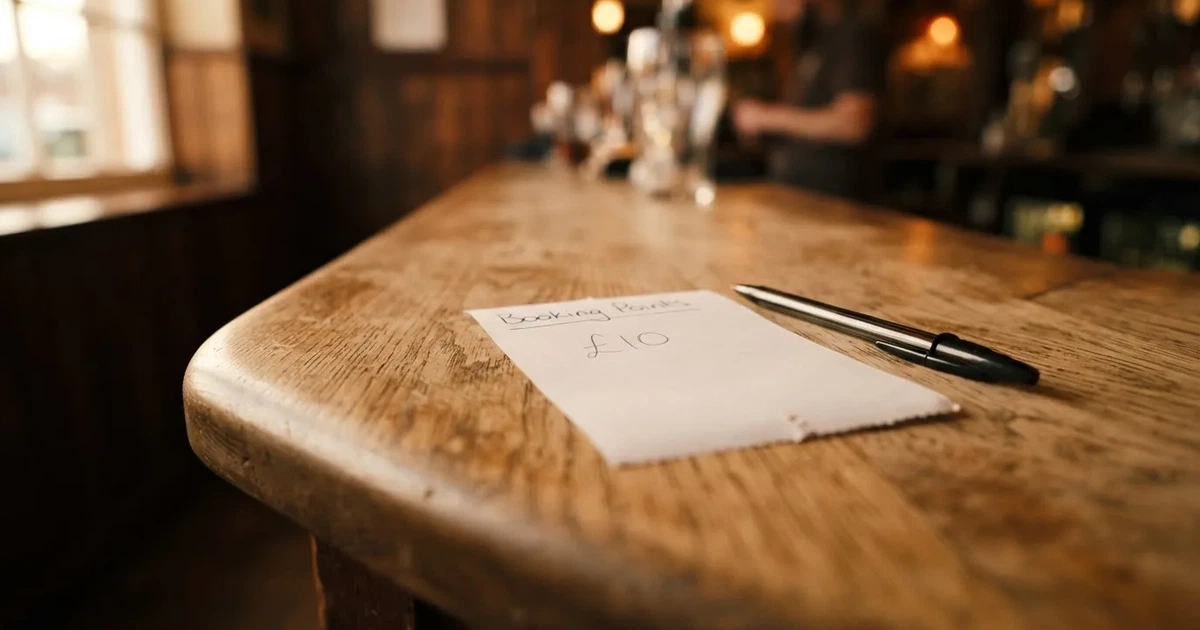
Booking points betting in 2026 has not changed since the last World Cup cycle, but the rulebook around it has. There is a bonus cap now. There is a check that kicks in well before most punters expect. And a licence does not mean what it used to mean online — which is why the first half of this page is about regulation, not selections. Once the legal and pricing basics are out of the way, the actual market is straightforward: totals, points schemes, who offers it, and what to read before you place.
Current as of 27 October 2026, checked against the Gambling Commission’s public register.
Statute: who can take your bet, and why the licence matters
In Great Britain a bookmaker taking online bets needs a Gambling Commission licence. That is the whole test. There is no separate list of “approved” markets and no such thing as a permit to run a booking-points market on its own — an operator holds a licence for a category, then writes its own market rules under the Licence Conditions and Codes of Practice (LCCP). Anyone telling you the Commission picks which football side-markets exist is overstating its reach; what it does is set the floor under the operator who offers them.

The Gambling Commission is a non-departmental public body sponsored by the Department for Culture, Media and Sport. The framework is the Gambling Act 2005, which covers England, Scotland and Wales; Northern Ireland sits outside the Act under its own older legislation. Since the Gambling (Licensing and Advertising) Act 2014, an operator whose remote facilities are used in Great Britain needs a Commission licence wherever it is actually based. A Curaçao, Maltese or Gibraltar licence on its own is not a substitute. If the brand’s name does not appear on the Commission’s public register against a remote betting category, no amount of .co.uk branding buys it the right to take your deposit.
What the register tells you. The Commission’s public register is searchable by business name, trading name, domain or account number, and it is the only document that proves a licence. Three licence types matter for the punters on this page. Remote general betting standard (real events) covers ordinary sportsbooks offering pre-match and in-play betting on real sport, which is what every featured operator below holds. Remote betting intermediary is the betting-exchange licence, used by brands where customers bet against each other. Remote general betting standard (virtual events) covers computer-simulated fixtures, which are not what this page is about but which share a register entry with the real-events licence in many cases. Some operators also hold a casino licence — separate from betting, separate rules, separate financial limits — and a holder of both does not mean the bingo or casino rules flow onto the football side.
The customer-facing protections. The same licence that lets a brand take your money obliges it to check you are who you say you are, that you are over 18, and (from 7 May 2019) that your name, address and date of birth have been verified before you can deposit or place a bet — including with a free bet or a sign-up bonus. Credit cards have been banned for gambling in Great Britain since 14 April 2020, including credit-card-funded payments through an e-wallet; debit cards and direct bank transfers are not covered by the ban. From 31 March 2020 every online licence holder has been a GAMSTOP member by condition, with the multi-operator self-exclusion periods running six months, one year, five years, or five years with auto-renewal. After the minimum, an exclusion stays in force for a further seven years unless the customer asks GAMSTOP to remove it.
The new bits you may not have noticed. A financial vulnerability check under LCCP condition 3.4.4 has been in force since 30 August 2024 and starts to bite once a customer’s deposits minus withdrawals exceed £150 across a rolling 30 days (the trigger applied from 28 February 2025). It is a public-records check — bankruptcies, county court judgments, individual voluntary arrangements — not a credit reference and not an income check. Operators have announced a second stage of “affordability” reviews, but as of the date of this page that plan is staged with no start date, so the right way to phrase it is “announced, staged, no start date”, not “in force”. On the bonus side, wagering requirements on bonuses are capped at 10x since 19 January 2026 — a £10 bonus may not need more than £100 of qualifying bets — and mixed-product promotions that require gambling on two or more product types (for example, “bet on football to get free spins”) are out.
A check costs nothing in cash, slows the first deposit by a minute and prevents an account from ever being opened at any GAMSTOP-signed-up brand for the period chosen. That is worth more than any individual market price.
Jurisdiction: what the licence costs the operator, and what you actually get
Licensed operators are not interchangeable with each other. The Commission’s licence conditions set a floor and a ceiling; the floor is mandatory, the ceiling is mostly commercial.
The maximums. There is no statutory cap on stakes in sports betting, no operator-set minimum above what the bet slip will accept, and no state-set deposit ceiling for ordinary customers. Operators set their own maximum stakes per market and per customer, can refuse or restrict individual accounts, and tighten limits on winning players without notice. The bookmaker decides whether the £500 booking-points bet you wanted to place is actually a stake it will accept; the Commission does not.
The minimums. Identity before first deposit, GAMSTOP coverage from day one, a public-records check once you cross £150 in over a month, a bonus wagering cap that keeps deposit-match bonuses bounded, a complaint route through an approved alternative dispute resolution body, and an operator bound by the LCCP’s social responsibility code when its data suggests harm. Bets and bonus rules flow from a single Gambling Act licence, but the rules around problem gambling, marketing, and reporting sit in a layered stack of codes that the Commission enforces against the operator, not the customer. A licensed operator can still legally refuse your bet; what the licence buys is a regulatory system around that refusal, not a guarantee of acceptance.
The trade-off. A licensed site confirms who you are before it sells you a single selection, takes days to verify your source of funds if your staking rises, and offers a complaints route that ends at the Commission — none of which feels helpful to a punter trying to put a tenner on a Saturday afternoon match. The unlicensed brand skips the lot. The honest framing: licensed means customer protections and friction; unlicensed means none of those protections and the loss of those protections if funds are withheld, with possible loss of deposited money. Neither is “the safe choice” by default and no betting is.
Offshore. Since 2014 a GB licence is compulsory at the point of consumption. Providing gambling facilities in Great Britain without the licence the Act requires is an offence under section 33 of the Gambling Act 2005, with the penalty aimed at the operator (up to 51 weeks’ imprisonment, a level-5 fine, or both on summary conviction in England and Wales; six months in Scotland). No offence aimed at a customer who simply places a bet on an unlicensed site was found in the rules. What the customer loses by going unlicensed is the package of protections — no GAMSTOP, no Commission complaints route, no approved dispute resolution, no British consumer redress if funds are withheld, no application of the 10x bonus cap or the £150 vulnerability check. Enforcement against operators is disruption rather than blocking: cease-and-desist notices, search-engine referrals, work with payment providers and domain registrars, and proposed court-order DNS blocking powers. The clearest way to describe unlicensed is to state what is missing.
Wellbeing: how to read the rules before you start
A booking-points market is a routine fixture for any GB-licensed sportsbook. The rules around it — minimum age, identity verification, the £150 vulnerability check trigger and the GAMSTOP sign-up — apply whichever brand you open an account with, because they sit in the licence, not the brand. Three numbers in particular are worth committing to memory.
The £150 figure is a threshold, not a cap. Below it, a licensed operator is allowed to take your deposits on the checks it already has. Above it, the financial vulnerability check kicks in as a routine step: a public-records search, not a credit reference. The check does not in itself mean anything is wrong; it is the next step in the standard onboarding cycle for customers staking enough for the rule to apply.
The £10 wagering figure is the cleanest mental model for any welcome offer or deposit bonus. A 10x cap means no bonus can demand more than ten times its own value in qualifying bets — and since 19 January 2026 no licensed brand may attach a higher multiple. Mixed-product promotions that link two product types (bet on football, get free spins in a slot game) are out of the market, which removes a category of small-print terms that used to be the worst-value offers.
The credit-card ban is the cleanest payment rule to remember. A credit card may not be used to fund a gambling account at a GB-licensed brand in any direct or indirect way, including an e-wallet funded from a credit card. Debit cards, bank transfers and most e-wallets are not affected. Withdrawals go back to the same payment method that funded the deposit wherever the operator can send them.
When a brand carries those three numbers in its terms — and every reviewed operator below does — the legal frame is in place. If the punt goes wrong, the safeguards that should catch a customer are GAMSTOP for self-exclusion, the Commission’s approved ADR for complaints, the 10x cap on bonus terms, and a brand held by the Commission for any licence breach. None of those substitutes for the customer’s own limits.
Help lines. GamCare (which runs the National Gambling Helpline), GambleAware, the NHS gambling clinics, and Gamblers Anonymous are the four mainstream routes, all free. The British format is to call the helpline first; GamCare advisers triage to the other services rather than handing out one number per organisation.
Selection: how a booking-points market is built
A booking-points market is a totals market on yellow and red cards, settled on a points scheme set by the operator. Both common schemes assign ten points to a yellow card and twenty-five to a red card, with a straight red on its own worth twenty-five and a second yellow (which produces the red itself) counting as ten only. The most common alternative scheme gives ten for a yellow, twenty-five for a straight red, and thirty-five for a second yellow producing a red — because the second yellow is, to the betting settlement, the more violent of the two offences. The two schemes produce different numbers from the same game, which is why the price next to “Over 40.5 points” looks generous on some fixtures and stingy on others.
The market is presented as a two-way contest. The book offers an Over and an Under on a chosen line, typically between 30.5 and 60.5 points depending on the league and the referee. Each selection has its own decimal price, the price carries the bookmaker’s margin, and the bettor takes one side. Settlement uses the official competition ruling rather than live data: VAR-induced cautions, post-match rescinded cards and retrospective punishments from the FA or the FAW do not all flow into the same settlement, and a market rule that names the source of the ruling makes a real difference at the edge.
Three things set a booking-points market apart from a standard goals market. There is no favourite on the totals line in the same sense as there is on the 1X2 — a derby between two disciplined sides and a stormy relegation six-pointer can price closer than the form suggests. The driving factor is the referee, not the teams: the same fixture under a different official is a different market, and odds compilers price for the named referee. And the market tends to drift rather than trade as the match plays: cards come in clusters after a flashpoint, not in the steady drip of chances, so the in-play price moves in steps. The price next to Over 40.5 at half-time may bear no relation to the price at the same scoreline with twenty minutes gone.
The match result is irrelevant to settlement. A 4-0 game with one card and a 0-0 game with eight cards can produce identical booking-points lines. That is what the market tests — not who wins, but how the match is reffed.
Settling. Bookmakers publish a settlement source per market. The standard for English football is the official FA / Premier League match report, which takes account of any retrospective red card rescinded on appeal *before* the betting result is computed; the league’s decision after a sufficient cut-off is the ruling one. The minority rule is to settle on the on-pitch final, with a footnote that the bet may be revised if a card is rescinded within a stated window. The two rules differ by a card a year that matters to about one booking-points bet in five hundred. Read the rule before you place.
Each-way is not offered on totals markets in the same way as on outright or scorer markets, but a booking-points line with a settled result can sit as a leg in an each-way accumulator, with the place terms reflecting the multi-leg structure. The detail is in the bet-slip rules rather than the market page itself.
Cash out. Most GB-licensed sportsbooks settle booking-points markets the same way they settle any other in-play market for cash out: the price is recomputed from the current totals and the operator’s margin, and a bet that goes cash-out early is settled at the operator’s quoted price at that instant. The proportion paid back is rarely more than the live price would imply, and a brand that promises a “fair” cash-out figure is rarely offering one. The honest position: cash out is a tool for getting out of a position at a known price, and a known fraction of what the same bet would be worth if held.
Staking: the price and the margin, and why they never square
The decimal odds printed next to a selection are not what the bet costs you. They are what the operator promises to pay back for each pound you stake if the selection wins, including your pound as part of the return. A decimal price of 1.90 means a £10 stake returns £19.00 if it wins; the £9.00 above the stake is the net profit, the £19.00 is the return. The arithmetic is the same wherever the price sits.
Two prices in a market are not the same story. Take an illustrative two-way market priced 1.90 / 1.90 — used here as a worked example rather than a quoted price. The book pays 1 ÷ (1 ÷ 1.90 + 1 ÷ 1.90) ≈ 0.95 per pound staked across the whole market at full cover, keeping roughly 5 % as margin. That 5 % is the overround: the slice of every pound staked that the operator keeps in the long run, before any other cost. The bookmaker does not “win” 5 % of the bet when the bet loses; the 5 % is the share of total stakes across all outcomes that the operator holds, whatever side wins, on this market. Both sides at 1.90 means the book pays the same on either outcome and the margin is the wedge. A market priced 1.80 / 2.00 has the same 95p payout per pound staked and the same 5 % wedge, but the prices are skewed because the operator expects an unbalanced book on those selections.
Booking-points markets price close to symmetric in mid-table fixtures with a moderate-harsh referee, and skew toward Over on a referee known for the card. A market on a Premier League game that settles at 1.80 / 2.00 is around a 5 % margin if the prices reflect the operator’s actual view of outcomes; if it settles at 1.85 / 1.95, the operator expects unbalanced money on the Under. The shape of the prices is information about the bookmaker’s book, not just the match.
Combination prices multiply. A four-leg acca priced at 1.90, 1.90, 1.90 and 1.90 has a combined price of 12.97 — but the operator’s margin compounds too. A single market priced at a 5 % margin carries roughly a 5 % margin for that leg; an accumulator of four such legs carries roughly a 19 % margin across the combined price, because each leg takes its slice. The price looks generous and the multi is paid out of your stake. An acca is a leveraged position on one outcome of four matches, paid in a chunk rather than rung up over the day.
Return. For any settled single, return = stake × price. For any settled combination, return = stake × price of leg 1 × price of leg 2 × … and so on. Profit is return minus the stake. The figure the bettor cares about is the return; the figure the marketing of any welcome offer talks about is the profit.
Shortlist: how the featured operators stack up
Ten GB-licensed sportsbooks and one betting exchange carry a booking-points market on a typical Premier League weekend and an FA Cup midweek. The list below is built from the Gambling Commission’s public register for remote general betting standard licences active against customers in Great Britain, plus one remote betting intermediary that holds a licence of the same kind. Several of the brands named sit under the same ultimate parent, but each licence is a separate register entry with a separate account number and a separate licence holder — the parent relationship is not a substitute for a Commission licence.
A note on the table. The first column names the brand a punter sees. The second carries the Gambling Commission account number — the same number that appears in the Commission’s public register — and the legal entity behind the licence. The third column carries a brief reading of the brand’s own terms on the booking-points market itself, drawn from each operator’s published rules. It is not a judgement of which brand has the “best” market; that varies match by match and the Commission’s register does not record pricing.
| Brand | Licence (account number, holder) | What the operator’s own terms state on the booking-points key |
|---|---|---|
| Bet Ahoy | 100094, Bet Ahoy Ltd | Standard bookmaker with a welcome offer framed around a £10 sports leg and a £10 acca leg; booking-points markets offered on the main football leagues |
| DragonBet | 64908, DragonBet Ltd | Strong on Welsh football and rugby fixtures alongside the mainstream leagues; booking-points markets sit within the standard football offering |
| BetTom | 64959, Bet Tom Limited | Standard bookmaker with a sports welcome offer set up as 50 % back as a free bet to £50; booking-points markets offered on the main leagues |
| Smarkets | 39173, Smarkets (Malta) Limited | Betting exchange; commission charged on net winnings rather than margin built into prices; booking-points markets are peer-to-peer with the exchange’s own commission |
| Paddy Power | 39439, PPB Counterparty Services Limited | Features Bet Builder+, Popular Bet Builders and Super Sub on the bet builder; booking-points markets sit within the in-play offering on a typical Premier League fixture |
| Bar One Racing | 56516, Bar-One Racing Limited | Irish roots with shops across Ireland and horse-racing sponsorships; football offering includes booking-points markets on the major leagues |
| Fitzwilliam Sports | 48760, SBKI Limited | Prices based on Oddschecker averages across selections; mobile app on iOS and Android; booking-points markets standard |
| Betmaster | 65699, BM Solutions GB Ltd | Standard sportsbook operating under a Malta-domiciled GB licence holder; booking-points markets sit within the regular football offering |
| Lottoland | 38991, EU Lotto Limited | Combines lottery betting with a sportsbook and casino in the same app; football offering includes booking-points markets on the main leagues |
| 888sport | 39028, 888 UK Limited | Pre-match and in-play with cash out, bet builder and racing streams; booking-points markets standard on Premier League and Championship fixtures |
A punt does not become a Comparison just because ten brands are listed. The list above shows the field; what follows reads each operator on its own terms, in the order set by the Commission’s register for the reviewed set.
Bet Ahoy
Bet Ahoy is a small, recently licensed GB sportsbook. Its Commission account is 100094, in the name of Bet Ahoy Ltd, and the licence covers remote general betting standard for real events. The welcome offer attached to the brand is “Bet £10 & Get £10 in Free Bets”, split between a £5 sports leg and a £5 acca leg, and the standard mechanics of a welcome offer apply. On the football side the brand offers a regular booking-points market on the main English leagues, with settlement from the same official ruling used by the wider market. The quiet weakness is depth: a small operator does not always carry the lower English leagues, and price depth on Championship and below may be thinner than the volume on Premier League fixtures. For a punter who bets in Premier League fixtures on the small-ticket markets and cares about a £10 welcome offer over a year, the brand fits; if you want FA Cup third-round or National League card totals, you might prefer a larger sportsbook.
DragonBet
DragonBet’s licence (account 64908, holder DragonBet Ltd) sits alongside its strongest suit: Welsh football and rugby. Its app lists Welsh football and rugby markets alongside racing, American football, in-play betting and bet builder markets, which makes it a regular first port of call for Welsh Premier League and Welsh rugby card totals. The pricing depth on Premier League booking-points is comparable to other GB-licensed sportsbooks, and the operator’s own in-play offering extends to standard card-totals markets. For a punter who follows the Welsh leagues, this is one of the narrow set of GB-licensed brands with a genuine menu for those fixtures. For a punter who only bets Premier League cards, it offers no advantage over any of the larger sportsbooks.
BetTom
BetTom is a GB-licensed sportsbook under Bet Tom Limited, account 64959, with the standard remote general betting standard (real events) licence. Its welcome offer sets up a 50 % back as a free bet of up to £50 on the sports side, mirrored by a 50 % back up to £50 in free slot funds for the casino. The figure is paired — which the post-19 January 2026 mixed-product cap would forbid if the two halves were tied together. Both halves are independent promotions under the operator’s terms, so the cap is respected. The booking-points offering is standard for a GB-licensed sportsbook of its size, covering the main English leagues with a regular two-way market on the totals line. For a punter chasing the larger welcome bonus on a small bankroll, BetTom is the kind of brand that pays £50 of free bet on a £100 first deposit, with the standard £150 vulnerability check trigger sitting behind it for higher staking.
Smarkets
Smarkets is the only betting exchange on this list and is licensed as such, under Commission account 39173 in the name of Smarkets (Malta) Limited. A betting exchange does not take the other side of a customer’s bet; customers bet against each other, with the operator taking a commission on net winnings rather than a margin built into each price. Smarkets’ standard rate is 2 %, and the brand has offered a 0 % commission rate for the first 60 days against a minimum first deposit of £10. A booking-points market on an exchange is a peer-to-peer two-way market: the punter either backs Over 40.5 points or lays Over 40.5 points, at a price set by other customers, with the operator’s commission paid only on net winnings. For a punter who prefers pricing set by the market rather than by a bookmaker, the exchange is the natural choice; for a punter who wants a brand-set price and a stake accepted at a published price, an exchange forces the customer to set the price.
Paddy Power
Paddy Power sits under PPB Counterparty Services Limited, account 39439, the same parent group that holds the Betfair licences. The brand’s football product is among the broader offerings available to a GB punter: Bet Builder+, Popular Bet Builders, the Super Sub mechanic (a bet rolls over to the replacement if a selected player is substituted), expanded Win More markets and player and acca statistics. Booking-points markets sit within the in-play offering on the typical Premier League weekend, with the standard cash out mechanics applying during play. For a punter who also enjoys combining markets via the bet builder, Paddy Power’s UI is among the smoother ones in the GB-licensed field. For a punter whose book is purely on card totals, the bet builder is wasted, and any of the broader sportsbooks would do.
Bar One Racing
Bar One Racing rebranded as Bar 1 Betting, an Irish-independent operator with shops across Ireland and racecourse sponsorships at Dundalk, Fairyhouse, Navan, The Curragh, Curraheen Park and Cork. Its remote licence is in the name of Bar-One Racing Limited, Commission account 56516, and the licence covers the same remote general betting standard category as the larger GB sportsbooks. Football offers booking-points markets on the major leagues; the racing sponsorships do not translate into a card-totals advantage. For a punter based in Ireland or visiting Irish race meetings, the shop network may matter; for a GB-only card-totals punter, the brand is interchangeable with any of the GB sportsbooks on the list.
Fitzwilliam Sports
Fitzwilliam Sports runs under Commission account 48760, held by SBKI Limited. The brand’s distinguishing feature is its pricing model: prices are based on Oddschecker’s average price for each selection, which puts the brand closer to the market average than a margin-driven sportsbook would be. The brand has iOS and Android apps alongside the desktop site. Booking-points markets are offered on the standard leagues. For a punter whose complaint about sportsbooks is that the prices lag the rest of the market, Fitzwilliam’s pricing model removes that complaint; those expecting an edge in proprietary markets will find none, as the brand’s whole pitch is avoiding any attempt to outsmart the field.
Betmaster
Betmaster operates under BM Solutions GB Ltd, a Malta-registered GB-licensed holder, Commission account 65699. The brand carries the standard remote general betting standard category and offers a regular football menu. Booking-points markets on the major leagues are standard. The Malta-domiciled licence holder is not a weakness — GB law requires a Commission licence wherever the licence-holder is based, and the register records this one as active — but it is the kind of detail a punter checking the Commission’s public register before sign-up will notice. For a punter who already has accounts with the larger brands and wants a second-tier option for smaller leagues, Betmaster sits in that category.
Lottoland
Lottoland is one of two lottery-betting brands on the GB-licensed roster, alongside a sportsbook and a casino in the same app. Commission account 38991 is in the name of EU Lotto Limited, with the standard remote general betting standard category covering football. The brand offers a booking-points market on the main English leagues as part of a broader menu that mixes lottery betting and scratchcards. For a punter who already plays lottery draws and wants a sportsbook as a sideline, Lottoland bundles the two; for a punter looking for a sportsbook-led offering, the brand is a sideline product rather than the main pitch.
888sport
888sport sits under 888 UK Limited, Commission account 39028, the GB arm of the wider 888 group. The football product is straightforward: pre-match and in-play betting, cash out, bet builder, racing streams, a BetFinder form tool, a live bet feed and daily boosted odds. Booking-points markets sit within the in-play offering on a typical Premier League fixture. The brand’s strength is the volume of football markets and the broader offering on the same app; the brand is interchangeable with the other volume sportsbooks on the booking-points market itself.
A verdict across the ten. The reviewed set is interchangeable on the booking-points market itself. Differences sit on the wider product offering (a bet builder, a Super Sub, an exchange model, a Welsh-league menu), the welcome offer framing and the price-depth in lower leagues. None of the ten offers a price-edge on card totals that the rest of the market does not reflect within a minute or two.
Fundamentals: a one-paragraph refresher for the betting slip
A booking-points market is settled on the sum of card points under the operator’s published scheme, usually ten for a yellow and twenty-five for a red card, with a second yellow producing a red counting once at ten. The market is a two-way total on a chosen line. Settlement uses the official competition ruling under the brand’s published rule — which can read from the on-pitch final or apply retrospective cancellations. Cash out is offered at the operator’s quoted in-play price and is rarely more generous than the live price. No operator-set maximum stake is guaranteed, and identity is verified before the first deposit. The bookmaker’s margin sits inside every decimal price, and a market priced 1.90 / 1.90 keeps around 5 % of total stakes regardless of the result.
FAQ
What are booking points in betting?
A booking-points market is a two-way totals bet on the points a referee awards in a football match. A yellow card is typically worth ten points and a red card twenty-five, with the operator publishing the exact scheme in its market rules. The punter picks whether the final card-points total goes Over or Under the line the book offers.
What is a booking points market at a bookmaker?
It is one of the side markets offered by GB-licensed sportsbooks on each football fixture, sitting alongside match result, both teams to score, total goals and player markets. The settlement comes from the official competition ruling, not live data, so any post-match rescinded cards do not all flow into the same result — the brand’s rule names the source.
Which bookmakers offer booking-points betting in Great Britain?
Any GB-licensed sportsbook with a remote general betting standard licence offers the market on the main English leagues, and most extend it to the Championship and the top European leagues. The featured set above is the roster that holds a current Commission licence for that category; the Commission’s public register is the only definitive list.
How is the return on a bet worked out from the stake and the odds?
Return = stake × decimal price. A £10 stake at 1.90 returns £19.00; the £9.00 above the stake is profit, the £19.00 is the total paid back. For a combination bet the prices of each leg multiply into a single price before the stake is applied.
What is the bookmaker’s margin and how can it be seen in the odds?
The margin is the slice of total stakes the book keeps, on average, across every outcome of a market. In a two-way market priced 1.90 / 1.90, the book pays back around 95p per £1 staked across both sides and keeps the remaining 5p as margin. In a market priced 1.80 / 2.00, the wedge is the same 5 % but the prices are skewed because the operator expects more money on one side than the other.
How can a punter check that a bookmaker holds a Gambling Commission licence?
Search the Commission’s public register by business name, trading name, domain or account number. The register records the licence category (remote general betting standard, betting intermediary and so on), the licence holder and the licence status. The same register is what the booking-points bet is being placed under, and the same register is what gives the customer the protection of the 10x bonus cap, the £150 vulnerability check trigger and the GAMSTOP coverage.
Bet types & in-play – Footy Tips
Content created by the «Footy Tips» team
