
Horse Racing Betting Predictions in 2026: What a Tip Actually Costs the Punter
 Available in US
Horse racing sits at the centre of British betting for a reason. It was the first sport on which the modern bookmaker took money, and it is still where the deepest pool of liquidity meets the widest menu of bet types — win, place, each-way, forecast, tricast, accumulator, ante-post. Every conversation about a “prediction” lands on that menu sooner or later, and the prediction itself is almost never the expensive part. What costs the punter is the gap between the price they take and the true probability the horse runs to — a gap the bookmaker sets, builds into every line, and recovers pound for pound across thousands of bets.

This guide explains the parts a tip sheet never does. How a value bet is built out of form, statistics and the market’s own odds. How the bookmaker’s margin hides inside those odds. How a return is calculated and why an each-way bet doubles the stake without doubling the payout. How to verify that a brand actually holds a Gambling Commission licence. And which controls the regulator now requires a licensed bookmaker to put in front of a customer who is gambling through their deposit faster than they meant to.
The angle is cost — what this costs the reader. Horse racing is a sport of small edges and slow burn, and the few cheap gains a punter can make (Best Odds Guaranteed on the morning of a race, a place part on an each-way wager, an exchange lay bet rather than a back bet with a bookmaker) are nowhere near large enough to undo a margin being collected on every bet. The pages that follow are written from that side of the counter.
> 27 October 2026 — licence status was checked against the Gambling Commission’s public register on that date.
Horse Racing in Britain: What the Punter Is Actually Betting On
Before anything is said about predictions, the sport needs a shape. Flat racing covers sprinters and middle-distance horses on a level surface; jump racing — hurdling and steeplechase fences — is called National Hunt in Britain and Ireland and is the form of the sport most casual punters see on a Saturday afternoon between November and April. Both codes are run as professional, regulated racing under the British Horseracing Authority, and both are covered by every mainstream UK bookmaker.
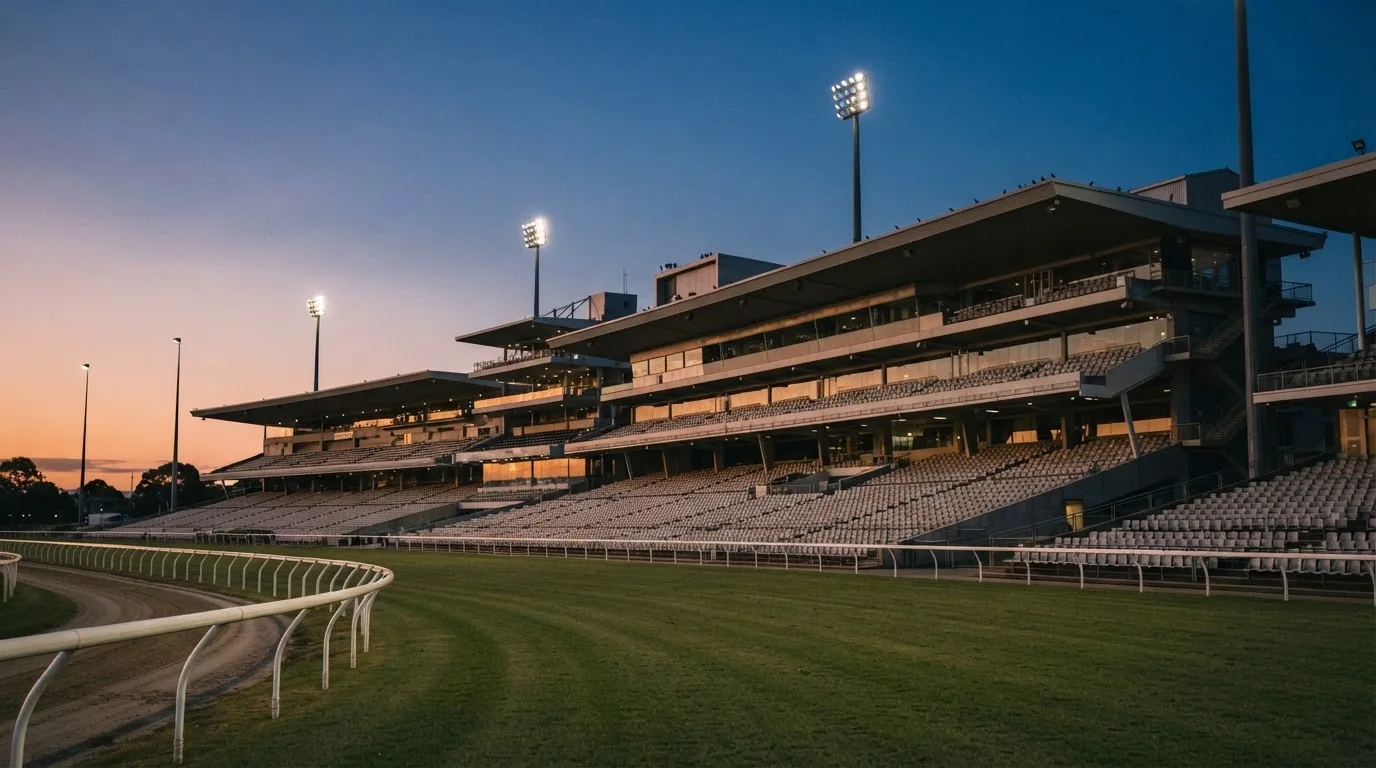
Distances are stated in furlongs and miles. Flat races range from five furlongs (just over a kilometre) up to two miles and beyond; jumps start at about two miles and run to the extreme distances at Cheltenham and Aintree in the spring. The common distances sit between five and twelve furlongs, the band over which form reading and sectional times are most reliable.
Weight drives the handicap system. In a handicap every horse carries a weight set by the handicapper, with the better horses carrying more to level the field at the finish. In a conditions race the weights are fixed and allowances are given to younger horses, to fillies and mares, and to horses that have not won certain races. A punter who knows only the form will still be at sea on a heavy going day if they have not thought about what each horse is being asked to carry.
The British classics are the skeleton of the flat season. The 2000 Guineas at Newmarket in early May, the Derby at Epsom in early June and the St Leger at Doncaster in September make up the British Triple Crown for colts and fillies; the Irish equivalents sit alongside. The pattern of those races, and the trials that feed into them in March and April, is what most form analysts spend their winter reading.
Prediction work, then, is never one thing. It is form reading against a handicap weight, against the going (the official going description issued on the morning of the race), against the draw at the relevant course and distance, against a sectional-time profile that more and more bookmakers now expose in their racecards. A “tip” that carries none of that is a name picked for the colour of its silks.
The Market Shapes That Change What a Prediction Costs
A bet does not pay the same in two different market shapes. Three structures dominate horse racing.

The win market is the simplest: one horse, one price, win or lose. The each-way market is two bets of equal stake — one on the horse to win, one on the horse to be placed. A “place” means finishing in the first two, three or four, depending on the number of runners and the bookmaker’s place terms; a £5 each-way bet costs £10 because it is two bets of £5 each, and the return is the win part plus the place part if the horse is placed, or the place part only if it is not. The place part pays a fraction of the win odds, usually a quarter or a fifth, and that fraction is set by the race type.
UK each-way terms run on a fixed schedule. Handicaps with sixteen or more runners pay a quarter of the win odds for the first four places. Handicaps with twelve to fifteen runners pay a quarter for the first three. Non-handicap races with eight or more runners pay a fifth for the first three. Races with five to seven runners pay a quarter for the first two. Races with fewer than five runners pay the win part only — there is no place part at all. A punter who reads “each-way” without reading the place terms is taking two bets they may not have agreed to.
A £10 each-way bet on a 10/1 horse at quarter place terms with three places paid costs £20. If the horse wins, the win part returns £110 (stake plus profit) and the place part returns £35, for a total of £145. If the horse finishes second, third or fourth, the win part loses and the place part returns £35 — a £15 net loss on the combined stake rather than a £20 wipeout. The each-way structure exists for one reason: it gives the punter a partial payout on a horse that runs a creditable race without winning it, and it gives the bookmaker a second margin to take on the same horse.
Forecast and tricast markets pay out on the first two or three in the correct order. They are higher-margin products than win and place; prices are displayed as single dividends per combination, and the bookmaker’s take is harder to see at a glance. Ante-post markets let the punter back a horse weeks or months in advance of a race; prices are larger because the field is less certain, but if the horse does not run, the stake is usually lost — the difference between ante-post and the day-of-race market is exactly that non-runner risk.
Why a “Prediction” Is Two Different Numbers
In theory, a prediction is a statement of how likely a horse is to win. In practice, it is two numbers in tension with each other.
The first is the probability the punter believes the horse has — built from form, going, draw, weight, sectionals, jockey, trainer patterns, the speed map of the race. The second is the implied probability the bookmaker’s odds carry, which is the reciprocal of the decimal odds (a 4.00 shot implies a one-in-four chance of winning). A value bet is one whose price implies a probability smaller than the punter’s own estimate. The bookmaker’s margin, however, is already taken out of the price the punter sees; what looks like 4.00 is closer to 3.80 once the margin is removed, and so the punter’s own estimate has to clear that bar, not the headline one.
That is why so few “tips” turn out to be value, even when the horse wins. A 5/1 shot whose true probability was 6/1 (a 16.7% chance) wins 16.7% of the time across a large sample. The punter who backed it because they preferred the horse at a price loses nothing on that single bet but loses the spread between their estimate and the implied probability across every losing bet in the same sample.
How UK Bookmakers Are Regulated, and Why That Matters at the Slip
The commercial market for betting in Great Britain is licensed by the Gambling Commission, a non-departmental public body sponsored by the Department for Culture, Media and Sport. The framework is the Gambling Act 2005, which covers England, Scotland and Wales; Northern Ireland runs separate legislation and is not covered by a Commission licence written under the 2005 Act. Since the Gambling (Licensing and Advertising) Act 2014 the test is point of consumption: an operator whose remote facilities are used in Great Britain needs a Commission licence wherever the operator itself is based. A Curaçao, Maltese or Gibraltar authorisation does not by itself entitle a brand to take bets from a customer sitting in Manchester.
Five licence categories cover the online market punters actually use. Remote general betting standard (real events) covers fixed-odds betting on real sporting events, which is what most horse racing bets are placed under. Remote general betting standard (virtual events) is a separate category and is its own licence. Remote general betting limited covers smaller operators with restricted product offerings. Remote pool betting is the tote’s category, in which money is pooled rather than priced against the bookmaker. Remote betting intermediary covers betting exchanges, where customers back and lay against each other rather than against the bookmaker.
The Commission’s public register is the whole test of who is licensed. It can be searched by business name, trading name, domain or account number. Every brand reviewed later in this guide holds an active entry on that register on the date of the check at the head of this article; the licence number and licence holder sit beside each name in the comparison table, and a reader who wants to verify them on the register can do so by searching the licence number.
What a Commission licence does, in practice, is bind the operator to the Licence Conditions and Codes of Practice (LCCP) and to a set of Remote Technical Standards. There is no statutory list of permitted bet types or sports. Identity verification — name, address and date of birth — has been compulsory before the first deposit since 7 May 2019, including before a customer uses a free bet or bonus. The minimum age is 18. Credit cards have been banned for gambling in Great Britain since 14 April 2020, including credit-card-funded payments made through an e-wallet; debit cards and bank-based payments are not covered.
What the LCCP Forces onto the Slip
Three controls bear directly on the punter’s experience, and they are worth knowing in full because they cut across every operator reviewed below.
Deposit limits under RTS 12. Operators must offer a gross deposit limit on a fixed time frame — daily, weekly or monthly — that the customer can set themselves. The first changes applied from 31 October 2025. A second phase has been postponed to 30 September 2026, and whether that second phase is live is not established from the public register. There is no state-set ceiling; limits remain the customer’s choice and the operator’s obligation.
Financial vulnerability checks under LCCP condition 3.4.4. Since 28 February 2025, when a remote betting customer’s deposits minus withdrawals exceed £150 in a rolling 30 days, the operator must run a public-record check (bankruptcy, county court judgments, similar registers). It is not a credit-reference check and not an income check; it is a check that a customer can in fact meet the obligations a debt could create. A financial risk assessment — the “affordability check” of the press coverage — has been announced in a staged plan, with no start date, and should not be written about as if in force.
GAMSTOP self-exclusion. Since 31 March 2020 every online operator licensed by the Commission must take part in GAMSTOP, the national multi-operator exclusion scheme. A customer can register a six-month, one-year, five-year or “five years with auto-renewal” exclusion; after the minimum period the exclusion stays in place for a further seven years unless the customer actively asks GAMSTOP to lift it. GAMSTOP covers online sites and apps; betting shops use a separate in-shop service. There is no equivalent centralised exclusion on the high street.
Bonus terms under the CAP Code. Since 19 January 2026 the Committee of Advertising Practice rules cap wagering requirements on bonuses at 10x (a £10 bonus at 50x needed £500 of qualifying bets; under the cap no more than £100), and mixed-product promotions — for example an offer that requires gambling on both betting and casino to clear the bonus — are banned. The cap concerns wagering terms that the operator imposes, not the bonus headline.
Together these controls make a licensed brand materially different from an offshore one. A licensed bookmaker will verify identity, will run the GAMSTOP exclusion, will accept a deposit limit, will stay inside the bonus cap and will run a vulnerability check where the spend pattern triggers it. A brand that does none of those things is not licensed under the 2005 Act at all, and the punter who uses it loses the consumer-protection side of the bargain — no Commission complaints route, no approved alternative dispute resolution, no recourse in Britain if funds are withheld.
The Cost Side of a Licensed Brand
The cost of operating with the licence is not zero, and it surfaces in places the punter can feel. Identity checks slow the time to first bet by a measurable margin at the bigger brands. Source-of-funds questions at higher spend levels are normal under the anti-money-laundering regime and can stall withdrawals. The bonus cap stops a brand from competing on sheer generosity; the right comparison is between offerings that are already constrained, not between a constrained offer and an unconstrained offshore one. The punter pays for that protection in time, occasionally in the loss of a promotional headline, almost always in the certainty that the brand exists at a registered UK address.
The upside is what it always was. Funds held by a GB-licensed operator sit in client accounts that are ringfenced from the operator’s own trading balance. A dispute over a settled bet has an approved alternative dispute resolution route in the shape of either the Independent Betting Adjudication Service (IBAS) or another approved provider; the LCCP binds the operator to honour it. The spread of consumer protection is the difference between a punt and a wager of last resort.
Responsible Gambling: What a Licensed Brand Has to Put in Front of the Customer
The safer-gambling controls are statutory for licensed brands. They sit alongside the menu the punter uses, and they are described here in the form a customer encounters them, because the answer to the question of whether a bookmaker takes responsible gambling seriously is measured at the deposit screen, not in the marketing copy above it.
Deposit limits. The customer can set a daily, weekly or monthly deposit limit from their account or by contacting customer services; any reduction takes effect immediately, and any increase has a cooling-off period during which it can be reversed. Operators must offer these limits, and the limits apply to gross deposits (the customer cannot exclude one payment method to bypass them). A state-imposed ceiling does not exist.
Reality checks. A pop-up that interrupts a long betting session to tell the punter how long they have been on the site and what their session stake or session loss looks like. The exact thresholds vary by operator; sessions over an hour are commonly caught.
Time-out and self-exclusion at the brand. Time-out is a short pause of anything from 24 hours to six weeks; self-exclusion at the brand level is longer, normally at least six months and at the customer’s choice. GAMSTOP is the cross-operator version of the same idea, and once registered the customer cannot open new accounts at participating brands during the exclusion period.
Self-exclusion at the brand level used to be the only option. GAMSTOP makes it a national mechanism rather than a local one, and the seven-year tail beyond the minimum period means that a customer who registers for five years cannot be enticed back by an offer at year six; they would have to ask GAMSTOP to lift the exclusion, in writing, and many do not.
Product restrictions. A customer can ask to be excluded from particular product types — casino, slots, sports betting, poker — even while leaving a deposit account open. This is a piece of the customer-protection toolkit the LCCP binds operators to honour.
Independent help. GamCare runs the National Gambling Helpline, a 24-hour service available by phone and online chat. The NHS runs clinics in several regions for problem gambling treatment. Gamblers Anonymous runs in-person and online meetings. The brand’s own safer-gambling section points to one or more of these and to its own deposit and exclusion tools. Anyone who has started to chase losses, bet money earmarked for something else, or hidden betting from people around them should call one of those lines before placing another bet.
What this looks like at one specific licensed brand. Unibet’s UK site lists deposit limits, a Player Profile test, product restrictions and self-exclusion alongside live chat support, and links out to BeGambleAware, GamCare, GAMSTOP, Gambling Therapy and the BGC. Other brands carry the same list with different wording; the set of tools is the licence-condition set, not a marketing choice, and every brand reviewed below is required to offer them whether or not it advertises them.
Building a Prediction: Form, Sectionals, the Market and the Margin
A prediction in horse racing is not one act but a chain of four. Form reading sets the order of the horses from past performances. The market prices that order against what other punters think. Sectionals and speed maps refine the order by how the race is likely to be run. The margin is then subtracted, and what is left is the price at which the punter is willing to back the horse.
Each link has to clear before the next one is useful.
Form reading. Past performances are the heaviest signal a punter has. Wins, places, course-and-distance records, going preferences, draw bias at the relevant course and distance, trainer-jockey combinations, recency (a horse that has not run for 300 days is rarely a proposition), and the way a horse’s form has trended over its last three runs. Form is read against weight in handicaps — a horse stepping up four pounds for a fourth win in a row is asking a serious question of the handicapper.
The market. The bookmaker’s market price is the average opinion of everyone who has backed and laid the horse at that brand. A horse whose price shortens through the morning of the race is being backed by people closer to the money, and that movement is a signal — but it is also what the bookmaker wants: a stable book, with money on the favourite and on the longshots, balanced by enough margin to make a profit across the field.
Sectionals. Sectional times split a race into the first quarter, middle half and final quarter (or finer). A horse whose sectionals show a fast finish from the turn is one whose price should respect the going and the pace of the race. A horse that runs the same time on fast going as on soft going is either a model of consistency or a horse whose sectionals have not been looked at properly. The skill is in reading what sectionals say about how the race will be run, not just about how the horse has run before.
The margin. Every price carries the bookmaker’s margin. The margin is what the bookmaker keeps of every unit bet on a market, regardless of which horse wins, and it is the difference between the true odds (the prices that would balance the book exactly) and the prices the punter sees. A typical win market on a horse race carries a margin of somewhere between 8% and 15% on a routine Saturday; place markets carry more, and forecasts and tricasts carry more still.
A worked example for the margin. Take an illustrative two-way market at decimal odds of 1.90 against 1.90 — a line that is rarely offered on a horse race but that shows the arithmetic cleanly. The implied probability is 1 ÷ 1.90 = 52.63% for each outcome. Two outcomes at 52.63% each give a sum of 105.26%, and the 5.26% over 100% is the margin — the slice of every pound bet the bookmaker expects to keep on the market in the long run. The remaining 94.74% is the payout share the bookmaker returns to winning punters.
Two things follow.
First, on a real horse race with twelve runners the picture widens. The twelve implied probabilities sum to far more than 100%, and the difference between that sum and 100% is again the margin. A bookmaker offering 6.0, 8.0, 9.0, 11.0, 13.0, 15.0, 21.0, 26.0, 34.0, 41.0, 67.0 and 101.0 on a twelve-runner race has an implied-probability sum of about 117%; the margin is the 17% above 100%, and the payout share is 83%. The wider the field, the larger the margin in absolute terms and the smaller the chance the bookmaker loses on the race.
Second, the band is the honest summary. A bookmaker’s margin on a typical Saturday horse race sits roughly between 12% and 25% depending on the race type, the liquidity and the operator. On a major festival meeting the prime win markets narrow, and on a small midweek handicap they widen. Place markets carry more, ante-post carries more again, and forecasts carry the most because the punter has to pick two or three horses in the correct order. The page never quotes a precise margin for a specific race unless the price is given with a snapshot date — and most prices are not.
Where Predictions Come From, and What They Are Worth
Three sources of predictions exist, and each costs differently.
Tipsters. A tipster is paid in one of three ways — a flat subscription, a profit share, or affiliate revenue from the bookmaker they recommend. The honest end of the trade publishes a verified record over hundreds of selections, with a stated staking plan and a stated method; the dishonest end publishes last week’s winners and asks for the month’s subscription up front. The difference between them is whether the verified record is independently checked and how big the sample is. A punter who pays for a tipster’s tips should be paying for the time, not the tip.
Form services and sectional databases. These are not predictions; they are the raw material a punter uses to build one. They are billed monthly, the data is the same as the racing press’s, and their value is in presentation and search rather than in any judgement. Racing Post, Timeform, Raceform and the Racing API services built on Equibase and similar feeds are the best-known names; sectional-time feeds from Sectional Data UK, the Racing Data PPI and Trakus are the more specialist end.
Exchange lay bets and traded prices. On a betting exchange a punter can back a horse to lose (lay). The market price on an exchange is the midpoint between the best back and the best lay, and because the exchange takes a small commission rather than a margin embedded in the price, the implied margin is tighter than on the same race at a traditional bookmaker. The cost is that liquidity on smaller races is thin, and the punter pays commission on net winnings rather than a margin in the odds.
A prediction is worth what its track record says it is worth, and a track record over a small sample is not a track record. That is the sentence the rest of the book lives under.
What an Each-Way Bet, a Place Part and Best Odds Guaranteed Actually Cost
Three product features dominate the horse-racing side of the modern bookmaker, and all three have a cost the punter pays in attention if not in pounds. Each is described in the form it takes at the betting slip, then in the form it costs.
Each-way betting has been covered above. Two bets of equal stake on the same horse — one to win, one to be placed at a stated fraction of the win odds. The cost is a doubled stake; the trade-off is a partial payout if the horse runs well without winning. Most place terms on UK racing pay a quarter or a fifth for three or four places; the punter reads the place terms from the racecard and the price from the betting slip, and the two numbers belong together.
Best Odds Guaranteed (BOG) is a concession. If the punter backs a horse at a price in the morning and the starting price (SP) at the off is bigger, the punter is settled at the bigger price. There is no cost to the punter on a winning bet — it pays more than they asked for. There is no upside on a losing bet. The cost is that the bookmaker restricts BOG in ways the punter must read. William Hill, for example, applies BOG on UK and Irish horse racing from 8 AM on the day of the race, on both single and multiple bets; it does not apply to ante-post, tote or pari-mutuel bets. Fafabet applies BOG on UK and Irish horse racing win and each-way bets from 9 AM on race days, paying the starting price if it is bigger than the original price. Each brand sets its own time, scope and bet type, and a punter who expects BOG on a late-afternoon multiple on a small Irish track can find it does not apply.
Starting price (SP). SP is the industry price at the off, set from the on-course bookmaker ring and the betting exchange. A punter can choose to take the price at the time of bet, or to wait for SP, or to take a mix. SP pays what the on-course market says; the bookmaker’s early price pays what the bookmaker thinks the horse is worth in advance. On a horse that drifts through the day, taking SP pays the larger number; on a horse that shortens, the early price pays the larger number. A punter who always takes the early price loses the drift, and a punter who always takes SP loses the steam. BOG removes the drift from the early price on the races and bet types the operator covers.
Cash out. Cash out is the option to settle an open bet at a price offered by the bookmaker before the race runs. The price is the bookmaker’s estimate of the bet’s current value, less its margin on the cash-out line. A punter who cashes out a winning position locks in less than the bet would pay at the off; a punter who cashes out a losing position recovers some of the stake to deploy elsewhere. The cost is the margin, and the margin on cash-out is wider than on the underlying market; a punt at the off is on a line the bookmaker has already taken margin on twice.
Place part only. A place part is the each-way wager without the win part. Most bookmakers offer a “place only” market that lets the punter back the horse for the place part alone, at the place price. It costs half the stake of an each-way bet for the same horse at the same terms. It pays out only on a place, never on a win. Its value is in races where the punter is convinced the horse will be placed but is unsure it will win — the second-favourite in a slowly-run race, the prominent racer against a pace angle in a staying contest.
Why the Each-Way Structure Is a Margin Question
The place part is exactly where the bookmaker’s margin lives in an each-way bet. The place market is a separate book, set with its own prices, and the fraction the bookmaker pays (1/4, 1/5) is on the win odds, not the place odds. A horse at 10/1 the win, placed at 1/4, has a place part that pays 2.50 plus stake — and the bookmaker’s margin on that 2.50 is wider than on the win market because the place market has fewer outcomes for the punter to pick from. A punter who takes a thousand each-way bets over a year is paying the place margin on every one of them, and the place margin compounds.
This is what the cost angle means in practice. The honest book on a British horse race is between 12% and 25% on the win market, less on the major festivals, more on the minor meetings, and the place market sits inside that band at the wider end. A punter who clears a couple of percentage points of margin by shopping between brands, who takes BOG where it applies, who backs on the place market only where the trade is genuinely between win and place, and who avoids the accumulator insurance and cash-out products that carry a hidden margin, can move that 20% down towards 15%. That is the practical saving the price-shopping disciplines offer — not a tip that wins, a margin that hurts less.
Tax, Payments and the Practical Limit on a Bet
The player pays no tax on betting winnings in Great Britain. This is general information, not tax advice; a professional punter whose betting is a trade should ask HMRC or a tax adviser. General Betting Duty is the operator’s tax, currently 15% of gross profits; from 1 April 2027 a new remote betting rate of 25% applies within it, while remote bets on UK horse racing, bets on self-service betting terminals in licensed premises, pool betting and in-person betting stay at 15%. Until 1 April 2027 the remote rate remains 15%, and whether any operator passes the change through to odds in advance is not established.
Credit cards are banned for gambling in Great Britain since 14 April 2020, including credit-card-funded payments through an e-wallet. Debit cards and bank-based payments are not covered by the ban. A punter who tries to deposit via credit card and is refused is being refused under a Gambling Commission rule, not under a brand choice. Crypto deposits at licensed operators are not forbidden by statute and not separately licensed; whether a particular brand accepts them is a brand decision, and the punter reads it from the brand’s banking page rather than from the regulator.
Identity verification before the first deposit means no anonymous play at a licensed site. Source-of-funds questions at higher spend are part of the anti-money-laundering regime and can stall withdrawals; they are not optional for the operator, and at the larger brands they happen around the same threshold the financial vulnerability check uses (£150 in a rolling 30 days). A punter who plans to move more than £500 in a single month should expect to be asked where the money came from; the documents are normal (three months of payslips or a bank statement) and the request is not a delay tactic, even when it feels like one.
The Reviewed Bookmakers for UK Horse Racing in 2026
Ten licensed operators appear on the Commission’s public register against a remote betting licence and are reviewed below. The table covers the four matters the comparison is built around: the brand itself, the Gambling Commission remote licence number and licence holder, and what each operator’s own terms state about the horse-racing question. The shortlist is not a ranking; it is a starting set for punter-level comparison, with the brands a punter actually meets in a typical price-comparison search.
| Brand | Gambling Commission licence (remote) and licence holder | What the operator’s own terms state about horse racing |
|---|---|---|
| Tote | 054779-R-331321-008 (TDCO Limited) | Pool-betting licence; stakes are pooled rather than priced against a book |
| Fitzdares | 000400-R-103839-030 (Fitzdares Limited) | App offers cash out, accumulators, Lucky 15s, ante-post, specials and in-play on horse racing, football, tennis, rugby, cricket, golf and American football |
| Bar One Racing | 056516-R-332750-007 (Bar-One Racing Limited) | Re-launched as BAR 1 Betting; Irish independent bookmaker with shops and horse-racing sponsorships at Dundalk, Fairyhouse, Navan, The Curragh, Curraheen Park and Cork |
| 10bet | 043173-R-322899-023 (Blue Star Planet Limited) | Sportsbook covers horse racing alongside football and tennis, with cash out, a bet builder and live streaming |
| Fafabet | 057385-R-333191-006 (Taichi Tech Limited) | Best Odds Guaranteed on UK and Irish horse racing win and each-way bets from 9 AM on race days, paid at the bigger of the original price or the SP |
| DragonBet | 064908-R-339041-003 (DragonBet Ltd) | Cash out pre-match and in-play; live streaming of racing |
| bet365 | 055148-R-331498-002 (Hillside (UK Sports) ENC) | In-play betting and live streaming worldwide; Bet Track, Match Live and a Live Golf Tracker to follow bets in play |
| Matchbook | 039504-R-319407-024 (Triplebet Limited) | Betting exchange (remote betting intermediary licence); Bet Builder, multiples, in-play betting and live streaming on horse racing and greyhounds |
| Smarkets | 039173-R-319366-011 (Smarkets (Malta) Limited) | Betting exchange (remote betting intermediary licence); two-factor authentication, live charts, an order-book view, a quick trade-out option and 24/7 live chat support |
| Betboro | 044181-R-324363-007 (Webmedia Development N.V.) | In-play markets and cash out on football, racing and tennis; boosted odds on selected singles from £10 stakes; deposit limits, reality checks and self-exclusion |
Two things belong beside the table rather than inside it. First, four of the ten are licensed for *remote general betting standard (real events)*, the standard fixed-odds horse-racing licence; Tote sits under *remote pool betting*, where stakes are pooled rather than priced; Matchbook and Smarkets sit under *remote betting intermediary*, the category for exchanges. Second, two of the ten are exchanges, which is a structurally different product — Matchbook, where customers bet against each other with a 2-5% commission on net winnings, and Smarkets, where the same structure runs with 3% commission on net winnings; the prices are tighter than at a traditional bookmaker because the operator is not the counterparty, but liquidity on smaller races is thinner and the user interface differs enough to be worth a test before stake. A punter who does not want to learn an exchange order book does not want Matchbook or Smarkets, regardless of how tight the prices are.
Tote
Tote is the pool-betting operator that runs the on-course pools at British racecourses and offers a parallel online product from its GB-licensed site. Where a traditional bookmaker sets the price and the punter backs against it, Tote runs a pool: the money goes in, a deduction for the operator and the course is taken, and the remaining pool is divided among the winning tickets. The published price on a Tote race is the dividend declared at the off, not the price at which the punter is committing. The licence holder is TDCO Limited, which holds account 54779 and operates under a remote pool betting licence. The price-shopping discipline that matters on Tote is the day-of-race dividend rather than the morning price.
Tote suits a punter who wants the price the entire field has paid for, not the price the morning bookmaker has set. The trade-off is that Tote dividends on small fields can be thin, and the operator and course deductions run higher than a typical bookmaker margin in absolute terms because they are a stated cut of the pool rather than an embedded price margin. Worth a place in the comparison; not a replacement for a traditional bookmaker’s morning price.
Fitzdares
Fitzdares markets itself as a premium service, with an app that lists cash out, accumulators, Lucky 15s, specials and ante-post markets alongside in-play live odds across horse racing, football, tennis, rugby, cricket, golf and American football. This operator is managed by Fitzdares Limited, which conducts its activities via an account numbered 400.
The product range is broader than the average bookmaker’s, and the Lucky 15 product in particular puts Fitzdares into the multi-bet end of the market where the margin compounds fastest. A punter whose core strategy is an each-way single on British racing will use the cash-out and the ante-post markets and will leave the Lucky 15s alone; a punter whose core strategy is a Saturday Lucky 15 has picked the wrong brand to read this paragraph for. Worth it for the punter who wants an ante-post product on smaller meetings; not worth it for the punter who wants the tightest win market.
Bar One Racing
Bar One Racing was the trading name of Bar-One Racing Limited, an Irish independent bookmaker that has rebranded as BAR 1 Betting and sponsors racing at Dundalk, Fairyhouse, Navan, The Curragh, Curraheen Park and Cork. The GB licence under which it offers online betting from the UK brand sits on the Commission register at account 56516.
The brand’s specialism is Irish racing, and the sponsorship gives it access to prices and angles on Irish fields where the bigger international books can be slower to react. For a UK punter whose interest is Irish racing specifically — Irish National Hunt meetings, the Irish flat classics, the all-weather fixtures that carry through the winter — BAR 1 is a sharper read than an English-centric bookmaker. For UK flat racing the larger brands carry more markets and more in-play depth.
10bet
10bet’s sportsbook covers horse racing alongside football and tennis, with cash out, a bet builder and live streaming across the product. Blue Star Planet Limited is the entity that holds the Gambling Commission licence for this brand, registered as account 43173.
10bet is a mid-market bookmaker whose horse-racing product is functional rather than specialist — a competitive price on the win market, cash-out on most races, a bet builder for football, and live streaming on the bigger meetings. The punter who wants a single account with horse racing, football and tennis at the same brand will find 10bet usable; the specialist horse-racing customer will find the markets shallower than on a racing-led brand.
Fafabet
Fafabet pays Best Odds Guaranteed on UK and Irish horse racing win and each-way bets from 9 AM on race days; if the starting price is bigger than the price the punter took, Fafabet pays the bigger one. The firm behind the site is Taichi Tech Limited, which carries the remote betting licence account 57385.
BOG at 9 AM is conservative against the major brands, several of which offer BOG from 8 AM, and a punter who backs early in the morning for that reason will lose an hour of price drift. Fafabet’s appeal is to the punter who places bets mid-morning rather than at the dawn declarations; the BOG kicks in before most of the market moves, and the rest of the horse-racing product sits inside a normal UK bookmaker’s range.
DragonBet
DragonBet offers cash out both in-play and pre-match on racing alongside live streaming of racing. The operations are conducted by DragonBet Ltd, an entity authorized under account 64908.
DragonBet is a smaller bookmaker that targets the racing end of the market and has built cash-out and live streaming into the product. The liquidity on big festival days at DragonBet will not match the major books; on the midweek mid-field handicap, where the major books price tightly and where the specials sometimes offer value, it can be sharper.
bet365
bet365 is the largest of the ten on most measures — daily active users, number of markets per fixture, depth of in-play, breadth of live streaming. The operator is Hillside (UK Sports) ENC, identified on the Commission register by account 55148. The product carries in-play betting and live streaming of events worldwide alongside Match Live, Bet Track and a Live Golf Tracker to follow bets in play.
The cost of the depth is a margin that does not always lead the market. The biggest brand on the high street does not run the tightest book on every race, and the punter who treats bet365 as a one-stop shop pays for the breadth. Where bet365 wins is on liquidity: a £500 win bet on a 33/1 outsider at Fakenham on a Tuesday afternoon gets matched at bet365 where a smaller brand would limit the stake. For a punter whose staking plan allows for that kind of bet, bet365 is the right home; for a punter whose plan lives on the morning price of a Festival favourite, another brand may be cheaper.
Matchbook
Matchbook is a betting exchange where customers back and lay against each other rather than against the bookmaker; the commission is 2-5% on net winnings rather than a margin embedded in the price, and the product carries Bet Builder, multiples, in-play betting and live streaming on horse racing and greyhounds. The licence holder is Triplebet Limited on a remote betting intermediary licence (account 39504), the category for exchanges.
The exchange has tighter prices than a traditional bookmaker on most races, especially once a market has been open for ten minutes or more, because liquidity from professional layers sets the mid-price. The cost is the interface and the discipline — the punter who has never used an exchange needs to learn how a lay bet is set, how to manage an unmatched order, and how the commission is deducted from net winnings only.
Smarkets
Smarkets is the second exchange on the list, with two-factor authentication, live charts and an order-book view, a quick trade-out option and 24/7 live chat support. The licence holder is Smarkets (Malta) Limited on a remote betting intermediary licence (account 39173).
Smarkets charges 3% commission on net winnings — tighter than Matchbook on smaller accounts at higher volume, similar at the top end. The product is also an exchange with the same trade-off as Matchbook: tight prices and an interface that costs the punter time to learn. For the punter who already uses an exchange, the choice between Smarkets and Matchbook is one of interface, depth of liquidity on the specific meetings they bet on, and commission tier.
Betboro
Betboro’s UK-facing site lists in-play markets and cash out on football, racing and tennis, boosted odds on selected singles from £10 stakes, and the responsible-gambling suite (deposit limits, reality checks, self-exclusion). The site is run by Webmedia Development N.V., holding the remote betting account 44181.
Betboro is a smaller bookmaker with a pricing focus on boosted odds rather than best-price-on-the-morning. The £10 minimum stake on boosted singles puts the offer out of reach of a £2 punter and in line with a mid-stake punter; the sportsbook is adequate rather than specialist, and the racing product is functional. For the punter whose bet size is £10 and up, the boosted singles can be a meaningful add-on to a base price.
How Verifying a Licence Works
Two checks cover most of what a punter needs to know.
Check one: the Commission’s public register. The register is at gamblingcommission.gov.uk, and it can be searched by business name, trading name, domain, account number or licence number. A search for the brand’s account number (the column in the comparison table) returns the licence and the conditions attached to it. A search for the domain returns any associated brand under that licence; a domain does not prove a licence, but a domain on the register confirms one.
Check two: the GAMSTOP register. GAMSTOP is mandatory for every online operator licensed under the 2005 Act. A punter who finds the brand on GAMSTOP has additional confirmation that the brand is bound by the safer-gambling conditions, because GAMSTOP enrolment is not voluntary. A punter who does not find the brand on GAMSTOP is not dealing with a GB-licensed online operator — there is no exception, and a brand that claims otherwise should be treated with caution.
Three things prove nothing and should not be relied on. A domain ending in .co.uk does not prove a licence; licensed operators use .com as well as .co.uk. A footer that says “Gambling Commission licensed” does not prove a licence, because the brand cannot list a number it does not hold and the punter must check the number itself. A statement of “UK customers welcome” does not prove a licence, because the test is at point of consumption rather than at point of customer.
A holder of a remote betting licence is responsible for the brands operating under that licence. Ladbrokes and Coral, for example, run under the same licensee; Paddy Power and Betfair run under another. A punter who knows one brand under a licensee has a sound starting point on the others, but each brand carries its own product terms and its own margin, and the licence is only the floor.
Tools the Licensed Brand Has to Offer
Every licensed online operator running on the public register offers five categories of safer-gambling tooling, and a punter who has not signed up to any of them is paying for them in time the first time a session goes wrong.
Deposit limits. Daily, weekly and monthly deposit limits the punter sets themselves from the account. A reduction takes effect immediately; an increase has a cooling-off period (the LCCP-binds the operator to allow a reversal). The withdrawal of a limit is a soft intervention moment for the operator; the punter who lowers the limit, raises it, lowers it again, and raises it again has crossed a behavioural threshold the operator is expected to engage with.
Reality checks. Pop-ups at intervals during a long session, showing time on the site and session net position. Most operators default to a session length between 30 minutes and one hour. The reality check is a soft prompt, not a forced stop, and the punter who clears it rather than acting on it pays for the prompt in cognitive load only.
Time-out. A pause of 24 hours to six weeks during which the account cannot be used to place bets; deposits and withdrawals continue. Time-out is the right tool for a punter who has had a couple of bad sessions and wants to take a beat before the next one. The tool is reversible at the punter’s option at the end of the period.
Self-exclusion. A six-month minimum self-exclusion at the brand, plus the cross-brand GAMSTOP exclusion with six months, one year, five years, or five years with auto-renewal. The seven-year tail after the minimum period is a feature: it stops the marketing that would otherwise arrive at month seven. A punter who self-excludes and then gambles anyway has told the operator to take additional steps, and a re-entry under those conditions involves a structured conversation with the safer-gambling team.
Independent help. GamCare (the National Gambling Helpline), GambleAware, NHS gambling clinics, Gambling Therapy and Gamblers Anonymous are listed in the safer-gambling section of every licensed UK bookmaker. The detail is a routine of every brand; what matters is that the punter rings the right number at the right moment, and the right moment is before the next bet, not after.
Mistakes a Punter Pays For
A handful of mistakes dominate the money lost to horse racing that is not lost on the racing itself. They are not complex, and they cost more in aggregate than any individual tip costs in its absence.
Taking the morning price without BOG, on a horse that shortens. If the price at 10 AM was 6.0 and the SP is 4.5, the punter who took the morning price is paid 6.0; the punter who took SP is paid 4.5; the punter who took morning with BOG from a brand that covers the race is paid 6.0. BOG is a no-cost option to the punter on a winning bet, and the brands that offer it from 8 AM or 9 AM keep that option live for most of the morning market.
Backing an each-way at the wrong place terms. A punter who backs a horse each-way in a five-runner race has paid for a place part that does not exist — only the win part counts in a five-runner race, and the place part of the stake is lost. The slip does not warn about this; the racecard does.
Building an accumulator without insurance, on a longshot. A six-fold accumulator pays a price the punter chose because the price felt exciting; the implied probability of winning the accumulator is roughly the product of the implied probabilities of each leg, with the margin expanding the product by a meaningful factor. A 100/1 six-fold is a 1-in-200 shot at the public price, perhaps a 1-in-220 shot at the margin-adjusted price. The punter who adds a “acca insurance” product (a free bet if one leg loses) is paying for it in margin on the cumulative price; the insurance is a paid-in margin by another name.
Cashing out a winning position. The bookmaker’s cash-out price is the bet’s expected value minus the bookmaker’s margin on the cash-out line, and the margin on cash-out is wider than on the underlying market. A punter who cashes out a winning position at the 4.50 offered by the bookmaker when the bet is paying 6.0 if left alone is paying a margin to receive the money now. The value of the early money has to be measured against the cost of the cash-out margin.
Laying on an exchange before learning the interface. A lay bet that is meant to lock in a position on a horse punter has already backed turns into an unbacked liability when the order is typed wrong. The exchange’s tight prices are not a saving if the punter does not understand the product; the punter in that position is better off at a traditional bookmaker.
Betting outside the bankroll. The cleanest definition of a bankroll is the money the punter can lose without changing their standard of living. A punter whose bankroll is £200 and whose target bet is £50 has a target of one quarter of the bankroll on a single race, and that target is too high for a long-run strategy. The bankroll is set first; the stake is set off the bankroll second; the selection is made third.
A Discipline of Staking
Three staking plans account for most of the punter-grade staking literature.
Flat staking. The same stake on every selection. Easy to track, easy to compare against a tipster’s record, easy to defend to oneself. The cost is that it underbets the high-confidence selections and overbets the low-confidence ones, and a punter with a real edge who uses flat staking will leave edge on the table.
Proportional staking. Stake is a fixed percentage of the bankroll, recalculated after each win or loss. A hot streak brings the stake up; a cold streak brings it down. The cost is that a long losing streak eventually puts the stake below the minimum bet and the discipline ends. The proportional plan protects the bankroll at the cost of a slow grind back after a downturn.
Kelly staking. Stake is the edge divided by the price; a 20% edge on a 5.00 shot suggests a 4% stake. The cleanest of the three in theory, the most demanding in practice. A misjudged edge brings the bet too large, and the punter who runs Kelly staking with a self-estimate of edge is betting on their own calibration as much as on the horse.
A punter who is just starting should use flat staking at one or two per cent of the bankroll, keep a written record, and worry about model refinement after a thousand bets have been recorded.
Frequently Asked Questions
What is a value bet, and why is no tip ever certain?
A value bet is one whose price implies a probability smaller than your own estimate of how likely the horse is to win — so a horse you think has a 25% chance but which is priced at 5.00 (implying 20%) carries positive expected value at your estimate. No tip is certain because horse races are decided by a horse’s preparation, the going, the pace of the race, and the margins between runners; even a strong favourite at 2/1 loses more often than it wins, and the bookmaker’s margin inside the price means the true implied odds are even shorter than the public price suggests.
What is the bookmaker’s margin, and how can it be seen in the odds?
The margin is the slice of every pound bet that the bookmaker expects to keep on a market in the long run. It shows up as the gap between the sum of the implied probabilities of every runner and 100%. On a twelve-runner handicap with prices of 6.0, 8.0, 9.0, 11.0, 13.0, 15.0, 21.0, 26.0, 34.0, 41.0, 67.0 and 101.0, the implied probabilities add up to about 117%, which is a 17% margin and a 83% payout share. The narrower the margin, the more honest the book; the wider the margin, the more the bookmaker is taking.
How is the return on a bet worked out from the stake and the odds?
For a win single the return is the stake multiplied by the decimal odds, and the profit is the stake multiplied by (decimal odds minus one). A £10 bet at decimal odds of 5.50 returns £55 if it wins, a £45 profit. An each-way bet is two separate bets of the stated stake, so the each-way return is the win part plus the place part; a £5 each-way bet costs £10, and the stake doubles for the purposes of the calculation even though the punter types only one figure into the stake box.
How can it be checked that a bookmaker holds a Gambling Commission licence?
The Commission’s public register at gamblingcommission.gov.uk can be searched by business name, trading name, domain, account number or licence number. A match returns the licence entry with the holder’s name, the licence categories, and any conditions attached. GAMSTOP membership is a second check; a brand that does not appear on GAMSTOP is not licensed for online betting under the 2005 Act and does not carry the safer-gambling suite the LCCP requires.
Which controls does a licensed bookmaker have to offer?
A deposit limit the customer can set themselves, time-outs of 24 hours to six weeks, self-exclusion at the brand for six months or longer, GAMSTOP self-exclusion across all participating operators, reality checks during long sessions, product restrictions by category, and access to independent help (GamCare, GambleAware, NHS clinics). The LCCP binds the operator to offer them, and the registered brand must be reachable through GAMSTOP and the National Gambling Helpline.
How do fractional odds such as 5/1 convert to decimal odds such as 6.00?
The conversion is to divide the first number by the second and add one: 5 ÷ 1 + 1 = 6.00. A 5/2 shot converts to 3.50, a 11/4 shot to 3.75, an evens shot to 2.00. The decimal form states the total return per unit stake, including the stake itself; the fractional form states only the profit per unit stake, and the punter who quotes a fractional price and is paid at the decimal equivalent needs to remember that the returned decimal price is the bet’s full return.
Horse racing & greyhounds – Footy Tips
Content created by the «Footy Tips» team
