
Horse racing betting odds in 2026: how prices are built, where they pay, and what they cost
 Available in US
Data current as of 27 October 2026; operator details checked against the Gambling Commission’s public register and each brand’s own published terms.
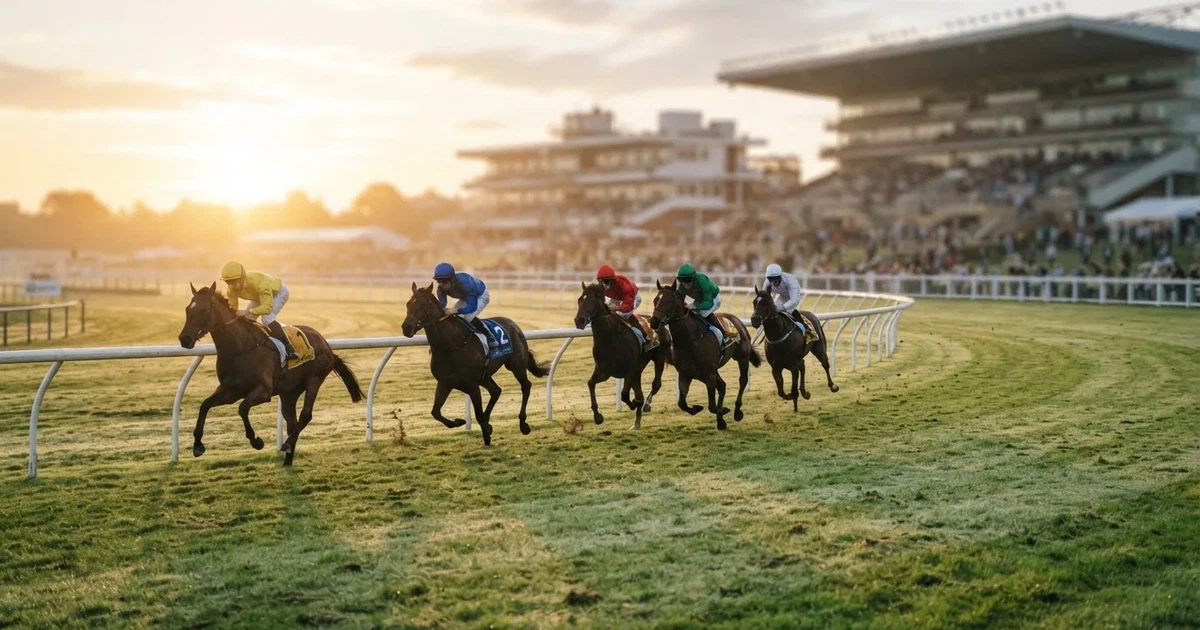
Horse racing is the sport where the bettor meets the bookmaker’s margin head-on. There are no halves of goals to argue about, no over/under lines imposed by a third-party feed — only a short price on a horse, with a fraction or a decimal attached. The arithmetic underneath that price is the same as it is for football, cricket or tennis, but racing carries it lightly: a six-furlong handicap at Kempton has only ever asked the punter to weigh a few pounds of rating and a few pounds of ground, and to pay whatever the price turns out to be. The price is the page.
This page goes through how those prices are made and what they cost. It opens with the British regulatory frame that decides who is allowed to take the bet, then moves through the safer-gambling rules that govern the bettor’s side, through the mobile and live-betting rails where modern British punters actually place the bet, and into the workings of the price itself — each-way bets, place terms, accumulators, the margin hidden in a 9/4 shot, and the small set of licensed bookmakers where a reader in Great Britain can actually place one. The angle is cost. Every figure on the page answers a single question: what does the bet actually take from the punter, and what does it give back.
The British rule book behind the price
Britain runs no state monopoly on sports betting. The Gambling Act 2005 (covering England, Scotland and Wales — Northern Ireland sits under older law and is not governed by a GB licence) opened the market to any operator willing to meet the Gambling Commission’s conditions, and the Gambling (Licensing and Advertising) Act 2014 extended that requirement to every operator whose remote facilities are used in Great Britain, wherever the operator itself is based. A Curaçao, Maltese or Gibraltar licence is not a substitute for the Commission’s permission to take a GB customer’s bet.
The Commission’s public register is the test of who holds a licence. It can be searched by business name, trading name, domain or account number, and it names the licence holder, the licence type and the categories that holder is permitted to offer. A bookmaker holding a remote general betting standard (real events) licence can take bets on horse races; one holding only a pool-betting licence is restricted to pool products on racing; one holding a remote betting intermediary licence runs an exchange. Every brand reviewed on this page holds the first kind, and the figures printed alongside each brand are taken from the register and from each operator’s own terms. The register does not list a count that should be quoted without its access date, and there is no “the only” licensed brand in this country.
Betting on racing at a licensed bookmaker carries the operator’s full licence-condition duty. Identity is verified before the first deposit or first bet — name, address, date of birth, since 7 May 2019, even when the bet is a free bet or bonus. That is why “anonymous” betting at a GB-licensed bookmaker is a category that simply does not exist. Cryptocurrency deposits are not ruled out by statute, but the same name-and-address check applies, and the licensed brands on this page quote deposit methods in sterling against UK bank rails.
Offshore brands remain reachable through a search engine and through affiliate marketing. They are not licensed by the Commission. Betting with one is not “illegal” for the customer as such, but the customer gives up every protection a GB licence brings — no GAMSTOP coverage, no Commission complaints route, no approved alternative dispute-resolution service, no automatic share of any British consumer protection if funds are withheld. The 10x wagering cap and the £150 rolling-30-day vulnerability check simply do not apply. The honest framing is that a licensed bookmaker costs the customer a verification step and a stake limit set by the operator; an unlicensed one costs the customer every protection a British reader assumes is there.
A licence is not, on its own, a recommendation. Several brands reviewed below are run by the same licensee — the register makes that clear — and the read-across is that one licence can carry more than one brand. The reviewed set, in the order set by the Commission’s register, is the basis for the comparison later in this article; every name there holds a real licence and runs under real British safer-gambling rules.
Safer gambling and the price a punter pays for protection
British licensed bookmakers carry the safer-gambling load in four parts: identity verification, GAMSTOP self-exclusion, financial-vulnerability checks at modest stakes, and the deposit limits in the Remote Technical Standards. Each of these comes with a cost to the punter, and the cost is the price of a market that is honest enough to admit a punter can lose.

Identity before the first deposit. A licensed bookmaker must verify the customer’s name, address and date of birth before any gambling, including a free bet or bonus. The check is one part friction, one part protection: it stops a minor from opening an account, it lets the operator spot a customer who has self-excluded via GAMSTOP, and it underwrites the source-of-funds questions that arrive later for higher spend. The cost to the reader is the time it takes to upload a document and the loss of the “sign up and play in thirty seconds” experience the offshore sites advertise. For most readers it is a few minutes; for the reader who does not want to be checked, it is the reason no licensed site will accept them.
GAMSTOP. The national multi-operator online self-exclusion scheme is a mandatory licence condition for every GB-licensed online bookmaker. Self-exclusion is offered in six months, one year, five years, or five years with auto-renewal. After the minimum period has run, the exclusion stays in place for a further seven years unless the customer asks GAMSTOP to remove it. GAMSTOP covers online sites and apps; the betting-shop equivalent is a separate scheme. A customer who has self-excluded at one bookmaker is self-excluded at every GB-licensed bookmaker. That is the safety net the offshore brands do not run.
The £150 vulnerability check. Since 28 February 2025, when a customer’s deposits minus withdrawals cross £150 in a rolling 30 days at any one operator, the operator runs a financial vulnerability check — a public-record check such as county court judgments or bankruptcy, not an income check and not a credit reference check. It is a soft trigger and does not pause play by itself. The customer should expect the operator to ask about source of funds at higher spend, and the operator is required to act on what the check shows.
Deposit limits. Operators must offer a gross deposit limit on a fixed time frame. The first phase of changes has applied since 31 October 2025; a second phase has been postponed to 30 September 2026 and whether it is in force at the date of this article is not established. There is no state-set deposit or loss ceiling for betting: the limits are the customer’s choice, and the operator’s job is to make them easy to set and to honour them. Any reader worried about their own play should set one before their first deposit; any reader worried about someone else’s play should know that the limit is one tool and that GAMSTOP, timeouts and the support lines below are others.
Help that is free, confidential and British. GamCare runs the National Gambling Helpline. GambleAware funds treatment and research. The NHS runs regional gambling clinics. Gamblers Anonymous runs local meetings. All four are reachable without registering anywhere and without telling their GP. The point is not that the reader needs them today. It is that a market which charges a margin on every bet also funds the help that the margin eventually pays for.
Crypto and anonymity at the British rail
No British-licensed bookmaker on this page runs a pseudonymous rail. Identity verification before the first deposit is the rule, and it applies whether the deposit comes from a debit card, a bank transfer, a UK-recognised e-wallet, or a crypto on-ramp that hands the operator a sterling-equivalent deposit. The same name, the same address, the same date-of-birth check.
Crypto deposits at licensed operators are not banned by statute. They are, in practice, rare: a brand that has already done an enhanced due-diligence pass on a customer for a £5,000 deposit does not need a blockchain ledger to satisfy itself on source of funds. Where a licensed brand does quote a crypto method, the marketing pages describe a normal deposit in pounds; the blockchain side is a payment-processor detail the punter does not see. The bet is settled and returned in sterling, and the price is a fractional or decimal British price the same way it would be on a debit-card-funded account.
The “anonymous” rail lives offshore. An unlicensed brand that takes a Bitcoin deposit and asks for no documents is, by the same token, outside GAMSTOP and outside the Commission’s complaints route. The cost of anonymity is the loss of the protection the British licence brings: no dispute resolution if the operator withholds a withdrawal, no automatic share of British consumer law, no obligation on the operator to honour a self-exclusion request. A reader who has chosen the unlicensed rail has made a real choice, and the page’s only job is to name what that choice costs.
The licensed path is also the path where the reader can read the licence details before depositing. The Commission’s register lists every brand with a remote betting licence for Great Britain, names the licence holder, names the trading name, and lists the categories. A reader who wants to check a brand before betting can search the register by domain or by trading name and read the licence number against the brand’s own footer. The number is the proof; the trading name on the register has to match the brand the punter is about to hand money to.
Bonuses, free bets and what the marketing word actually buys
A horse racing free bet is one of the clearest pieces of marketing a British bookmaker runs. The headline number is the giveaway. The fine print is the cost, and the cost is most of what this section is about.
The shape of the offer. A typical welcome offer is “bet £10, get £30 in free bets”. The bet is on the customer’s first settled bet, on a market at minimum odds the operator names; the £30 is paid as free-bet tokens, split or single, with a stated expiry (commonly seven days), and the stake on a winning free bet is usually not returned — the free bet pays the profit only. That last point is the difference between a free bet and a cash bonus: a cash bonus credits the account with withdrawable cash once the wagering is done; a free bet pays the profit only and the stake disappears.
Wagering, in plain English. Wagering is the turnover the operator asks for before bonus winnings become withdrawable. Under the Commission’s marketing rules in force since 19 January 2026, the cap on wagering is 10x — a £10 bonus at 50x would, under the cap, need no more than £100 of qualifying bets before bonus winnings release. The cap applies to bonuses with a wagering condition. The application to free bets with no wagering condition is not established, and the punter should read the offer terms on the brand’s own page before claiming. Mixed-product promotions — an offer that asks the punter to bet on football to unlock free bingo, for example — are banned.
The minimum price. Almost every bonus and free bet carries a minimum odds clause. Bets below that price do not count towards wagering or towards the qualifying stake. On racing, where short-priced horses are common, that clause bites more often than on football: a 1/5 shot in a four-runner novice hurdle will not count. The minimum price is the kind of term a punter reads once, and ignores the second time, and pays for ignoring the second time.
The expiry. Free bets expire. A seven-day window on a £30 free bet sounds generous until the day the punter’s only betting interest is a Kempton all-weather on a Tuesday when the punter is at work. The expiry is not a marketing word. It is a deadline the punter either meets or forfeits.
What the offer is worth on average. A free bet whose stake is not returned is worth, on average, the free-bet amount multiplied by (odds − 1) divided by odds, and then by the payout share of the market the free bet is placed on. A £10 free bet at 4/1 (decimal 5.00), on a market where the payout share is 90 %, is worth roughly £10 × (5 − 1) / 5 × 0.90 = £7.20 on average. The marketing number was £10. The arithmetic value is £7.20. That gap is the operator’s margin doing its job on the free bet as well as on the price.
The race where a bonus can cost. A bonus with wagering requires turnover at minimum odds. The punter is asked to place bets the operator has priced; the operator has priced them to keep a margin; the punter pays that margin over the turnover required to clear the bonus. A punter who bets on a market with a 6 % margin, and clears a £10 bonus with £100 of turnover, can expect to give back around £6 to the margin over the clearing period — before counting the cost of bets that do not win. The “free” in “free bet” is a marketing word. The arithmetic on the back is a margin doing its job.
The honest assessment for a punter. Treat the offer as a marketing loss-leader, not as a margin call. Read the minimum price, the expiry, the wagering condition, and the question of whether the stake comes back. Use the offer to bet on a market the punter would have bet on anyway, at a price the punter would have taken anyway, and ignore the headline number. The price on the racing market is still the price on the racing market; the offer sits on top of it, and the offer is not where the long-term edge lives.
Mobile and the racing app
The racing app is where most British punters place the bet now. The page below a desktop site used to be where the form book lived; the home screen of an iPhone is where it lives today, and a bookmaker’s app is judged on how quickly the punter can get from “I want to back the 3.15 at Ascot” to a confirmed slip with a price locked in.
The two rails an app runs on. A native iOS or Android app downloads through the App Store or Play Store, sits on the home screen, opens with a tap, and reads the device’s biometrics for login. A mobile site runs through the browser, needs no download, and adapts to the handset. Native apps are usually faster on the in-play page and on bet placement; mobile sites are usually quicker to access without installing anything, and easier to share between devices. The racing punter wants both. The leading brands offer both; the smaller brands offer a polished mobile site and skip the native, or ship a thin native and rely on the site for the form book.
The features a racing punter asks an app for. Live streaming of racing is now standard from the major British and Irish meetings — At The Races and Racing TV feeds sit behind a funded account or a recent bet on most apps. Best Odds Guaranteed is a price promise from 8 AM on the day of the race that the operator pays the higher of the price taken and the starting price, and it is the single feature most racing punters look for first; the reviewed brands quote it on UK and Irish racing with their own conditions. Cash out is the option to settle a bet before the race finishes; on racing it is offered most often on win and each-way singles and doubles, less often on accumulators, and the price is the operator’s, not the starting price. A bet builder is offered on football by most major apps and is rare on racing; the racing markets are too narrow for the same construction to work cleanly, and the racing punter who wants a multi-race accumulator places it through the regular multiples tab.
The download number is not the test. The most-downloaded sports betting app in the UK is one signal that punters use it; it is not a signal that it is the best for racing. Racing has a dedicated set of features (form, BOG, in-running on selected meetings, non-runner markets, Rule 4) that live in the small print of the racing tab and that a generic “best app” ranking misses. The right test is whether the app places a £5 each-way bet on the 3.15 at Kempton in four taps with a price that does not jump between the racing page and the slip.
The small-print costs. Geolocation is one: an app will not let the punter place a bet from outside the UK without telling the operator where the punter is. Data is another: in-play prices and live streaming chew through a mobile data plan. Verification is a third: the same identity check runs in the app as on the site, and the punter will need a document and a selfie. None of these are deal-breakers; all of them are costs a racing punter should know are coming.
In-running, cash out and the racing punt that lives through the race
British bookmakers offer in-running on horse racing. The race is the in-play market; the price moves with the position on the track; the cash-out price tracks the running price with a margin; the result settles at the line, not the cash-out click.
The mechanics of in-running. Once the stalls open or the tapes go up, the bookmaker suspends the pre-race market and reopens it as an in-running book. The price is set by the bookmaker’s own traders, with a feed from the track and a margin on top, and updated every few seconds. A punter who wants to back a horse mid-race takes the in-running price the bookmaker offers, not the pre-race price the punter remembers. On a strongly fancied horse that has just hit the front, the in-running price will be very short — and very expensive if the horse is caught.
Cash out is the punter’s exit. A bookmaker will offer to settle a bet before the race ends. The cash-out price is set by the bookmaker, with a margin, and is rarely as good as the price the punter would have got by holding the bet to the result. On racing the cash-out offer is most useful on a horse that has clearly blown its chance — a tailed-off favourite in a two-mile chase, for example, where the punter wants to recover the each-way place stake rather than wait for the result. It is least useful on a horse still in contention, where the cash-out price is a fraction of the back price the punter would have taken before the race.
What is not offered. Bet Builder is a football feature; on racing, most brands do not offer a same-race multi of the kind Bet Builder does for the match result, both teams to score and total goals. A racing punter who wants a multi does it through the regular multiples tab. Live streaming of racing is standard from the major British and Irish meetings and is the one in-play feature that consistently adds to the betting experience — the punter can see the race the price is being set on.
The cost of in-play. In-running is priced with a wider margin than the pre-race market, partly because the bookmaker is setting each price from a fast-moving situation rather than reading an overnight market. A punter who places most of the betting action in-running pays a higher average margin than a punter who bets pre-race. The price on the in-play tab is still a price; the rule is the same as the rule on the pre-race market, with the additional cost of being right about the race as well as about the horse.
Predictions, form and the racing book
There is no system that wins at horse racing. The bookmaker’s margin is in every price; the form book is the punter’s working tool, not a winning system; a tipster is a person who sells opinions, not a person who sells winning bets. The honest framing of any racing prediction is that it is one opinion against the market, and the market is a margin above true probability.
Form is the punter’s working tool. Going, distance, course, class, weight, jockey, trainer, recent runs, the draw on a flat track, the pace map in a handicap, the going description in the racecard — all of these are inputs to a judgement the punter makes. The judgement is rarely better than the market; it is sometimes better than the market; it is never systematically better than the market across a punter’s lifetime without a real edge the punter can describe and test.
Tipsters are opinions. A tipster who sells a selection is selling a stated view. The view may be right today and wrong tomorrow; the price on the tipster’s selection is the price the bookmaker offers, not the price the tipster would have liked. The right way to read a tipster is to weigh the tip against the punter’s own form, take the price the market offers, and ignore the tipster’s record unless the punter can verify it from a settled-bet history the tipster publishes openly.
Systems are not edges. A staking plan — level stakes, percentage of bank, Martingale, Fibonacci — does not change the price the punter pays or the probability of the horse winning. A staking plan changes the shape of the punter’s losing run: it can stretch a bad run out, or compress it, or accelerate it. No staking plan makes a bad bet a good one. The punter who bets £10 on every selection pays the price, and the price on a 4/1 shot at a 6 % margin is around 22.7 % to break even over a large number of bets at true probability.
Today’s racing. Every British race meeting from a GB-licensed bookmaker carries the day’s racecard. Form, going, declared runners, non-runners, weights, the going stick on the all-weather tracks — the bookmaker’s own racecard is the starting point for a bet. Beyond the racecard, the Racing Post, At The Races and the form-book sites give a second opinion. None of them give the punter an edge the bookmaker has not priced.
The honest position. The bookmaker’s margin is the punter’s long-run cost. Form, tips and systems change the punter’s short-run experience but not the long-run cost, except at the rare and difficult margin where the punter genuinely knows more about a race than the market. That is the level the page describes itself as operating on — analysis of the price and the rules, not predictions of the result.
Bet types, place terms and the arithmetic of the racing price
The racing price is a price on a horse, in fractional or decimal form, with a place alternative that pays out if the horse finishes in the first two, three or four. The each-way bet is the racing bet; the win bet is the basic bet; the accumulator is the multi-race bet. Each of these carries a different cost to the punter, and the cost is the arithmetic of this section.
The single and the win bet
A win bet pays the price the punter took, multiplied by the stake. A £10 win bet at 5/1 (decimal 6.00) returns £60 if the horse wins, of which £50 is profit and £10 is the returned stake. The net cost to the punter is £10 lost if the horse loses, and £50 gained if the horse wins. The arithmetic is: return = stake × odds; net profit = stake × (odds − 1).
The each-way bet
An each-way bet is two bets of equal stake: one on the horse to win, one on the horse to place. The place part pays at a fraction of the win price, with the fraction set by the place terms. A £5 each-way bet costs £10 in total — £5 on the win and £5 on the place.
British place terms depend on the type of race and the number of runners. Handicaps with sixteen or more runners pay 1/4 odds for the first four places; twelve to fifteen runners 1/4 for three places; other races with eight or more runners 1/5 for three places; five to seven runners 1/4 for two places; fewer than five runners win only. The fraction (1/4 or 1/5) is the share of the win price the place part pays; the number of places is how many of the first finishers count as a place. Some operators offer enhanced place terms on selected races — extra places for a big field — and that is the kind of term a punter reads before placing.
A worked example shows the cost and the payout. A £10 each-way bet on a 10/1 (decimal 11.00) horse at 1/4 place terms for three places costs £20 (£10 win, £10 place). If the horse wins, the win part pays 10 × £10 = £100 plus the £10 stake back, and the place part pays (10/4) × £10 = £25 plus the £10 stake back, total return £145. If the horse places (second or third), the win part loses while the place part pays out as just described, total return £35. If the horse finishes out of the places, both bets lose and the £20 stake is gone.
The each-way bet is the racing punter’s tool. The cost is the doubled stake; the benefit is that the punter is paid out on a place as well as a win. The place terms are the cost and the benefit both, and the punter who bets each-way on a five-runner race at 1/4 for two places has bought a place insurance with the same terms as a punter betting in a twenty-runner handicap — but the place terms on a five-runner race are tighter, and the insurance is smaller.
The accumulator
The acca (accumulator) is a single bet that wins only if every leg wins. A four-fold accumulator pays the product of the four decimal odds. A £10 accumulator on four horses at 5/1, 4/1, 6/1 and 3/1 (decimal 6.00, 5.00, 7.00, 4.00) returns £10 × 6 × 5 × 7 × 4 = £8,400 if all four win, of which £8,390 is profit. If any one leg loses, the whole bet loses.
The accumulator is where the bookmaker’s margin compounds. Each leg carries its own margin; the four margins multiply into one combined margin; the punter who backs four short-priced favourites in an accumulator pays a margin on each leg and a compounded margin on the acca. A punter who backs two or three selections a race has other options: the Lucky 15 (four selections, fifteen bets covering singles, doubles, trebles and the four-fold), the Yankee (eleven bets on four selections), the Heinz (fifty-seven bets on six selections), the Goliath (two hundred and forty-seven bets on eight selections). Each of these names a different number of bets and a different total stake for the unit stake named.
Spread betting on racing
A small number of British licensed bookmakers also offer financial spread betting on racing. Spread betting is regulated by the Financial Conduct Authority for financial products and by the Gambling Commission for non-financial products; losses on a spread bet can exceed the original deposit, because the punter’s loss is the difference between the spread’s two prices multiplied by the stake-per-point. A £5-per-point spread bet on a horse’s winning distance that settles four points against the punter loses £20. The punter who wants exposure to a moving market with a defined loss should use fixed-odds betting, where the worst-case loss is the stake. Spread betting is a different product for a different reader.
Margin and the cost built into a price
The bookmaker’s margin is what the bookmaker keeps of every unit bet on a market. It is the difference between the fair price (where every outcome would pay out its exact share of one unit) and the price the bookmaker offers. In a two-way market with decimal odds 1.90 / 1.90, the payout share is 1 ÷ (1/1.90 + 1/1.90) = 0.5263, and the margin is 1 − 0.5263 = 0.4737, or about 47.4 % — a high margin for a small example, the size of which makes it a useful teaching example rather than a typical racing book. The bigger the field, the more outcomes the bookmaker prices, and the margin divides across them. A twelve-runner race at even money the field is a margin of around 8-10 %; a four-runner race at 5/2, 3/1, 4/1 and 6/1 is a higher margin; a handicap with twenty runners is a lower margin because more outcomes share the book.
The margin is the long-run cost the punter pays. A market with a 6 % margin returns 94p for every £1 the punter would have won at true probability; the missing 6 % is the bookmaker’s edge. Over a thousand £10 bets, the punter who picks at true probability loses about £600 to the margin before counting the variance of the bets themselves. The punter who picks with an edge larger than the margin comes out ahead; the punter who picks with an edge smaller than the margin comes out behind; the punter who picks without an edge comes out behind by the margin.
A worked margin on an example market
Take an illustrative two-way market at decimal odds 1.90 / 1.90 — fractional 9/10 on each side, an example rather than a quoted price. The payout share is 1 ÷ (1/1.90 + 1/1.90) ≈ 0.5263, or about 52.6 %. The margin is 1 − 0.5263 ≈ 0.4737, or about 47.4 %.
That is a heavy margin. It is the margin of a small example used to show the relationship between payout share and margin — a real racing book on a six-runner novice hurdle might run at a margin of 8-12 %, and a handicap with twelve runners might run at 12-15 %. The exact figure for any market the punter actually bets on is whatever the bookmaker publishes as its overround, and the punter who wants to see the margin can read it from the prices: a six-runner race with prices 3/1, 4/1, 5/1, 6/1, 8/1, 12/1 sums to a margin that a five-line spreadsheet will return.
The figure is a band. The margin on a two-runner match at 1.90 / 1.90 is a known 47 % to a single decimal place; the margin on a real racing market varies by race, by bookmaker and by the time before the off. State the band with its condition — the margin on this kind of market is between roughly X % and Y % under conditions Z — never as a single figure that pretends to a precision that does not exist.
Sports, tournaments and the British racing calendar
The British horse racing calendar runs year-round. Flat racing in the summer, jump racing in the winter, all-weather racing every evening of the year on the polytrack and tapeta surfaces. The major meetings set the rhythm: the Cheltenham Festival in March, the Grand National meeting at Aintree in April, Royal Ascot in June, the Goodwood festival in late July and early August, the Ebor meeting at York in August, the St Leger meeting at Doncaster in September, the Champion Chase meeting at Leopardstown in late January and early February, the Punchestown Festival in late April / early May, and the major all-weather finals at Newcastle, Lingfield and Wolverhampton. Each of these carries its own betting market, its own ante-post book from the autumn, and its own in-running experience on the day.
The British Triple Crown is the 2000 Guineas at Newmarket in early May, the Derby at Epsom in early June, and the St Leger at Doncaster in September. A horse that wins all three completes the Triple Crown, last done in 1970. The fillies’ equivalent is the Triple Tiara, contested across the 1000 Guineas, the Oaks and the St Leger. The Champion Hurdle, the Champion Chase and the Gold Cup at Cheltenham are the three championship events of National Hunt racing, all run at the Cheltenham Festival in March.
Flat races range from 440 yards (400 m) to more than four miles (6.4 km). Five to twelve furlongs (1.0 to 2.4 km) are the most common distances — a sprint at five furlongs, a mile at eight, a middle-distance race at ten, a staying race on flat at twelve. National Hunt races range from two miles (a minimum-trip hurdle) to four and a half miles (the Grand National course at Aintree). The distance is one of the main inputs to a form judgement and one of the easiest to read off the racecard.
Flat racing is run directly between two points around a straight or oval track; jump racing (steeplechasing and hurdling) is called National Hunt racing in Great Britain and Ireland. In handicap races, each horse carries a different weight set by the handicapper based on its ability; in conditions races, horses carry the same weight with allowances for younger and female horses. The weight a horse carries is printed next to its name on the racecard, and a horse’s record at the course, the distance, the going and the class of race is the form a punter weighs before placing the bet.
The British racing calendar carries one statutory rule on the cover that bears naming. The Horserace Betting Levy, paid by bookmakers on British racing, has been replaced for online betting by the General Betting Duty at the operator level. The punter pays no British tax on racing winnings. The bookmaker’s tax is its own; the price the punter takes already has the duty built in, the same way it has the margin built in.
The ten UK-licensed bookmakers reviewed
The set below is the ten brands the Commission’s public register lists against a remote general betting standard (real events) licence, in the order the Commission’s register presents them. Each holds a real licence for Great Britain. Each review covers what the operator’s own terms state on the racing-relevant features — the welcome offer where the brand publishes one, the racing features, the licence details — and closes with the verdict the comparison earns. The verdict is the page’s own judgement of the brand; the spec is the operator’s own.
Tote — the pool-betting heritage at tote.co.uk
The Tote is the pool-betting brand with a long British history. It holds Gambling Commission remote licence 054779-R-331321-008 under TDCO Limited, with the Commission’s register listing remote general betting standard (real events) among the categories it covers. The brand runs pool betting on British and Irish racing — a separate product from fixed-odds — alongside its fixed-odds racing book. The pool product is a dividend-based system where the punter’s stake goes into a pool and the dividend is set after the race. The racing features the brand publishes are those of a racing-focused bookmaker with a longer history than most on this page.
The Tote suits the punter who wants pool betting on British and Irish racing and is comfortable with a dividend instead of a fixed price. It is the specialist racing punter’s choice for a different kind of betting experience.
BetGoodwin — Goodwin Racing at bet goodwin
BetGoodwin is operated by Goodwin Racing Limited under Gambling Commission remote licence 002927-R-327985-008. The brand’s sports welcome offer is described in the App Store listing as “Bet £10 & Get £15 in Free Bets”, made up of a £5 sports bet, a £5 acca and a £5 Sub-Cover bet. The acca component suggests an accumulator-focused offer; the £5 Sub-Cover is a niche product that covers a single named selection and pays out if a related condition is met.
BetGoodwin suits the punter who wants a racing-focused brand whose offer splits across singles, accumulators and a niche product. The headline number is the marketing hook, but the punter should scrutinise the terms before committing.
Geoff Banks — GB Sports Advisors at geoff banks
Geoff Banks is published by GB Sports Advisors Limited under Gambling Commission remote licence 054095-R-330366-010. The brand’s app offers live in-play prices and ante-post prices on future events. Ante-post is the racing term for a bet placed before the final declarations, when the field is wider and the price is bigger; the price on an ante-post bet carries the risk of a non-runner, and the punter who places an ante-post bet should know whether the operator pays Rule 4 deductions or treats the bet as lost on a non-runner.
Geoff Banks suits the punter who bets ante-post on British and Irish racing and wants a brand whose app is built around the racing calendar. It offers a different proposition to the generalist bookmaker with a huge football book.
VBet — SCGO Limited at vbet
VBet is operated by SCGO Limited under Gambling Commission remote licence 044662-R-324273-022. The brand’s sports welcome offer is described in the App Store listing as a £10 free bet if a new, verified customer stakes £10 or more on a first-ever bet that loses — a “no bet, no free bet” construction that returns a token rather than a stake refund. The free bet’s stake is not returned on a win; the punter is paid the profit only.
VBet suits the punter who wants a multi-product bookmaker with racing in the book. The “risk-free” framing is a marketing term; the punter who values a real cash refund might prefer other offers.
Sporting Index — Sporting Index Limited at sporting index
Sporting Index is operated by Sporting Index Limited under Gambling Commission remote licence 027343-R-308898-011. The brand lets customers switch between fixed odds and spread betting, with in-play betting, Bet Builder for football, auto cash-out and Multi-Markets. Spread betting on racing is a Financial Conduct Authority-regulated activity for financial products and a Gambling Commission-regulated activity for non-financial products; losses can exceed the deposit. The dual product mix is the brand’s distinguishing feature.
Sporting Index suits the punter who wants exposure to spread betting on racing alongside a fixed-odds book. It is a specialised offering for the punter who understands the differences between the two products and is comfortable managing the associated risk.
Kalooki Sportsbook — Kalooki Sportsbook Limited at kalooki sportsbook
Kalooki Sportsbook is operated by Kalooki Sportsbook Limited under Gambling Commission remote licence 057730-R-333396-005. The brand is a GAMSTOP member, which is a mandatory licence condition for GB-licensed online bookmakers; the verification the Commission requires before the first deposit applies to Kalooki Sportsbook the same way it applies to every other brand on this page.
Kalooki Sportsbook suits the punter who wants a smaller, racing-focused brand with the same British regulatory frame as the bigger names. The racing card can be tighter, but for the focused punter, it remains a viable alternative.
LiveScore Bet — LiveScore Betting and Gaming (Gibraltar) Limited at live score bet
LiveScore Bet is operated by LiveScore Betting and Gaming (Gibraltar) Limited under Gambling Commission remote licence 056859-R-332720-005. The brand’s Bet Builder allows up to ten selections and covers match result, both teams to score, corners, total goals, player scoring and card markets — a football-focused feature set. LiveScore Bet is built on the back of the LiveScore scores-and-stats product, and the racing book sits inside a wider multi-sport offering.
LiveScore Bet suits the punter who wants a Bet Builder-driven bookmaker with a racing book inside a multi-sport offering. Its focus lies elsewhere, which may be a drawback for those seeking a racing-first experience.
Dabble — Dabble Sports UK Ltd at dabble
Dabble is operated by Dabble Sports UK Ltd under Gambling Commission remote licence 065677-R-340363-005. The brand’s welcome offer is described in the App Store listing as “Bet £10, Get £10 in Free Bets” on a first deposit for new customers, with minimum odds applying, a 7-day free bet expiry and the stake not returned. The 7-day expiry is short for a punter whose week does not include a settled £10 bet; the stake-not-returned detail is the standard free-bet construction.
Dabble suits the punter who wants a social-betting-style bookmaker with a clean racing product. It is a straightforward option for those who find complex offers more confusing than beneficial.
10bet — Blue Star Planet Limited at 10bet
10bet is operated by Blue Star Planet Limited under Gambling Commission remote licence 043173-R-322899-023, with remote general betting standard (real events) among the categories listed on the Commission’s register. The brand’s sportsbook covers football, tennis and horse racing, with Cash out, Bet Builder and Live Streaming. Live streaming on racing is a feature the punter expects from a full-service bookmaker; the brand’s racing coverage is one part of a wider multi-sport product.
10bet suits the punter who wants a multi-sport bookmaker with racing, football and tennis under one licence and a clean racing tab. The brand is not the right fit for a punter who wants the racing-first product that smaller racing-focused brands quote.
Betfred — Petfre (Gibraltar) Limited at betfred
Betfred is operated by Petfre (Gibraltar) Limited under Gambling Commission remote licence 039544-R-319290-010, with remote general betting standard (real events) among the categories listed on the Commission’s register. The Betfred Sports, Casino & Games app covers 21 sports plus over 2,000 casino-style games. Betfred is one of the larger British high-street brands with an established racing book; the betting-shop heritage carries through to the online product in the form of BOG and a deep racing card.
Betfred suits the punter who wants a full-service British bookmaker with a racing book at the centre of the product. The punter who bets each-way on the Grand National will find the place terms and the non-runner rules published in detail on the brand’s own racing page, and the punter who bets BOG on a big Saturday will find the price promise in operation from 8 AM on the day of the race on both singles and multiples.
How the comparison stacks up
The table below sets the ten licensed brands on this page against the three things the racing punter asks first: the licence details that prove the brand is regulated for Great Britain, and what the operator’s own terms state on the racing offer the brand publishes. The columns are the matters a punter needs to make a decision; the rows are the brands in the order the Commission’s register presents them.
| Brand | Gambling Commission remote licence (account number) | What the operator’s own terms state on the racing offer |
|---|---|---|
| Tote | 054779-R-331321-008 (54779), licence holder TDCO Limited | Pool betting on British and Irish racing alongside a fixed-odds racing book |
| BetGoodwin | 002927-R-327985-008 (2927), licence holder Goodwin Racing Limited | Sports welcome: bet £10, get £15 in free bets, split as £5 sports bet, £5 acca, £5 Sub-Cover |
| Geoff Banks | 054095-R-330366-010 (54095), licence holder GB Sports Advisors Limited | App publishes live in-play prices and ante-post prices on future events |
| VBet | 044662-R-324273-022 (44662), licence holder SCGO Limited | Sports welcome: £10 free bet if first £10+ bet loses; stake not returned on a win |
| Sporting Index | 027343-R-308898-011 (27343), licence holder Sporting Index Limited | Switch between fixed odds and spread betting; in-play, auto cash-out, Bet Builder on football |
| Kalooki Sportsbook | 057730-R-333396-005 (57730), licence holder Kalooki Sportsbook Limited | Smaller racing-focused brand; GAMSTOP member; identity check before first deposit |
| LiveScore Bet | 056859-R-332720-005 (56859), licence holder LiveScore Betting and Gaming (Gibraltar) Limited | Bet Builder up to 10 selections on football markets; racing inside a multi-sport product |
| Dabble | 065677-R-340363-005 (65677), licence holder Dabble Sports UK Ltd | Sports welcome: bet £10, get £10 in free bets; 7-day expiry; stake not returned |
| 10bet | 043173-R-322899-023 (43173), licence holder Blue Star Planet Limited | Covers football, tennis and horse racing; Cash out, Bet Builder, Live Streaming |
| Betfred | 039544-R-319290-010 (39544), licence holder Petfre (Gibraltar) Limited | Covers 21 sports and over 2,000 casino-style games; BOG on UK and Irish racing from 8 AM |
The spread is what a punter should expect from a ten-brand comparison. Three brands are full-service multi-sport bookmakers with a racing book as one product among many; the rest are smaller and racing-focused, with a tighter welcome offer and a thinner racing card. The licence column makes the regulatory position identical: every brand holds a remote general betting standard (real events) licence and runs under the Commission’s licence conditions and codes of practice. The third column is the place the comparison earns its conclusion; the table does not rank the brands, because the Commission’s register does not rank them, and a comparison that ranks on the same data is one that ranks on its own preferences.
A punter’s choice turns on the racing product and the welcome offer. A punter who wants pool betting on the big meetings picks the Tote. A punter who wants a deep racing book with BOG from 8 AM picks Betfred. A punter who wants a fixed-odds and spread book on the same site picks Sporting Index. A punter who wants a racing-focused bookmaker with a clean welcome offer picks BetGoodwin or Dabble. A punter who wants a multi-sport bookmaker with racing, football and tennis in one app picks VBet or 10bet. The Commission’s register does not pick; it lists.
Reading the page at the actual price
Three threads run through the analysis and are worth pulling together before the reader places one. The first is the price the punter pays. Every racing market carries a margin in the bookmaker’s favour; the margin is the long-run cost the punter pays, and the punter who bets a market at a 10 % margin over a thousand bets can expect to lose around 10 % of turnover to the margin before counting the variance. The punter who picks at true probability loses by the margin. The punter who picks with an edge larger than the margin wins. There is no other outcome, and no staking plan that makes a losing bet a winning one.
The second is the offer. A free bet is a free bet whose stake is not returned; a bonus with a turnover condition is a bonus the punter pays for in margin on the clearing bets; a “risk-free” bet that returns a free bet token is a free bet by another name. The marketing word is not the price; the arithmetic on the offer page is. The punter who claims an offer reads the minimum price, the expiry, the wagering condition, and the question of whether the stake comes back.
The third is the licence. Every brand reviewed on this page holds a Gambling Commission remote licence for Great Britain. The Commission’s public register is the test. The punter who wants to check a brand before depositing searches the register by trading name or by domain, reads the licence number, and confirms the licence holder. The cost of a licensed bookmaker is the verification step at sign-up. The benefit is every protection a British licence brings.
The three threads together answer the question the page opened with. The price on a horse is the page; the margin inside the price is the punter’s long-run cost; the offer on top of the price is a marketing layer the punter reads rather than relies on; the licence underneath both is the standard. British racing punters place in a market with a margin, with a regulated bookmaker, and with the safer-gambling rules that come with the licence. That is the British rule book on the racing market in 2026, and that is what a fair price on a horse at Ascot actually buys.
Frequently asked questions
How does a bet on a horse racing market actually work?
A bet is a contract: the punter risks a stake against a price the bookmaker offers, and the bookmaker pays out at the agreed price if the horse wins. The stake and the price decide the payout if the horse wins; the punter loses the stake if the horse does not win. An each-way bet is two contracts at the same stake — one on the horse to win and one on the horse to place — so the stake is doubled. The place part pays at a fraction of the win price set by the place terms, which vary by race type and number of runners.
How are horse racing bets worked out from the stake and the odds?
Return equals stake multiplied by the decimal odds, and net profit equals stake multiplied by (decimal odds minus one). A £10 win bet at decimal odds 6.00 returns £60 if the horse wins, of which £50 is profit and £10 is the stake returned. On an each-way bet, the same arithmetic runs twice — once on the win part and once on the place part — and the place part pays at a fraction (commonly 1/4 or 1/5) of the win price depending on the place terms for the race.
How do the odds on a horse racing market actually work?
Odds are the price the bookmaker offers against each outcome, and the implied probability is the inverse of the decimal odds. A horse at decimal 4.00 has implied probability 1/4.00 = 0.25, or 25 %. The bookmaker’s margin is the difference between the sum of the implied probabilities across all runners and 100 %; in a fair book they would sum to 100 %, and in a bookmaker’s book they sum to more than 100 %, with the excess being the margin. The margin is the long-run cost the punter pays.
How can a bookmaker’s Gambling Commission licence be checked?
The Gambling Commission’s public register can be searched by business name, trading name, domain or account number. The punter opens the register, types the brand’s trading name, and reads the licence holder, the account number, the licence type and the categories listed. Every licensed brand has a real account number on the register; the absence of a brand from the register, or a brand listed under a different licence type, is the signal that the brand is not licensed for the activity the punter is about to fund.
How is the return on a bet worked out from the stake and the odds?
Return is stake multiplied by the decimal odds. For a £10 stake at decimal odds 6.00, the return is £60, the net profit is £50, and the punter’s loss on a losing bet is the £10 stake. The arithmetic is the same for a single, a double, a treble and an accumulator: the odds of the legs multiply into one combined price, and the combined return is the stake multiplied by the combined odds. On an each-way bet the arithmetic runs twice — once for the win part and once for the place part — and the place part pays at a fraction of the win price.
What is the bookmaker’s margin and how can it be seen in the odds?
The margin is the share of every pound wagered that the bookmaker expects to keep over the long run. It is the difference between the sum of the implied probabilities (1 divided by each decimal odds) and 100 %. In a two-way market at 1.90 / 1.90, the sum of the implied probabilities is 1/1.90 + 1/1.90 ≈ 1.053, and the margin is the excess over 1.000 — roughly 5.3 % of the punter’s stake on each outcome, or 47 % across both outcomes combined because each outcome is a stake. The margin is most easily read by converting the fractional prices to decimals, summing the inverses, and subtracting from 100 %.
Horse racing & greyhounds – Footy Tips
Content created by the «Footy Tips» team
