
Existing customer betting offers in 2026: what the marketing hides
 Available in US
A bonus looks like a gift until the conditions come into view. “Free bet” sits on the page, the headline figure is crisp, the small print runs to four pages, and somewhere in those pages a turnover multiple and a minimum price decide what the gift is actually worth. In Great Britain a new rulebook governs exactly that gap between the headline and the small print: since 19 January 2026 the Gambling Commission has capped the wagering requirement on a betting bonus at 10x and has banned any promotion that asks a customer to gamble on two or more product types at once. This page is a cost-first read of that landscape — what an existing customer offer is, what it really costs to clear, and what each of ten licensed bookmakers is doing within it.
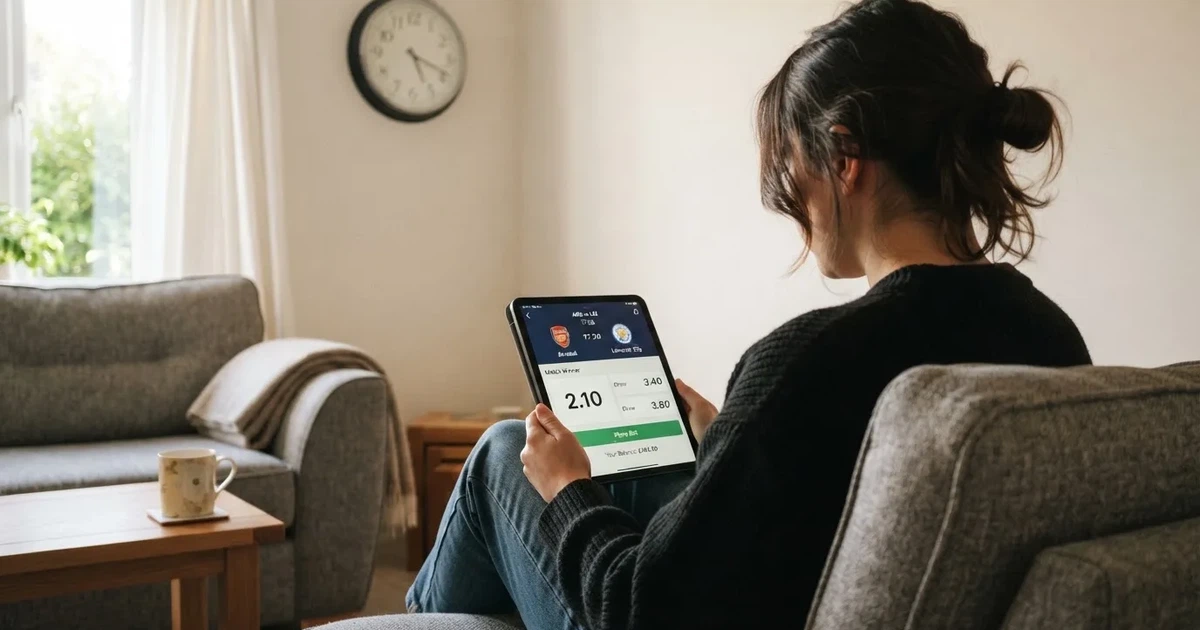
The data below is current as of 27 October 2026 and was checked against the Gambling Commission’s public licence register.
How Great Britain regulates a betting bonus
The Gambling Commission is the regulator for the whole commercial gambling market in England, Scotland and Wales. Northern Ireland sits outside the Gambling Act 2005 and has its own older law; a “GB licence” never extends north of the border and the page uses the phrase accordingly. The Commission licenses operators under the Act, sets social-responsibility conditions in the Licence Conditions and Codes of Practice (LCCP), and runs the public register that anyone can search by brand name, domain, trading name or account number. The register is the whole test of whether a brand is licensed: when in doubt, look it up.
The Commission does not licence advertising — that runs through the CAP Code for non-broadcast and the BCAP Code for broadcast, with the ASA enforcing. Where the two overlap is on the substance of a promotion: the LCCP and the gambling-themed rules of the CAP Code both push in the same direction, with the CAP Code’s section 16 setting the bar that no one who is or seems to be under 25 may feature in a betting advertisement. That rule governs who may appear in the ad, not who may place a bet.
A GB licence is one of a small set of categories — remote general betting standard (real events), the same for virtual events, remote general betting limited, remote pool betting, and remote betting intermediary for exchanges. Spread betting on financial markets is regulated by the Financial Conduct Authority, not the Commission; spread betting on sports that are not financial products still sits inside the Commission’s regime and pays General Betting Duty. Several familiar brands share one licensee — Ladbrokes and Coral both sit under LC International Limited, and Paddy Power and Betfair share another — so do not mistake a separate website for a separately licensed operator.
The rule that changed the cost of an offer is the one that took effect on 19 January 2026:
- A wagering requirement on a bonus is capped at 10x. A £10 bonus with a 50x turnover condition used to need £500 of qualifying bets to clear; under the cap, no wagering requirement above 10x is permitted. That alone is the largest single cost cut of recent years.
- Mixed-product promotions are banned. An offer that ties a sportsbook stake to casino play, bingo, lottery play, or free spins — “bet on football to get free spins”, that shape of promotion — is now outside the rules.
- Whether the 10x cap also applies to free bets whose free-bet value carries no wagering condition, and whether there is any cap on the headline money amount of a bonus, is not established by the rules published so far. Operators apply their own reading; a reader comparing offers has to read the small print.
That is the frame. Everything an operator does sits inside it.
Safer gambling and the right to set a limit
Betting is licensed, but the licence is paid for in part with a duty of care that bites the reader as much as it bites the bookmaker. A few of the moving parts:

- Identity is checked before the first deposit. Name, address and date of birth are verified before any money moves, including when a customer is using a free bet or bonus. There is no anonymous play at a licensed site, and a punt can take an hour or more to clear on the first occasion.
- GAMSTOP is mandatory for every GB-licensed online operator. A self-exclusion of six months, one year, five years, or five years with auto-renewal blocks account opening and marketing contact across the licensed market. After the minimum period the exclusion stays in place for a further seven years unless removed on request. Betting shops run a separate in-shop scheme.
- A financial vulnerability check applies once a customer’s deposits minus withdrawals exceed £150 in a rolling 30 days. It is a public-record check — bankruptcies, county court judgments, similar registers — not an income check and not a credit reference check. Announced financial risk assessments (the press’s “affordability checks”) are staged, with no start date set.
- Deposit limits are the customer’s to set. The Commission has signalled a phased framework, with the first set of changes live since 31 October 2025 and a second phase postponed to 30 September 2026; whether the second phase is now in operation is not established. There is no statutory cap on what a customer may deposit: limits are the customer’s choice, set against the operator’s tools.
- Credit cards have been banned for gambling in Great Britain since 14 April 2020, including credit-card-funded e-wallet top-ups. A debit card, an instant bank transfer, a normal e-wallet or a bank-based Open Banking payment is not affected by the ban; a credit-card-funded payment channel is.
Help is at the other end of the line: GamCare runs the National Gambling Helpline, GambleAware funds treatment and education, NHS gambling clinics operate in several regions, and Gamblers Anonymous runs local groups. The bookmakers feature these on their safer-gambling pages; the bar to ask is low.
What a betting offer really costs the reader
The marketing vocabulary has a sentence for every shape of value the offer does not deliver. “Free bet” sounds like a stake you keep if it wins; the small print usually says it is not. “Risk-free” sounds like a refund in cash; the small print usually says the refund is a free bet whose stake is gone. “Best odds guaranteed” promises a price upgrade on horse racing, and it is real; the qualifying race list is set by the operator. “Price boost” raises the headline of a single bet; the maximum stake is usually capped at a few pounds. “Acca insurance” refunds a losing accumulator as a free bet when one leg lets it down; the refund ceiling and the minimum leg count decide whether it is worth opting in. “Cashback” pays a slice of net losses over a period, with terms that name the period and the market; it can be cash or a free-bet token, with the cap usually well below the headline.
What every one of those offers has in common is a rule that costs the reader something. Three rules carry most of the cost:
- The wagering requirement. A £10 bonus with a 10x turnover condition needs £100 of qualifying bets to clear — one condition of the new rules is the multiple itself, another is which bets count and at what minimum price. A bet at odds shorter than the minimum does not count. A bet on a market the bonus excludes does not count. A stake limit per bet may also apply, with smaller bets counting in full and larger bets only counting up to a cap. Multiply £10 by the wagering factor, divide by the average stake size and the minimum price that counts, and a clearing programme runs into weeks of small bets at restrained prices.
- The minimum odds for a qualifying bet. A “min odds 1/1 (2.0)” rule means an odds-on or even-money selection is the floor; a rule that drops to “min odds 1/2 (1.5)” lets far more of the betting programme count. Two offers with the same headline value can carry very different clearing programmes against this number alone.
- The deadline. A free bet that expires in 7 days is the norm; an offer that expires in 30 days or more is generous. Free-bet stake returned only with the winnings, not on its own, is also the norm — see “free bet” below.
Two more costs sit underneath. The bookmaker’s margin sits inside every price, from 2% on the sharpest pre-match football markets to 30% or more on smaller prop markets. A punter clearing a bonus is paying that margin on every bet they place, regardless of the outcome; the offer is a slice of the losses the margin produces, and the question is how big a slice and for how long. The currency, licence and payment rule (debit cards and instant bank transfers qualify; e-wallets may not) decides whether the qualifying bet even counts. Several welcome offers explicitly exclude Skrill, Neteller and similar wallets from the qualifying deposit and stake, because matched bettors have used those wallets to clear bonuses for years.
A worked view of the Coral welcome offer
Coral’s sports welcome offer is “Get £40 in Free Bets when you bet £20”: a deposit and a sports bet of £20 or more at minimum odds of 2.0 (1/1), with £40 in free bets issued within 7 days and expiring 7 days after issue, for new GB customers who opt in and stake with a debit card or instant bank transfer. The headline treats the gift as free money; the cost is hidden in the conditions.
Using the bonus-turnover formula — required turnover equals the bonus base multiplied by the wagering factor, here treated as a single-wager condition plus the £20 qualifying stake:
- Required turnover: £20 (qualifying stake) + £40 (free-bet value to clear) = £60 at the operator’s effective minimum price of 2.0.
- Number of qualifying bets at £20 each, all at minimum odds 2.0: roughly three matched-size bets of £20 at minimum price, plus the free-bet stakes across the 7-day expiry window.
- Free-bet value on a single bet whose stake is not returned: free bet × (odds − 1) ÷ odds × the market’s payout share. On a typical Premier League match-winner market priced at margins of around 5%, a £10 free bet at 3.0 nets roughly £10 × (3.0 − 1) ÷ 3.0 × 0.95 ≈ £6.33 in expected free-bet value across many bets.
State it as the page’s own gain, in words rather than digits: the £40 in free bets is worth roughly £20 to £25 in expected value across the four £10 tokens, after taking out the bookmaker’s margin on the prices they are staked at, before any weight is given to the chance that any single bet is allowed to win. The offer is sized for a customer who will use the tokens quickly, on markets where the price is competitive, not on markets where the headline looks biggest.
What the new rule changes in real terms
Pre-19 January 2026 offers commonly carried 40x, 50x or even higher wagering factors. The 10x ceiling cuts the worst ones to a third or less of the qualifying stake required. The mixed-product ban removes a class of promotion altogether — no more sportsbook bonuses tied to casino wagering, no more football-accumulators-with-free-spins. The cap does not touch price boosts and acca insurance that already attach to qualifying fixed-odds bets at the stated odds; those still operate within the operator’s own terms, with their stake caps and minimum leg counts. The result is a market where the visible large bonus is closer to what it costs to clear, and where the customer who could read a wagering condition before the cap was the only one who could clear the bonus anyway.
A reader who reads the small print before the cap could already do the maths. A reader who did not now meets a smaller, more honest offer most of the time.
How to compare two offers without a calculator
Open each offer’s terms page. Find three numbers: the bonus or free-bet amount, the wagering factor (if any), and the minimum odds for qualifying bets. Find one number for the deadline. If the offer is a cash bonus with a wagering condition, the work is done in those four numbers. If the offer is a free bet with no wagering condition, the wagering factor is zero and the deadline and minimum odds become the only constraints. If the offer ties a sportsbook stake to a casino bonus, the offer is no longer a permitted promotion under the new rules and should not be on a licensed bookmaker’s page at all — a mixed-product promotion surfacing now is a signal to question it.
Top ten existing customer bookmakers in Great Britain
The list below compares ten bookmakers that hold a Gambling Commission remote licence for betting on real events. The set and the order below are not a ranking; no brand is “the only” licensed one, and being listed is not a recommendation. Each entry describes the operator’s own terms, the licence it sits under, and the cost shape of its welcome promotion, then closes with a verdict a reader can act on.
| Operator | Licence holder and Commission account | Own terms on the offer |
|---|---|---|
| BetUK | LeoVegas Gaming PLC · 039198-R-319450-029 (Commission account 39198) | Four £10 free bets (two football accas of 4+ legs, two multiples of 2+) after a £10 qualifying sports bet within 7 days; opt-in required |
| Copybet | Copybet UK Limited · 053774-R-330743-010 (Commission account 53774) | Acca Booster pays up to 100% cash bonus on accas of 3+ legs; Daily Profit Boost up to 15% |
| Ladbrokes | LC International Limited · 054743-R-330863-014 (Commission account 54743) | Odds boosts on horse and greyhound bets; Best Odds Guaranteed on UK and Irish racing; in-play; Acca Boosts |
| Bet600 | Tyche Tech Limited · 044731-R-323941-016 (Commission account 44731) | £10 free bet credited after five qualifying single bets of £10 at minimum odds 2.0 within 7 days |
| Bet Ahoy | Bet Ahoy Ltd · 100094-R-341742-003 (Commission account 100094) | “Bet £10 & Get £10 in Free Bets” — a £5 sports bet and a £5 acca |
| Betway | Betway Limited · 039372-R-319367-029 (Commission account 39372) | £40 in free bet tokens (4 × £10) on settlement of a first bet of £10 at minimum odds 2.0; 7-day expiry; debit card deposits only |
| Fitzwilliam Sports | SBKI Limited · 048760-R-335434-009 (Commission account 48760) | “High Stakes Welcome” subject to compliance criteria; capped membership and Dublin origin |
| BetGoodwin | Goodwin Racing Limited · 002927-R-327985-008 (Commission account 2927) | “Bet £10 & Get £15 in Free Bets” — £5 sports bet, £5 acca, £5 Sub-Cover |
| LiveScore Bet | LiveScore Betting and Gaming (Gibraltar) Limited · 056859-R-332720-005 (Commission account 56859) | Debit cards (Visa, Mastercard), Apple Pay, PayPal, Pay by Bank (Open Banking), Revolut Pay |
| Kalooki Sportsbook | Kalooki Sportsbook Limited · 057730-R-333396-005 (Commission account 57730) | Instant withdrawals by bank transfer within minutes; Best Odds Guaranteed on UK and Irish racing; in-play; daily boosts; extra place races |
BetUK — LeoVegas Gaming PLC
The licence holder runs a portfolio that includes several sportsbook brands; BetUK is one of its UK-facing sites. The welcome offer is built around four £10 free bets issued after a £10 qualifying bet within 7 days of registering, with the tokens structured as two football accumulators of 4+ selections and two multiples of 2+, valid for 7 days and requiring opt-in. The shape of the offer matters: a customer who only bets singles will struggle to put three accas to qualifying use within a week. The cost of the headline is the constraint on the form — acca-style, short window, opt-in. The verdict: suits the customer who already wagers multiples and reads the small print; less so for a customer who bets singles only.
Copybet — Copybet UK Limited
The product is built around accumulators. The Acca Booster pays up to a 100% cash bonus on accas of 3+ legs, and a Daily Profit Boost adds up to 15% on selected bets. Copybet carries no traditional welcome offer in the same shape as the rest of the table — it is positioned as a product for the customer who already uses accumulators as their default bet. The cost of skipping a welcome is the price of a more focused product. The verdict: a comparison of the acca-boosting model shows it serves the accumulator specialist well, provided the leg counts match the user’s usual stake profile.
Ladbrokes — LC International Limited
A well-known high-street bookmaker now operating under LC International, alongside Coral. The current product line focuses on Best Odds Guaranteed on UK and Irish horse racing, odds boosts on horse and greyhound bets, in-play and Acca Boosts. The legacy as a betting shop chain does not change the offer structure on the Ladbrokes site, but it does change the kind of customer it suits: someone who likes a familiar brand name and who values a horse-racing product over a casino-heavy product. The verdict: a strong choice for the customer who values consistency in horse-racing coverage and the benefit of Best Odds Guaranteed across UK and Irish tracks.
Bet600 — Tyche Tech Limited
The welcome offer rewards volume: five qualifying single bets of £10 at minimum odds 2.0 in the first 7 days earn a single £10 free bet. That shape of programme is closer to a loyalty match than to a headline grab, and it skews against a customer who registers to clear a token in a single session. The cost of the offer is the time it asks for: a week of small bets at a defined minimum price, with a single £10 free bet as the yield. The verdict: suits the customer who already places several qualifying bets in their first week and is happy to be paid for it; unsuited to the customer looking for a one-shot bonus.
Bet Ahoy — Bet Ahoy Ltd
“Bet £10 & Get £10 in Free Bets” is the headline, with the free-bet amount split between a £5 sports bet and a £5 acca. The split is the work: a customer who only bets singles will use the £5 sports token easily and have to find an acca to use the second £5 before the deadline. The opposite is also true — an acca-heavy customer values the second token more than the first. The licence is recent (Commission account 100094), and the product is sport-focused. The verdict: a measured welcome whose value depends on whether the reader’s bet slip already contains an acca.
Betway — Betway Limited
The Betway welcome has been a £40 free-bet token offer for some time, currently structured as 4 × £10 tokens on settlement of a qualifying bet of £10 at minimum odds 2.0, with a 7-day expiry and debit card deposits only. The debit card rule is the cost: a customer who usually funds their account with PayPal or a similar wallet will not have their qualifying deposit count, and the offer effectively excludes them. The verdict: suited to the debit-card customer, less so to the e-wallet customer, with the £40 headline carrying roughly the same expected value as BetUK’s four £10 tokens for a customer with a week of small accas to place.
Fitzwilliam Sports — SBKI Limited
Dublin-origin, capped membership, and a “High Stakes Welcome” subject to compliance criteria. The product is not a price for the mass market — it is a price for a smaller, more committed customer. Whether the welcome is for a particular reader depends on whether the offer corresponds to that reader’s stake and turnover profile; the operator’s own terms and the customer-terms page give the criteria. The verdict: this is a niche product; a reader should check the compliance criteria carefully before assuming the welcome offer is available for their stake level.
BetGoodwin — Goodwin Racing Limited
“Bet £10 & Get £15 in Free Bets” breaks down as £5 sports, £5 acca, £5 Sub-Cover. Sub-Cover is the differentiator — it is a Goodwin product, on the operator’s own terms. The three-token split means a customer must use three different shapes of bet within the deadline, which is more demanding than a single-token welcome. The verdict: the three-token shape rewards a customer who already has those three shapes on their slip in a given week; less so for a customer whose slip is one shape only.
LiveScore Bet — LiveScore Betting and Gaming (Gibraltar) Limited
The proposition here is the payment set rather than the offer shape: debit cards (Visa and Mastercard), Apple Pay, PayPal, Pay by Bank (Open Banking) and Revolut Pay. A customer who values that breadth of payment options — including a bank-based Open Banking channel and the Revolut Pay wallet — finds a real differentiator at LiveScore Bet, which excludes no common method. The licence holder is Gibraltar-domiciled, which is a normal structure for UK-facing remote operators but worth knowing when comparing customer-jurisdiction clauses. The verdict: highly recommended for the customer whose priority is the payment set, including bank-based instant deposits via Open Banking.
Kalooki Sportsbook — Kalooki Sportsbook Limited
The shape of the offer is operational. Instant withdrawals by bank transfer within minutes, Best Odds Guaranteed on UK and Irish horse racing, in-play, daily boosts and extra place races are all on the homepage. The withdrawal speed is the differentiator — a customer who values a fast payout over a slow one places Kalooki on the shortlist. The licence is the standard remote general betting standard (real events) category. The verdict: an attractive operator for the customer who prioritises fast withdrawals and horse-racing specials over a heavy promotional welcome.
Frequently asked questions about existing customer offers betting in Great Britain
What is the maximum wagering requirement on a betting bonus in Great Britain?
Wagering requirements on bonuses were capped at 10x when the Commission’s promotion rules took effect on 19 January 2026. An offer with a 50x turnover condition is no longer a permitted bonus. A £10 bonus at the cap needs £100 of qualifying bets at the operator’s stated minimum price to clear.
What do minimum odds and the wagering requirement mean in a sign-up offer?
Minimum odds are the lowest price a qualifying bet can carry and still count towards clearing the bonus. The wagering requirement is the total amount of qualifying stakes you must place before the bonus becomes withdrawable. Bets at prices below the minimum odds do not count, so a customer who usually bets heavy favourites will have a thin qualifying programme.
Why is the stake of a free bet not paid back with the winnings?
A free bet is a token the customer uses to place a real bet; the stake is the bookmaker’s money, and the win is paid at the book’s price minus the stake. A £10 free bet at 3.0 returns £30 if it wins, of which £20 is profit; the original £10 stake is not returned. That is why free-bet value is calculated as the free bet multiplied by (odds − 1) ÷ odds.
Can a bet on sport be tied to a casino bonus under the Commission’s promotion rules?
No. Mixed-product promotions — an offer that asks a customer to gamble on two or more product types such as betting and casino, bingo or lottery — are banned in the new rules. A reader who spots one on a licensed site should treat it as a signal to question the offer or the licence.
How can it be checked that a bookmaker holds a Gambling Commission licence?
The Commission’s public register can be searched by business name, trading name, domain or licence account number. The register lists every licensed operator, the licence categories held, and the trading names operated under each licence. The register is the test; the homepage’s claims are not.
Are betting winnings taxed in Great Britain, and who pays General Betting Duty?
The customer pays no tax on betting winnings in Great Britain (this is general information, not tax advice — a professional gambler should ask HMRC or an adviser). General Betting Duty is the bookmaker’s tax on gross profits, currently 15%; the player does not pay it and the customer-facing bill does not include it.
Free bets & offers – Footy Tips
Content created by the «Footy Tips» team
