
Snooker odds 2026: building prices, reading margins, paying for value
 Available in US
Snooker is a small sport in betting terms. The Premier League dwarfs it, horse racing dwarfs it, and on most weekends the World Snooker Tour calendar runs a tier or two below the front pages of a sportsbook. That scarcity is exactly why the odds matter: every price a UK bookmaker prints on Ronnie O’Sullivan at the Crucible or Wu Yize in a Shanghai invitational has a margin baked in, and the smaller the market, the wider that margin tends to sit. A reader who treats snooker prices like Premier League prices is paying for a sport they have less information on than the bookmaker does.
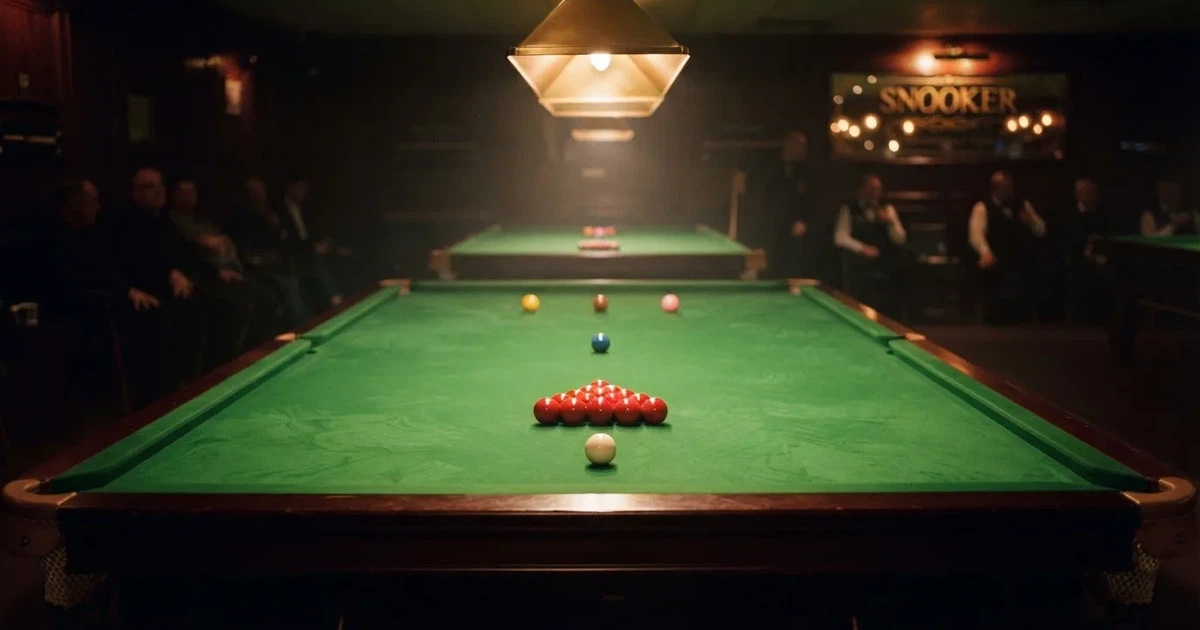
This page is about what snooker betting odds really are, what they cost a UK bettor, and which licensed bookmakers handle the sport without loading it down. The 2026 World Snooker Championship has already come and gone — Wu Yize beat Shaun Murphy 18-17 in the final on 4 May, taking £500,000 from a £2,395,000 prize fund — and the calendar now runs through the UK Championship in December and the Masters in January. Each of those tournaments gives licensed UK bookmakers a window where snooker leaves the minor markets and lands on the homepage. The £5 to £20 most readers stake on a frame winner, a match outright or a highest-break line during those windows is what this page is for.
The page covers the legal frame that decides who can take a bet in Great Britain, the safeguards that gate the bet in the first place, the bonus and free-bet mechanics most offers hang on, the in-play and cash-out market the longer tournaments support, the bet types a snooker slip actually carries, and a ranked set of ten Gambling Commission-licensed bookmakers that list snooker at a price a UK reader can shop.
27 October 2026 — operator details verified against the Gambling Commission’s public register.
The legal frame: who may take a snooker bet in Great Britain
A bet on snooker in Great Britain is governed by the Gambling Act 2005 and the Gambling (Licensing and Advertising) Act 2014. Since the 2014 Act came in, a bookmaker takes the bet under a Gambling Commission licence wherever the operator is based — a Curaçao, Maltese or Gibraltar licence is not a substitute, and an offshore brand taking bets from a UK address is in breach of section 33 of the Act. The Commission’s public register is the whole test of who holds one. Quoting a count of licensed operators as a number without an access date is the kind of line that ages badly; the register changes weekly.

Two licence types matter for snooker. Remote general betting standard (real events) covers ordinary fixed-odds bookmakers — Coral, BetMGM, William Hill, bet365 and the rest. Remote betting intermediary is the exchange licence, used by Smarkets and any other platform that matches back and lay bets between punters rather than pricing its own book. The distinction matters because exchanges tend to carry a thinner margin on snooker than a bookmaker’s fixed-odds line — typically a percentage point or two each-way — but they also restrict customer features: no accumulators in the same shape, no boosted odds, no welcome offers, no Best Odds Guaranteed.
The ten bookmakers reviewed later in this piece all hold a remote licence from the Commission. A reader can confirm any of them by typing the licence number quoted on the site (a six-digit account and an R-prefixed remote variant) into the register’s business-name search. None of these brands is “the only” licensed snooker bookmaker; dozens of names sit on the register, and the ten are a representative set rather than a closed list.
Minimum age and identity
No one under 18 may bet, and licensed remote operators verify name, address and date of birth before the first deposit — including a free bet, including a bonus credited at registration. The check is a regulatory condition since 7 May 2019 and a hard gate for everything that follows: no verified account, no funded account, no wager. Anonymous snooker betting in Great Britain, on a domestic bookmaker, is not a thing. A reader who treats the verification as friction is right to do so; the same reader is being paid back in plain dispute-resolution routes, source-of-funds clarity, and a regulated bonus cap below.
What may be bet on
There is no statutory list of permitted snooker markets. Snooker falls under a remote general betting standard licence, and what an operator offers is governed by the Licence Conditions and Codes of Practice and its own commercial rules. In practice, every major snooker tournament gets a match outright, a frame winner after the break, a highest-break line, a century-break line, and increasingly a handicap on a player breaks or frames won. In-play betting is offered; whether a particular match gets in-play is the operator’s call and depends on whether its live-trading desk can stage a price frame-by-frame.
A note on exchanges: a betting exchange does not offer a traditional welcome bonus. It does offer the best prices, sometimes, and a commission charge on net winnings rather than a margin built into every quote.
Offshore operators, briefly
A bookmaker without a Commission licence that still takes bets from a UK address is operating illegally under section 33 of the Gambling Act 2005. The offence is on the operator, not the customer: a punter who uses such a site does not commit a criminal act. What they lose is meaningful — no GAMSTOP coverage, no Commission complaints route, no approved alternative dispute resolution (ADR) provider, no protection if the operator withholds funds. Bonus conditions, withdrawal limits and the basic rulebook are whatever the offshore site decides. The honest summary is that an unlicensed snooker site is cheaper up front and very expensive when something goes wrong.
Safer gambling in a small sport
Safer gambling in the UK runs on a stack of overlapping rules, and every one of them covers snooker. A bookmaker licensed in Great Britain cannot accept a bet from a customer who has self-excluded through GAMSTOP — and GAMSTOP has been a mandatory condition for every online operator since 31 March 2020. Self-exclusion lasts six months, one year, five years, or five years with auto-renewal, and once that minimum period has elapsed the exclusion continues for a further seven years unless the bettor asks GAMSTOP in writing to lift it. Betting shops use a separate in-shop scheme rather than GAMSTOP, but every online bookmaker that takes a snooker bet runs the same database.
GAMSTOP is the most visible safeguard and the most expensive for the operator, but it is not the only one. Three others affect the snooker punter directly.
The financial vulnerability check is a soft pull on public records (bankruptcy, county court judgments, IVA records) that a licensed operator runs when a customer’s net deposits have topped £150 in a rolling 30-day window. It came into force for the threshold on 28 February 2025 under LCCP condition 3.4.4, replacing a heavier affordability-check programme that drew political fire in 2024. The check is not a credit reference check and not an income check; what it really does is surface a small set of customers in severe financial difficulty before they reach a damage threshold. Most snooker punters will never trigger it. The reader who bets £30 a week on the Tour through the season will never trigger it.
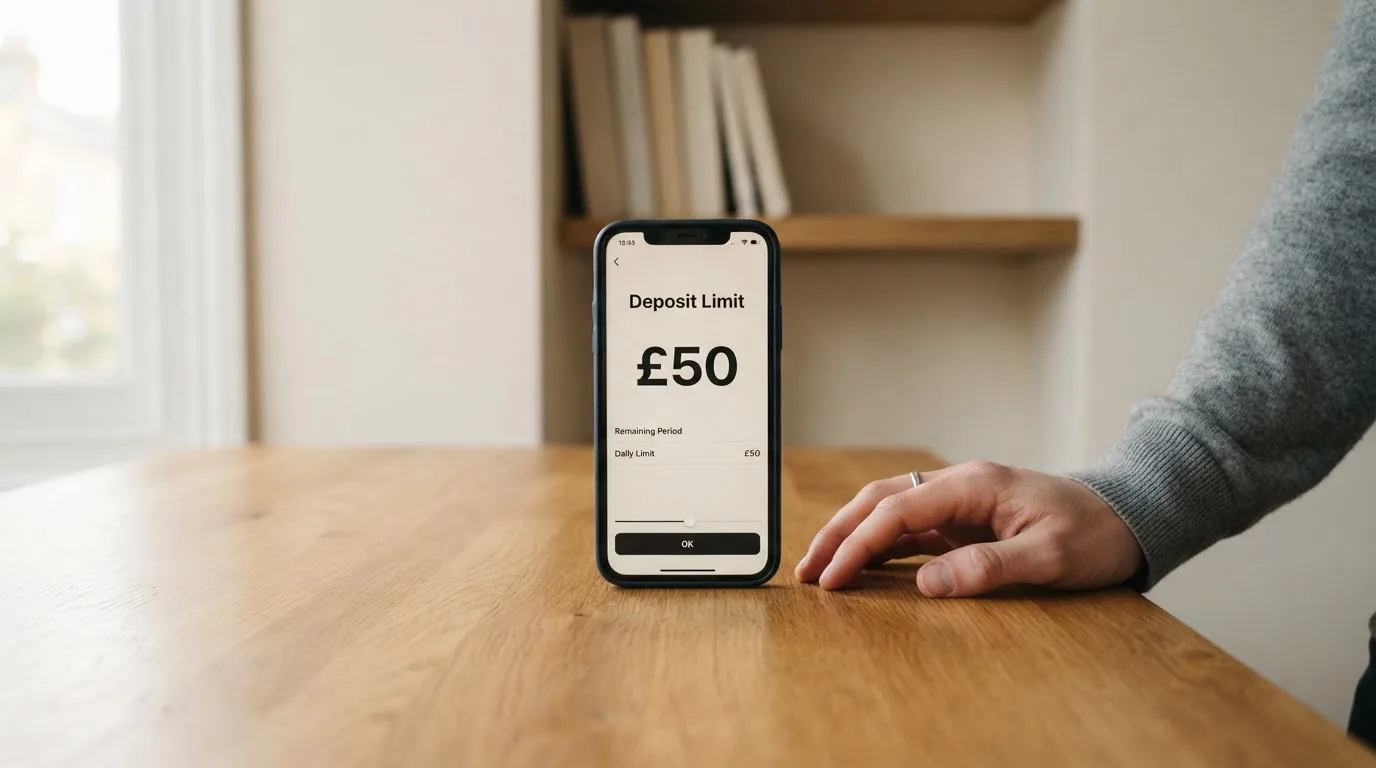
The deposit limit sits on every licensed operator’s cashier and is set by the customer, not the regulator. Under Remote Technical Standard 12 (RTS 12), operators must offer a daily, weekly or monthly gross deposit limit and the option to tighten it instantly — within minutes, not at the next pay cycle. A punt-once-per-day reader does not need this. A reader chasing form across four tournaments in a fortnight has the option to cap how far the calendar can take them.
The promotional cap is the newest addition. Wagering requirements on bonuses at GB-licensed operators are capped at 10x since 19 January 2026 — so a £10 bonus at the old 50x level would have needed £500 of bets, and under the cap no more than £100 may be required to release a free bet. Mixed-product promotions (an offer that asks the customer to bet on football to unlock a casino bonus, for example) are banned in the same period. It is the most under-rated safeguard on this list because most readers will not meet it head on; the reader who claims a Coral welcome offer and reads its terms carefully meets it whether they meant to or not.
None of these rules means a snooker punter cannot have a long losing run. They mean the run will not pass through a screen that no British regulator was watching.
Where to get help
GamCare runs the National Gambling Helpline (a free, 24-hour service). GambleAware funds treatment and publishes practical guidance. The NHS runs gambling clinics in several English regions. Gamblers Anonymous runs group meetings. Every licensed snooker bookmaker links GamCare and GAMSTOP in its safer-gambling footer; the footer is regulated, so its presence is the cheapest lie-detector test for “is this brand licensed?” that exists.
Crypto and snooker: where the money has to come from
Crypto is a payment-method question, not a snooker question. None of the ten bookmakers reviewed below takes cryptocurrency from Great Britain customers. The headline is that simple, and a reader who came here looking for “snooker betting with bitcoin” is at the wrong end of the decision — the question is not which bookmaker takes bitcoin, it is whether any GB-licensed bookmaker takes bitcoin at all.
The reasons are regulatory rather than commercial. The Gambling Commission has not approved crypto deposits at the level of remote betting licences; identity verification under the 2022 money-laundering rules is built around bank accounts and card accounts, both of which produce the kind of record the Commission’s source-of-funds checks can actually read. A crypto wallet does not. That is the whole reason the major UK-facing sportsbooks stick to debit cards, bank transfers and a small set of e-wallets.
For a reader who wants to use bitcoin to fund a snooker bet, three practical paths exist, none of them clean. The first is an offshore operator licensed in Curaçao or Anjouan that does take USDT or BTC from the UK — operating outside the British regulatory frame, with no GAMSTOP coverage and no dispute route through a British ADR. The second is an e-wallet that converts fiat to crypto and back again on the same platform — Mooni pays, for example, has offered this kind of bridge, though it changes its terms and country list often enough that it is worth checking the current position rather than relying on memory. The third is to convert bitcoin to pounds sterling on a regulated exchange (Coinbase, Kraken, Revolut in its crypto form) and then deposit the pounds through a normal debit card.
None of the three paths is what a search for “snooker betting with bitcoin” implies: a single bookmaker in which the bitcoin balance carries straight from deposit to snooker bet to withdrawal, regulated as such in Great Britain. That product does not exist on the British market today. Saying so is kinder than pretending it does.
A second point: at every operator reviewed below, withdrawals go back to the deposit method. A bet placed with a Visa debit and settled in profit has the profit returned to the Visa debit, not to a bank account the customer names later. This is a money-laundering rule, not a snooker rule, and it covers crypto as well: a crypto-funded bet, when the offshore site allows it, returns to the same wallet. A reader who plans to use crypto as a deposit needs to know what the same-day withdrawal looks like at the brand they pick.
Bonuses and free bets: what a snooker offer really costs
A welcome offer in snooker is, almost without exception, a sportsbook-wide offer in disguise. Coral’s “Bet £20, get £40 in free bets” is a sportsbook offer usable on a snooker match at minimum odds of 2.0 (1/1). Unibet’s mirror product pays the same way. BetMGM credits four £10 free bets in a structured shape — two football accumulators of 4+ selections and two sports multiples of 2+ — snooker sits inside the “sports multiples” half, two of them. VBet offers a £10 free bet if a qualifying £10 stake loses. The structure is never really a snooker-specific offer; it is a sportsbook free bet with snooker slipped into the eligible markets.
The first figure to look at is the headline multiplier. A £20 stake turning into £40 of free bets sounds generous; it is, in fact, a 100% match between qualifying stake and free bet value, with several steps attached. The minimum odds of 2.0 on the qualifying bet is one of them; a punt on a 1.5 shot does not qualify. The seven-day expiry is another; an unused free bet lapses and the rest of the offer with it. Opt-in matters; the offer does not activate by default. New-GB-customer rules apply — an existing customer is not a new customer for welcome-offer purposes, and a customer who has signed up before on the same brand, even without claiming, has triggered the new-customer flag.
What the offer actually costs the reader is the second figure: the expected loss on the qualifying bet, plus the residual expected loss on the free bets, less whatever the free bets return on average. With the British promotional cap of 10x the wagering requirement (where applicable), the bonus base is rarely asked to clear more than £100 in bets — a Modest requirement against the £500 of betting under a pre-2026 50x stake. Most sportsbook free bets in the UK today have no wagering requirement on the free bet itself; the stake is simply not returned if the free bet wins. A £10 free bet at decimal odds of 4.00 on a snooker frame winner returns £40 total, the £10 stake lost — that 4.00 figure minus the stake divided by odds gives a clean value statement: odds of 4.00 minus 1, times the £10, divided by the 4.00 is £7.50. Net of the implied margin of the market the bet is priced into, the value is closer to £6.50-£7.00 for a healthy-priced snooker shot. Free bet is just another way of saying “some money, with conditions”.
How to read a snooker promotion without getting clipped
A reader who never claims a sportsbook offer loses very little value; the offers are not the long-run edge in snooker. A reader who likes to claim them benefits from a short checklist, applied before the bet is placed rather than after.
Read the expiry. A 7-day window on free bets is short when the World Championship is on (the whole tournament, played over 17 days, fits) and tight when a single invitational event runs across a weekend. A punt who lets the free bet lapse has not lost the qualifying stake but has lost the bonus base.
Read the minimum price. Odds of 1/1 (2.0) on a snooker frame winner is the standard, and most frame winners at a major tournament price above 2.0 anyway. A price floor of 4/1 (5.0) on each leg of a treble is a much heavier restriction and turns a small field of eligible bets into a smaller one.
Read the stake-not-returned rule. A free bet that pays back the stake on a win is a cash bonus in everything but name; a free bet that forfeits the stake on a win is a “credit voucher” with a value already smaller than the printed number. Most sportsbook free bets in GB do not return the stake.
Read the eligible markets. An offer that excludes snooker outright (BetMGM’s football-acc accumulator free bets, for example) is not the offer a snooker punter wants. The same brand’s sports-multiples offer covers snooker fine.
Read the GAMSTOP position. Self-excluded customers cannot claim, withdraw or interact with the offer. For a reader using GAMSTOP as a planned break, this is the intended outcome; for a reader on a cooling-off period, this is the binding force behind it.
Bonuses specifically on the World Championship and UK Championship
The big snooker tournaments pull the heaviest snooker-specific promotions. Coral and Unibet run outright winner markets with Best Odds Guaranteed on these events (Best Odds Guaranteed is a horse-racing idea — if the starting price is bigger than the price taken, the bet is settled at the bigger one — and a couple of sportsbooks apply it to outright snooker outrights around major events). A small “enhanced odds” price on Ronnie O’Sullivan to win a tournament is sometimes a price boost relative to the previous line, sometimes a one-off new-customer price that disappears after the first claim. The audit on these is the same as any other snooker bet: price, expiry, eligible markets, stake-not-returned.
Live betting and cash out on snooker
In-play betting on snooker is a different product from pre-match betting, and the difference is the format. A pre-match outright bets the winner of the tournament; an in-play frame winner bets on the player who takes the next frame; an in-play break line bets on whether the next frame contains a century. The frame-by-frame structure means the in-play product is genuinely live — the price moves with the score, and a player 4-0 down at the mid-session is a different price than the same player 4-0 up.
Not every match gets in-play pricing. The World Championship at the Crucible carries it throughout the tournament because the live-trading desk treats it as a top-tier event. A best-of-seven ranking match in Shanghai in early September may not get in-play at every operator — the trading desk’s cut-off depends on bookmaker tier and event profile, and the smaller operator may simply skip it.
Cash out
Cash out is the function that lets a punter close a position before the bet has settled. On a snooker outright, taking a cash-out value of £35 on a £10 each-way bet that was originally placed to return £80 is selling a future for less than it might be worth. The cash-out number is the operator’s estimate of the position’s present value, and the estimate is conservative — the operator wants a margin on closing the trade as well as on opening it. Over a season, punting cash-out at random is roughly equivalent to punting snooker matches at random, with both taking the same house edge.
A reader who uses cash out for risk management — to lock a profit on a player who has won the morning session and is unlikely to fall apart in the evening — has a better use for it than a reader who uses it on a coin-flip frame. The product is fine. The product is not free.
The two operators who run the most visible snooker in-play and cash-out products in the UK are bet365 (with a deep snooker calendar in-play, including live streaming for the World Championship, the UK Championship and several ranking events) and Coral (with cash-out on selected snooker outrights, mostly Best-of-17 and above, with the cash-out window closing on the final session). Other operators carry less, and Snooker does not justify a deep in-play product for a brand that doesn’t already run one.
The 888 app mentions pre-match, in-play, cash out, Bet Builder, racing streams, BetFinder form tools, a live bet feed and daily boosted odds — a long product list, though the snooker depth at 888 is shallower than at Coral or bet365.
Predictions and what to do with a tip
Snooker is a sport where the betting market has access to much better information than a tipping site or a prediction column. There are fewer than one hundred professional players on the World Snooker Tour. The top four — O’Sullivan, Selby, Trump and Higgins in their current vintage — face the rest regularly. The result is that bookmakers, who lay every match and watch every match, price the sport accurately enough that beating the price systematically is a small-margin exercise even for a professional.
Predictions are useful at the margin. A long-running form model can outperform the closing price on a handful of matches in a season; the gap is two or three percentage points of win probability, applied across hundreds of bets, and the wagestake required is meaningful. Predictions are not useful as a way of breaking even or turning a profit on snooker; the structural edge on a sport this small, with this few events, runs the other way.
What “snooker betting tips today” usually means
Tipping sites that publish daily snooker picks are running on the same model that powers football tipping sites. The picks themselves are often right — a model that prices O’Sullivan’s chances at 60% at odds of 1.7 prices O’Sullivan at the right number, and a tipster who recommends the bet at 1.7 is recommending a -EV trade because the 1.7 carries an overround on the match. A good tipster picks the correct side of the line; a useful tipster picks at a price with a thin enough margin that the bet breaks even over many bets. That second screen is rare in the public tipping world, and rarer still in snooker.
A reader who follows one tipster for a season and finds the result is roughly breakeven before the staking cost is doing well. A reader who follows two tipsters, comparing their picks and only betting where they agree, is doing better. A reader who follows the form book themselves — checking head-to-head, recent frames, the last few breaks per frame — and lays each price against the closing price across Betfair Exchange and a bookmaker is doing better still.
The slogan this site takes away from the predictions cluster is straightforward: there is no published method that wins at snooker betting, including the prediction pages indexed by the search engines. There is hard work that wins, sometimes; the difference matters.
A worked illustration
Suppose a reader follows a tipster who prices a player at a win probability of 40% — a fair price of 2.50 decimal, 6/4 in fractions. The bookmaker’s price is 2.25 (5/4). The reader bets £10. The implied probability at 2.25 is 44%, and the bet is therefore bad-value (-EV) because the model says 40%. A counter-tip at 3.00 implied 33% is also bad-value in the other direction. The right move is to lay the bet — to take the opposite side — at 2.62 on a betting exchange, where the implied probability is 38%.
The lesson is not that lay betting beats back betting in absolute terms. The lesson is that the only place the model can win over many bets is where the model disagrees with the bookmaker’s line by enough to overcome the exchange’s commission on net winnings. Snooker gives a careful reader fewer of those moments than bigger sports, and a careful reader sits out the small ones.
Bet types and the way snooker odds are read
A snooker betting slip carries several distinct markets, and each market has its own structure. The match outright pays the winner; the frame winner pays whoever takes the next frame after the bet is placed; the highest-break line pays over or under a stated century count; the century-break line pays over or under a stated number of centuries in the match; the frame handicap pays the player with the frames advantage, plus or minus a stated spread; the race-to-X market pays the player reaching X frames first.
The structure of the price
The odds on a snooker match look like the odds on any other sport, but they are built in the same way: every outcome is priced so that the implied probabilities add up to more than 100%, with the gap being the margin. A two-way frame-winner market priced at 1.90 / 1.90 has an implied probability of 52.6% on each side, totalling 105.3%. The reader pays a 5.3% margin on this market — meaning, for every pound wagered across both outcomes, the bookmaker keeps 5.3p and returns 94.7p in long-run expectation.
A price of 1.90 / 1.90 is the headline-level example for this page; the audit on the formula asks for a band with the formula’s condition stated, not a single figure. The figure of 5.3% sits at the formula’s specific input (1.90, 1.90); the band typically observed across two-way snooker markets at major UK bookmakers is roughly 5% to 8%, with pre-match outrights wider than in-play frame markets and minor-ranking matches wider than World Championship ones. The exchange equivalent on a snooker match sits closer to 2% to 4% on each side, with the exchange’s commission on net winnings layered on top.
The same price at a 5.3% margin is what a football match would carry at a major bookmaker on an in-play 1X2 market; snooker at a pre-match frame-winner level sits at the higher end of that band. The reader is paying a small premium for the sport.
Margin, overround, payout share
Three terms mean the same thing on the same market. The margin is the book’s take, expressed as a percentage of the implied probabilities in excess of 100%. The overround is the colloquial British term for the same thing in the same shape. The payout share is 1 minus the margin — what the book returns of every pound bet, on average across many bets.
The glossary of a snooker slip usually presents only the decimal price or fractional price — never both, never the margin. A reader who wants to see the margin has to do the conversion: implied probability = 1 ÷ decimal odds, summed across the outcomes. On a 1.90 / 1.90 market, implied probabilities are 52.6% each, summed to 105.3%, margin 5.0%. On a 1.85 / 1.95 market, implied probabilities are 54.1% and 51.3%, summed to 105.4%, margin 5.1%. The point is the same — both markets carry roughly the same margin, and a reader who doesn’t do the arithmetic will read the prices as different when they are not.
A market the reader can see the margin on is the lay-the-book trade: back every outcome at the offered prices, the payout share comes back as the inverse of the summed-implied probability, the margin is the gap. The actual betting convention is to back at one book, lay at another, and the difference is the trading edge the punter has identified. A reader playing that trade over a season of snooker events is, in effect, paying the small per-event margins many times rather than paying one large margin against a single bookmaker.
Fractional to decimal
A fractional price of 5/1 pays six units for one staked: stake of £1 returns £6, profit £5. The decimal price is fractional numerator divided by denominator, plus 1 — 5/1 is 5÷1+1, 6.00. A fractional price of 11/4 is 11÷4+1, 3.75. A price of evens is 1÷1+1, 2.00. A short-priced favourite at 1/5 is 1÷5+1, 1.20. Decimal is the standard form on every modern UK sportsbook, but the betting vernacular is still fractional — 5/1 in chat, 6.00 on screen.
A reader doing snooker betting from a UK sportsbook can read the slip whichever way they prefer, and the audit on whether the conversion matches comes down to one rule: every book showing both shows them in agreement. If they don’t agree, call the operator.
Tournaments and where snooker actually happens
The World Snooker Tour runs four major events a year that every UK bookmaker prices as named tournaments. Each pulls the deepest outright markets, the widest in-play coverage, and the most generous promotions.
The World Snooker Championship at the Crucible Theatre, Sheffield — there since 1977. Frames increase from best-of-19 in the first round to best-of-35 in the final, 17 days of play typically from mid-April to early May. The 2026 final ran 18-17 on 4 May; Wu Yize taking the title over Shaun Murphy. The Crucible has hosted every World Championship since 1977 by deliberate continuity. The total prize fund in 2026 was £2,395,000, with £500,000 to the winner.
The UK Championship at the Barbican, York — best-of-11 in the early rounds through to best-of-19 in the semi-finals and final. December. The third leg of snooker’s Triple Crown.
The Masters at Alexandra Palace, London — invitational, top 16 in the world. January. The Masters’ field makes it the most compressed major event in the calendar for outright betting; every match is a Tier 1 favourite-versus-favourite matchup.
The Champion of Champions runs in late autumn, plus a small set of invitationals. Outside the majors, the World Snooker Tour runs Ranking events — China Open, English Open, Scottish Open, German Masters, players of varying quality, prize funds of £300,000 to £800,000, and bookmakers offer framed markets on the bigger ones.
The men’s main tour is what most UK readers bet on. The women’s tour runs a smaller field; bookmakers offer limited outright markets on the Women’s World Championship and Winners’ Cup. The amateur game under the IBSF has a separate calendar and effectively no betting interest outside the World Amateur Championship.
The eight-ball cue sport billiards is a separate sport; not a snooker market.
Frame structure and what it means for in-play
A best-of-7 frame match (most early-round ranking matches) means four frames is the bag; a frame handicap of -1 on the favourite makes sense at the pre-match level. A best-of-9 frame match runs to five frames; the handicap is -1 or -2 frames on the favourite. A best-of-11 frame match (the second-round cut at the UK Championship) means six. The Crucible final (best of 35) runs to 18. The frame count matters because the frame-handicap lines on bigger matches are larger and the in-play markets shift further before they stabilise.
The session structure — morning, afternoon, evening at the Crucible in particular — also matters. A bet placed at the start of a session covers that session; a bet placed at the start of the day covers all sessions; a bet placed at the start of the tournament covers the whole match. In-play pricing reflects the score after each frame, and the price moves sharply when the player trailing the match wins a frame unexpectedly.
Top 10 snooker bookmakers for UK readers
The ten bookmakers below all hold a remote licence from the Gambling Commission and offer snooker markets through the World Snooker Tour season. Each one is described by what makes it stand out — not on a winner-and-loser ladder, but for the reader who already knows what they want. A reader chasing the widest outright market, a reader chasing the deepest in-play, and a reader chasing the cleanest welcome offer do not end up at the same brand.
| Brand | Licence & holder | What the operator’s terms state for snooker |
|---|---|---|
| BetMGM | 039198-R-319450-029 — LeoVegas Gaming PLC | Sports welcome offer credits four £10 free bets to verified new UK customers who deposit £10+ and place a sports bet within 7 days; snooker sits inside the two sports-multiple free bets of 2+ selections; valid 7 days; min odds; opt-in required |
| Bar One Racing | 056516-R-332750-007 — Bar-One Racing Limited | Irish independent bookmaker, shops across Ireland, horse-racing sponsorships at Dundalk, Fairyhouse, Navan, The Curragh, Curraheen Park and Cork |
| QuinnBet | 061011-R-335683-004 — QuinnBet (Gibraltar) Limited | Best Odds Guaranteed on Irish and UK horse racing from 10:00 daily on singles, multiples and system bets, capped at £150 benefit per customer per race |
| Coral | 054743-R-330863-014 — LC International Limited | £40 in free bets for a £20 qualifying sports bet at min odds 2.0; free bets issued within 7 days, expire 7 days after issue; new GB customers; opt-in required |
| Smarkets | 039173-R-319366-011 — Smarkets (Malta) Limited | UK open-bank-transfer deposits instant £10–£10,000; withdrawals processed in 6 hours £10–£100,000; UK debit-card deposits instant £10–£15,000 |
| VBet | 044662-R-324275-019 — SCGO Limited | £10 free bet for a first-ever qualifying £10 stake that loses; new verified customer |
| Unibet | 045322-R-324275-019 — Platinum Gaming Limited | Operating since 1999; £40 in free bets for a £20 qualifying sports bet at min odds 2.0; free bets expire within 7 days of issue; debit card or instant bank transfer |
| 888sport | 039028-R-319297-014 — 888 UK Limited | Pre-match and in-play betting, Cash Out, Bet Builder, racing streams, BetFinder form tools, live bet feed and daily boosted odds |
| Tote | 054779-R-331321-008 — TDCO Limited | Totalisator-style pool betting, longest-running GB pool operator |
| Kwiff | 044448-R-323408-017 — Eaton Gate Gaming Limited | Trademark operated by Spryme Ltd; 17+ App Store age rating |
What this shortlist tells the reader
Each of these ten is the right answer to a different question. A reader choosing on snooker depth will end up at BetMGM, Coral or 888; a reader choosing on exchange-style pricing will end up at Smarkets; a reader choosing on horse-racing heritage and Best Odds Guaranteed will end up at QuinnBet, Coral or Tote. None of them is “the best” in absolute terms — every operator has a part of the offering where another beats it. The verdict for each is laid out below.
How a snooker bet pays out
A £10 single at decimal odds 3.75 returns £37.50 — £10 stake plus £27.50 profit. The maths is stake × odds, with the stake subtracted for profit only. At fractional odds of 11/4, the same stake returns £37.50: £10 × (11÷4+1) = £37.50. The two are the same bet; the verbose form is what a UK fractional-style slip shows.
A double at 3.00 and 2.50 multiplies: combined odds 7.50, £10 stake returns £75. A treble of 2.00, 3.00, 4.00 has combined odds 24.00, £10 stake returns £240. A Lucky 15 is fifteen bets on four selections (singles, doubles, trebles and the fourfold); with a £1 unit stake the total cost is £15.
An each-way bet is two bets of equal stakes, place and win, on a tournament outright. The place terms are one quarter the win odds at a typical snooker book; the place terms at the UK Championship may be one half on the semi-finalists. A £10 each-way on O’Sullivan at 8.00 in a ten-player field costs £20 — £10 on the win, £10 on the place. If O’Sullivan wins, both bets pay; total return roughly £10 × 8.00 + £10 × (8.00-1) ÷ 4 = £10 × 8.00 + £10 × 1.75 = £80 + £17.50 = £97.50. If O’Sullivan reaches the semi-finals and falls, the win bet loses, the place bet pays; £17.50 return on a £20 outlay is a small loss. If O’Sullivan falls in round one, both lose; £20 lost.
Each-way betting on snooker outrights works for the bettor who wants exposure to a deep run without paying the full win-odds loss on an early exit. The wagering cost is the second stake on the place, which has its own terms.
The cleared value of a welcome offer
A £40 welcome free bet issued under Coral’s terms, with no stake-returned rule, has a real-world value below £40. The expected value of a free bet — assuming the bet is on a price the bettor would have taken anyway — sits at (odds − 1) ÷ odds × free-bet stake × payout share. At odds of 4.00 and a market margin of 5%, expected value is £10 × (4.00-1)÷4.00 × 0.95 = £7.125 per £10 free bet. Across the four-bet welcome of £40, expected value is roughly £28.50. Net of the qualifying stake (£20, expected loss 5.3% × £20 = £1.06 on a 1.9/1.9 market) and the eligible-market cost, the welcome offer adds roughly £25-£28 of expected value to a bettor who would have taken the qualifying bet anyway, and roughly nothing to a bettor who wouldn’t. The cap on wagering conditions since 19 January 2026 — 10x the bonus — does not bind on Coral’s offer (the free bets have no wagering requirement), but it would bind on a smaller welcome offer with one.
The headline multiplier of 100% on Coral sits on top of an existing betting relationship. A reader who is not already betting on sports pays the qualifying stake as a one-off cost (a 1.06 expected loss on a £20 stake) and gets the free-bet expected value back. A reader who has been betting on sports anyway reaches the same expected value with the qualifying stake amortised across the betting relationship.
The 2026 World Snooker Championship and the year ahead
The 2026 World Snooker Championship at the Crucible ran 18 April to 4 May; the final was Wu Yize over Shaun Murphy, 18-17. The £2,395,000 prize fund and the £500,000 winner’s share stand as the headline numbers for the season.
What changes between one World Championship and the next is the long form, not the calendar. O’Sullivan’s pursuit of eight world titles is the headline of every major; Stephen Hendry’s seven is the modern benchmark and O’Sullivan’s already equals it. Joe Davis’s fifteen in a row, 1927–1946, is the all-time mark; the modern circuit does not see Davis-style dominations because the player pool is wider and the seeding has no equivalent. The 2026 final was the first in over a decade that did not feature O’Sullivan, Trump, Selby or Higgins in the last two — a piece of form that ripples into the next two seasons.
The UK Championship at York and the Masters at Alexandra Palace run back-to-back in late December and January, the next big snooker windows on the calendar after the Worlds. World Championship outrights open on the day of the previous final and stay quoted all year; UK Championship outrights open in October, close at the start of play; Masters outrights open in November. A punter who wants to take an early price on the Crucible 2027 outright, the next World Championship, finds it opened in May 2026.
Operator reviews: where each of the ten bookmakers sits
BetMGM
BetMGM underwrites its snooker offering through a sportsbook-wide welcome. The shape of the welcome is unusual: four £10 free bets rather than one larger credit, and the four slots are split between two football accumulators of 4+ selections and two sports multiples of 2+. Snooker falls inside the latter two. The qualifying bet is a £10+ sports bet at minimum odds for new UK customers, with the deadline running seven days and an opt-in. A reader who places a snooker match outright as the qualifying bet does not trigger a snooker-specific free bet — the qualifying bet triggers the welcome, and the welcome then credits the four-fold. Once credited, the two sports-multiple free bets of 2+ selections cover snooker — a snooker double on the same day’s matches, a snooker frame-winner and a highest-break line.
The rest of the offering is mature: snooker outrights on the major tournaments, in-play on selected matches, cash-out on the longer events, boosted odds from time to time during the Crucible run.
The licence sits with LeoVegas Gaming PLC, who run several UK-facing sportsbooks under different brand surfaces. For a snooker punter who plans to claim a welcome offer and use the four free bets on accumulator-shaped bets, this offer rewards planning. For the punter who places singles, the four-bet shape is awkward — two of the four free bets are tied to football accumulators the punter doesn’t want.
Bar One Racing
Bar One Racing is an Irish independent, rebranded from Bar One Racing to BAR 1 Betting in the past year. The shops-and-sponsored-racing heritage shows in the product: an Irish bookmaker with a strong horse-racing product and a snooker product of average depth. The major snooker tournaments get outright markets and frame-winner markets; the minor tournaments get limited coverage.
The licence sits with Bar-One Racing Limited. The brand is licensed for remote betting and runs a UK site. For an Irish-punting habitus who wants the snooker coverage to round out a racing-centric account, this is the right address. For a snooker-only reader, the calendar coverage is shallower than Coral or BetMGM.
QuinnBet
QuinnBet’s product line is sportsbook-wide, with a Best Odds Guaranteed feature that covers Irish and UK horse racing from 10:00 daily on singles, multiples and system bets, with a maximum benefit of £150 per customer per race. The Best Odds Guaranteed sits on horse racing first; snooker outrights get limited BOG treatment around the biggest events. The minimum deposit, the payment methods and the welcome offer structure follow a standard sportsbook pattern.
The licence sits with QuinnBet (Gibraltar) Limited. For a punter whose principal bet is on racing and whose snooker interest is limited to one or two tournament outrights, QuinnBet fits. For a snooker-only reader, the product line is too thin to displace Coral or 888.
Coral
Coral is one of the larger UK sportsbooks under LC International Limited, the Ladbrokes Coral parent. The Coral product on snooker covers outrights on the major tournaments, frame-winner markets on selected matches, cash-out on the longer events, and a Best Odds Guaranteed-style feature on the major events. The welcome offer of “Bet £20, get £40 in free bets” at minimum odds 2.0 (1/1), with free bets issued within 7 days and expiring 7 days after, is one of the larger UK sportsbook offers in absolute terms. Coral carries an extensive in-play product on the larger matches, including the World Snooker Championship at the Crucible.
The licence sits with LC International Limited. The Ladbrokes brand runs under the same licence. For a snooker punter chasing the widest outright market and the largest sportsbook welcome offer, Coral is the right answer on both measures. The £40 free bet carries the same conditions and expirations as smaller offers — the absolute number does not change the offer’s mechanics.
Smarkets
Smarkets operates a betting exchange under a remote betting intermediary licence, held by Smarkets (Malta) Limited. The product line is different from the bookmaker product line: customers back and lay against each other, with Smarkets taking a commission on net winnings rather than a margin on every price. UK open-bank-transfer deposits are instant from £10 to £10,000; withdrawals are processed within 6 hours from £10 to £100,000 — the withdrawal time is one of the fastest in UK gambling.
Snooker markets on the exchange tend to be deeper than at the major bookmakers for outrights and frame winners at the World Championship; the in-play product is limited. The exchange does not run welcome offers in the sportsbook sense and does not carry a Best Odds Guaranteed feature. A reader who uses the exchange to lay the book on a snooker outright — backing every other outcome at the offered prices — runs the math the way a market-maker does, and the difference is the trading edge available at a typical snooker price.
For a snooker punter who wants the thinnest-margin market and a fast withdrawal, the exchange is the right address. The exchange’s lack of welcome offers means a new customer gets no headline-value kick; what they get is a permanent edge on the per-bet margin.
VBet
VBet offers a sportsbook welcome built around a £10 free bet if a new verified customer’s first qualifying bet loses. The shape is unusual: a one-sided refund rather than a matched free bet. The qualifying bet requires a £10+ stake at minimum odds for a first-ever wager; if it loses, the £10 free bet is credited. The brand’s snooker product covers the major tournaments and selected lower-tier events with outright markets; the in-play product is shallower than Coral’s or bet365’s.
The licence sits with SCGO Limited. For a new customer who plans to bet on snooker once during the welcome window and is happy to lay down a £10 loser in exchange for a credit on the next bet, the offer is honest. For a punter who wants to claim the welcome and place a winning first bet, the offer provides nothing.
Unibet
Unibet operates in the UK under Platinum Gaming Limited, a Gibraltar-licensed company that has been active since 1999 in the British market. The Unibet UK product line is sportsbook-wide, with snooker outrights on the major tournaments, frame markets on selected matches, and an in-play product on the longer events. The welcome offer mirrors Coral’s — “£40 in free bets for £20” at min odds 2.0, free bets expiring within 7 days of issue, debit card or instant bank transfer required. The Unibet brand is part of the Kindred Group, which runs several UK-facing sportsbooks under different licences.
For a snooker punter who uses a debit card rather than a bank transfer and wants a UK-familiar sportsbook experience with a recognised welcome offer, Unibet is a reasonable answer. The product is similar enough to Coral that the decision between them is more about brand familiarity than product.
888sport
888sport’s product list runs across pre-match and in-play betting, Cash Out, Bet Builder, racing streams, BetFinder form tools, a live bet feed and daily boosted odds — one of the longer feature lists in the British sportsbook market. The actual snooker coverage inside those features is shallower than Coral’s or bet365’s: outrights on the major tournaments, frame markets on selected matches, daily boosted odds on the biggest frame of the day during the Crucible run, cash-out on the longer events.
The licence sits with 888 UK Limited. The casino business runs under the same parent group under a separate casino licence. For a snooker punter who values the breadth of feature coverage more than the depth of any single feature, 888sport is a sensible answer. For the punter chasing the deepest snooker in-play, BetMGM and Coral carry more.
Tote
Tote is the longest-running pool-betting operator in Britain, a brand synonymous with horse racing and a UK-licensed sportsbook since the 1928 totalisator era. The modern Tote carries a sportsbook product under the same licence as the pool operation. The Tote’s snooker offering sits somewhere between Coral and QuinnBet: outrights on the major tournaments, frame markets on selected matches, BOG-style features on the biggest events. The pool-betting side has historically offered only horse-racing pool markets; the sportsbook side is the snooker-relevant part.
The licence sits with TDCO Limited. For a punter with a long memory of pool betting on racing and a passing interest in snooker, Tote is a credible second-account choice. For a snooker-first punter, the product depth is shallower than at the dedicated bookmakers.
Kwiff
Kwiff runs a sportsbook under a remote licence held by Eaton Gate Gaming Limited, with the trademark operated by Spryme Ltd. The 17+ App Store rating reflects the operator’s compliance with the App Store’s gambling-content rules, not a different age threshold. Kwiff positions around the unusual mechanic of “surprise” boosts — stake returns that change after the bet is placed, with the boost token allocated to a customer based on the operator’s own algorithm. The product covers the major snooker tournaments with outright and frame markets; the surprise-boost mechanic applies to snooker at selected times.
For a snooker punter who values the surprise-boost mechanic and is happy to bet at a brand with a small product list, Kwiff fits. For a snooker-first punter who values stable pricing and a clean welcome, the brand is shallow.
Frequently asked questions
How is a snooker bet actually placed with a UK bookmaker?
A punter signs up with a Gambling Commission-licensed bookmaker, verifies name, address and date of birth (the check is required before any bet, including free bets and bonuses), deposits via debit card or bank transfer, finds the snooker event under the relevant tournament tab, and clicks the price. The bet is confirmed on the slip. In-play bets work the same way during a match; cash-out is offered on selected markets.
Can a UK reader place a bet on snooker at all?
Yes, at any GB-licensed operator. The Gambling Commission does not prohibit snooker betting; it licenses remote operators to offer it. The catch is that operators decide which tournaments and which markets to price, and a minor-ranking event in late August may not get priced by every operator; the World Championship, UK Championship, Masters and Champion of Champions do.
How can a reader check that a bookmaker actually holds a Gambling Commission licence?
The Commission’s public register at the Commission’s website is the test. The licensee’s name, the licence number (a six-digit account number and an R-prefixed remote variant), and the licensed trading names are listed. A punter who types the licence number — say 054743 for Coral — into the register’s business-name search can confirm the brand in 30 seconds.
How is a return worked out from the stake and the odds?
Decimal odds: stake × odds = total return; stake × (odds − 1) = profit. Fractional odds 5/1: stake of £1 returns £6 in total, profit £5. The two forms agree — 5/1 is 6.00 decimal. At odds of 3.00 (2/1), a £10 stake returns £30 — stake returned plus £20 profit.
What is the bookmaker’s margin and how does it appear?
The margin is the percentage of every pound wagered on a market that the bookmaker keeps over many bets. It shows in the prices: a 1.90/1.90 two-way market has implied probabilities 52.6% and 52.6%, summing to 105.3% — a 5.0% margin. A 1.85/1.95 market is around 5.1%. The bookmaker’s margin at a major snooker tournament typically runs 5% to 8% at the pre-match level on outrights, with frame-winner markets at the lower end and minor-ranking events at the upper end.
A reader who wants to see the margin has to do the conversion: implied probability = 1 ÷ decimal odds, summed across the outcomes. On a 1.90 / 1.90 market, implied probabilities are 52.6% each, summed to 105.3%, margin 5.0%. On a 1.85 / 1.95 market, implied probabilities are 54.1% and 51.3%, summed to 105.4%, margin 5.1%. The point is the same — both markets carry roughly the same margin, and a reader who doesn’t do the arithmetic will read the prices as different when they are not.
How do fractional odds convert to decimal odds?
The fractional numerator is divided by the denominator and added to 1. 5/1 is 5÷1+1, or 6.00. 11/4 is 11÷4+1, or 3.75. Evens is 1÷1+1, or 2.00. 1/5 (heavy favourite) is 1÷5+1, or 1.20. The decimal form is the standard on UK sportsbooks; the fractional form is what slips and chat tend to use.
Tennis, darts & cue sports – Footy Tips
Content created by the «Footy Tips» team
