
Best betting sites with accumulators for UK punters
 Available in US
A £10 accumulator at three short-priced favourites sounds easy. It usually is not. The price on each leg already holds the bookmaker’s margin, the legs multiply into one number, and a single losing selection clears the whole stake off the account. The product has been built to feel like a small bet with a big payout, and that is exactly why it warrants a careful look before anyone hands one over.
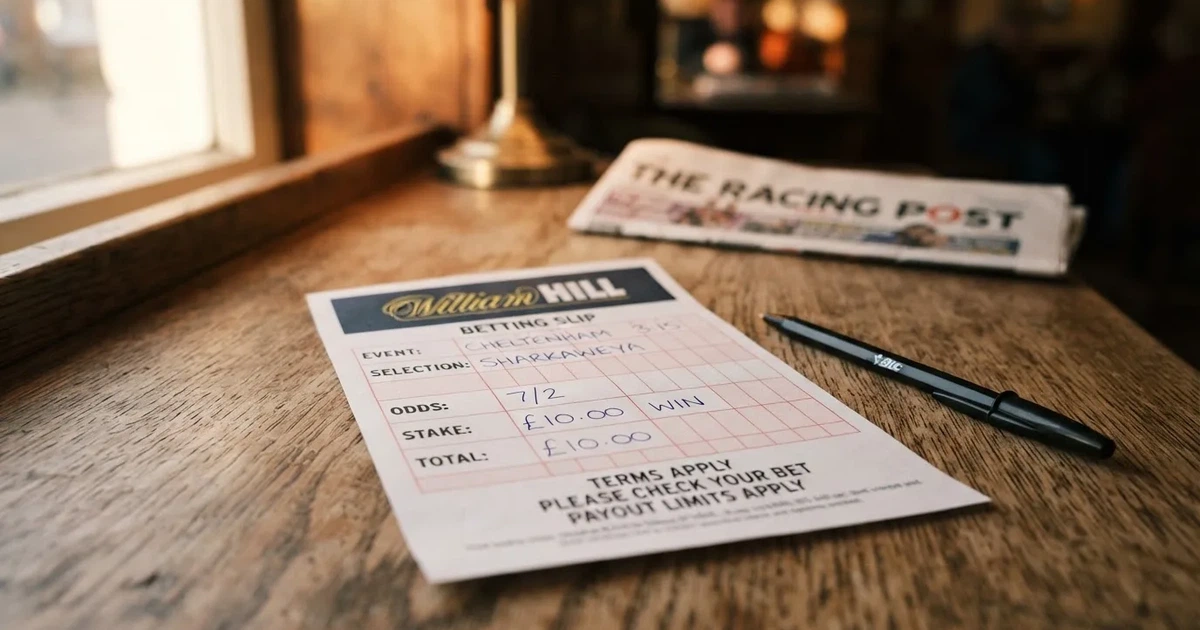
The page below works through what an accumulator is, what it costs the person placing it and which UK-licensed bookmakers offer one in a form worth weighing. The angle is cost: not the headline stake, but the turnover, the minimum price the legs have to beat, the caps on free-bet winnings and the verification step you walk into before the first leg is added to the slip.
Verified 27 October 2026 against the Gambling Commission’s public register.
How accas work, and why the price adds up the way it does
An accumulator — “acca” on a betting slip, “parlay” in the American trade press — is one bet that links two or more selections. Every leg has to win for the bet to win, and one loser takes the stake off the table.

The price you see at the bottom of the slip is the product of the legs’ decimal odds, which is why this format suits accumulators better than fractional quotes do. Three legs at 1.50, 2.00 and 2.50 multiply into a price of 7.50: a £10 stake returns £75 if all three win, and the punter keeps £65 of profit on top of the £10 returned. Two legs at evens each give 4.00, four legs at 1.40 each give about 3.84, ten legs of 1.20 apiece give 6.19. The closer each leg sits to 1.50, the heavier the bookmaker’s margin gets relative to the chance of the runner, because each margin is multiplied across the slip.
A tied leg (a “push”) does not lose the bet. The leg is removed and the payout odds are recalculated on the selections that remain.
What a winning acca pays back
A £10 accumulator at 7.50 returns £75 in total, of which £65 is profit, on the standard formula: return = stake × combined odds. The shape of the payout band matters more than any single headline price, because the legs almost never multiply to a round number.

Working from the three illustrative prices the table on this page works through — 1.50, 2.00 and 2.50 — the combined price comes to 7.50, and a £10 stake returns £75. Knock one leg down to 1.40 and the band shifts to 7.00; lift it to 1.60 and it moves to 8.00. In real markets the legs are usually tighter than 2.00, so a four-fold at four legs of 1.40 returns £3.84 for every £1 staked — and a £10 stake pays £38.40. At six legs of 1.30 the figure climbs to about £4.83 per £1, or £48.30 on a £10 stake. The point is not any one number. The point is the curve: short-priced favourites compound into a modest combined price rather than the blockbuster payout the marketing language suggests.
The full-cover bets that the same selections can be arranged into — Trixie, Yankee, Lucky 15, Heinz, Goliath — multiply the stake by the number of bets the format requires (4, 11, 15, 57, 247 respectively), and each individual bet within the cover pays the product of its own legs. A £2 unit stake on a Lucky 15 costs £30 across the 15 bets, not £2, and that £30 is the figure the punter stands to lose on a card that loses on every line.
What an acca really costs the punter
The price on each leg is the visible cost. Two less visible costs sit underneath it.
The first is the bookmaker’s margin, which is built into every quote and grows with each leg added to the slip. One leg at 1.90 carries a margin in the high single digits; two such legs multiply the margin into the slip, three multiply it again, and by the time four or five short-priced favourites sit on the slip the margin is well into double digits. The football weekend highlights of “£250 from a £5 stake” are paid out of the losing slips of the punters who picked one short-priced favourite too many.
The second is the wagering requirement on a bonus or free bet that the acca is used to clear. A £30 free bet given with a 10x wagering factor on the bonus needs £300 of qualifying bets before anything can be withdrawn; the free bet itself usually does not return the stake with a win, so the headline payoff is also the floor of what is at risk. Read the small print on the qualifying odds: a bonus cleared at 1.50 minimum odds and a bonus cleared at 2.00 minimum odds take very different amounts of betting to clear.
A punter who skips both costs pays for them anyway: they are written into the odds, and the bonus terms are the part of the page the operator writes last and the punter reads first.
The acca, the bonus and the small print: where the cost lands
Free bets, acca insurance and boosted odds are the three incentives most bookmakers wrap around accumulators. They are sold as extras on top of the bet. Mechanically, each one is a small contract that pins the punter to a specific kind of stake and a specific kind of bet.
A “risk-free” first bet refunded as a free bet is not a refund in money. A £10 risk-free bet that returns as a £10 free bet has refunded the losing stake, not the loss — the punter keeps the free bet, plays it through, and walks away with whatever it returns minus the house edge. A “win if your acca has one loser” insurance product pays a free bet on the next stake when one leg loses, not cash on the original slip. An “acca bonus” that pays 10% extra on five-folds, 20% on six-folds and so on is a percentage on top of the winnings: a long shot because the percentage kicks in only at the legs where the slip is already short-priced.
The marketing writes these in the language of free money. The terms write them in the language of a small contract. The bookmaker’s margin sits in the price of every leg the contract covers.
What the wagering requirement turns the bonus into
The 10x cap on bonus wagering that applies to UK-licensed operators means a £10 bonus needs £100 of qualifying bets before the winnings can be withdrawn. A £30 bonus needs £300. A punter running those bets at a margin of 5% across the qualifying markets loses £15 of expected value on the £300 turnover; at 8% the loss is £24. The expected cost of clearing the bonus is the turnover times the margin of the markets the turnover is run through, and the margin is set by the bookmaker, not by the punter.
Free bets whose stake is not returned with the win sit on a different calculation. A £10 free bet at odds of 3.00 returns £20 in profit on average — roughly, the price minus one times the free bet divided by the price, scaled by the payout share of the market. A £10 free bet at odds of 5.00 returns roughly £8 in profit on average. The headline “£10 free bet” is the amount of the stake that does not come out of the punter’s pocket, not the amount that lands in it.
What being licensed by the Gambling Commission does for the punter
A bookmaker taking remote bets from customers in Great Britain has to hold a Gambling Commission licence, and the licence comes with a set of obligations the operator cannot ignore and a set of protections the punter can call on. The licence number is shown on the operator’s site and listed on the Commission’s public register against the licensee name, the licence categories held and the trading names the licence covers.
The protections sit at the level of the operator, not the individual bet. Identity has to be verified before the first deposit, including before a free bet is credited. The licensed operator is part of GAMSTOP, the national multi-operator online self-exclusion scheme, and is required to offer a deposit limit. Credit cards have been banned for gambling in Great Britain since 2020. Bonuses on licensed sites carry the 10x wagering cap (in force from 19 January 2026), and mixed-product promotions are no longer permitted. A financial vulnerability check kicks in once a customer’s net deposits cross £150 in a rolling 30-day window. None of these controls is something an offshore site running on its own house rules offers.
The Commission is the regulator. TheASA, working under the CAP and BCAP codes, regulates the advertising, with section 16 of the CAP Code tightening who can appear in a gambling advertisement and how the marketing is framed.
What unlicensed sites do not offer
An unlicensed site accepts a stake from Great Britain without holding the licence the Gambling Act 2005 requires. The customer may have a working bettor account and a paper history of withdrawals; the protections on a licensed site simply are not present, and there is no approved dispute-resolution service to take a complaint to. Net deposits over the £150 vulnerability threshold trigger nothing. Free-bet terms run as the operator writes them, with no 10x cap and no GAMSTOP coverage. Funds held in a closed account on an unlicensed platform sit outside UK consumer redress.
There is no statutory offence aimed at the customer who uses such a site. The Commission’s enforcement is disruption: cease-and-desist notices, search-engine referrals, registrar and host coordination, and payment-provider pressure, with court-order DNS blocking powers introduced or about to be. The honest framing is that licensed = checks, limits, GAMSTOP, the bonus cap; unlicensed = none of those, and a real risk the customer never sees the funds again.
What responsible gambling controls the punter sees in practice
Every reviewed operator is part of GAMSTOP, and the register is the route into self-exclusion for online betting. A self-exclusion period starts at six months and runs to five years (or five years with auto-renewal); after the minimum period it stays in force for a further seven years unless the customer asks GAMSTOP to lift it.
Deposit limits are the customer’s choice. The licensed operator must offer one on a fixed time frame; the customer sets the level and the change takes effect on a cooling-off period. The financial vulnerability check is the operator’s obligation — a public-record check that runs above the £150 net-deposits threshold in any rolling 30 days. The check is not an income check and not a credit reference check, but it is a real interaction between the operator and the customer, and it is a normal part of placing larger stakes.
GamCare runs the National Gambling Helpline, with the contact details on the Commission’s site and on each reviewed operator’s safer-gambling pages. GambleAware funds treatment and education, NHS gambling clinics work with severe cases, and Gamblers Anonymous runs peer support. The Commission’s safer-gambling standards are the floor; the help lines are the route when the floor starts to slip.
Mobile and the accumulator builder
Most UK betting runs through a phone, and the accumulator builder is the part of the app that gets the most use. The standard pattern is the same across the ten reviewed bookmakers: a price boost column on the home screen, an “acca” tab at the top of the slip, and a Cash Out button once the bet is on.
Cash Out is the feature that turns a winning accumulator into working money before the last leg settles. The price offered is the bookmaker’s estimate of the slip’s present value minus its margin, and the offer shortens as the legs get closer to kick-off. A punter who Cashes Out a £10 wager on a four-fold at combined odds of 9.00 when the slip is two legs into a winning run sees a price that depends on the two unfinished legs; the price falls as those legs shorten, and it falls faster the more the bookmaker’s margin weights the offer. Cash Out is a tool; the tool costs the bookmaker’s margin to use.
Betting apps are a delivery channel, not a licence to a different market. The bets and the offers inside the app are the bets and the offers of the licensed operator, and the same age check, GAMSTOP coverage and credit-card ban apply in the app as on the desktop site.
Tips and strategy: what a tip really is
A “tip” from a tipster is one person’s opinion that a selection will win, written up as if it were a prediction. The gambling tipsters in the trade press sell the picks because the picks sell the subscription; the value of a tip to the punter is the price the punter pays to follow it, not the price the tipster charges.
Bankroll is the working vocabulary. A bankroll is the part of the punter’s money set aside for betting, sized as a fraction of monthly discretionary spend, and the stake per bet is a small percentage of the bankroll. A £1,000 bankroll run at 1% per bet stakes £10 a time; at 2% it stakes £20. The fraction is the punter’s protection against a losing run, and the protection is real whether the picks come from a tipster service, a model or the punter’s own reading of the form.
Forecasts are opinions shaped by whatever data feeds into them. A model trained on ten years of results produces a probability; the bookmaker’s price is a probability with a margin; the difference between the two is the value the punter is looking for. Bookmakers are very good at building margins into prices, so the value, when it exists, is small and inconsistent. A punter following a tipster pays for the picks either as a subscription fee or as a slice of stake, and the picks are honest opinions, not insider information.
The honest framing of strategy is bankroll plus odds plus margin, with the tipster a slice of stake on top. Anyone selling a “sure” pick is selling a guess, and the guess is wrong often enough that the bankroll shrinks faster than the headline odds look like they should let it.
What kind of bets the reviewed bookmakers offer, and what settlement looks like
The ten operators reviewed on this page all offer fixed-odds accumulators on the major UK sports — football, horse racing, tennis and golf at a minimum — and they all use decimal odds in the slip where the customer has chosen the decimal format. Football and horse racing carry the deepest market depth, the most in-play events and the most acca-builder functionality; tennis and golf run on outright markets that suit singles more than accas.
Settlement is the operator’s call, settled when the last leg’s result is confirmed. Rule 4 deductions, non-runner no-bet and dead-heat rules apply on a per-bookmaker basis; the terms pages set them out, and the punter reads them before placing the bet rather than after. Each-way betting is a specific feature: it splits the stake into two bets of equal size, one on the win and one on the place, so a £10 each-way stake costs £20 in money staked and settles on both legs of the place terms.
Full-cover bets (Trixie, Yankee, Lucky 15, Heinz, Super Heinz, Goliath) are arranged into multi-bet formats the punter pays a unit stake across. Each has its own number of bets: a Trixie four, a Yankee eleven, a Lucky 15 fifteen, a Super Heinz (also called a Canadian) twenty-six, a Heinz fifty-seven and a Goliath two hundred and forty-seven. The total stake is the unit stake times the number of bets, and an acca built the same way is one bet on the multi-leg slip. The punter chooses between the formats on the slip before the bet is placed.
The ten reviewed bookmakers, ranked by what they actually offer
The order below is from the Gambling Commission’s public register, not a leaderboard and not a recommendation. Each bookmaker holds the licence the register names, runs under a UK-licensed operator and offers accumulators on football and the major sports. The differences are in the bonuses, the acca-builder tooling and the way each operator settles on the leg-by-leg slip.
| Brand | Gambling Commission account | Licence holder | Position on accumulators |
|---|---|---|---|
| BetUK | 39198 | LeoVegas Gaming PLC | Acca welcome credit with minimum-odds terms; free bets exclude virtual sports, esports and non-UK/IE racing |
| Midnite | 101839 | Midnite Limited | Acca builder on the home page, popular accas feed, in-play and price-boost columns |
| Bet Ahoy | 100094 | Bet Ahoy Ltd | Single-bet welcome bonus with an acca leg as part of the package |
| Smarkets | 39173 | Smarkets (Malta) Limited | Betting-exchange format; commission on net winnings, not a margin in the price |
| BetGoodwin | 2927 | Goodwin Racing Limited | Horse-racing-leaning book with a sports acca on the welcome offer |
| Kalooki Sportsbook | 57730 | Kalooki Sportsbook Limited | Fixed-odds book with the standard acca mechanics on football and racing |
| 888sport | 39028 | 888 UK Limited | Pre-match, in-play, Bet Builder, racing streams and daily price boosts |
| Swifty Sports | 58957 | Swifty Global (UK) Ltd | Best Odds Guaranteed, Cash Out, daily boosts; Bet Builder listed as coming soon |
| Spreadex | 8835 | Spreadex Limited | Combined fixed-odds and financial spread betting under a single FCA- and UKGC-licensed operator |
| Betfair | 39439 | PPB Counterparty Services Limited | In-play, Bet Builder, racing streams, 90-Minute Payout market on football |
BetUK
BetUK runs on LeoVegas Gaming PLC’s UK licence, with the remote general betting standard for real events listed on the Commission’s register. The acca piece of the welcome offer is paired with a minimum-odds qualifier, and the free bets that come with it exclude virtual sports, esports and horse racing outside the UK and Ireland. The qualifying bet has to be at or above the minimum odds the terms name; the acca legs need not all be at that threshold.
The acca builder sits inside the sportsbook in the usual way, with football and racing as the depth markets and the standard Cash Out on the slip. The bet credits behave like other UK free bets: the stake is not returned with the win, and the winnings come off the legs at the prices the slip was built at.
Worth it for the punter who keeps the welcome offer to UK and Irish racing and football. The exclusions on virtual, esports and non-UK/IE racing bite the punter whose weekend acca draws from those markets.
Midnite
Midnite’s site is the rare one with the Commission’s account number (101839) printed on the page, with the acca builder wired into the home screen and a “popular accas” feed that surfaces combinations other customers have already built. In-play and a price-boost column sit alongside the slip, and maximum-stake limits apply on the boosted selections.
The welcome offer is a £5 qualifying bet at minimum odds of EVS (2.0) within 14 days of sign-up, returning £25 in free bets and 50 free spins valid for seven days. A small qualifying stake unlocks a 5x return in free bets; the small stake keeps the bonus from dominating the punter’s bankroll in the qualifying week.
Worth it for the punter who builds accas off other customers’ combinations. The maximum-stake limits on boosts need a glance before the slip is placed.
Bet Ahoy
Bet Ahoy’s welcome is a £10 stake returning £10 in free bets — £5 against a sports single and £5 against an acca. The structure is the standard “Bet £10, Get £10” card with the acca piece sitting alongside the straight sports bet. It runs on Bet Ahoy Ltd’s licence (account 100094) with the remote general betting standard for real events on the register.
The acca itself is a standard fixed-odds multi with the Cash Out feature on a winning slip. Other pricing details are not documented in the operator’s published material on the app store page beyond the welcome offer.
Worth it for the punter who wants the acca leg credited free on top of a sports bet. The published material on Bet Ahoy is shorter than the bigger brands, and the punter checks the live slip directly for the acca minimum odds and the full terms.
Smarkets
Smarkets sits on the Commission’s register as a remote betting intermediary — a betting exchange — rather than as a fixed-odds bookmaker. The Commission account number is 39173, held by Smarkets (Malta) Limited. An exchange matches punters against each other; the operator charges a commission on net winnings rather than building a margin into the price.
The standard commission is 2% on eligible exchange bets. New customers have been offered 0% commission for 60 days against a first deposit of £10. The acca on an exchange is built leg by leg against other customers’ lay bets, and the price the slip totals is the product of the back-side prices the punter matched against — with no operator margin in the underlying odds.
Worth it for the punter who understands backing and laying and wants the price without the bookmaker’s margin. The welcome period is a real saving of 2% on every settlement for two months; the punter checks what commission applies to which market, since exchange fees can vary.
BetGoodwin
BetGoodwin sits on Goodwin Racing’s licence (account 2927) with the remote general betting standard for real events. The welcome offer is £10 returning £15 in free bets — £5 on a sports single, £5 on an acca and £5 on a Sub-Cover bet — three credit pots against three bet formats. The structure rewards the punter who plans their first bets across formats.
Horse racing is the depth market on BetGoodwin, given the Goodwin Racing heritage. Football and the other major sports carry standard acca markets; the racing depth sits alongside acca-friendly features like Best Odds Guaranteed where the operator offers it.
Worth it for the punter who splits their bets across racing and football. The split structure suits a punter building a small acca alongside a sports single; the racing card is where BetGoodwin outshines the larger brands.
Kalooki Sportsbook
Kalooki Sportsbook runs on Kalooki Sportsbook Limited’s licence (account 57730). The site is the registered business Kalooki Sports Book Ltd (company number 12938274), GAMSTOP-registered, with the fixed-odds acca on the major sports.
The published material on the Kalooki site is shorter than the bigger brands, and the welcome offer specifics, the minimum odds on qualifying accas and the full terms are in the operator’s terms pages. The punter checks the slip directly for the acca minimum odds and the bonus rules.
Worth it for the punter who wants the smaller-room feel. The published material is thinner, so the punter reads the slip and the terms before placing.
888sport
888sport runs on 888 UK Limited’s licence (account 39028) under the standard remote betting authorisation. The acca welcome is layered on top of a sportsbook that offers pre-match and in-play betting, Cash Out, Bet Builder, racing streams, BetFinder form tools, a live bet feed and daily boosted odds. The depth of features is wider than the smaller operators on this page.
The boost column and the Bet Builder are the parts the punter spends the most time in; the live bet feed is a window into the current slip volume; the racing streams are useful on the bigger meetings. The acca itself is a standard fixed-odds multi with Cash Out on the slip.
Worth it for the punter who wants the full feature set on one screen. The 888sport welcome offer is the standard sportsbook bonus, and the acca legs qualify at the minimum odds the terms name.
Swifty Sports
Swifty Sports runs on Swifty Global (UK) Ltd’s licence (account 58957). The book offers Best Odds Guaranteed on horse racing, Cash Out on racing and football, daily price boosts, live streaming and in-play betting. The Bet Builder is listed as coming soon at the time of the App Store entry.
The acca is a standard fixed-odds multi on the depth markets of horse racing and football, with Cash Out. Best Odds Guaranteed applies on the racing legs where the operator has it on. The Bet Builder gap is worth knowing about: a punt used to single-leg Bet Builders will need to wait or pick a different brand for that feature.
Worth it for the racing-led punt who values BOG and streaming. The Bet Builder’s “coming soon” status pushes the single-leg builder punt to a different operator for now.
Spreadex
Spreadex is the hybrid on the list: regulated by the FCA for financial spread betting and by the Gambling Commission for fixed-odds betting, under account 8835, held by Spreadex Limited. A fixed-odds acca and a spread-bet acca are two different products on one account, and the same £10 acca stake is the punter’s full risk on the fixed-odds side; on the spread side the liability runs above the stake.
The new-customer offer is £60 in free bets on a £10 fixed-odds qualifying bet, with the free bets usable on fixed-odds and spread betting and a 28-day window on the qualifying bet. The site is the only one on the page where a single account crosses the two regulatory regimes.
Worth it for the punter who wants both fixed-odds and spread betting on one account. The FCA’s spread-betting regime is the deeper of the two; financial spread-betting losses can exceed the deposit, so the punter reads the FCA side of the terms before opening a spread position.
Betfair
Betfair runs on PPB Counterparty Services Limited’s licence (account 39439). The sportsbook is separate from the exchange side: in-play betting, Bet Builder, free live streaming of UK and Irish horse racing and football, and a 90-Minute Payout market on football where the bet pays out as a win if the backed team goes two goals ahead. The free-stream coverage is wider than the smaller brands.
The acca welcome offer structures around the Bet Builder and the racing streams. The 90-Minute Payout market is a separate product from the acca; the acca itself is the standard fixed-odds multi with Cash Out.
Worth it for the punter who wants the Betfair exchange and sportsbook on one wallet and the deep racing streams. The 90-Minute Payout market is unique to Betfair on this list and works on top of the regular acca.
The cost calculation, walked through one band at a time
The acca cost exercise works through three illustrative prices and three stake sizes. At a combined odds of 7.50 the stake × odds formula returns £75 on a £10 stake, £37.50 on a £5 stake and £15 on a £2 stake. The bands show the payout shape without claiming any one leg’s price is a market quote:
- £10 stake at combined odds of 7.50 returns £75 in total. Profit on top of the stake is £65.
- £5 stake at the same combined odds returns £37.50. Profit is £32.50.
- £2 stake at the same combined odds returns £15. Profit is £13.
- £2 unit stake on a Lucky 15 (15 bets × £2) returns against the price of the multi lines the format covers; the punter stands to lose £30 if every line loses.
The shape of these bands is the same for every multi: the payout is the product of the legs and the stake. The headline “£250 returns from £10” figures that advertise accas are usually the long tail of bigger legs, not the everyday outcome.
The marketing language is consistent across operators; the cost is consistent across operators too. The margin, the wagering factor and the qualifying minimum odds are where the differences show up.
Verdict
The accumulator is a fixed-odds bet where the legs multiply into one price and one losing selection takes the stake. The bookmaker’s margin sits inside every leg’s price, and it grows as the slip grows. The reviewed brands on this page all hold a Gambling Commission licence for the categories of betting they offer, and the differences across the ten come from the welcome structure (BetUK, Midnite, Bet Ahoy, BetGoodwin, Spreadex), the exchange mechanism (Smarkets, Betfair), the racing heritage (BetGoodwin, Swifty Sports), the feature set (888sport, Betfair) and the hybrid structure (Spreadex). The punter reads the welcome term, the minimum odds, the bonus cap and the verification step before the slip is built. The acca itself is settled, returned or voided in line with the operator’s published terms.
Frequently asked questions
What is an accumulator bet?
An accumulator is a single bet that links two or more selections, with the winnings from each leg rolled into the next. Every leg has to win for the bet to win; one loser takes the stake off the table. A tied leg is removed and the payout price is recalculated on the selections that remain.
How do football accumulator bets work?
A football acca is an accumulator built only from football selections — match results, both teams to score, over/under totals, player markets and so on. The legs multiply into one combined price, and every leg has to settle as a win before the bet pays out. Cash Out is available on most UK-licensed bookmakers once the slip is on.
How can it be checked that a bookmaker holds a Gambling Commission licence?
Open the Gambling Commission’s public register, search the operator’s trading name, business name, account number or domain, and confirm the licence number and the categories listed against it. The licence categories name the kind of betting the operator is allowed to offer — remote general betting standard for real events is the standard one for an acca bookmaker.
How is the return on a bet worked out from the stake and the odds?
The return is the stake multiplied by the combined decimal odds. On an accumulator the combined odds are the product of the legs, so a £10 stake on legs of 1.50, 2.00 and 2.50 returns £75 in total at a combined price of 7.50. The profit is the return minus the stake.
What is the bookmaker’s margin and how can it be seen in the odds?
The margin is the cut the bookmaker keeps out of every market, written into the price of each outcome. It is most easily seen by converting the odds of every outcome of a market into implied probabilities and adding them up; the sum runs above 100%, and the gap between the sum and 100% is the margin. A two-outcome market with a margin of 5% implies probabilities of about 52.4% on each side; a margin of 8% implies about 54%.
Bet types & in-play – Footy Tips
Content created by the «Footy Tips» team
