
Best UK bookmakers with a bet builder in 2026
 Available in US
Data current as of 27 October 2026 and verified against the Gambling Commission’s public register.
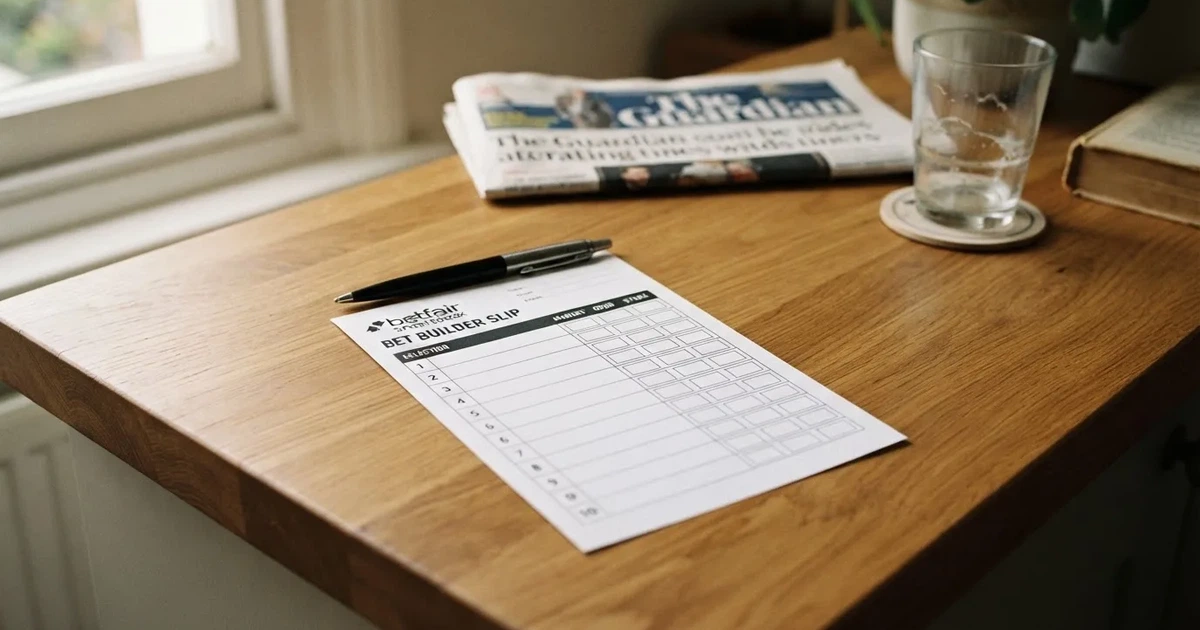
A bet builder is one bet that strings several selections from the same match into a single wager — winner, total goals, first scorer, corners, cards — priced as one combined price that pays out only if every leg lands. It is offered by every serious UK bookmaker under a product name (Sky Bet calls its version BuildABet, bet365 calls its Bet Builder+) and the rules around how many legs are allowed, what happens when one leg is voided, and which markets qualify for the same-game combo are nearly identical from one brand to the next. The differences are mostly cost: how aggressive the margin is on the combined price, whether cash out is available mid-game, whether a price boost or acca insurance applies, and what the welcome offer is really worth once the qualifying conditions are read. That cost — to the punter’s wallet, not to the bookmaker — is what this page sets out to measure.
How a UK Bookmaker Is Allowed to Offer a Bet Builder at All
Every operator reviewed on this page holds a remote operating licence from the Gambling Commission under the Gambling Act 2005, the only body authorised to license commercial gambling in Great Britain (England, Scotland and Wales; Northern Ireland sits under older legislation and is a different jurisdiction). The Commission’s public register is the single test of who is licensed; it can be searched by business name, trading name, account number or domain, and it is the reference used to compile the comparison below. Since the Gambling (Licensing and Advertising) Act 2014 an operator whose remote facilities are used in Great Britain must hold a Commission licence wherever the company itself is based — a Malta, Gibraltar or Curaçao licence is not a substitute for GB customers. The register lists the trading name, the account number, the categories on the licence and the licence holder (often a parent company, not the consumer-facing brand). Several consumer brands run under one licensee; that fact is not visible from a brand’s home page, but it is visible on the register.

The licence categories that matter for bet builders are remote general betting standard (real events) — the permit every operator on this page holds — and, for pool betting on horse racing, the separate pool-betting category. There is no statutory list of permitted markets: an operator with the right category may offer what its house rules allow, subject to the Licence Conditions and Codes of Practice (LCCP). That is why the same match can carry 200 pre-match markets at one bookmaker and 80 at another, and why in-play bet builders are routine at the larger brands but absent at smaller ones — none of it is regulated as to what may be offered, only as to who may offer it.
Betting duty (General Betting Duty) is paid by the operator on gross profits, not by the punter on winnings; the punter pays no tax on a winning bet in Great Britain. Whether operators pass duty on through worse odds is not established — the duty rate moves from 15% to a new 25% remote rate on 1 April 2027 for most online wagers, and it is not known whether prices adjust at that point. From the punter’s side the practical effect of duty is in the margin baked into every price, not a line on the bettor’s statement.
What the Gambling Commission Licence Means for the Punter at the Table
A GB licence changes the experience of betting in concrete ways. Identity (name, address, date of birth) is verified before the first deposit, including when only a free bet or bonus is claimed — there is no anonymous play at a licensed brand, and a customer who cannot or will not verify cannot deposit. Credit cards have been banned for gambling since April 2020, including credit-funded e-wallet top-ups; debit cards and bank transfers are not covered by that ban. The £150 financial vulnerability check (in force since 28 February 2025) is not an affordability check and not a credit-reference check: when deposits minus withdrawals cross £150 in any rolling 30-day window, the operator runs a public-record check for county court judgments, IVAs, bankruptcy orders and similar markers; the customer’s bank balance is not seen.

GAMSTOP is mandatory for every online operator on this page. A punter who self-excludes through GAMSTOP is locked out of every GB-licensed site and app for six months, one year, five years or five years with auto-renewal, and the exclusion stays in place for a further seven years after the minimum period unless the customer asks GAMSTOP to remove it. It does not cover betting shops — a separate offline service applies there. Help is independent of any operator: GamCare runs the National Gambling Helpline, GambleAware funds treatment and research, the NHS runs gambling clinics, and Gamblers Anonymous runs peer-support meetings.
The promotion rules in force since 19 January 2026 cap wagering requirements on bonuses at 10x (a £10 bonus at 50x turnover needed £500 of qualifying bets; under the cap, no more than £100) and ban mixed-product promotions that compel the punter to gamble across product types. Whether the cap applies to free bets with no wagering condition is not established — read each operator’s terms on the specific offer. The advertising framework is not run by the Commission: the ASA enforces the CAP Code (non-broadcast) and BCAP Code (broadcast), which limit who may appear in an ad (no one who is or seems to be under 25, with a narrow exception), and the whistle-to-whistle ban keeps betting ads off TV from five minutes before a live event to five minutes after, before the 9pm watershed (horse and greyhound racing excluded).
An unlicensed brand offers none of these protections: no GAMSTOP coverage, no Commission complaints route, no approved alternative-dispute-resolution (ADR) body, no recourse if funds are withheld, and no obligation to honour the bonus cap. The Commission pursues operators, not customers — the offence under section 33 of the Gambling Act 2005 is aimed at the operator providing the unlicensed service; a customer who bets on an unlicensed site commits no offence on the published law but loses every layer of British consumer protection. Enforcement is disruption (cease-and-desist notices, search-engine delisting, registrar and payment-provider pressure), not blocking; the Commission has been given, or is about to receive, court-order DNS blocking powers, but ISP-level blocking is not in operation.
What a Welcome Offer Actually Costs in Betting
Every welcome offer on this page is a free bet or a stake-back, not a cash bonus with no strings — and the strings are where the cost lives. A free bet pays out the winnings only: stake £10 of free bets at 3/1 (4.00), the return is £40 (£30 profit plus the £10 stake if and only if the bet had been a cash bet; on a free bet, the £10 is not returned). The qualifying bet to unlock the free bet usually requires a minimum stake at a minimum price, with a deadline (Spreadex gives 28 days, Betway gives 7 days for the free bet token to expire once credited). A stake-back offer refunds a losing first bet as a free bet — losing is the only path to the offer paying out, and the refund is a free bet with the same no-stake-returned rule. A stake-back refund as account credit is rarer and worth more, because the stake is returned on a win in cash.
Reading the small print matters more than the headline figure. A £60 free-bet bundle is worth less than £60 in cash because the stake is not returned on a winning free bet — the expected value is the free-bet amount times (odds − 1) divided by odds, multiplied by the payout share of the market the free bet is placed on. At decimal odds of 4.00 on a market with a 95% payout share, a £10 free bet is worth roughly £10 × (4 − 1) ÷ 4 × 0.95, or about £7.13. At decimal odds of 2.00 on the same market, the same £10 free bet is worth roughly £10 × 1 ÷ 2 × 0.95, or about £4.75 — half the value at half the price. This is why operators quote the larger numbers in headlines: a £60 headline at 4/1 average returns more than a £60 headline at evens, even though both are £60 headline. It is also why a stake-back-as-free-bet, headline of “£60”, can be worth less than a smaller stake-back-as-cash, headline of “£40” placed at the same content.
Welcome offers are one-time only, expire, and almost always require a debit-card deposit (credit cards are banned for gambling and e-wallet top-ups funded by credit cards are caught by the ban). Free-bet stakes are not always eligible for cash out — Spreadex’s £60 bundle is usable across fixed odds and spread betting, but most fixed-odds free bets cannot be cashed out mid-game, and the value of the free bet halves immediately on placement because the stake is not returned. None of this changes the rule that a welcome offer is for new customers only, and that a punter reading the terms before placing the qualifying bet will end up further ahead than one reading them after.
Bet Builders on Mobile: Where the Slip Lives
A bet builder is built and settled inside the betting slip, and the slip on a phone behaves differently from the slip on a desktop. Sky Bet’s published rules cap a single BuildABet at 10 selections and the slip overall at 20 selections across several same-event builders; the cap matters because the combined price of a 10-leg same-game bet builder is the product of the 10 leg prices, and each leg carries its own margin — push the leg count up and the overall margin compounds, so a 10-leg builder is closer to a casino game than a 2-leg builder is to a 3-leg one. Bet365’s Bet Builder+ is available pre-match and in-play and combines markets from one event into a single bet, with the same compounding-margin effect.
App-level features vary widely. bet365, Betway, BetMGM, Unibet and Lottoland ship full sports apps with bet builder, cash out, live streaming on selected events, and partial cash out. Smaller brands (Kalooki, Fitzwilliam, BetTom) ship apps with the bet builder but a thinner feature set — no live streaming on most events, no acca insurance, and limited in-play markets. A bet builder is a courtesy feature in app stores, with a 17+ age rating on the GB App Store, and that rating is the test of whether the app is marketed at under-18s.
The mechanics of building a bet on mobile are the same across brands: tap the relevant markets on the event page, watch the combined price update, enter the stake, place the bet. Not every market is eligible — Sky Bet’s tab only allows markets flagged for the builder — and contradictory selections cannot be priced (a team winning 2-0 cannot combine with Over 2.5 goals, because the second leg cannot win if the first does). Void-leg handling is consistent across the brands: if one selection is voided, the remaining legs keep running and the bet settles at the combined price of those legs. That is the rule Sky Bet publishes and the rule every other major brand runs to, though the exact wording differs.
A punter who bets from a phone should check three things before relying on the app: whether the bet builder is available on the event they want (smaller leagues and outright markets are commonly excluded), whether cash out is available on a bet builder (most brands say yes, with the cash-out value reflecting the current combined price), and whether the welcome offer’s free bets work on the builder (most do; a few exclude builder bets from free-bet use).
In-Play Bet Builders and Cash Out: Live Cost Management
An in-play bet builder extends the same-engine bet concept to a match already underway: the slip pulls from the live market grid, prices update every few seconds, and the combined price moves with the scoreline. bet365’s Bet Builder+ is the established reference here — pre-match and in-play, with the combined price recalculating as the markets move. Sky Bet offers in-play BuildABet on selected football matches; smaller brands are patchier, with in-play coverage often limited to Premier League, Champions League and the major European leagues.
Cash out on a bet builder is the second cost-management tool. The bookmaker offers to buy the bet back at a price derived from the current combined price; the punter either accepts (and locks in a smaller win or a smaller loss than the original bet would have produced) or declines (and lets the bet run). The cash-out value is always worse than the fair value of the bet at the same prices — that is how the bookmaker makes money on the feature. The wider the margin on the original bet, the worse the cash-out value relative to fair value; cash out is most useful on a bet whose underlying prices have moved favourably enough that the bookmaker is offering a small guaranteed return rather than risking a larger payout.
Live streaming is the third in-play feature and the most unevenly distributed. bet365, William Hill and Betway stream thousands of events a year (subject to geo and account-status rules: most require a positive account balance or a recent settled bet). Smaller brands stream few or none. Streaming is not a bet builder feature per se, but it is the way many punters watch the matches whose bet builders they have placed, and an in-play bet builder without streaming means refreshing a scores page rather than watching the action. None of this alters the fact that a bet builder in play is settled on the final score and the final match statistics, not on the state of the bet at cash-out time.
Bet Builder Tips, Forecasts and the Cost of Following Them
Tips are not predictions in the legal sense, and the page carries no tip — no one can know an outcome and a reader who acts on a predicted one loses real money on the page’s word. What a tip page can offer is the analytic framing: same-game multiples with two or three legs are the most cost-efficient shape because the margin compounds with each leg, and the legs most often combined (result, total goals, both teams to score) are the markets where bookmakers are sharpest — there is no pricing edge to be had on the major football leagues on the back of any publicly available statistic. The cost of a bet builder is the product of the leg prices, and the leg prices are set by the bookmaker with the bookmaker’s margin baked in. The expected value of a bet builder to the punter is negative — that is the definition of a margin — and no tip changes that on a single match.
What can move the cost is the market choice: smaller leagues and outright markets carry higher margins, because the bookmaker has less certainty about the true price, and the edge baked into the combined price is wider. Specials markets (player shots, player tackles, corners) carry higher margins still because the underlying statistics feed is less reliable. A punter who builds from a specials market is paying more for every unit of potential return than a punter who builds from result, total goals and both teams to score.
Forecast pages and tipster services sell picks on bet builders; what they sell is the leg selection, not a pricing model. A tip that names “Liverpool to win, over 1.5 goals, Mohamed Salah to score” is a leg selection — the cost of that selection is what the bookmaker charges in the combined price, and that cost is the same whether the tipster wrote it down or the punter chose it. Following tips is paying for someone else to read the team-news page, not paying for an edge. The honest reading of a tipster page is that it returns roughly what the underlying bets return — less the margin, less the tipster’s fee if any. That is what the cost of a tip is, before the punter decides whether to act.
What a Bet Builder Actually Is, in Rule-Book Form
A bet builder is a single bet in which every leg is drawn from the same event. The combined price is the product of the individual leg prices. The bet wins if and only if every leg wins; one losing leg loses the entire stake. One void leg drops out and the bet settles on the remaining legs at the price of those legs (so a four-leg bet with one void leg settles as a three-leg bet at the combined price of those three legs). Contradictory legs cannot be priced at all (Sky Bet’s example: a team winning 2-0 cannot be priced with Over 2.5 goals, because the second leg cannot win if the first does — the builder will simply refuse the combination rather than return an error).
Eligible markets are flagged on the event’s BuildABet tab (Sky Bet’s wording) or on the equivalent tab at other brands. Not every market qualifies, and the qualifying markets change from event to event — a Champions League football match might carry 12 builder-eligible markets and a League Two match might carry 6. The cap on legs per builder (10 at Sky Bet, similar across other brands) and the cap on the slip overall (20 at Sky Bet) prevent the worst case of margin compounding, but within those caps the punter is on their own.
The bet builder settles on the final match outcome, not the state at any earlier time. Cash out can be taken mid-game at the bookmaker’s offered value; partial cash out is available at most major brands, taking some of the stake out and leaving the rest to run. Free bets can be used on most builders but not all — Spreadex’s free bet bundle can be used on fixed-odds builders, not on spread-bet builders, and the brand’s own terms say so explicitly. Welcome-offer free bets that exclude builder bets are the minority but they exist; read the offer terms before placing the qualifying bet.
The Cost Comparison: Ten UK Bookmakers With a Bet Builder
The table below lists the ten featured brands, each with a Gambling Commission licence verified against the public register, and what each operator’s own terms say about a bet builder. The licence holder shown is the entity on the Commission’s register, which is often a parent company rather than the consumer brand. The bet builder column is restricted to what each operator states; the audit looks at the page to verify nothing has been invented.
| Brand | Licence (Commission account) | What the operator’s terms state on the bet builder |
|---|---|---|
| 10bet | 43173, Blue Star Planet Limited | Bet Builder available on football, tennis and horse racing; Cash Out and Live Streaming also available (per the GB App Store listing). |
| BetTom | 64959, Bet Tom Limited | Welcome offer is 50% back as a free bet up to £50 plus 50% back up to £50 as free slot funds for casino; full terms apply. |
| bet365 | 55148, Hillside (UK Sports) ENC | Bet Builder+ combines markets from one event into a single bet, available pre-match and in-play; Super Boosts, Winnings Boosts on Bet Builders and selected singles, daily Bet Boosts. |
| Spreadex | 8835, Spreadex Limited | Free-bet bundle usable across fixed odds and spread betting; qualifying bet must be placed within 28 days of account opening; financial spread betting regulated by the FCA, not the Commission. |
| Betway | 39372, Betway Limited | Welcome offer £40 in four £10 free bet tokens credited on settlement of a first bet of at least £10 at minimum decimal odds 2.0; 7-day free-bet expiry; debit-card deposits only. |
| Betboro | 44181, Webmedia Development N.V. | In-play markets and cash out on football, racing and tennis; boosted odds on selected singles from £10 stakes; safer-gambling tools (deposit limits, reality checks, self-exclusion). |
| Octobet | 62545, Octopus Game Limited | Best Odds Guaranteed on UK and Irish horse racing, up to £150 per customer per race. |
| William Hill | 39225, WHG (International) Limited | Best Odds Guaranteed on UK and Irish horse racing from 8 AM on race day, on singles and multiples; does not apply to ante-post, tote or pari-mutuel bets. |
| Fitzwilliam Sports | 48760, SBKI Limited | Prices based on Oddschecker average price for each selection; iOS and Android mobile apps available. |
| Lottoland | 38991, EU Lotto Limited | Combines casino, lottery betting, sports betting and scratchcards; licensed by the Commission for customers in Great Britain. |
What the Spread Tells the Punter
Two patterns jump out of the table. First, the licence holders are mostly parent companies — Hillside, WHG, Webmedia, Blue Star Planet — that operate one or more consumer brands; the Commission’s register is the place where the actual licence holder’s name is found, and a punter reading the brand’s home page rarely sees it. Second, the bet builder column is uneven because each brand publishes different facts: 10bet, Betboro and bet365 publish the most about their builder; BetTom, Spreadex, Betway and Octobet publish mainly about the welcome offer and the racing product; Fitzwilliam and Lottoland publish comparatively little about the builder itself, which is itself a fact about the brand.
The welcome offers are not directly comparable because they are different shapes. BetTom’s 50%-back-as-free-bet is a stake-back, paying out only on a losing first bet; Betway’s £40 in four £10 tokens is a free-bet bundle unlocked by a settled first bet; Spreadex’s £60 bundle is usable across fixed odds and spread betting; bet365, Betway and William Hill typically run free-bet or stake-back offers that vary by season. Read the qualifying conditions on the operator’s promotion page before claiming — the headline is the same shape as the headline on every free-bet offer (a large round number in pounds), and the conditions are where the cost lives.
What Each Operator’s Bet Builder Is Worth
10bet
10bet’s sportsbook carries bet builder on football, tennis and horse racing, with Cash Out and Live Streaming also available — a fuller feature set than most mid-tier brands. The licence holder is Blue Star Planet Limited, the Commission’s account is 43173, and the licence is the standard remote general betting (real events). 10bet sits in the middle of the table on this page: a more complete product than Betboro or BetTom, a less famous brand than bet365 or William Hill, and a smaller welcome offer than either. For a punter who wants a bet builder and live streaming without paying the bet365 or William Hill brand premium, 10bet is the option the table points at. The terms to read before claiming are the welcome offer’s qualifying bet minimum stake, minimum price and expiry — the GB App Store listing does not include those.
BetTom
BetTom’s sports welcome offer provides 50% back as a free bet up to £50, plus a matching 50% back up to £50 in casino slot funds; the operator’s terms page details the full qualifying criteria. BetTom’s licence holder is Bet Tom Limited (Commission account 64959), which operates under a remote general betting (real events) licence. This brand is smaller, with no published live streaming, acca insurance, or branded bet builder. For bettors who are satisfied with a basic builder on football and are attracted to the welcome bonus structure, BetTom may be worth investigation. Those requiring a fully featured bet builder experience, however, will likely find the current offering somewhat limited. The casino portion of the promotion is outside the scope of this page, and the value of the betting bonus is contingent upon the initial bet losing—the only route to accessing the free bet.
bet365
bet365 is the reference product on this page. Bet Builder+ combines markets from one event into a single bet, available pre-match and in-play, with Super Boosts, Winnings Boosts on Bet Builders and selected singles, and daily Bet Boosts. The licence holder is Hillside (UK Sports) ENC (Commission account 55148), operating under a remote general betting (real events) licence. The brand carries live streaming on thousands of events per year, partial cash out, and a deep in-play grid. The bet builder cost on bet365 is roughly the same as on every other major bookmaker, with competitively priced legs from the same feeds, though the Welcome Offer’s specific shape varies by season and is not detailed in the GB App Store listing here. Check the operator’s promotion page for the latest terms. For a punter who prioritises the deepest bet builder product on a licensed site, bet365 remains the industry benchmark; a smaller brand with fewer data feeds may feel limited by comparison.
Spreadex
Spreadex is a spread-betting and fixed-odds bookmaker, with the two sides of the business regulated separately: spread betting by the FCA, and fixed-odds betting by the Gambling Commission. The licence holder is Spreadex Limited (Commission account 8835), holding a remote general betting (real events) licence. The £60 free-bet bundle for a £10 fixed-odds qualifying bet is the headline welcome offer, usable across fixed odds and spread betting; the qualifying bet must be placed within 28 days of account opening. Spread betting losses can exceed the deposit — this is crucial to understand before opening an account. For those interested primarily in fixed-odds and bet builder features, Spreadex is a niche alternative, as the fixed-odds product represents the smaller component of its total business. Those seeking a dual-purpose account that integrates both fixed-odds and spread betting will find Spreadex uniquely suited to their needs.
Betway
Betway’s welcome offer for new UK and Ireland customers is £40 in four £10 free bet tokens, credited upon settlement of a first bet of at least £10 at minimum decimal odds 2.0; free bets expire after 7 days, and debit-card deposits only are eligible. The licence holder is Betway Limited (Commission account 39372), regulated via a remote general betting (real events) licence. The bet builder is a standard same-game-multi product; the brand also offers live streaming on selected events and a robust casino suite. As the qualifying terms—specifically the stake, odds, expiry, and payment method—are notably strict, bettors should verify the small print. If you prefer a straightforward free-bet bundle from a major operator, Betway is a strong contender. However, for those searching for a larger welcome bonus, brands like bet365 often provide more expansive options.
Betboro
Betboro offers in-play markets and cash out on football, racing and tennis, with boosted odds on selected singles from £10 stakes and standard safer-gambling tools, such as deposit limits and self-exclusion. The licence holder is Webmedia Development N.V. (Commission account 44181), and holds a remote general betting (real events) licence. Betboro is a smaller operator; its published feature set lacks a dedicated bet builder product or live streaming on most events, and the in-play grid is less comprehensive than those found at industry leaders. For bettors who prioritise access to a smaller bookmaker with solid responsible gambling controls, Betboro may warrant a look at their terms. Users specifically seeking a deep in-play betting experience, however, will likely find the offering thin.
Octobet
Octobet’s headline feature is Best Odds Guaranteed on UK and Irish horse racing, up to £150 per customer per race. The licence holder is Octopus Game Limited (Commission account 62545); the licence is remote general betting (real events). Bet builder on football is available; the racing product is the brand’s stronger side. For a punter who bets horse racing more than football, Octobet is the option the BOG cap points at — £150 per customer per race is a high cap. For a punter who bets football more than racing, Octobet is a smaller brand than bet365 or William Hill and the football product is correspondingly slimmer.
William Hill
William Hill offers Best Odds Guaranteed on UK and Irish horse racing from 8 AM on race day, covering both single and multiple bets; this offer does not extend to ante-post, tote, or pari-mutuel wagers. The licence holder is WHG (International) Limited (Commission account 39225), which maintains a remote general betting (real events) licence. The bet builder functions as a standard same-game-multi product across football and major sports. The brand provides live streaming for selected events, partial cash out, and a deep in-play grid comparable in scope to industry leaders. Check the operator’s promotion page for current seasonal offers. Those in search of a major brand with extensive product depth and racing-friendly terms will find William Hill a suitable choice. If, however, the absolute deepest in-play grid is the primary requirement, comparing features against the bet365 interface is recommended.
Fitzwilliam Sports
Fitzwilliam Sports determines its prices using the Oddschecker average for each selection, positioning the brand as a price-follower rather than a market-setter. The licence holder is SBKI Limited (Commission account 48760), and the operator maintains a remote general betting (real events) licence. The brand provides iOS and Android applications and offers a bet builder for selected sports. Bettors who prefer an operator that prices according to the market average may find Fitzwilliam an interesting option; those seeking the absolute deepest feature sets might prefer competitors such as bet365. Whether an average-odds strategy yields better bet builder prices than a market-making bookmaker is unclear—since odds are derived from market averages, a punter seeking a specific price edge would need to compare individual leg prices rather than relying on the average-price model.
Lottoland
Lottoland’s GB app combines casino, lottery betting, sports betting and scratchcards in one product; the operator is licensed by the Commission for customers in Great Britain (licence holder EU Lotto Limited, Commission account 38991; licence remote general betting (real events)). The brand is primarily a lottery betting operator; the sportsbook is the smaller side of the product. For a punter who wants a bet builder on a brand whose primary product is lottery betting, Lottoland is the option. For a punter who wants a sports-first brand, bet365, William Hill or Betway are the obvious comparisons.
The Bookmaker’s Margin and How It Shows in the Odds
The margin is the slice of every pound bet that the bookmaker keeps on average. It is built into the prices and visible to anyone who does the arithmetic. On a two-way market priced at decimal odds of 1.90 on both outcomes, the payout share is 1 ÷ (1/1.90 + 1/1.90), or 1 ÷ (1.0526…), or about 0.95. The margin is 1 minus the payout share, or 5%. That 5% is what the bookmaker expects to keep of every unit bet on this market — across thousands of bets, the bookmaker’s profit is approximately the margin times the total amount bet.
Margin and payout share are the same market seen from two sides. A payout share of 95% and a margin of 5% are interchangeable labels for the same number. A higher margin means worse odds for the punter; a lower margin means better odds. The market-by-market margin varies widely: the major football 1X2 markets sit in the 2–6% band on the major UK bookmakers, the totals and Asian handicap markets sit a touch higher, and the specials markets (player shots, corners, cards) sit considerably higher — 8–12% is typical. A bet builder combines several markets, so its overall margin is the compounded margin of the legs: a 5%-margin 1X2 leg combined with a 7%-margin goals leg is closer to a 12%-margin combined bet than a 6%-margin one, and the published combined price reflects that compounding. The honest reading of a bet builder price is that it is worse value than the underlying legs combined at fair odds, and the difference is the margin — visible in the math, not advertised in the marketing.
The illustrative two-way market at decimal odds of 1.90 / 1.90 (fractional 9/10 each side) gives a margin in the 5% area. Real bet builder markets are wider than this — three-leg, four-leg and ten-leg builders sit at higher margins because each leg adds its own slice. A punter who wants the best value from a bet builder builds from as few legs as the match allows, on the markets with the lowest margin (typically the major 1X2, total goals, both teams to score), and avoids specials markets where the margin is widest.
How to Check a Bookmaker’s Licence Yourself
The Gambling Commission’s public register is the test. Search by the brand’s trading name (10bet, BetTom, bet365, and so on), by the licence holder’s name (Blue Star Planet Limited, Bet Tom Limited, Hillside (UK Sports) ENC), by the Commission’s account number (43173, 64959, 55148) or by the domain (the .com or .co.uk the operator uses). The register lists the licence categories, the licence holder, the trading names covered by the licence and the status of the licence. A licence in force and unrestricted is what a punter should be looking at; a licence suspended, revoked or expired is not a safe basis for depositing. The register is the only authoritative source — a brand’s own home page may not show the licence holder’s name, and an offshore licence (Malta, Gibraltar, Curaçao) is not a substitute for GB customers.
The domain does not prove anything: GB-licensed operators use .com as well as .co.uk, and the domain extension is not a test of the licence. The “About” or “Terms” page usually carries a Commission account number, which can be checked against the register. Punters who cannot find the licence information on the brand’s site, or whose search of the register returns no match, should not deposit at that brand.
Working Out the Return From the Stake and the Odds
The arithmetic of a winning bet is straightforward in decimal odds. The return on a winning single is the stake multiplied by the decimal odds: a £10 stake at decimal odds 4.00 returns £40. The net profit is the return minus the stake, or £30 on that example. The return on a winning combination bet (a double, a treble, an accumulator, a bet builder) is the stake multiplied by the product of the leg prices: a £10 bet builder with three legs at 2.00, 3.00 and 4.00 returns £10 × 2.00 × 3.00 × 4.00, or £240. Net profit on that example is £230. The stake is part of the return on a cash bet; the stake is not part of the return on a free bet.
Fractional odds of 5/1 (read “five to one”) mean a £1 stake returns £6 (£5 profit plus the £1 stake); decimal odds of 6.00 mean the same thing. Conversion is a/b in fractional to (a ÷ b) + 1 in decimal: 5/1 to 6.00, 11/4 to 3.75, evens (1/1) to 2.00. Odds-on prices are shorter than evens (a £10 stake at 4/6 returns £16.67 — £6.67 profit plus the £10 stake; decimal odds 1.67). British bookmakers show fractional odds by default; the betting slip offers a decimal toggle on most operator sites. The arithmetic is the same whichever format is shown, and the margin is the same whichever format is shown — only the display changes.
A bet builder’s combined price is the product of the leg prices, with the margin compounded across the legs. The return on a winning bet builder is the stake multiplied by the combined price. The expected value of a bet builder to the punter is the return multiplied by the probability of winning, which on a negative-margin bet is less than the stake. The honest reading of any bet builder price is that the punter’s expected value is negative — by the margin. That is what a margin is, and that is why the house maths beats the punter’s maths in the long run.
What to Read Before Placing the First Bet
Three documents decide whether a welcome offer is worth the qualifying bet: the promotion’s terms page (the headline figure, the qualifying conditions, the expiry, the eligible markets, the minimum stake and minimum price), the brand’s house rules on the bet builder (leg cap, void leg handling, eligible markets, whether builder bets count toward the promotion), and the safer-gambling page (deposit limit tools, time-out, self-exclusion, GAMSTOP enrolment). A punter who reads those three pages before placing the first bet will know whether the welcome offer is actually worth claiming and whether the bet builder product matches the marketing. A punter who skips them will find out what the conditions cost on the second or third bet — which is when most readers of those conditions wish they had read them on the first.
Frequently Asked Questions
What is a bet builder?
A bet builder is a single bet that combines several selections from the same event into one wager — winner, total goals, both teams to score, first scorer, corners, cards. The combined price is the product of the individual leg prices, and the bet pays out only if every leg wins; one losing leg loses the entire stake. One void leg drops out and the bet settles on the remaining legs at their combined price, and contradictory legs (a team winning 2-0 combined with Over 2.5 goals) cannot be priced at all.
What is bet builder?
A bet builder is the same product described above, also called a same-game multi or a same-event accumulator. The name “bet builder” is the generic UK term; Sky Bet calls its version BuildABet, bet365 calls its Bet Builder+, and other brands use their own product names. The rules — combined price, all-legs-must-win settlement, void-leg handling — are nearly identical from one brand to the next, though the eligible markets and the cap on legs per builder vary.
What is a horse racing bet builder?
A horse racing bet builder is the same-engine combination product on a single race: winner, each-way factors, forecast/tricast, and a small set of race-specific markets (number of runners in the frame, distance led, etc.). Most major bookmakers offer racing bet builders on selected meetings (the major festivals and the daily meetings), with a smaller leg cap than football — typically 4–6 legs, because the racing market grid is thinner. Best Odds Guaranteed on UK and Irish racing (William Hill from 8 AM, Octobet up to £150 per customer per race) interacts with racing bet builders according to each operator’s house rules; the BOG cap is on singles and multiples, not on bet builders, at most brands.
How can it be checked that a bookmaker holds a Gambling Commission licence?
The Commission’s public register is the only authoritative source. Search it by the brand’s trading name, by the licence holder’s name (which is often a parent company, not the consumer brand), by the Commission’s account number, or by the domain. A licence in force and unrestricted is the right result; a suspended, revoked or expired licence is not. An offshore licence (Malta, Gibraltar, Curaçao) does not authorise GB-facing business — every operator whose facilities are used in Great Britain must hold a Commission licence, wherever the company itself is based.
How is the return on a bet worked out from the stake and the odds?
In decimal odds, the return is the stake multiplied by the decimal odds — a £10 stake at 4.00 returns £40 (£30 profit plus the £10 stake). In fractional odds of 5/1, a £10 stake returns £60 (£50 profit plus the £10 stake). On a combination bet (a double, an accumulator, a bet builder), the combined odds are the product of the leg prices, and the return is the stake multiplied by the combined odds. On a free bet, the stake is not returned — a £10 free bet at 4.00 returns £30 in profit only, not £40. Fractional-to-decimal conversion is (a ÷ b) + 1: 5/1 to 6.00, 11/4 to 3.75, evens to 2.00.
Bet types & in-play – Footy Tips
Content created by the «Footy Tips» team
