
Cricket betting odds in Great Britain: what the price is, what the margin takes, what the offer costs
 Available in US
The price on a cricket bet is the smallest thing to misunderstand and the easiest to misread. A line of 1.91 against 1.91 looks like a fair coin toss, but the bookmaker’s margin already lives inside both numbers, and that margin is what the punt pays every time, on winning bets and losing ones. The rest of this page is built around that single fact: a price is not a probability, a free bet is not £10 of value, a “best odds guaranteed” headline is not the same offer on every bookmaker, and a deposit limit is not a state ceiling. Cricket is the focus; the price is the subject.

Current as of 27 October 2026, against the Gambling Commission’s public register and the operators’ own terms.
Where Cricket Betting Stands Legally in Great Britain
The whole commercial market in Great Britain runs under one statute, the Gambling Act 2005, and one regulator, the Gambling Commission. The Act covers England, Scotland and Wales; Northern Ireland sits outside it under older law, which is why a “GB licence” is the right phrasing rather than a UK one. A bookmaker serving customers in Great Britain must hold a Commission licence wherever the company itself is based, and that rule has applied since the Gambling (Licensing and Advertising) Act 2014. A Malta or Curaçao or Gibraltar registration is welcome as an extra layer but is not a substitute: providing gambling facilities in Great Britain without the licence the Act requires is an offence under section 33, and it is the operator, not the customer, who faces that charge.
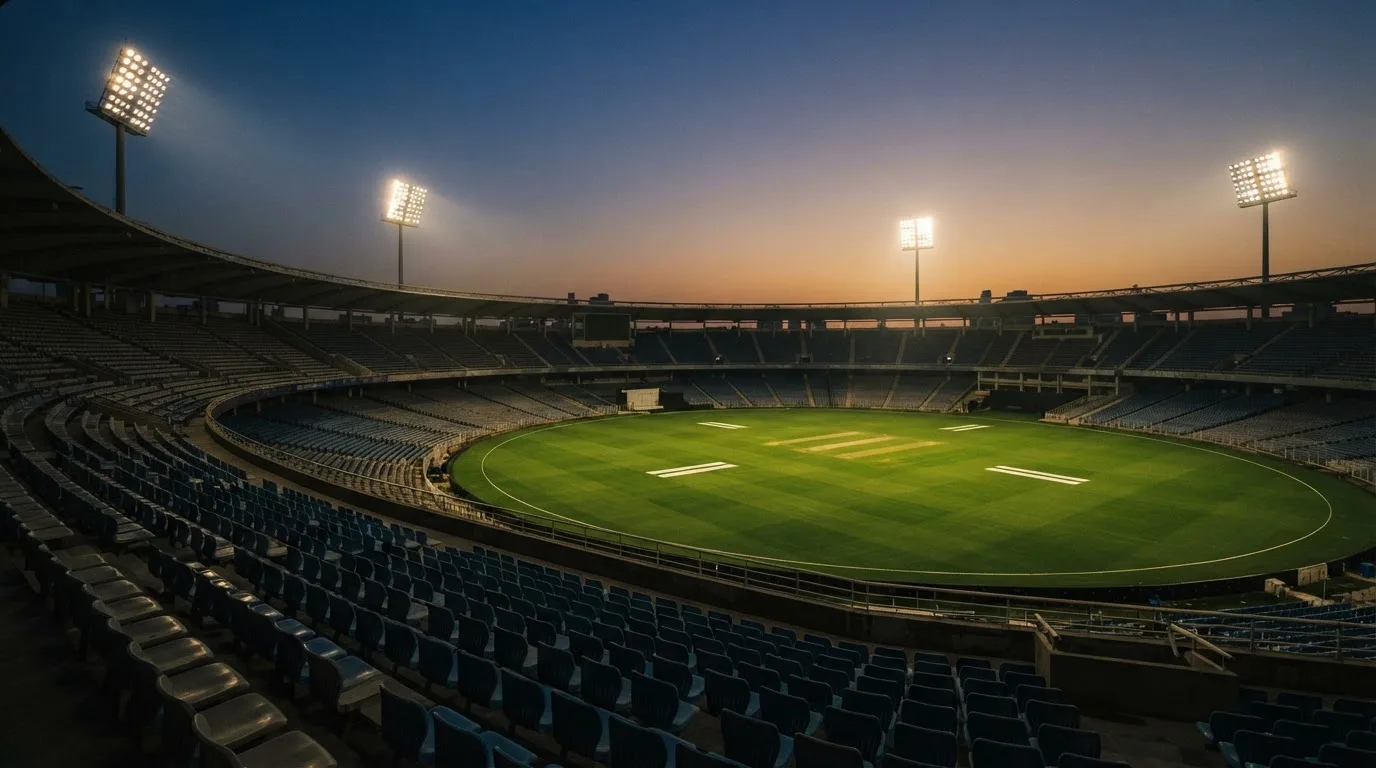
There is no statutory list of permitted sports or markets. Cricket sits inside a licensed category — “remote general betting standard (real events)” is the line that appears on the public register — and an operator offers the markets it chooses under that licence, bound by the Licence Conditions and Codes of Practice rather than by a list of allowed events. Twelve national boards hold Test status under the International Cricket Council, and that is what makes a Test match a regulated event at every licensed bookmaker. Twenty20 franchise leagues, The Hundred, the Indian Premier League, the Big Bash and county cricket are all covered by the same category.
Spread betting on cricket is its own case. A financial spread bet on a cricket index is regulated by the Financial Conduct Authority, not the Commission, and the rule of thumb is older than the book: spread losses can exceed the deposit. Spreadex is the operator most punters will meet on this side of the line, and its homepage states plainly that it is FCA-regulated for spread betting and Commission-regulated for fixed-odds betting. The fixed-odds cricket market is a different product, settled differently, and the rest of this page concerns that one.
The minimum age to bet is 18, and licensed operators verify name, address and date of birth before the first deposit, including for a free bet. No anonymous play exists on a GB-licensed site. Punters sometimes read that as friction; the Commission’s view is that it is the cost of the protections that come with the licence, and that is the trade to keep in mind when the unlicensed alternative is held up as quicker.
Responsible Gambling Tools, and What They Actually Do
A licence is a checklist, and the checklist runs further than most readers assume. GAMSTOP is the national multi-operator online self-exclusion scheme, mandatory for every online operator since 31 March 2020. A punt can sign up for six months, one year, five years, or five years with auto-renewal, and once the minimum period ends the exclusion stays in place for another seven years unless the customer asks GAMSTOP to lift it. It covers online sites and apps; high-street betting shops run a separate service. Kalooki Sportsbook is one GB-licensed brand that lists its GAMSTOP membership on its own homepage, which is what the public register says every GB-licensed remote operator should be doing.

A financial vulnerability check, a new layer, applies when a customer’s net deposits cross £150 in a rolling 30 days. It is a public-record check (bankruptcy, county court judgments) rather than a credit check or an income check. The trigger has applied since 28 February 2025 and the mechanism itself since 30 August 2024. Beyond that line, the Commission has announced a staged set of affordability checks — “financial risk assessments” in the policy language — with no start date yet. A “no start date” framing is the honest one. Deposit limits are the operator’s offer to the customer, not a state ceiling: every operator must provide a gross deposit limit, and several increases, withdrawals and time-driven reminders are layered on top, but no British law sets a maximum stake or a maximum loss in sports betting.
Credit cards are banned for gambling in Great Britain since 14 April 2020, including credit-card-funded payments through an e-wallet. Debit cards and bank-based payments are untouched. Identity is checked before the first deposit, so the same card used to fund the account is, by then, the customer’s card, in their name. The offshore alternative reads as friction-free by comparison, and the licensed alternative reads as a small delay before a punt; both readings miss the larger point that an unlicensed site has no GAMSTOP coverage, no Commission complaints route, no approved dispute-resolution body, no British consumer redress if funds are withheld, and is not bound by the 10x bonus cap or the £150 vulnerability check. The licence is the protection, and the protection is what the page is about.
Help is available, and it is free. GamCare runs the National Gambling Helpline, the NHS runs gambling clinics, and the support organisations most operators link to (GambleAware, Gamblers Anonymous) sit alongside them. Fitzwilliam Sports’ own homepage shows the standard pattern: instant deposits, fast withdrawals, timeouts, deposit limits, and links to those three services. The same pattern runs across every brand reviewed below.
Bonuses and Free Bets: What the Headline Costs
A welcome offer on a cricket book reads like free money. It is not. Three figures decide what any welcome offer is worth: the bonus amount, the wagering multiple (how many times it must be turned over before a withdrawal is allowed), and the minimum price at which a qualifying bet counts. A £10 free bet at any price, on any sport, with no turnover, is a real £10 of expected value. A £10 bonus that must be turned over ten times at minimum odds of 1.50 is something else, and the arithmetic below makes the difference plain.
The wider rule that governs these offers landed on 19 January 2026. Wagering requirements on bonuses are capped at 10x — a £10 bonus at 50x, the old industry default, would have required £500 of qualifying bets; under the cap, no more than £100. Mixed-product promotions are banned: an offer that requires gambling on two or more product types (betting plus casino, betting plus bingo, betting plus lottery) is no longer a permitted structure. The cap does not necessarily apply to free bets with no wagering condition, and the Commission’s position on the money value of any bonus is not established; the figure to watch is the wagering multiple on the bonus, not the headline on the advert.
BetMGM’s UK sports welcome, as listed in the App Store, hands four £10 free bets to a new customer who deposits £10 and places a sports bet within 7 days; the four bets are split as two football accumulators of four or more selections and two sports multiples of two or more, valid for 7 days, with minimum odds and opt-in required. BoyleSports gives £20 in free bets for a £10 qualifying bet, with a parallel €30-in-free-bets offer on a €10 bet for Irish customers. Octobet’s sportsbook welcome is 50% back as a free bet up to £50, plus a £10 casino bonus — and that casino leg is precisely the kind of mixed-product structure the new rule pushes against. Dabble’s “Bet £10, Get £10 in Free Bets” carries minimum odds, a 7-day free bet expiry, and the stake is not returned with the win. Sky Bet’s free bets are non-withdrawable, expire 30 days after crediting, can be used only on single or each-way markets (not multiples, virtuals excluded), and the stake is not returned. Each of those conditions removes real value from the headline.
Two more offers outside the welcome set sit on the cricket page. Best Odds Guaranteed on horse racing, run by QuinnBet from 10:00 every morning on UK and Irish racing for singles, multiples and system bets, pays out at the starting price if the SP is larger than the price taken, with a maximum benefit of £150 per customer per race. Bet600 runs the same BOG structure on racing. The cricket market has no equivalent in the reviewed set: BOG is a racing product, and punters looking for the same protection on a Test or T20 bet will not find it under that name.
Two warnings sit above all of this. First, a free bet whose stake is not returned is not a £10 bonus. Its expected value is the free-bet amount times the price minus one, divided by the price, then multiplied by the market’s payout share — a smaller number than the headline. Second, the bonus is only as good as the wagering rule, and the rule is the part a banner never quotes.
Cricket Betting on a Phone
Most cricket bets in Great Britain are now placed on a phone. bet365’s iOS app is described in the App Store as the most downloaded sports betting app in the UK, and the same app carries the official global betting partner branding of the UEFA Champions League — the kind of catalogue that explains why a brand can afford to advertise heavily in cricket windows. Most other reviewed brands sit on the same App Store shelf: Bet600, BetMGM, BoyleSports, Octobet, Dabble, Kwiff (with a 17+ age rating), and Lottoland UK, which combines casino, lottery betting, sports and scratchcards in one app.
Two design points matter to cricket. First, the in-play screen on a T20 game needs to refresh quickly, and the better apps run an odds-tick that updates ball-by-ball during the over. Second, a Bet Builder — the same-game-multi product — works differently for cricket than for football. A bet365 Bet Builder+ combines markets from one event into a single bet, available pre-match and in-play, with Super Boosts, Winnings Boosts on Bet Builders and selected singles, and daily Bet Boosts layered on top. That last product is the one that catches a cricket punter: a price boost on a player market is the most common free-bet substitute on the modern book.
Browser play has not gone away. Lottoland UK’s app and Sky Bet’s app both run as web clients on smaller screens, and the Commission’s identity-verification rules apply whichever channel the customer uses. The difference between the two is operational rather than legal: the app remembers the verification, the browser may re-prompt on a new device.
Live Betting and Cash Out on Cricket
In-play cricket is the section that divides a strong cricket book from a thin one. The bet types are different from football’s: a T20 over line, a “next method of dismissal” market, a fall-of-wicket band, a player performance market over the remaining overs. The strong books price these in real time, and the weak books do not. GB-licensed bookmakers offer in-play cricket; the controls on it are the operator’s licence conditions and customer-protection duties, not a statute. Midnite’s homepage shows in-play events alongside an acca builder, popular accas and price boosts with maximum-stake limits, and that is the structure a cricket punter wants to see on a Saturday in the IPL window.
Cash out is the second moving part. It lets a punter close a bet before the match is settled, at a price set by the bookmaker. On a Test match that has moved firmly one way by tea on day three, an in-play cash-out on a session line is the cleanest exit. The catch is that the cash-out price carries the book’s full margin, and the margin on an in-play market is wider than on a pre-match one. The cricket punter who cashes out often is paying a tax on every decision, and the tax is invisible.
The cash-out product on a strong cricket book is a live tick on the bet slip; on a weaker one it is a button that grey-outs during key moments. The difference is engineering, not regulation. The rule the book applies to settlement — when cash-out is unavailable, how a void leg is handled, what happens if a market is suspended mid-over — sits in the operator’s own terms and is worth a read before the first in-play bet of a series.
Cricket Betting Tips and the Limits of Forecast
Search volume for “cricket betting tips” is high and the supply is wide. Three points hold across the field. First, no model and no tipster can know the outcome of a match in advance: a T20 chase collapses on a mistimed slog, a Test turns on a 40-minute spell before lunch, and a one-day international is decided by Duckworth-Lewis-Stern in a rain break. Anyone selling a “sure” pick is selling something that does not exist. Second, a tip is only as good as the price: a 1.60 favourite that wins six times out of ten is value only at a price that reflects a sixty per cent chance, and the bookmaker’s margin is the first thing that has to be carved out of any probability estimate. Third, the markets that move the most information are the markets the books price most tightly: an open batter’s line, an in-form bowler’s overs, the team total — and the edge on those markets is the smallest in the book.
What a serious cricket punter does with a tip is check the price against the rest of the market, log the bet in a record, and review the record over a season rather than over a week. The arithmetic that matters is whether the closing line beat the book more often than not; that is the only measure that survives a year of form cycles. The rest is noise. Forecasts on rain-affected ODIs, on team news that breaks ninety minutes before the toss, on pitch reports that change after the warm-up — all of those belong in a record and not on a betting slip until the price has been checked.
How Cricket Betting Markets Are Built
Cricket has three international formats, and the market on each is different. A Test match lasts up to five days with up to four innings in total, a minimum of ninety overs is scheduled per day, and a match that is not won is a draw — a third outcome that no other team sport on the book carries in the same way. A One Day International gives each side 50 overs; if the chasing side is all out or out of overs with the scores level, the match is a tie. Rain is the structural feature: in a rain-affected ODI, the Duckworth-Lewis-Stern method usually sets the target or result, and if too few overs are played (usually 20) the match is a no result. A tied Twenty20 game is decided by a super over; a Twenty20 side bats a maximum of 20 overs, a bowler may bowl at most four, and the match lasts around three hours. The market on a T20 is denser, faster and more volatile than the market on a Test; the market on a Test is thinner, slower and more vulnerable to rain.
The bet types run across all three formats. Match odds — who wins — is the front line. The draw, the tie and the “no result” are the outcomes that complicate settlement. Then the player markets: top batter, top bowler, method of dismissal, fall of next wicket, partnership runs. Then the in-play markets that move ball by ball in a T20. Each market carries its own margin, and the margin on a player market is wider than the margin on match odds, and the margin on an in-play market is wider again. The cricket book is not one market; it is a stack of markets with a different price of admission to each.
How a single price is built is the next question, and the formula is the same in any sport. The bookmaker’s margin is one minus the payout share, and the payout share is the sum of the reciprocals of the prices on every outcome, inverted. Take the 1X2 market on a football match at 2.10 / 3.40 / 3.60: the payout share is 1 ÷ (1/2.10 + 1/3.40 + 1/3.60) = 1 ÷ (0.4762 + 0.2941 + 0.2778) = 1 ÷ 1.0481 = 0.954 — a 4.6% margin. Cricket’s two-way match-odds market, where the draw is removed and “no result” is its own line, is the cleaner illustration. Take a T20 at 1.91 / 1.91: 1 ÷ (1/1.91 + 1/1.91) = 1 ÷ (0.5236 + 0.5236) = 1 ÷ 1.0472 = 0.955 — a 4.5% margin. The same market at 1.85 / 1.85: 1 ÷ (0.5405 + 0.5405) = 1 ÷ 1.0811 = 0.925 — a 7.5% margin. The price looks harmless; the margin is the hidden charge, and on a T20 the same outcome at 1.91 keeps the book 4.5% of every pound staked, on both sides, regardless of who wins. That is the arithmetic to remember when a price looks fair.
Cricket Tournaments and Fixtures the Bookmaker Carries
The ICC governs cricket, and twelve full members hold Test status. The World Test Championship began its inaugural season in 2019 and runs on a two-year cycle. India won the 2026 ICC Men’s T20 World Cup, played from 7 February to 8 March 2026 and co-hosted by India and Sri Lanka across 20 teams, beating New Zealand by 96 runs in the final — a margin large enough that no in-play punt would have caught the turn. The Hundred, the IPL, the Big Bash League, the Caribbean Premier League, the Pakistan Super League, county cricket, the Sheffield Shield and domestic T20 competitions in every Test nation sit beneath the ICC’s umbrella and appear on a GB bookmaker’s fixture list when the schedule is live.
The fixture list is also where the punter meets the book’s actual depth. A book that lists the IPL match-odds line, the top batter line, the fall-of-wicket line and the next-over line on the morning of the match is operating one product. A book that lists only the match-odds line is operating another. The Hundred window is the cleanest test: most GB books now price it, but the depth varies. County cricket is the harder test again: a small number of books price the Championship in full, and the margin on those markets is wider than the margin on the international game.
Ten Cricket Bookmakers in Great Britain, Reviewed
Each brand below holds a Gambling Commission remote licence for “remote general betting standard (real events)” at the time of writing and appears in the Commission’s public register. The licence number, the licence holder, and the operator’s own position on a few key terms are stated alongside. The judgement is the editor’s.
| Brand | Commission licence | What the operator’s own terms state |
|---|---|---|
| Bet600 | 044731-R-323941-016 — Tyche Tech Limited | Pays Best Odds Guaranteed on UK and Irish horse racing; on the starting price if larger than the early or show price. |
| bet365 | 055148-R-331498-002 — Hillside (UK Sports) ENC | Bet Builder+ combines markets from one event pre-match and in-play, with Super Boosts, Winnings Boosts on Bet Builders and selected singles, plus daily Bet Boosts. |
| BetMGM | 039198-R-319450-029 — LeoVegas Gaming PLC | UK sports welcome: four £10 free bets (two football accas of 4+, two sports multiples of 2+) for a £10+ deposit and a sports bet within 7 days; 7-day free bet expiry, minimum odds, opt-in required. |
| BoyleSports | 039469-R-319383-025 — Boylesports Enterprise | UK welcome: £20 in free bets on a £10 qualifying bet. |
| Octobet | 062545-R-337248-006 — Octopus Game Limited | Welcome: 50% back as a free bet up to £50, plus a £10 casino bonus. |
| Dabble | 065677-R-340363-005 — Dabble Sports UK Ltd | Welcome: Bet £10, Get £10 in Free Bets; minimum odds, 7-day expiry, stake not returned. |
| Sky Bet | 067370-R-341330-005 — SBG Sports Limited | Free bets expire after 30 days, single or each-way use only (no multiples, virtuals excluded), non-withdrawable, stake not returned. |
| Fitzwilliam Sports | 048760-R-335434-009 — SBKI Limited | Dublin bookmaker, capped membership; “High Stakes Welcome” subject to compliance criteria. |
| Kwiff | 044448-R-323408-017 — Eaton Gate Gaming Limited | Trademark operated by Spryme Ltd; 17+ App Store age rating. |
| QuinnBet | 061011-R-335683-004 — QuinnBet (Gibraltar) Limited | Best Odds Guaranteed on UK and Irish horse racing from 10:00 daily, singles/multiples/system bets, max benefit £150 per customer per race. |
Bet600 is a focused racing-and-sports book with a Best Odds Guaranteed on the racing side and a less crowded cricket shelf than the leaders; the price is the product. bet365 is the deepest cricket book in the set, with Bet Builder+ across formats and the strongest in-play product, and that depth is also what the margin pays for. BetMGM runs a competitive welcome, but the four-bet split is restrictive: two football accas and two sports multiples of two-plus, a 7-day expiry, minimum odds, and an opt-in — every one of those conditions shrinks the value. BoyleSports’ headline is a clean £20 on a £10 bet, and on a like-for-like welcome that is one of the better structures in the set, though the smaller cricket depth than bet365 or Sky Bet is the trade. Octobet’s 50%-back offer is generous on the headline, but the £10 casino bonus is the mixed-product leg the new rule pushes against; readers who want a pure cricket book should look elsewhere. Dabble’s welcome is a clean £10-for-£10 with the standard stake-not-returned caveat. Sky Bet’s free bet structure is the most restrictive in the set — single or each-way only, no multiples — but the cricket book is deep and the in-play product is strong. Fitzwilliam Sports sits in a different category: a Dublin bookmaker with capped membership, a “High Stakes Welcome” subject to compliance, instant deposits, fast withdrawals, timeouts and deposit limits, and the standard GambleAware / GamStop / Gamblers Anonymous links. The brand is not for a casual punter; the structure is for a settled account. Kwiff is a smaller book with a clean licence trail and a 17+ App Store rating, but the cricket depth and the welcome offer are not in the same league as bet365 or Sky Bet. QuinnBet’s strength is racing — the £150-per-race BOG cap is generous for a high-volume racing punter — and the cricket book is a smaller part of the product.
The shared point is the licence. Every brand above is on the Commission’s public register, every one is bound by the LCCP, every one participates in GAMSTOP, and every one has accepted the 10x wagering cap. The choice between them is the choice of price, depth, welcome offer and product, not the choice of legal status.
Overview: What the Cricket Book Costs the Punter
A cricket bet is the most common kind of bet the GB punter places and the one whose price is hardest to read. Three costs sit inside every bet. The first is the margin, the slice of every pound staked that the book keeps on average across the market; on a 1.91 / 1.91 T20 line it is around 4.5%, on a 1.85 / 1.85 line around 7.5%, and on a deeper player market it is wider again. The second is the in-play spread, the wider margin on a market the book is pricing ball by ball; a cash-out during a T20 over pays the book’s full margin twice — once on the entry, once on the exit. The third is the welcome offer, whose headline is a stake-not-returned free bet whose expected value is the headline times (price minus one) over price, multiplied by the market’s payout share — a smaller number than the banner, every time.
The trade is the licence. The 10x bonus cap, the £150 vulnerability check, the GAMSTOP membership, the credit-card ban, the identity check before the first deposit, the LCCP marketing conditions — every one of those is a cost the licensed book bears and the unlicensed book does not. The cost is real, and the cost is what the price pays for. The unlicensed alternative is not cheaper because the licence is missing; it is cheaper because none of those protections exist on the other side. The decision is the punter’s, and the page lays the price on the table.
How the Margin Works, Step by Step
The bookmaker’s margin is the difference between the true probability of all outcomes (1.000) and the payout share the prices on those outcomes actually offer. The payout share is the inverse of the sum of the reciprocals of the prices. On a 1.91 / 1.91 two-way market, the sum of the reciprocals is 0.5236 + 0.5236 = 1.0472, the payout share is 1 ÷ 1.0472 = 0.955, and the margin is 1 − 0.955 = 0.045 — a 4.5% margin. On a 1.85 / 1.85 line, the sum is 0.5405 + 0.5405 = 1.0811, the payout share is 1 ÷ 1.0811 = 0.925, and the margin is 7.5%. The same market at 1.80 / 1.80 gives 0.5556 + 0.5556 = 1.1111, a payout share of 0.900, and a margin of 10.0%. A book that prices a T20 match-odds line at 1.91 / 1.91 is keeping 4.5% of every pound staked on that market; a book that prices it at 1.80 / 1.80 is keeping 10%. The price looks fair in both cases, and the difference between them is the difference between a 4.5% tax and a 10% tax on the same bet.
That is the calculation, and that is the band: a tight T20 line runs at 4 to 6%, a middling one at 6 to 8%, a wide one at 8 to 10%. A book that prices a Test match-odds line at 1.80 / 2.20 / 4.50 — home win, draw, away win, with the draw on the board — is keeping a different margin on a different shape, and the shape has three outcomes instead of two. The cricket punter who learns to spot the margin on a line of 1.91 learns to spot the same margin on a fall-of-wicket market, on a top-batter line, and on an in-play next-over market, because the formula is the same and the lesson is the same. The book keeps its margin, and the rest is what the punter fights for.
A Quick Cost Audit of the Reviewed Brands
Three figures decide whether a brand is worth the welcome offer. The wagering multiple on the bonus (capped at 10x by the Commission since 19 January 2026), the minimum price on a qualifying bet (the higher the price, the harder the rollover), and the free-bet expiry (the shorter the window, the more the punter is rushed). Sky Bet’s 30-day free-bet expiry is the longest in the set; Dabble’s 7-day expiry is the shortest. BetMGM’s split welcome is the most restrictive; BoyleSports’ £20 on a £10 bet is the cleanest structure. Octobet’s 50%-back offer is generous on the headline but carries the mixed-product leg that the new rule targets. Fitzwilliam Sports’ “High Stakes Welcome” sits outside the standard structure and is for an account that meets a compliance bar the standard punter will not clear. Kwiff and QuinnBet do not feature a headline welcome in the reviewed set, and that is not a criticism: the absence of a welcome is sometimes the better offer.
The deeper audit is the price. bet365’s depth in cricket is the strongest in the set, and the price is tight on the main lines. Sky Bet runs a comparable cricket book at a slightly wider margin on the player markets. BetMGM and BoyleSports run a competitive cricket shelf at a competitive price. Octobet, Dabble, Bet600 and Kwiff run a smaller cricket book with the price on the smaller market correspondingly wider. Fitzwilliam Sports and QuinnBet run a strong racing book and a smaller cricket book; QuinnBet’s BOG cap of £150 per race is generous for the high-volume racing punter. The right book for a casual cricket punter is the book with the tightest match-odds line; the right book for an in-play cricket punter is the book with the deepest in-play product; the right book for a racing-led account is the book with the best BOG structure. Three different books, three different punters.
The Verdict: A Licence, a Margin, an Offer
The cricket book in Great Britain in 2026 is a licensed market with a small but real margin, a regulated bonus structure, and a set of operator terms that differ more than the welcome offers suggest. The licence is the protection: GAMSTOP, the 10x bonus cap, the £150 vulnerability check, the credit-card ban, the LCCP marketing conditions. The margin is the cost: 4 to 6% on a tight T20 line, 8 to 10% on a wide one, wider again on a player market. The welcome offer is the headline: a free bet whose stake is not returned, whose value is the headline times (price minus one) over price times the market’s payout share, and whose cost is the wagering multiple and the minimum price the operator has set. The decision is the punter’s, the price is on the page, and the protection is the licence.
Frequently Asked Questions
How is a cricket bet placed?
A cricket bet is placed by selecting a market (match odds, top batter, fall of next wicket, an in-play line on the next over), choosing a stake in pounds, and confirming the bet on the slip. The book settles according to its own rules: a Test match is settled on the result, an ODI on Duckworth-Lewis-Stern if rain cuts in, a T20 on the super over if the scores are tied, and “no result” applies if a minimum number of overs (usually 20 in an ODI) is not bowled.
How does a punter check that a bookmaker holds a Gambling Commission licence?
The Commission’s public register can be searched by business name, trading name, domain or licence account number. The brand, the licence holder, the licence number and the licensed categories are listed there, and the domain proves nothing on its own — licensed operators use .com as well as .co.uk, and the absence of a .co.uk is not a sign of an unlicensed brand.
How is the return on a winning bet worked out from the stake and the odds?
Return equals stake times the decimal odds. A £10 stake at decimal odds of 2.50 returns £25; the net profit is the stake times (odds minus one), so £15 in this case. On a combination bet the legs multiply into a single price, the same rule applies, and the slip shows the combined return before confirmation.
What is a bookmaker’s margin and how does it appear in the odds?
The margin is one minus the payout share, and the payout share is the inverse of the sum of the reciprocals of every price on the market. On a 1.91 / 1.91 two-way line the margin is 4.5%; on a 1.85 / 1.85 line it is 7.5%; on a 1.80 / 1.80 line it is 10%. The price looks fair in all three cases; the margin is the hidden charge, and a tighter line is always the cheaper one for the punter.
Are cricket winnings taxed in Great Britain?
No. The player pays no tax on betting winnings in Great Britain (general information, not tax advice; a professional gambler should ask HMRC or an adviser). General Betting Duty is the operator’s tax on gross profits, currently 15% and rising to 25% on remote bets (other than on UK horse racing) from 1 April 2027; whether operators pass duty on through odds is not established, and the duty is not charged to the customer.
Rugby, cricket & Gaelic – Footy Tips
Content created by the «Footy Tips» team
