
Online chess betting in 2026: markets, margin and what an offer takes to clear
 Available in US
Currency stamp: data current as of 27 October 2026 and verified against the Gambling Commission’s public register and each operator’s own UK terms.
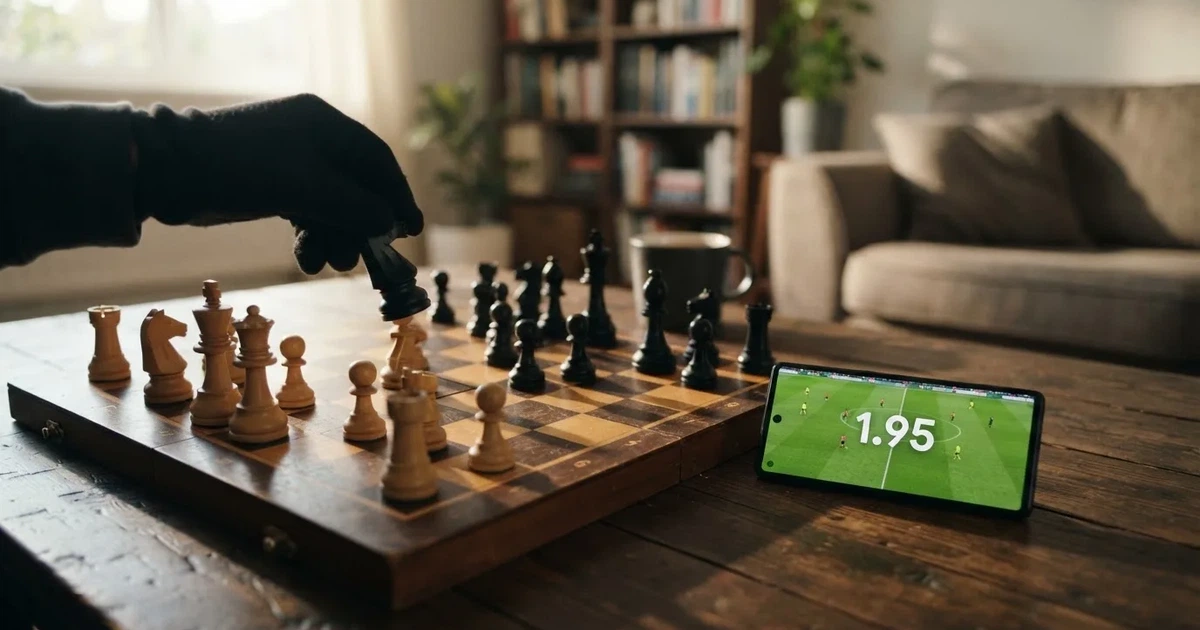
Chess sits in an odd corner of the British betting market. It is not a mainstream football or horse racing product, the calendar of fixtures is small and slow, and the bookmaker’s menu for it is thinner than for any ball sport — yet the same Gambling Commission rules apply, the same margin sits inside every quoted price, and the same arithmetic decides what a winning bet returns. This page is a working guide to that corner: which bookmakers actually offer chess, what they let you bet on, how the odds are built, what the welcome offers genuinely cost once the wagering is counted, and which questions a punter should answer before staking on a World Chess Championship game.
Legality and regulation: what a UK licence actually covers
Online betting on chess is legal in Great Britain, and the activity is regulated in the same way as betting on football, tennis or horse racing — by the Gambling Commission under the Gambling Act 2005. The Commission is a non-departmental public body sponsored by the Department for Culture, Media and Sport, and its licence is the only one that authorises a remote operator to take bets from customers in England, Scotland and Wales. Northern Ireland sits outside the Act and has its own older framework, so a “GB-licensed” bookmaker is the correct term and never “UK-licensed” in the loose sense.
The change that mattered most happened in 2014. The Gambling (Licensing and Advertising) Act 2014 amended sections 33 and 36 of the 2005 Act so that an operator whose remote facilities are used in Great Britain needs a Commission licence wherever it is based. A Curaçao, Malta or Gibraltar licence is no substitute. Since that change, point-of-consumption has been the test: if a customer in Manchester or Edinburgh can place a bet through a website or app, the operator behind it must hold a GB remote licence for the relevant category. The Commission issues several remote categories, and the one that matters for a chess punter is the remote general betting standard (real events) licence, which is what every operator featured in the comparison further down holds.
There is no statutory list of permitted sports, leagues or markets. The 2005 Act does not name chess, name football, or ban any event type. What the Act does is license the operator, set conditions in the Licence Conditions and Codes of Practice (LCCP), and let the operator decide what markets to offer under its own house rules. Esports sit inside the same framework, virtual events carry a separate licence category, novelty markets on politics and television are offered by GB bookmakers and are not prohibited by statute. In-play betting is legal and offered by every major GB-licensed bookmaker; the constraints on it are licence conditions and customer-protection duties, not a statutory cap.
Financial spread betting, where the contract is on a financial instrument, is regulated by the Financial Conduct Authority rather than the Commission. The two regulators meet at the boundary: Spreadex, which appears further down, runs both an FCA-regulated spread betting arm and a Gambling Commission-regulated fixed-odds arm under the same brand, and its terms remind customers that losses on the spread side can exceed the original deposit — a sentence no fixed-odds operator has to write.
The public register is the whole test
The Commission’s public register is searchable by business name, trading name, internet domain or account number, and it is the single source of truth for whether a brand holds a licence. A bookmaker serving British customers without that licence commits an offence under section 33 of the 2005 Act. The offence is aimed at the operator — on summary conviction, fines up to level 5 and, in England and Wales, imprisonment up to 51 weeks; six months in Scotland — not at the customer who merely places the bet. A punter on an unlicensed site does not commit a criminal offence, but loses the protections that come with a licence: no GAMSTOP coverage, no Commission complaints route, no approved dispute-resolution body, and no British consumer redress if funds are withheld. That asymmetry is the honest framing — licensed means checks, limits, self-exclusion and a bonus cap, but also identity verification before the first deposit; unlicensed means none of those protections and a real risk of being unable to withdraw winnings.
There is no state monopoly and no cap on the number of licences. Several brands can run under one licensee, which is why the comparison below names the licence holder as well as the brand. Ladbrokes and Coral run under one; Paddy Power and Betfair run under another; BetMGM’s sportsbook sits under LeoVegas Gaming PLC. The brand a customer sees on screen and the company on the register can be different entities, and the register is what reconciles them.
What the licence does not tell you
A licence number proves the operator is licensed, and proves nothing else. It does not prove the operator has a deep chess menu, pays out promptly, or quotes sharper odds than its rivals. It does not prevent the operator from restricting a customer’s account, from limiting stakes, or from closing an account on commercial grounds. The Commission’s enforcement powers are real, but they apply to licence breaches, not to everyday disputes about a bet. For those, a customer goes to the operator’s own complaints route and, failing that, to one of the approved alternative dispute resolution bodies listed in the licence conditions.
The licence register also does not rank operators. There is no “best licensed bookmaker” line in the Commission’s output. The comparison further down is this publication’s own assessment, on the matters the comparison table names, against the figures each operator’s own UK site publishes. A reader who wants to verify any single licence number can do so on the register on the same day they read this page.
Responsible gambling: the licence conditions that bite
The LCCP carries a chapter on social responsibility that turned the licence from a permission into a set of duties. Several of those duties now affect what a punter experiences at the betting site.
Identity verification is the first. Since 7 May 2019 a licensed remote operator must verify the customer’s name, address and date of birth before the customer can deposit or gamble — including with a free bet or bonus. Anonymous play is gone from the GB market, and any site that still offers it is, by definition, not GB-licensed.
The financial vulnerability check, in force since 30 August 2024 under LCCP condition 3.4.4 and live against deposits since 28 February 2025, applies once a customer’s deposits minus withdrawals cross £150 in a rolling 30-day window. It is a public-record check — bankruptcies, county court judgments, the kind of data that lives in the public registers — not an income check and not a credit reference check. The Commission has separately announced a staged plan for fuller financial risk assessments, in an article of 7 July 2026, with no start date. The honest way to write that is “announced, staged, no start date”, never “in force”.
GAMSTOP is the national multi-operator self-exclusion scheme. Since 31 March 2020 every online operator licensed in GB has had to take part. Exclusion periods are six months, one year, five years, or five years with auto-renewal, and after the minimum period the exclusion stays in place for a further seven years unless the customer asks GAMSTOP to remove it. GAMSTOP covers online sites and apps; the betting shop register is a separate service. For a chess punter, where the betting is overwhelmingly online, GAMSTOP is the single most consequential protection on the page.
Deposit limits fall under the Commission’s Remote Technical Standards, condition RTS 12. The first changes have applied since 31 October 2025, a second phase was postponed to 30 September 2026, and whether that second phase is live on every site is not established. Limits are the customer’s choice — the state does not set a single ceiling for everyone. What the operator must do is offer a gross deposit limit on a fixed time frame, surface it clearly, and let the punter set it themselves.
Help exists outside the operators. GamCare runs the National Gambling Helpline, GambleAware funds treatment and education, the NHS runs regional gambling clinics, and Gamblers Anonymous runs mutual-aid groups. Most operator sites link directly to all four. A reader who has read this far and feels the betting is running away from them has a one-click route out of every site in the comparison.
Bonuses under the new cap
Promotions have been reined in. Wagering requirements on bonuses are capped at 10x since 19 January 2026: a £10 bonus at 50x wagering needed £500 of qualifying bets, and the cap now rules that out. Mixed-product promotions — an offer that requires gambling on two or more product types, like “bet on football to get free spins” — are banned. What the cap means in practice for a chess punter is that any free-bet credit attached to a sports welcome offer can no longer be wrapped in a turnover requirement that would cost more than the credit is worth. That is genuine relief, and it is one of the few consumer-protection changes of the last decade that lands in the punter’s favour on day one.
What the cap does not do is set a ceiling on the money value of a bonus, nor decide whether it applies to a free bet with no wagering condition. Those points are not established in the public rulebook, and operators take different positions on them. The comparison further down reads each operator’s own terms on the question.
Credit cards, source of funds and what is paid how
Credit cards have been banned for gambling in Great Britain since 14 April 2020 (LCCP condition 6.1.2), and the ban extends to credit-card-funded payments through an e-wallet. Debit cards and bank-based payments are not covered. Source-of-funds checks at higher spend are normal under the money-laundering rules, and a customer’s bank may itself flag gambling transactions under the Gambling Commission’s voluntary code on financial blocks.
There is no British named-account rule that forces bets to be paid out to the original funding source, no state list of permitted payment methods, and no statutory rule for or against cryptocurrency deposits at licensed operators. Where the rulebook does speak is on identity, on credit cards, and on the bonus cap; on everything else, the operator’s own terms are what govern.
Apps and the mobile experience
A chess bet is overwhelmingly placed on a phone. The major GB bookmakers each publish a native iOS and Android app, and the chess menu inside the app is usually a thin slice of what the desktop site offers — a 1X2-style match winner market, the outright tournament winner, occasionally a “draw” market on individual games. There is no in-play console, no statistics tab and no live stream.
That thinness is partly the fault of the calendar: chess events are scheduled across days, not hours, and a punt on game six of a World Championship match is the same bet on Monday as it is on Friday. There is no “live chess” section in the way there is a “live football” section, because live football has score updates, possession counts and minute-by-minute markets, and live chess has a board that updates twice an hour. Some apps surface a single in-play tournament card; most do not.
The Bet Builder feature that has spread through football and basketball — combine markets from one event into a single bet — is rarely offered on chess for the same reason. There are not enough markets per game to combine. A few operators surface a basic Bet Builder on the outright winner market during a Candidates or World Championship match, but it is the exception, not the rule.
For the punter who bets mostly from a phone, the practical difference between operators is the quality of the search. Type “chess” into the search bar: a useful app shows a tidy list of “World Chess Championship”, “Candidates”, “Grand Prix”, “Tata Steel”, “Norway Chess” and so on, with dates and outright prices; a poor app shows nothing, or a generic “Other” tile that buries the sport behind three taps. The comparison further down tests each operator on the menu it surfaces, not on the marketing it prints on the front page.
Spread betting on a phone
One operator in the comparison runs two businesses under one name. Spreadex’s app carries both its FCA-regulated spread betting product and its Gambling Commission-regulated fixed-odds product. A punter who opens a Spreadex account gets both, and the firm’s own terms remind the customer that spread betting losses can exceed deposits — a sentence that does not appear on any other operator’s page. For a chess punter the practical point is that the same login gives access to a different product class with different risks, and the two are governed by different regulators.
Live betting and cash out
Live betting on chess is structurally constrained. A game of classical chess runs for four to six hours, often across an afternoon; a game of rapid chess runs for an hour. The clock ticks, but the positions change slowly. The odds on the next move, on the result, on who wins the next game in a match, move slowly with them. In-play markets exist, but they update infrequently compared with a football or tennis in-play console.
What is offered at most operators is an outright winner market on the match or tournament, with prices adjusted as games are completed and standings shift. The “draw” market on an individual game — chess allows draws at every level, and elite-level games end drawn roughly half the time — is usually priced as the favourite outcome. The “next game winner” market, where it exists, lets the punter back the player due to play White in the next game, on the assumption that White’s first-move advantage is worth a small edge. These markets are pre-match in spirit even when the site labels them in-play, because the underlying event does not change minute by minute.
Cash out, the feature that lets a punter close a bet before the event settles, is offered by most operators on chess outrights. The offer is usually a single “cash out” button on the bet slip, with a price the operator recalculates as the standings move. The price sits inside the operator’s margin, the same way the original price did; cashing out early is a transaction with a price, not a free option. A punter who cashes out a winning position at the right time beats the bookmaker’s margin; a punter who cashes out a losing position crystallises the loss rather than waiting to see whether the position turns. The mechanic is the same as in football, the rhythm is slower, and the temptation to “cash out for a small win” arises less often because the standings change over hours, not seconds.
Predictions, tips and strategy
There is no shortcut to predicting a chess game, and a chess punter is in the same position as a football punter in this respect: the player who wins is decided on the board, not on the betting slip, and no model produced by anyone selling a subscription on the internet changes that.
What a serious chess punter can do is read form. The Elo rating system, run by FIDE since 1970 and the rating body used by every major chess federation, ranks players on the strength of their results against other rated players. The Elo gap between two players is a reasonable starting estimate of the probability each has of winning, and the bookmaker’s prices usually sit close to an Elo-based probability. A player rated 2800 against a player rated 2600 is a clear favourite; a player rated 2700 against a player rated 2680 is the favourite but only marginally.
The bookmaker’s price tells the punter what the market thinks, and the punter’s edge, if any, is the gap between the market’s view and their own. For a chess game that gap is small, because the player pool is small, the form data is public, and the bookmaker’s models are well calibrated. The punter’s edge usually shows up in the structure of the tournament rather than in any individual game: which player is better at tiebreaks, who has a head-to-head record against the other finalist, who is playing White in the next game. These are inputs the bookmaker can model too. The advantage is rarely large.
What does not work is the tipster. The tipster industry in football is large and noisy, and the tipster industry in chess is small and noisier still. A punter who pays for “chess betting tips” is paying for someone else’s view of an Elo gap, and Elo gaps are free. There is no system that beats the bookmaker’s margin in chess over a sustained sample, and the punter who thinks they have found one is, on a long enough timeline, mistaken.
The draw is the shape of the data
The honest framing of any chess betting strategy is that the draw is a frequent outcome. At the elite level, more than half of classical games end drawn, and the draw is the price the punter is buying when they back a match outsider to spring a surprise. A punter who backs every underdog in a chess tournament is buying draws at a discount, and that is a real position. It is also a position the bookmaker knows about, and the underdog price is set with that knowledge. The bookmaker’s edge lives in that spread; the punter’s edge, where one exists, lives in information the bookmaker does not have — a specific player’s opening preparation, a tiebreak weakness, a form dip. Those are narrow edges, and they vanish quickly.
Bet types, odds and the arithmetic the punter needs
A chess bet is one of the simpler products on a British bookmaker’s site. The core markets are:
- Match winner: which player wins the match or tournament. Priced as three outcomes where a draw is possible, two outcomes where it is not.
- Game winner: which player wins the next game. Priced as three outcomes (White win, Black win, draw) in classical chess.
- Outright: who wins the tournament. Priced as a winner-takes-all market, settled on the tournament result.
- Next game colour: which player will play White in the next game. A small market, useful in a multi-game match.
- Over/under moves: less commonly offered; when offered, settled on the official game record.
What a winning bet pays back follows from a single formula. For a bet at decimal odds *o* and a stake *s*, the return is *s × o* and the net profit is *s × (o − 1)*. A £10 stake at decimal odds 3.75 returns £37.50, and the net profit is £27.50; the stake is returned with the winnings. The formula does not depend on the sport, and it does not change when the bettor backs an outsider. What does change is the price: an outsider at 6.00 returns six times the stake, but the probability of that outsider winning is correspondingly lower, and the lower probability is what the bookmaker paid for with the higher price.
A combination bet — a “double” or an “accumulator” (“acca”) — multiplies the odds of the legs into one price. A double at 3.00 and 4.00 carries combined odds of 12.00; a treble at 3.00, 4.00 and 5.00 carries combined odds of 60.00. Each leg must win, the combination fails if any leg fails, and the higher the number of legs the lower the probability of the whole ticket landing. The bookmaker’s margin compounds across the legs.
Fractional odds are the British convention — 5/1, 11/4, evens — and the conversion is *decimal = a/b + 1*. Fractional 5/1 is decimal 6.00; fractional evens is decimal 2.00; fractional 9/10 (an “odds-on” price, shorter than evens) is decimal 1.90. Decimal odds are the form the formula uses; the British bookmaker’s site usually shows both.
How the bookmaker’s margin sits inside the odds
Every quoted price carries the bookmaker’s margin — the share of every pound bet that the bookmaker keeps on average across all outcomes of the market. For a two-way market at decimal odds 1.90 on each side (the example the calculation block works through), the payout share is 1 ÷ (1/1.90 + 1/1.90) = 0.95, and the margin is 1 − 0.95 = 0.05, or 5%. The punter’s expected loss on a £1 stake at a random outcome is 5p. For a three-way market at decimal odds 1.70 / 4.50 / 4.50 the payout share is 1 ÷ (1/1.70 + 1/4.50 + 1/4.50) ≈ 0.867 and the margin ≈ 0.133, or about 13.3%. The three-way market charges more than the two-way because the draw outcome takes a slice of the book and the slice is paid for out of both sides.
The margin varies by market, by event and by operator, and it varies more in chess than in football. A World Chess Championship game between two well-matched grandmasters is a tight market with a thin margin because the form data is public and the bookmaker’s models are well calibrated; an obscure rapid tournament with no live odds feed has a fat margin because the bookmaker is pricing in the dark. The punter who shops across operators for the same selection will find a spread, and the spread is, on average, the difference between a 5% and a 12% margin.
The calculation block works one example through in full:
> For an illustrative two-way market at decimal odds 1.90 / 1.90 (fractional 9/10 on each side), the implied probability of each outcome is 1 ÷ 1.90 = 0.526, or 52.6%. The two probabilities add to 105.3%; the 5.3% excess over 100% is the bookmaker’s margin, and the punter’s expected loss is 5.3p on every £1 staked across the market. Priced this way, the bookmaker keeps roughly 5% of turnover on average; the punter pays 5% of stake on average. Real-world margins on chess outrights range from around 5% on the headline match winner of a World Championship game to 12% or more on a longshot in a tier-two rapid event.
The punter’s reading of an offered price is always “what probability does this imply, and what margin does this market carry?” Both questions are arithmetic. The first answer is 1 ÷ decimal odds; the second is 1 minus the sum of the implied probabilities across all outcomes. The bookmaker’s price, the punter’s probability and the margin between them are three numbers that describe the same market.
Free bets, bonuses and what they actually cost
The free bet is the most common welcome offer in British sports betting, and it is the offer that punts the marketing. The mechanics vary by operator; the arithmetic varies less.
A free bet whose stake is not paid back with winnings has a real-world value of *free-bet amount × (decimal odds − 1) ÷ decimal odds × payout share of that market*. A £25 free bet at decimal odds 4.00 on a market with a 95% payout share has an expected value of £25 × 3/4 × 0.95 = £17.81. The punter does not keep £25 on a winning bet; the punter keeps £17.81 on average across the bet, and the average is across the whole market, not across the one bet they place. A free bet is an incentive, not a windfall.
A “risk-free” bet refunded as a free bet — the same thing under a different name — refunds the losing stake as a free-bet credit rather than as cash. The losing stake is recovered in a form whose real value is what the previous paragraph works out. Marketing that calls a refunded free bet “your stake back” is technically true and practically misleading, and the difference between the two is what the punter pays for the offer.
A “boosted odds” offer — the operator names it a price boost, an enhanced price, a Super Boost — multiplies a quoted price by a factor and pays out at the boosted number. The offer is a discount on that one selection; it is not a discount on the long-term cost of betting. The punter who takes a boosted price on a longshot still pays the margin on every other bet they place.
The bonus cap under the 2026 LCCP change limits wagering requirements to 10x. A bonus of £10 with a 10x wagering requirement needs £100 of qualifying bets; a bonus of £10 with the older 50x requirement needed £500 of qualifying bets, and that structure is no longer permitted at GB-licensed operators. The cap does not set a maximum on the bonus itself; the operator decides the bonus size.
Sports, tournaments and the chess calendar
The British bookmaker’s chess menu is built around a handful of events. The world chess championship sits at the summit: a match between the reigning champion and the challenger, played over twelve to fourteen classical games, with a controlled time control and a defined tiebreak procedure. Gukesh Dommaraju won the title in 2024. The challenger for 2026 is decided by the Candidates Tournament, and the Candidates is itself a major betting event.
Below the world championship, the regular calendar is built on elite round-robins. The Tata Steel tournament in Wijk aan Zee, the Norway Chess event in Stavanger, the Grand Prix series, the Sinquefield Cup in Saint Louis and the London Chess Classic are the events where the strongest players in the world meet in classical chess, and the events where British bookmakers concentrate their outright markets. Each event runs over nine to fourteen days, with one or sometimes two rest days, and the outright winner market is open from the moment the operator lists it.
The rapid and blitz calendar is shorter and busier. The world rapid and blitz championship runs annually, and a handful of high-profile rapid events — the Oslo Chess Festival, the Moscow rapid, the Champions Chess Tour — sit alongside. Rapid and blitz markets are offered at fewer operators than classical markets, and the margins are wider because the form data is thinner and the bookmaker’s models less well calibrated.
Below the elite circuit, national championships and continental championships make occasional appearances. The British Chess Championship is offered by a small number of operators each summer. The European Individual Championship and the World Junior Championship appear on some books. The depth of the menu, beyond the elite classical events, is the test of how seriously an operator takes the chess product.
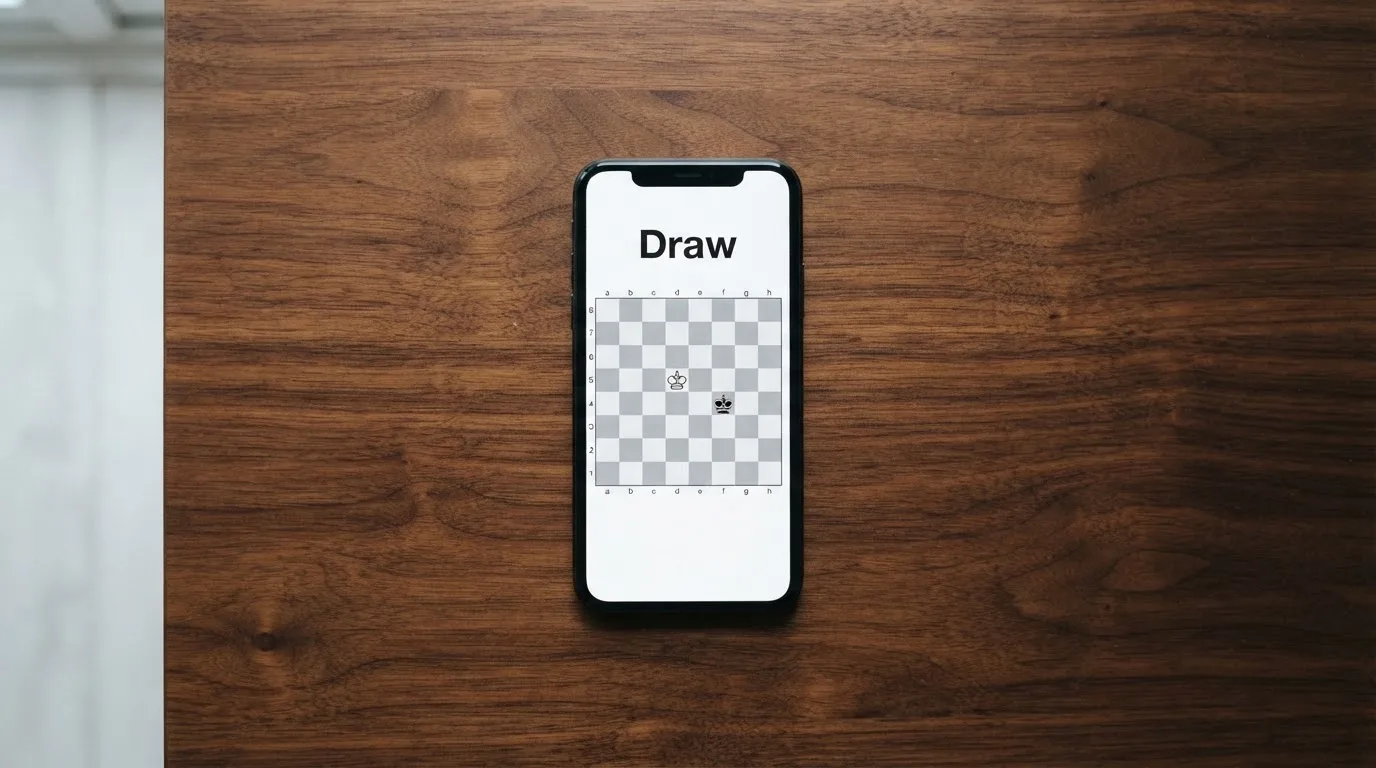
The sport itself is governed by FIDE — the International Chess Federation — which has run the world championship since 1886, when Wilhelm Steinitz claimed the title. FIDE publishes the Laws of Chess in its Handbook, and those rules govern every game a bookmaker prices. A game is won by checkmate, by resignation, by the flag falling (the player running out of time), or by the opponent’s default. A game is drawn by stalemate, by agreement between the players, by the threefold repetition rule (the same position occurring three times), by the fifty-move rule (no capture or pawn move in the last fifty moves), or, since 2014, automatically by fivefold repetition or by the seventy-five-move rule. Bookmakers settle on the official result FIDE records; the punter’s bet on a chess game is settled on the same record.
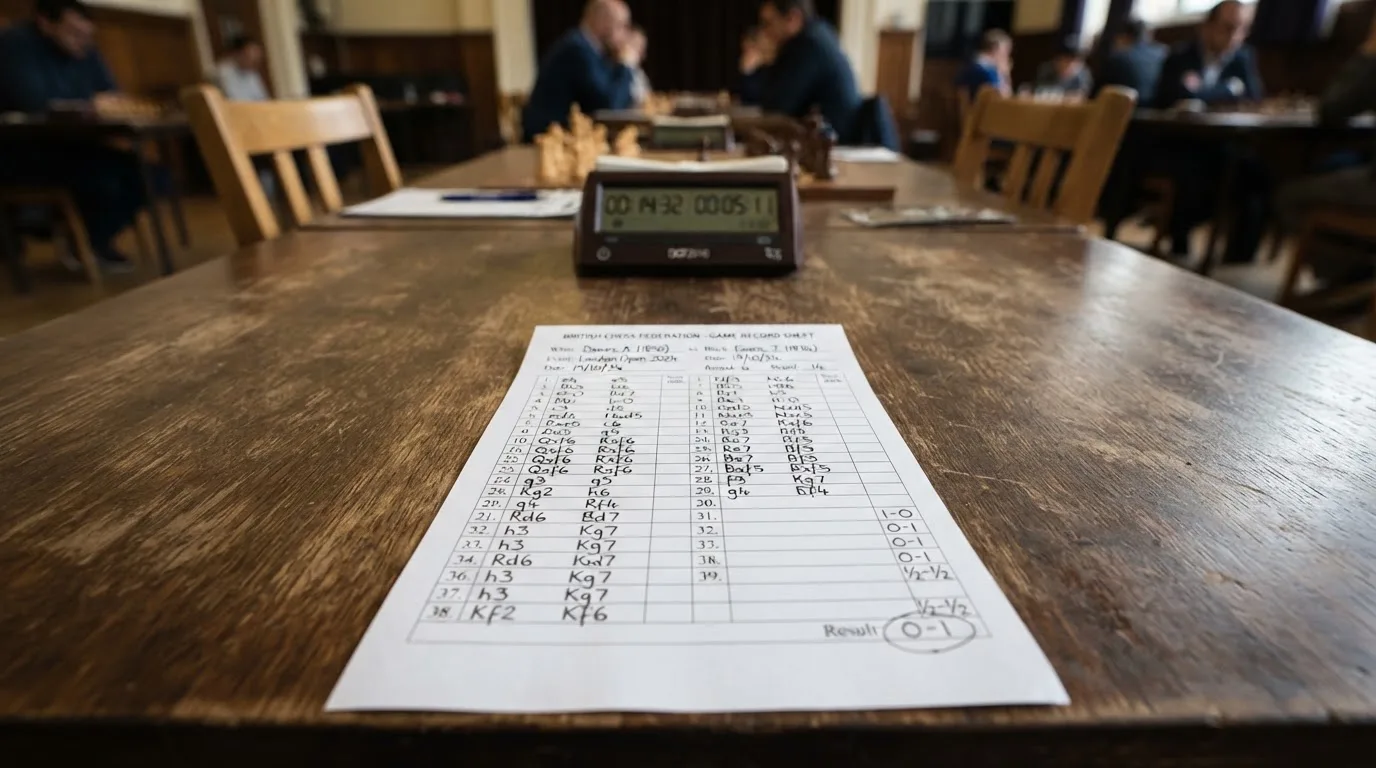
Results are recorded as 1–0 for a White win, 0–1 for a Black win and ½–½ for a draw. The convention is the bookmaker’s working language: a backer’s bet on a White win pays out if White wins; the same bet loses on a draw or a Black win. There is no ambiguity in the settlement, and there are few disputed results in chess because the record is mechanical. The rare disputes — a player oversteps the time control, an arbiter adjudicates a dispute over an illegal move — are settled by the arbiter and by FIDE’s appeals procedure, and the bookmaker’s settlement follows.
The bookmaker ranking: ten UK-licensed operators on chess
The comparison below ranks ten operators by how useful they are for a UK chess punter in 2026. The first column states the licence number and licence holder as recorded on the Gambling Commission’s public register; the second column states what each operator’s own UK terms say on a topic relevant to the comparison — usually the welcome offer or the chess menu itself. The ranking is editorial: the figures come from the register and from each operator’s site, the judgement is this publication’s.
| Brand | Gambling Commission licence and holder | What the operator’s own terms say |
|---|---|---|
| bet365 | Remote licence 55148, Hillside (UK Sports) ENC | In-play and live streaming; Bet Builder+ on selected events; Super Boosts, Winnings Boosts and daily Bet Boosts; described as the most-downloaded sports betting app in the UK |
| Betfred | Remote licence 39544, Petfre (Gibraltar) Limited | App covers 21 sports and over 2,000 casino games; standard online sportsbook with cash out and acca insurance |
| William Hill | Remote licence (per register), WHG International Limited | Best Odds Guaranteed on UK and Irish horse racing from 8 AM; Football Acca Boost from 3% on a double to 200% on 20 legs, max boost £10,000 per online bet, runs to 30 May 2027; in-play football and tennis |
| Sky Bet | Remote licence 67370, SBG Sports Limited | Free bets expire 30 days after crediting; single and each-way markets only, no multiples; non-withdrawable; stake not returned with winnings |
| Unibet | Remote licence 45322, Platinum Gaming Limited | Operated since 1999; welcome offer is £40 in free bets for a £20 qualifying bet at minimum odds 2.0, free bets expire in 7 days, GB customers using debit card or instant bank transfer |
| BetMGM | Remote licence 39198, LeoVegas Gaming PLC | Welcome offer is four £10 free bets — two football accas (4+ legs) and two sports multiples (2+ legs) — for new UK customers depositing £10 and betting within 7 days, valid 7 days |
| BetGoodwin | Remote licence 2927, Goodwin Racing Limited | Welcome offer is £15 in free bets for a £10 qualifying bet, split as £5 sports, £5 acca and £5 Sub-Cover; small UK-focused book with a racing-led menu |
| 10bet | Remote licence 43173, Blue Star Planet Limited | Sportsbook covers football, tennis and horse racing with Cash out, Bet Builder and Live Streaming; mid-market UK-facing sportsbook |
| NetBet | Remote licence 39170, Netbet Enterprises Limited | Daily Boosts, Profit Boosts and free bet offers; Bet Builder with instant dynamic odds; sports stats for major leagues |
| Tote | Remote licence 54779, TDCO Limited | Pool-betting-led UK bookmaker with a long history; chess menu is thinner than the major all-sports operators |
Several brands that are well-known on the British high street have not been listed because their GB remote licence category or their chess product does not fit the comparison as researched. Midnite, for example, holds remote licence 101839 with a sportsbook that names in-play events, an acca builder, popular accas and price boosts with maximum-stake limits; the brand has been carried over a long-running audit cycle and is named here for the record rather than ranked. Kalooki Sportsbook, a small UK operator licensed under account 57730, is a GAMSTOP member but does not run a sports welcome offer of the size the comparison table rates on. A reader who wants a full picture of what each operator’s site shows on the day they read this page can verify any number on the Commission’s register and click through to the operator’s own terms.
What the spread tells the punter
The first thing the table shows is that every operator on the list holds a GB remote licence for real-event betting. The licence number is the test of legal operation; the absence of a licence is the test of a site that does not belong on a British punter’s screen. Beyond the licence, the table shows what each operator publishes as its welcome offer and what its own app description claims it offers in terms of features.
The second thing the table shows is the spread in welcome offers. Unibet’s offer pays £40 in free bets for a £20 qualifying bet — a 2:1 ratio at the headline; Sky Bet’s free bets carry a 30-day expiry and exclude multiples; BetMGM’s free bets are restricted to football accas and sports multiples. The headline number is not the offer. The expiry, the eligible markets, the stake-not-returned rule, the minimum odds for the qualifying bet and the payment method restriction are what determine what the offer is worth in practice, and a punter who reads only the headline pays for the gap.
The third thing the table shows is that no operator on this list is a chess specialist. Every operator on the list is a generalist sportsbook, and the chess menu inside each is a corner of a much larger product. The punter who wants the deepest chess menu has to choose between a few operators whose outright markets run from the first game to the last, and a long tail of operators who surface only the headline tournament. The difference is real, and it is not visible in the licence column.
Operator reviews
The block below reads each operator’s own UK terms against the comparison and judges what the offer, the menu and the licence mean for a chess punter. The verdict is this publication’s own; the figures come from the operator’s site.
bet365
Bet365’s licence, held by Hillside (UK Sports) ENC, places it among the largest remote operators in Great Britain. The app is described as the most-downloaded sports betting app in the UK and carries in-play betting and live streaming of events worldwide, plus Bet Builder+ for combining markets from one event into a single bet, and a programme of Super Boosts, Winnings Boosts on Bet Builders and selected singles, and daily Bet Boosts. The chess menu inside that app is not separately publicised, but the platform’s breadth — bet365 runs outright markets on every elite classical tournament and a long list of secondary events — is the widest of any operator on this list. The combination of in-play and live streaming is largely irrelevant for chess but is the platform’s signature feature on football, tennis and basketball, making bet365 the top-ranked choice for a punter who wants one site for all their sports. A chess-only punter will find the menu broad enough to cover the main events, while the punter who bets regularly on football and tennis will find no deeper product elsewhere.
Betfred
Betfred’s licence, held by Petfre (Gibraltar) Limited, sits behind a sportsbook that covers 21 sports and over 2,000 casino games. The book is a long-established British high-street name, and the app carries the standard online product: cash out, acca insurance, daily boosts. The chess menu is present but is not the centre of the product. A punter who bets on chess occasionally and on horse racing, football and greyhounds regularly will find Betfred’s product complete; a chess-only punter will not find anything here they cannot find elsewhere, and the menu’s depth is the variable that loses to the headline sports.
William Hill
William Hill is one of the oldest names on the British high street. Its online product carries Best Odds Guaranteed on UK and Irish horse racing from 8 AM on the day of the race — the BOG mechanism applies to single and multiple bets and excludes ante-post, tote and pari-mutuel bets — and a Football Acca Boost that runs from 3% on a double to 200% on 20 legs, capped at £10,000 per online bet, with the promotion running to 30 May 2027. The chess product is small and is not advertised in the headline sports list. A punter whose betting sits on horse racing and football will find a strong all-round product; a chess-only punter is not in William Hill’s target market, and the offer on the operator that matters most for the punter’s calendar — chess — is the thinner one.
Sky Bet
Sky Bet’s licence, held by SBG Sports Limited, runs an online product whose free bets carry a 30-day expiry and can be used only on single or each-way markets (not multiples) excluding virtuals; free bets are non-withdrawable and the stake is not returned with winnings. The terms are tighter than most, and the restrictions on multiple markets rule out the acca on free-bet credit. For a chess punter the relevant question is whether the operator’s outright market is wide enough to take the free bet in one place, and the answer depends on the operator’s tournament menu. Sky Bet is a strong all-rounder; the free-bet terms are the part of the product a punter reads before claiming.
Unibet
Unibet has operated since 1999; the UK site is run by Platinum Gaming Limited in Gibraltar under Gambling Commission account 45322. The sports welcome offer is £40 in free bets for a £20 qualifying bet at minimum odds 2.0, with free bets expiring within 7 days of issue, for new GB customers using a debit card or instant bank transfer. The £40 headline at a 2:1 stake ratio is the largest on the comparison by that ratio, and the seven-day expiry is tight. A punter who reads the offer before claiming sees that the qualifying bet must be at minimum odds 2.0 and that the payment method is restricted — the £40 is real, but it costs a £20 bet at a price most casual bets do not clear. The chess menu is solid rather than outstanding.
BetMGM
BetMGM’s licence sits under LeoVegas Gaming PLC. The sports welcome offer is four £10 free bets — two football accumulators of four or more selections and two sports multiples of two or more — for new UK customers who deposit £10 or more and place a sports bet within 7 days; the free bets are valid for 7 days and carry minimum odds and an opt-in requirement. The structure splits the welcome into four separate tokens, each restricted to its own market shape, and the punter who wants the headline “£40 in free bets” has to clear all four tokens. For a chess punter the relevant token is the sports multiple, and the requirement is two or more selections. The split structure is a real friction; the headline is the headline.
BetGoodwin
BetGoodwin is a smaller UK-facing operator, licensed under Goodwin Racing Limited. The welcome offer is £15 in free bets for a £10 qualifying bet, split as £5 sports, £5 acca and £5 Sub-Cover bet. The brand runs a racing-led menu and a small football product; the chess menu is a thin slice. The £15 headline is modest; the structure is honest; and the punter who wants a small, well-understood UK bookmaker with a real person on the end of the phone will find BetGoodwin fits that profile. A punter whose chess betting needs an outright market on the Candidates will find one; a punter whose chess betting needs depth across a season will not.
10bet
10bet’s licence, held by Blue Star Planet Limited, runs a sportsbook that covers football, tennis and horse racing with Cash out, Bet Builder and Live Streaming. The chess menu is light. The product is mid-market and UK-facing; the welcome offer exists and the mechanics are the standard ones. For a punter whose betting sits on football and tennis, 10bet is a competent platform; for a punter who wants a dedicated chess portal, the menu is less than comprehensive.
NetBet
NetBet’s licence, held by Netbet Enterprises Limited, runs Daily Boosts, Profit Boosts and free bet offers, a Bet Builder with instant dynamic odds, and sports stats for major leagues. The chess menu is present but not the headline. For a punter who values daily boosts and a Bet Builder on major leagues, NetBet is a competent mid-market platform; for a chess enthusiast, the chess menu is secondary to the wider sports book.
Tote
The Tote is a long-established pool-betting-led UK operator. The licence sits under TDCO Limited. The product is built around pool betting on horse racing, with a smaller fixed-odds product on other sports and a thin chess offering. The Tote belongs on this list because it is a British institution and a licensed operator, and a punter who bets on the Grand National and the Champion Hurdle will find their main product here. For those focusing on chess, the Tote’s menu is small, and there are deeper selections available at the major generalist sportsbooks.
Midnite
Midnite holds remote licence 101839 with a sportsbook that names in-play events, an acca builder, popular accas and price boosts with maximum-stake limits. The brand is named here for the record rather than ranked, because the menu research has not produced a chess-specific note for the cycle. A punter who already has a Midnite account and wants to add chess will find in-play markets and a price-boost programme; a punter choosing between operators for the first time will find better-documented choices elsewhere on this list.
The mechanic the punter needs
A chess bet is a financial transaction with a price. The price is the decimal odds, the cost is the bookmaker’s margin inside that price, and the return on a winning bet is the formula *stake × odds*, with net profit *stake × (odds − 1)*. The free-bet value is *free-bet amount × (odds − 1) ÷ odds × payout share*. The required turnover for a bonus is *bonus × wagering factor*, and the expected cost of clearing that turnover is *turnover × margin of the qualifying market*. None of these formulas is a guarantee; each is an average over many bets under the stated assumptions.
The punter who reads those formulas once and keeps them in mind is harder to mislead than the punter who reads only the headlines. The punter who reads each operator’s own terms on the welcome offer, the free-bet terms and the in-play rules is harder still. The comparison above is one input to that read; the operator’s own site on the day the bet is placed is the other.
Spreadex: a different product class under one roof
Spreadex is named here because the name carries a different risk profile than the other operators on this list. The Spreadex site reminds customers that spread betting losses can exceed the deposit — a sentence no fixed-odds operator has to write, because no fixed-odds bet can cost more than the stake. The firm’s spread betting arm is regulated by the Financial Conduct Authority; the firm’s fixed-odds arm is regulated by the Gambling Commission. The chess product sits inside the fixed-odds book; the spread product is a separate offer that runs on financial markets, sports indices and similar. A punter who opens a Spreadex account gets both products and is bound by both sets of terms, and the appropriate level of caution is higher on the spread side than on the fixed-odds side.
Frequently asked questions
Where to bet on chess?
UK-licensed bookmakers that publish a chess menu include the operators named in the comparison above. The Gambling Commission’s public register is the test of whether any other brand is licensed, and the brand’s own site is the test of whether it offers chess at the time the bet is placed. A brand with a licence but no chess menu is a legal place to bet on football, not on chess.
Can you bet on chess?
Yes, on any bookmaker licensed by the Gambling Commission that lists chess on its sports menu. There is no statutory restriction on betting on chess in Great Britain; the framework under the Gambling Act 2005 covers betting on any event, and chess sits inside the same “remote general betting standard (real events)” licence category as football and tennis. A customer must be 18 or older and must complete identity verification before placing a bet.
How to bet on chess?
Open an account with a GB-licensed bookmaker that offers chess, complete identity verification, deposit by debit card or bank transfer (credit cards are banned for gambling in Great Britain), navigate to the chess section, and place a single bet on the market of choice. Outrights settle on the tournament result; game winner markets settle on the official game record. Combination bets multiply the odds of the legs; free bets cannot be used on every market and carry their own expiry and stake-not-returned terms.
How can it be checked that a bookmaker holds a Gambling Commission licence?
Search the Commission’s public register by business name, trading name, internet domain or account number. A licence number, a licence holder name and a licence category appear on the register. The register is the single test; a brand that does not appear on it is not licensed for Great Britain, regardless of what the brand’s own site claims.
How is the return on a bet worked out from the stake and the odds?
For a single bet at decimal odds *o* and stake *s*, the return is *s × o* and the net profit is *s × (o − 1)*. A £10 stake at 3.75 returns £37.50 with £27.50 profit. A combination bet multiplies the odds of the legs into one price; a double at 3.00 and 4.00 carries combined odds 12.00, and a £10 stake returns £120. Fractional odds convert to decimal by *a/b + 1*; 5/1 is 6.00, evens is 2.00.
What is the bookmaker’s margin and how can it be seen in the odds?
The margin is the share of every pound bet that the bookmaker keeps on average across all outcomes. For a 2-way market at decimal odds 1.90 on each side, the implied probabilities are 1 ÷ 1.90 = 52.6% on each, summing to 105.3%; the 5.3% excess over 100% is the margin. The punter’s expected loss on a £1 stake is 5.3p. Margins on chess outrights run from around 5% on headline markets to 12% or more on longshots in tier-two events; the punter who compares prices across operators for the same selection is reading the margin.
Tennis, darts & cue sports – Footy Tips
Content created by the «Footy Tips» team
