
Online floorball betting 2026: what the price actually leaves you with
 Available in US
Floorball has been a niche corner of the British betting market for years. The sport — five outfield players and a keeper per side, three 20-minute periods, sudden-death overtime if the scores tie — is played from late summer through spring, with the international calendar peaking every other December. Most licensed UK bookmakers do not even list the Swedish Superligan, the Finnish F-liiga or the men’s World Championships in their main navigation; the ones that do tuck them under floorball, hockey or “more sports”. The punter looking for the sport in 2026 therefore faces a thinner menu than a Premier League regular, and a menu where every extra available book pays a slightly different cost to use.

The page below looks at that cost. It maps which of the ten reviewed brands actually hold a Gambling Commission remote licence and which merely advertise one. It walks through the bets a floorball match actually allows — match winner, totals, handicaps, the same-game multi builders — and what each one costs in margin, the slice of every pound the book keeps. It covers the bonus mechanics that the marketing copy glosses over: the rollover, the minimum price per leg, the deadline, the cap on free-bet winnings. It lands on the responsible-gambling duties the Commission licence imposes — the GAMSTOP hook-up, the £150 financial vulnerability check, the 10x bonus wagering cap — and on what is lost by leaving that frame for an offshore site.
A line on the data, before any of that. Current as of 27 October 2026 against the Gambling Commission’s public register and each operator’s own published terms.
The statute that decides who may take your floorball bet
Floorball is not on any British list of permitted or prohibited sports, because no such list exists. The Gambling Act 2005 licences operators and licence categories, not individual sports; what an operator offers within its category is a matter of its own commercial choice and its Licence Conditions and Codes of Practice (LCCP). So the test for a British floorball bet is straightforward, and it sits in two parts.
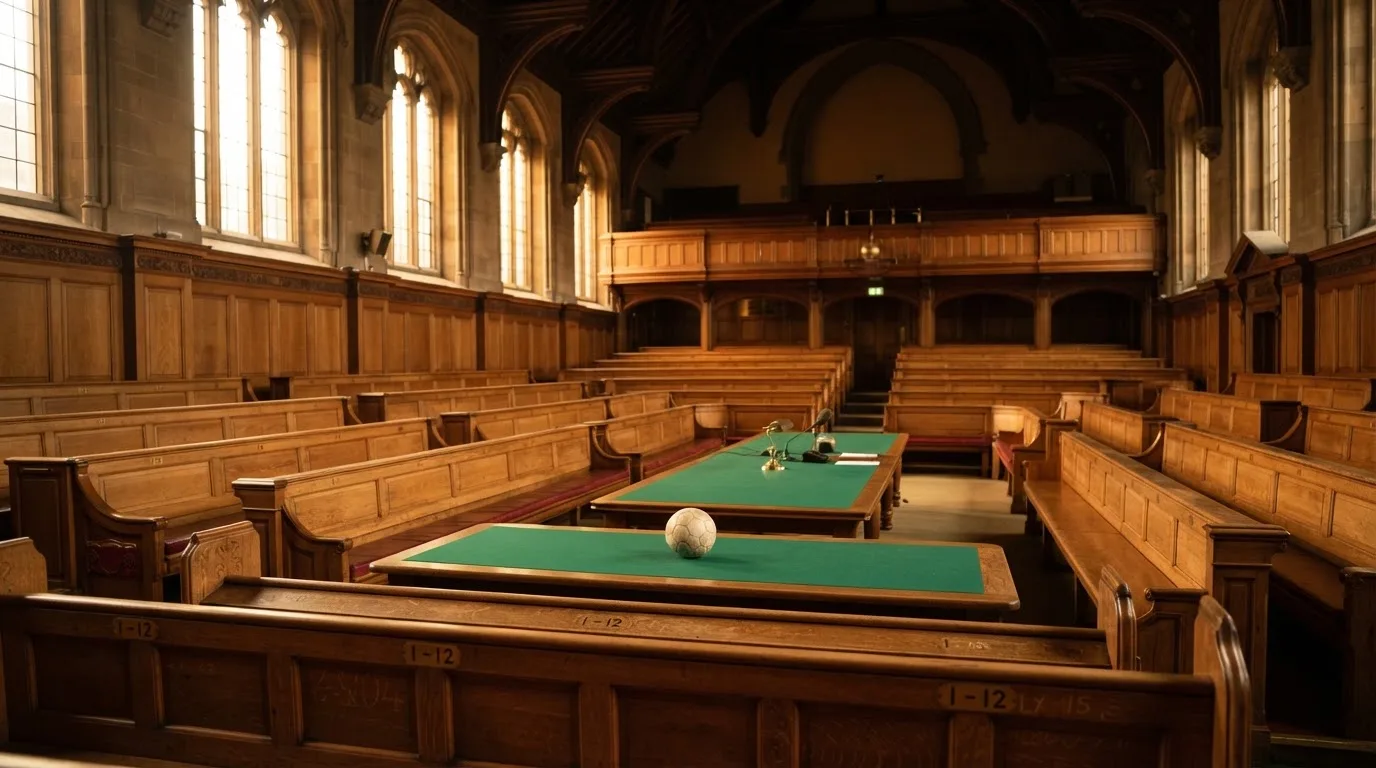
The first part is the licence. Any operator taking remote bets from customers in Great Britain needs a Gambling Commission operating licence, regardless of where the operator is incorporated (Gambling (Licensing and Advertising) Act 2014, amending sections 33 and 36 of the 2005 Act). A Curaçao, Malta or Gibraltar registration is not a substitute. The five categories that cover floorball are: remote general betting standard (real events), remote general betting standard (virtual events), remote general betting limited, remote pool betting and remote betting intermediary (the betting exchange category). The reviewed brands sit in either the standard real-events or the betting-intermediary category.
The second part is the customer-side check. Since 7 May 2019 every Commission-licensed operator has had to verify name, address and date of birth before a customer may deposit or gamble, including when the first product is a free bet or bonus. That check is what closes anonymous play at any brand on the reviewed list. It is also what makes the Commission’s public register the right place to start: a brand whose name, domain or account number does not appear there cannot lawfully take a GB customer’s floorball bet, and a brand that does appear is the one to read the small print on.
The Commission’s register is searchable by business name, trading name, domain or account number, and the licence type, the categories the licence covers and the licence holder’s legal name are all printed beside the entry. The ten brands compared later on this page appear on that register against the licence numbers set out in their cards; every brand discussed here has been checked against it as of 27 October 2026.
Northern Ireland sits outside the 2005 Act and runs on older legislation, so a “GB licence” is exactly that — a licence for Great Britain — and the comparison on this page applies to customers in England, Scotland and Wales.
The responsible-gambling duties that come with the licence
A Commission licence is not a marketing badge. It carries a stack of social-responsibility conditions, and they apply to floorball bets in exactly the same way they apply to Premier League accumulators.

GAMSTOP is the national multi-operator self-exclusion scheme, and being a member is a mandatory licence condition for every online operator since 31 March 2020. A punter who self-excludes through GAMSTOP is locked out of every reviewed brand at once, for a minimum of six months and up to five years, with a further seven-year tail unless the customer asks the scheme to lift it. The scheme covers online sites and apps only; betting shops run a separate service.
The £150 financial vulnerability check sits one tier below that. Since 28 February 2025, when a customer’s deposits minus withdrawals exceed £150 across any rolling 30 days, the operator must run a public-record check — bankruptcy registers, county court judgments and the like — before accepting more deposits. It is not an income check, and it is not a credit-reference check. A heavier tier of financial risk assessment has been announced in stages by the Commission (an article of 7 July 2026) without a confirmed start date; in plain English: announced, staged, no start date.
Deposit limits are a separate obligation. Operators must offer a gross deposit limit set on a fixed time frame; the first changes took effect on 31 October 2025 and a second phase was postponed to 30 September 2026, so whether the second phase is currently live is not established from the consulted material. Either way, no state-set ceiling exists: the limits are the customer’s own choice, layered on top of the operator’s safer-gambling tools. Timeouts, reality checks, the ability to withdraw money in the customer’s account and access to GamCare, GambleAware and the National Gambling Helpline are all standard across the reviewed brands; Fitzwilliam Sports links those organisations explicitly from its home page and several others carry them in their safer-gambling menus.
The credit-card ban (LCCP condition 6.1.2, in force since 14 April 2020) covers every gambling product a licensed operator offers, including floorball. Debit cards and bank transfers are not affected; credit-card funding through an e-wallet is. Skrill, Neteller and PayPal are usable on UK-licensed sites only when topped up by a debit card or bank transfer.
The bonus cap that arrived on 19 January 2026 is the most directly relevant change for floorball punters. Wagering requirements on bonuses are capped at 10x — a £10 bonus at 50x means £500 of qualifying bets; under the cap the same bonus requires no more than £100 of qualifying bets. The cap also bans mixed-product promotions, the “bet on football to get free spins” shape, which is good news for a punter who only wants the sports side. The cap is silent on free bets with no wagering condition and on any money cap on a bonus; both questions sit with each operator’s own terms.
What the bonus on a floorball bet really costs
Every floorball offer that lands in a UK inbox in 2026 falls into one of a small number of shapes, and each shape carries a price that the marketing line does not print.
The matched free bet is the commonest. The punter deposits, places a first bet at the qualifying minimum, and receives a free bet of roughly the same size. Betboro’s sports welcome offer, for instance, is a 100% matched free bet of up to £25 on the first qualifying wager, requiring a debit-card deposit of at least £10 and a first bet of £5 to £25 with at least three selections each at 3/5 (1.60) or higher. The arithmetic of the free bet matters: on a matched free bet where the stake is not returned with the winnings, a £25 free bet at even money is worth roughly £12.50 on average, before any market margin is paid for. The condition reads the offer, but the qualifier — three legs at 1.60 or higher — does most of the work.
The multi-leg free bet bundle is what BetMGM and a couple of others run. BetMGM’s sports welcome for new UK customers who deposit £10 or more and place a sports bet within 7 days is four £10 free bets: two football accumulators of 4+ selections and two sports multiples of 2+. The bundle is generous on the face of it, but it is unusable on a single floorball match: the smallest bundle is two selections, the floorball schedule rarely lines up four fixtures on the same day, and the 7-day validity on the free bets means the punter either lets the bundle burn or builds the bet with a sport they would not otherwise have chosen. The cost is in the substitution the bundle forces.
The recurring free-bet club is the third shape. Betway’s Free Bet Club gives up to £10 in free bets every week after opt-in: spending £25 or more on sports earns two £5 free bets. On a floorball schedule that fires twice a week at international windows, hitting the £25 threshold in a week means either a handful of mid-priced singles or a short accumulator, neither of which carries a margin dramatically different from the Premier-League equivalent. The free-bet club is a value-add, not a value-replace.
The acca insurance and the enhanced odds are smaller mechanical offers. Acca insurance refunds a stake (usually as a free bet) if one leg of a multi lets the bet down. Enhanced odds boost the price of a named selection; Bet365’s daily bet wins and Super Boosts run in that direction. Both reward activity, neither replaces a margin. On a thin floorball card, an enhanced price on the World Championship final is the kind of thing to take if the price already looked fair; the boost is the difference, not the bet.
The headline £-figure on any of these offers is the figure the marketing writes. The figure the punter walks away with is the free bet at the average market margin, less the qualifying stake already spent, plus or minus the time value of waiting out the rollover. The Commission cap of 10x on wagering limits how heavy the structural damage can get, but it does not eliminate it.
How a floorball price is built and what it keeps
Floorball matches are quoted in decimal odds in the 1.40 to 3.50 band for match winners in the World Championships, wider for the women’s and the lower-division fixtures, narrower still for the outright markets where Sweden and Finland sit at the top. Behind every quoted price sits the bookmaker’s margin — the slice of every pound bet the book keeps, regardless of which side wins. The punter pays it; the margin is the price of being allowed to bet at all.
Take a simple illustrative match, priced at 1.90 / 1.90 in decimal — 9/10 in fractional — for two evenly matched sides. The arithmetic is mechanical: 1 ÷ (1/1.90 + 1/1.90) = 1 ÷ (0.5263 + 0.5263) = 1 ÷ 1.0526 = 0.9500, so the book pays out 95 pence of every pound wagered and keeps 5 pence. That 5% margin is the floor; the bigger the favourite, the smaller the price, and the more skewed the margin becomes. A match priced 1.40 / 2.8 with the same vig on the favourite works out to a margin of about 7.1% — the favourite’s price is closer to evens than the price looks, and the underdog’s price is shorter than the price looks. The margin sits inside every price and moves in the same direction as the bookmaker’s confidence in the outcome.
The punter sees the margin by adding up the implied probabilities across the selections: 1.90 / 1.90 implies 52.63% + 52.63% = 105.26%; the 5.26% above 100% is the margin, expressed as the bookmaker’s “overround”. A market with a 5% margin pays out 95p of every £1 on average, across many bets at that price. A market with a 10% margin pays out 90p. Over hundreds of bets, the difference is the difference between breaking even and giving back a tenth of every stake.
In practice, on a thin floorball card, the margins tend to sit higher than on a Premier League match: the bookmaker has less price data, less liquidity and more reason to protect the book. The punter’s job is to compare prices across books — for the same match, twice — and to walk away from the price with the wider margin where the prices are otherwise close. The reviewed brands price floorball at their own discretion, and the difference between one price and the next on the same fixture can be enough to flip a breakeven bet into a profitable one or vice versa.
The bet types a floorball match actually offers
Floorball is not the Premier League. The match-winner market — Team A, the draw (after sixty minutes plus overtime, in most editions; some books settle on regulation time only), Team B — is the staple. The total-goals market runs in 0.5-goal increments, sometimes whole-numbered lines where the book prices the over and the under on each side of the line. Asian handicaps appear on the bigger fixtures. Outrights cover the World Championships, the women’s World Championships and a handful of domestic leagues.
The same-game multi, or “bet builder”, is the market that has changed the floorball betting surface in the last two seasons. The reviewed brands price bet builders differently: bet365’s Bet Builder+ combines markets from one event into a single bet, pre-match or in-play; 888sport runs a Bet Builder; Midnite runs an acca builder. Each leg of the builder is priced separately and the combined price multiplies them out. The combined margin is the leg-by-leg margin multiplied together — a builder with four legs each at a 5% margin has a combined margin near 19%, four legs at 7% each near 25%. The punter pays that combined margin by betting on correlated outcomes that the book is happy to combine.
In-play betting on floorball is on a smaller fixture base than football, but it is offered by most of the reviewed brands. The price moves with the score: a 3–0 lead in the second period collapses the underdog’s price and stretches the leader’s. Cash-out is offered on selected in-play bets at most reviewed brands, with the cash-out figure set by the live price and the operator’s own spread; the punter locking in a partial win pays the cushion the book builds into the cash-out. Live streaming of floorball is rare — the production base is too thin — so the in-play experience is more often a stats feed than a video stream.
Outright markets on the Men’s World Floorball Championship are the headline offering on the international calendar. The 2026 edition, the 16th, runs from 4 to 13 December 2026 in Tampere, Finland, with 16 national teams; Finland qualifies automatically as host and won the 2024 title, Sweden has won ten of the previous editions (most recently 2022). An outright market on Sweden and Finland at the top, the rest of the field at longer prices, pays out only once a year in December and the margin on the favourites tends to be wider than the margin on a single match.
Floorball as a sport: the schedule, the rules and the betting window
The sport is short, sharp and high-scoring. Five outfield players and a goalkeeper per team, three 20-minute periods (15 minutes for juniors), sudden-death overtime to settle a tie. Shots are quick, substitutions are unlimited on the fly, and a goal a minute is unusual but not rare. That tempo is part of why the in-play product exists: a floorball match can swing quickly, and the price moves with it.
Floorball was invented in Sweden in the late 1960s; its basic rules were set in 1979, the year the Swedish Floorball Federation standardised the playing area, the stick and the ball. The International Floorball Federation (IFF) governs the sport internationally and had 80 member associations as of 2025. The Men’s World Floorball Championship has been held every December in even-numbered years since 2008; the Women’s tournament runs on the same cycle, one year out of phase. The Under-19 World Championships run alongside the senior events.
The British calendar is thin. The Great Britain national team competes in the Men’s World Championships at the lower divisions and occasionally in the B division; the women’s team runs a similar schedule. The English National League and the Scottish league run a domestic season from autumn to spring, but the GB-licensed bookmakers price them only when the international calendar is loud. The Superligan (Sweden), the F-liiga (Finland), the SSL (Switzerland) and the top Czech and Norwegian leagues are the league fixtures most often priced by the bigger books.
The punter looking for the sport in 2026 should expect a short betting window around the international windows — the World Championship in December, the European Championships in odd-numbered years, the qualifier windows in between — and a thin menu of domestic fixtures the rest of the time. The bookmakers who hold the licence are not always the bookmakers who price the sport; several reviewed brands list floorball under “more sports” or run it only at the international windows.
Ten reviewed bookmakers for floorball
The ten brands below each hold a Gambling Commission remote licence for Great Britain as of 27 October 2026. Every licence has been checked against the Commission’s public register, and every licence is held in the categories that cover real-event betting or a betting exchange. None of the brands is ranked, recommended or singled out as “the only” licensed floorball bookmaker — the page names what each one does, and what each one costs.
Bet Ahoy — a thin free bet, no announced rollover
Bet Ahoy’s welcome offer is a £5 sports bet plus a £5 acca for a £10 qualifying stake, drawn down as free bets. The structure is light: no deposit match, no rollover attached to the free-bet bundle at the marketing line. The licence on the Commission’s register is held by Bet Ahoy Ltd under account 100094, with the remote general betting standard (real events) category in force. Floorball is not a headline sport on the platform — the brand runs a sportsbook fronted by football, horse racing and a tennis menu — and the floorball offering at the international windows is a small fixture list. The cost picture is the cleaner one: a £10 qualifying bet earns £10 of free bets, the free bets settle on whatever sport the punter chooses, and the offer is the kind a punter uses once and does not rejoin for.
Copybet — Best Odds Guaranteed plus first past the post on racing
Copybet is licensed in Great Britain under account 53774, held by Copybet UK Limited. The platform’s headline racing offer is Best Odds Guaranteed all day, every day, on UK and Irish racing, with first past the post paid even if the winner is later disqualified. Floorball is a quieter side of the product; the racing offering is the headline. For a punter whose floorball bets sit alongside a horse-racing habit, the BOG terms and the FPTP concession on racing are the real value, and the floorball side is a thin add-on.
Ladbrokes — long-standing licence, broader market mix
Ladbrokes is one of the longest-standing British betting brands and is published by Entain Operations Limited in the UK, with the licence held by LC International Limited under Commission account 54743. The categories on the register include remote general betting standard (real events) and remote betting intermediary, the dual licence that reflects Ladbrokes and Coral running under the same holder. Floorball sits under the wider sports menu alongside the football, horse racing, greyhound racing and the in-play offering; the price depth on a thin sport is not what the price depth on a Premier League match is, but the brand has the scale to keep the floorball line open at international windows. The cost picture is the breadth of the product rather than a specific floorball advantage.
Bar One Racing — Irish racing sponsor with a UK licence
Bar One Racing, recently rebranded to BAR 1 Betting, is an Irish independent bookmaker with shops across Ireland and horse racing sponsorships at Dundalk, Fairyhouse, Navan, The Curragh, Curraheen Park and Cork. The UK licence is held by Bar-One Racing Limited under Commission account 56516, in the remote general betting standard (real events) category. The product mix is racing-first, with the floorball offering incidental. For a punter whose floorball betting sits inside a racing-led account, the brand is one to know exists; for a punter whose betting is mostly floorball, the menu is the wrong shape.
Smarkets — betting exchange with sharp prices and tight margins
Smarkets runs as a betting exchange in Great Britain, licensed under Commission account 39173, held by Smarkets (Malta) Limited. The exchange format means the punter backs or lays against other customers, and the platform takes a commission on net winnings rather than a margin baked into every price. The headline payment terms — UK debit-card deposits instant from £10 up to £15,000; open bank transfers instant from £10 up to £10,000; withdrawals processed within 6 hours from £10 up to £100,000 — are the clearest on the reviewed list. For floorball, the exchange model pays off on the bigger fixtures: the World Championship final is more liquid on a betting exchange than on a traditional book, and the prices on each side run closer to 1.95 / 1.95 than to 1.85 / 1.85. The cost is the commission on winnings, the absence of a free-bet welcome, and the liquidity drop on the smaller fixtures.
Kwiff — quirky acca mechanics, narrow sport set
Kwiff is licensed under Commission account 44448, held by Eaton Gate Gaming Limited, and operates with a 17+ App Store age rating. The brand markets itself with surprise “supercharged” odds on selected bets — an in-app boost that lands on the bet slip rather than at the price level — and the floorball set is part of the broader sports menu rather than a flagship. The cost is the unfamiliar mechanic: a “supercharged” price is a marketing line, not a margin cut, and the punter should read the price as it stands before the boost lands. For a floorball punter, the platform is one of the smaller books to compare prices against, not a primary account.
Betway — weekly free-bet club with a floorball-compatible qualifying spend
Betway is licensed under Commission account 39372, held by Betway Limited. The headline offer is the Free Bet Club: opt in, spend £25 or more on sports in a week, earn two £5 free bets. The threshold is low enough to hit on a floorball week — two singles at the international windows plus a short acca on a Saturday — and the free bets are reusable on any sport. The cost is the qualifier: the £25 of qualifying bets carries the platform’s regular sportsbook margin, which on a thin sport is not always the tightest. The weekly cadence means a floorball punter who runs the offer every week pays that margin twelve times a year.
BetMGM — four-bundle free bet that points toward football
BetMGM’s UK licence is held by LeoVegas Gaming PLC under Commission account 39198. The headline sports welcome for new UK customers who deposit £10 or more and place a sports bet within 7 days is four £10 free bets, split into two football accumulators of 4+ selections and two sports multiples of 2+. For a floorball punter, the bundle is a partial fit: the two-sports-multi free bets work on any sport, including floorball; the two-football-accumulators do not. The 7-day validity on each free bet is the other pressure: a floorball schedule does not always line up four football fixtures inside the window, so the punter either builds the bet with football they would not otherwise have chosen or lets the free bet burn.
Betboro — 100% matched free bet with a tight qualifying structure
Betboro’s UK licence is held by Webmedia Development N.V. under Commission account 44181. The sports welcome offer is a 100% matched free bet of up to £25 on the first qualifying wager, requiring a debit-card deposit of at least £10 and a first bet of £5 to £25 with at least three selections each at 3/5 (1.60) or higher. The three-leg minimum and the 1.60 floor on each leg mean the qualifying bet is forced into a multi — a single floorball match will not qualify, the punter has to combine floorball with another sport or pick a different combination. The cost is the qualifier’s structural pressure: the free bet is only unlocked if the qualifying bet settles as a winner.
888sport — broad market mix with the in-play tools
888sport is licensed under Commission account 39028, held by 888 UK Limited. The product includes pre-match and in-play betting, Cash Out, Bet Builder, racing streams, BetFinder form tools, a live bet feed and daily boosted odds. Floorball sits inside the broader sports menu rather than as a flagship, and the in-play tools are the practical asset. The cost is the daily-boosted-odds layer: a “boost” is a marketing line on a price the book would have offered anyway, and the punter reads the boosted price as it stands rather than as it appears. For a floorball punter, the platform is the broader-menu option with the in-play product attached.
The floorball betting landscape: brands, licences and what they actually say
| Brand | Gambling Commission licence | Licence holder | What the operator’s terms say on the subject |
|---|---|---|---|
| Bet Ahoy | 100094 (remote general betting standard — real events) | Bet Ahoy Ltd | Welcome offer of a £5 sports bet plus a £5 acca for a £10 qualifying stake; floorball sits inside the broader sports menu. |
| Copybet | 53774 (remote general betting standard — real events) | Copybet UK Limited | Best Odds Guaranteed all day, every day on UK and Irish racing; first past the post paid on horse racing even if the winner is later disqualified. |
| Ladbrokes | 54743 (remote general betting standard — real events; remote betting intermediary) | LC International Limited | Long-standing UK bookmaker with a broad sportsbook including floorball at international windows. |
| Bar One Racing | 56516 (remote general betting standard — real events) | Bar-One Racing Limited | Irish independent bookmaker with racing sponsorships; floorball sits inside the wider menu. |
| Smarkets | 39173 (remote betting intermediary) | Smarkets (Malta) Limited | Betting exchange; UK debit-card deposits instant £10–£15,000; withdrawals processed within 6 hours £10–£100,000. |
| Kwiff | 44448 (remote general betting standard — real events) | Eaton Gate Gaming Limited | UK-licensed with in-app “supercharged” odds on selected bets; floorball is part of the broader sports set. |
| Betway | 39372 (remote general betting standard — real events) | Betway Limited | Free Bet Club: £25 of qualifying sports spend in a week earns two £5 free bets. |
| BetMGM | 39198 (remote general betting standard — real events) | LeoVegas Gaming PLC | Sports welcome of four £10 free bets — two football accumulators of 4+ selections and two sports multiples of 2+ — valid 7 days. |
| Betboro | 44181 (remote general betting standard — real events) | Webmedia Development N.V. | 100% matched free bet of up to £25; qualifying bet of £5–£25 with at least three selections each at 3/5 (1.60) or higher. |
| 888sport | 39028 (remote general betting standard — real events) | 888 UK Limited | Pre-match and in-play betting, Cash Out, Bet Builder, racing streams, BetFinder form tools, a live bet feed and daily boosted odds. |
The table sits beside the operator reviews above rather than replacing them: the licence numbers are the verifiable claim and the operator-specific note is what the punt checks before staking. Where a brand holds a licence in more than one category — Ladbrokes, with both standard real-events and betting-intermediary permissions — the table records both, because the dual category is what lets the same platform host both a sportsbook and an exchange-style product.
What the licence costs the operator — and what the punter gets back
The Commission’s licence is not free for the operator to hold. General Betting Duty is the operator’s tax on gross profits at 15%; from 1 April 2027 a remote betting rate of 25% applies within it, while remote bets on UK horse racing, bets on self-service betting terminals in licensed premises, pool betting and in-person betting stay at 15%. Until 1 April 2027 the remote rate is unchanged. Whether operators pass duty on through odds is not established; the punt reads the price as published rather than as back-solved from a duty assumption.
The levy the operator pays the Commission funds the regulator’s work, including research into gambling harm. It is not a customer tax. The punter pays no tax on betting winnings in Great Britain — general information, not tax advice; a professional gambler should ask HMRC or an adviser. The 15% General Betting Duty is the operator’s number, not the punt’s, and the customer’s net return on a winning bet is the stake multiplied by the decimal odds, with the stake returned.
What the punter gets in return for the licensed market is the safer-gambling frame: GAMSTOP coverage, the £150 financial vulnerability check, the bonus cap at 10x wagering, the credit-card ban, the dispute-resolution route through the Commission. What the punt pays back for it is the verification check before the first deposit — name, address, date of birth — and a thinner product in some niches than an offshore site might offer. That trade is the trade the licence asks the customer to make, and the rest of the comparison on this page sits on top of it.
Going outside the licensed frame
An offshore floorbook — a brand licensed in Curaçao, Malta or Gibraltar but not by the Gambling Commission — is not lawful for a GB customer, because the 2014 amendment to the Gambling Act 2005 makes a Commission licence compulsory at the point of consumption. The offence is aimed at the operator, not the customer who bets on the unlicensed site, but the customer loses the licensed-market protections: no GAMSTOP hook-up, no Commission complaints route, no approved dispute-resolution body, no British consumer redress if funds are withheld, no 10x bonus cap, no £150 vulnerability check, no credit-card ban.
Enforcement is disruption rather than blocking: cease-and-desist notices, search-engine referrals, work with registrars, hosts and payment providers. The Commission has been given, or is about to receive, court-order DNS blocking powers; ISP blocking is not yet in operation, and writing it as if it were would mis-describe the enforcement frame.
The honest framing is the one this page keeps coming back to. Licensed = checks, limits, GAMSTOP, the bonus cap, the dispute route, the verification before the first bet. Unlicensed = none of those protections and a real chance of funds being held without a British route back. Neither is “the safe choice” by default; one is the lawful British choice with the protection stack that comes with it, the other is the choice the law does not recognise.
What the page has not covered — and where to read further
A few things sit outside the comparison on this page, and the punt who needs them should look at the operator’s own terms and the Commission’s register before staking.
The 2026 Men’s World Floorball Championships, scheduled for 4 to 13 December 2026 in Tampere, Finland, with 16 national teams, are the headline tournament on the calendar. Finland qualifies automatically as host and won the 2024 title; Sweden has won ten of the previous editions, most recently in 2022. The outright market on the tournament typically opens a month or two before the first game and tightens as the group fixtures settle.
Payment methods on the reviewed brands are described qualitatively on this page rather than at a per-brand level, because the British licensed market has no state list of permitted payment methods. Cryptocurrency deposits at licensed operators are not established from the consulted material. Where a brand’s payment terms are explicit (Smarkets publishes its £10–£100,000 withdrawal window and the 6-hour processing time), the page prints them; where they are not explicit, the punt checks the cashier before staking.
Spread betting on floorball is a different product from fixed-odds betting. Spreadex, for instance, is regulated by the FCA for spread betting and by the Gambling Commission for fixed-odds betting, and states that spread betting losses can exceed the deposit. The liability on a spread bet is not capped at the stake in the way a fixed-odds bet is, and the floorball offering in that format is the smaller part of the product. The punt who wants spread betting reads the FCA-side terms separately from the Commission’s.
Picking a floorball bookmaker for 2026
The page has not ranked the ten reviewed brands because the ranking would be a marketing claim, and a marketing claim is not what this page is for. What it has done is lay out what each brand holds on the licence side and what each brand offers on the floorball side.
A punter whose floorball bets sit inside a Premier League and Champions League habit has a different answer from a punter whose betting is mostly the World Championships. The first punter likes a Ladbrokes, a Betway or a 888sport for the breadth of the product; the second likes a Smarkets for the sharper exchange prices on the bigger fixtures; the third likes a Betway for the weekly free-bet club or a Betboro for the matched free bet if the qualifying structure suits. None of those is “the best”. Each is the one that fits the punter’s pattern of play, and the rest is the margin the punt accepts in return for the offer the marketing line has sold.
The two checks the punter makes before staking are the same two checks this page has run. The first is the Commission’s public register — by name, by trading name, by domain, by account number — to confirm the licence is held, in the category that covers floorball, against a holder whose terms the punt can read. The second is the terms themselves, for the floorball market, the bonus terms, the payment terms and the safer-gambling tools. The two checks together cost the punter ten minutes; they save the punter the cost of staking on a site the law does not recognise.
Frequently asked questions
How can it be checked that a bookmaker holds a Gambling Commission licence?
The Commission’s public register at its official site is searchable by business name, trading name, domain or account number. The entry for a brand lists the account number, the licence categories, the licence holder’s legal name and the date the licence was issued. If the name on the register does not match the name on the betting site, or if the domain on the register does not match the domain in the punter’s browser, the licence does not cover that site. The register is the whole test; nothing else is.
How is the return on a bet worked out from the stake and the odds?
In decimal form, the return on a winning bet is the stake multiplied by the decimal odds. A £10 stake at 2.50 returns £25, with £15 of net profit. The stake is returned on top of the winnings; the “return” is stake plus profit, and the two are reported separately on a betting slip. For an accumulator, the odds of the legs multiply into one price, and the same formula applies to the combined price.
What is the bookmaker’s margin and how can it be seen in the odds?
The margin is the slice of every pound the book keeps on average, across many bets at the same price. It is visible by adding up the implied probabilities across the selections. Two sides priced at 1.90 / 1.90 imply 52.63% + 52.63% = 105.26%; the 5.26% above 100% is the overround, the inverse of the payout share. The higher the overround, the more of every pound the book keeps, and the more the punter pays for the privilege of betting.
How do fractional odds such as 5/1 convert to decimal odds such as 6.00?
The decimal odds are the fractional form divided and added to one. 5/1 is 5 ÷ 1 + 1 = 6.00; 11/4 is 11 ÷ 4 + 1 = 3.75; evens (1/1) is 1.00 + 1 = 2.00. The decimal form is what the punter multiplies the stake by to get the return; the fractional form is the traditional British way of stating the same number, with the first number being the profit per unit of stake.
Which tools for controlling play does a licensed bookmaker have to offer?
Every Commission-licensed brand offers GAMSTOP self-exclusion, deposit limits set by the customer, timeouts, reality checks and the ability to withdraw funds in the customer’s account. The £150 financial vulnerability check applies once deposits minus withdrawals exceed £150 in a rolling 30 days. Help is signposted to GamCare, the National Gambling Helpline, GambleAware and Gamblers Anonymous. These are mandatory licence conditions, not optional features.
Are betting winnings taxed in Great Britain, and who pays General Betting Duty?
The punter pays no tax on betting winnings in Great Britain — general information, not tax advice; a professional gambler should ask HMRC or an adviser. General Betting Duty is the operator’s tax on gross profits at 15% (rising to 25% for remote bets from 1 April 2027). The operator pays the duty; the customer does not, and the price the customer sees on the betting slip is the price after the operator has set its margin.
US & other team sports – Footy Tips
Content created by the «Footy Tips» team
